Highways England – helping you this Christmas

Some 778 miles of roadworks on England’s motorways and major A-roads will be removed from the road network from 6am on Sunday 20 December to 12:01am on Monday 4 January 2021.

Where essential roadworks must continue, speed limits will be set at 60mph where possible.

To make journeys better for everyone, plan your route, check traffic conditions before setting out, make sure your vehicle is ready for the drive ahead and allow plenty of time for your trip.

As well as keeping roadworks to an absolute minimum, Highways England’s traffic officers will help you stay on the move by changing their working hours to meet peaks in traffic volumes.

Highways England’s customer service director, Melanie Clarke, said: “We want to help you see loved ones this Christmas, so we’ll be doing everything we can to make journeys as smooth as possible and to minimise any disruption.

“We’ll remove roadworks wherever possible and to help reduce the chance of breaking down, we’re reminding drivers to carry out simple vehicle checks before setting off on journeys.”

Before setting off remember to:

Check fuel: make sure you have enough fuel to get to your destination.

Check tyres: check your tyre pressure and the condition of your tyres, including the spare. Look out for cuts or wear and make sure the tyres have a minimum tread depth of 1.6mm, which is the legal limit.

Check engine oil: use your dipstick to check oil before any long journey and top up if needed. Take your car to a garage if you’re topping up more than usual.

Check water: make sure you always have good visibility by keeping your screen wash topped up so you can clear debris or dirt off your windscreen.

Check lights: check your indicators, hazard lights, headlights, fog lights, reverse lights and brake lights. If they’re not functioning properly, you’re putting yourself at risk. Also, light malfunctions can be a reason for your vehicle to fail its MOT.

As well as checking your vehicle, if you’re:

  • towing: make sure you have the correct licence and insurance to tow the weight of your load and it’s correctly connected and secured.
  • driving on the motorway: follow the motorway signage, including the red X signals. Lanes are closed for a reason and drivers ignoring red X signs put themselves and others at risk.

Highways England will step up works to ensure the roads are prepared for bad weather, putting over 400 patrols on duty to rapidly respond to disruption.

Over 200 Highways England staff will also be working over Christmas to provide 24/7 cover in Highways England’s seven regional operations centres to keep traffic flowing.

Information about traffic conditions is on our website and on Twitter. We can also be contacted on 0300 123 5000.

Get journey planning advice, including making sure vehicles are ready for the road.

Get information about how to avoid tailgating by giving fellow road users enough space.

Members of the public should contact the Highways England customer contact centre on 0300 123 5000.

Journalists should contact the Highways England press office on 0844 693 1448 and use the menu to speak to the most appropriate press officer.


Company fined for illegally depositing waste in Teesside

Appearing at Teesside Magistrates’ Court on Monday, 7 December, haulage and waste management company Scott Bros Ltd pleaded guilty to offences relating to the illegal deposit of waste on the site of a former landfill outside Thorpe Thewles, Stockton-on-Tees.

In 2017 a landowner approached Scott Bros Ltd to raise and level a 2.5 hectare field off Durham Road with inert soil and stone to improve its use for grazing.

However, after obtaining conditional planning approval from Stockton-on-Tees Borough Council in May 2018, the company failed to apply to the Environment Agency for an environmental permit, which is designed to protect people and the environment, before starting the work.

Prosecuting for the Environment Agency, Chris Bunting told the court that the land’s previous use as a landfill meant that a specific environmental permit application needed to be made so that the site’s intended use could be monitored.

Almost 4,000 tonnes of waste illegally deposited

When responding to a report from a member of the public in November 2018, Environment Officers discovered that almost 4,000 tonnes of material had already been illegally deposited on the land.

Photographs showed that waste contaminated with plastic and metal had been deposited along with bricks and disused road planings, which had to be tested to ensure they were not hazardous.

Scott Bros Ltd were immediately told to cease operations at the site so it could be investigated. The company produced paperwork showing the origin and details of the waste that had been deposited, but enquiries with other companies revealed that considerably more lorry loads of material had been transported there.

The type of environmental permit which was required is the type already held by Scott Bros Ltd for five other sites in the North East. The court agreed the company had acted recklessly, and had stood to gain a significant advantage over a lawfully operated site.

John Crowl, Enforcement Team Leader at the Environment Agency in the North East, said:

This case demonstrates how seriously we take waste crime and the tough penalties in place if operators do not abide by the law. Not only does waste crime damage the environment and have a negative impact on communities, but it undermines those operating legitimately.

As an experienced company which already has a number of environmental permits, Scot Bros Ltd knows the process involved in applying for a permit and the reason why it’s so important to protect the environment.

In mitigation, the court heard that Scot Bros Ltd had a previously unblemished regulatory history. During interview a director had said that the failure to apply for a permit had been an oversight, and that the company had “jumped the gun”. But the court was told that the company mistakenly didn’t think it actually needed a permit for this particular site.

Magistrates fined the company £36,000 and ordered them to pay prosecution costs of £6,720.63.


NHS Test and Trace continues to improve as contacts reached exceeds 85%

  • The proportion of contacts reached by tracing service increases substantially from 72.6% to 85.7%

NHS Test and Trace is reaching an ever-greater proportion of contacts of people who have tested positive for coronavirus according to the latest weekly Test and Trace statistics, helping to prevent transmission of the virus and save lives.

Recent improvements made by NHS Test and Trace to the contact tracing website to make it faster and easier to provide tracing information, as well as operational changes to the process for contacting household contacts, have led to the latest substantial improvements, with 85.7% of contacts now reached, up from 72.6% in the previous week.

Among other changes, NHS Test and Trace has encouraged greater use of the digital self-service journey so that it is faster and easier for people to provide tracing information. The service has accelerated the roll out of local tracing partnerships – it is now working with over 250 local authorities across the country – and has made operational changes to the process for reaching household contacts to avoid making repeat calls to the same household.

The improvements were made following feedback from the public and from local tracing partners and have been positively received. These latest enhancements to the service have also seen the proportion of contacts reached within 24 hours increase to 95.2%.

Health Minister Lord Bethell said:

Today’s figures represent a milestone for NHS Test and Trace and a breakthrough in terms of the effectiveness of its tracing capability. The service has made a series of improvements to operations over time, informed by listening to partners and the public, and we are now seeing the positive outcome of that work. Testing, tracing and isolating are a vital part of the nation’s response to COVID-19 and although there will be challenges ahead, NHS Test and Trace will continue to work to improve the service further still.

Interim Executive Chair of the National Institute for Health Protection Baroness Dido Harding said:

NHS Test and Trace continues to build on partnerships across national and local government, with business and with the public, and we are now seeing some of the fruits of that work. I am determined to make NHS Test and Trace as effective as possible in bearing down on transmission of the virus, as part of the wider government response to COVID-19.

These improvements will help stop transmission of the virus and help protect our communities. This week’s figures show that as the number of people who have used NHS Test and Trace continues to increase, so the service is constantly evolving and improving.

Testing

During the week of 26 November to 2 December, 1,850,619 tests were processed for pillars 1 and 2.

More than 43 million tests have been processed in total, more than any other comparable European country. With more than 700 test sites now in operation, the median distance travelled for a test is 2.3 miles.

Testing capacity has increased almost 5-fold in 6 months, from 100,000 a day at the end of April to more than 500,000 a day by the end of October with plans to go even further by the end of the year.

For this reporting period, 90.0% of in-person test results were received the next day after the test was taken, compared with 84.9% reported in the previous week. 91.0% of pillar 1 test results were made available within 24 hours, compared with 88.5% the previous week.

Tracing

91,578 positive cases were transferred to contact tracers between 26 November and 2 December, 86% of whom were reached and told to self-isolate.

Between 26 November and 2 December, 195,355 people were identified as recent close contacts with 92.4% reached and told to self-isolate of those who had communication details. Since Test and Trace launched 80.9% of close contacts for whom contact details were provided have been reached.

Over the past few months our teams have been working incredibly hard to make the contact tracing service as effective as possible and NHS Test and Trace has now reached more than 3 million people.

These latest enhancements have meant that 85.7% of contacts were reached last week, up from 72.6% in the previous week, and the proportion of contacts reached within 24 hours increased to 95.2%. The improvements were made following feedback from the public, our colleagues and our local tracing partners, and have been positively received.

Background information

The weekly statistics from the 27th week of NHS Test and Trace show in the most recent week of operations (26 November to 2 December):

  • a total of 1,850,619 were processed for pillars 1 and 2, compared with 2,028,365 the previous week
  • the proportion of contacts reached by tracing service increases substantially from 72.6% to 85.7%
  • 86.0% (78,729) people who tested positive and were transferred to the contact-tracing system were reached and asked to provide information about their contacts, compared with 86.1% (100,183) the previous week
  • 92.4% of contacts where communication details were given were reached and told to self-isolate, compared with 83.9% the previous week
  • 90% of in-person test results were received the next day after the test was taken, compared with 84.9% the previous week
  • 91.0% of pillar 1 test results were made available within 24 hours, compared with 88.5% the previous week
  • 64.9% of in-person test results were received within 24 hours after the test was taken, compared with 54.2% the previous week
  • 96.2% of satellite (care home) tests were received within 3 days after the day they were taken, compared with 95.2% the previous week

Since NHS Test and Trace launched, over 3 million contacts have been identified, and 80.9% of all contacts where communication details were given have been reached and told to self-isolate.

Latest figures also show that the NHS COVID-19 app has been downloaded more than 20 million times since it was launched.


UK announces travel bans and asset freezes for human rights violators

Press release

UK announces travel bans and asset freezes for 11 Russian, Venezuelan, Gambian and Pakistani human rights violators.

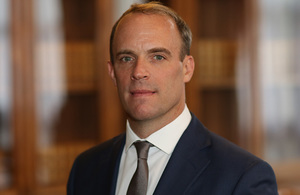
The Rt Hon Dominic Raab MP
  • the UK is placing sanctions, including travel bans and asset freezes, on 11 politicians, officials and others responsible for gross human rights violations in Russia, Venezuela, The Gambia and Pakistan
  • UK is acting alongside the US who are also announcing new designations under their human rights regime today
  • on International Human Rights Day, the Foreign Secretary warns those who commit human rights violations that the UK will not hesitate to impose further sanctions

Today (10 December) the UK has announced a third tranche of sanctions under its Global Human Rights Sanctions Regime against 11 individuals and one entity from Russia, Venezuela, The Gambia and Pakistan for egregious human rights violations, including torture and murder.

These sanctions, announced on International Human Rights Day, are part of the UK’s global human rights regime which gives the UK powers to stop those involved in serious human rights abuses and violations from entering the country, channelling money through UK banks, or profiting from our economy.

This is the third time the UK has sanctioned people or entities for human rights violations and abuses under a UK-only regime, with the first in July and the second in September 2020.

This is also the second time the UK has worked alongside allies to announce sanctions, with the US also announcing their own measures today. In total, the US and the UK designated 31 actors today for their involvement in serious human rights abuses.

  • in Russia, the UK is imposing sanctions, including travel bans and asset freezes, against three individuals and the Terek Special Rapid Response Unit responsible for torture and other human rights violations against LGBT people in Chechnya

  • in Venezuela, sanctions will be imposed on senior security figures responsible for human rights violations in Maduro’s illegitimate regime. These designations are a timely reminder of the crisis in Venezuela, coming as they do so soon after the illegitimate Maduro regime organised deeply flawed National Assembly elections on 6 December

  • the former President of The Gambia, Yahya Jammeh, and Ahmad Anwar Khan, the former Senior Superintendent of Police in Malir District, Pakistan are also facing sanctions for historic human rights violations including extrajudicial killings of protestors and minority groups

Foreign Secretary Dominic Raab said:

Today’s sanctions send a clear message to human rights violators that the UK will hold them to account.

The UK and our allies are shining a light on the severe and systematic human rights violations perpetrated by those sanctioned today. Global Britain will stand up for democracy, human rights and the rule of law as a force for good in the world.

Underlining the UK’s position as a global force for good, this regime showcases commitment to the rules-based international system and to standing up for victims of human rights violations and abuses around the world.

The full list of designations:

Venezuela

  1. Rafael Bastardo Commander of FAES (Special Action Forces) until 2019
  2. Remigio Ceballos Ichaso: Head of the Strategic Command Operations of the Bolivarian National Armed Forces (CEOFANB)
  3. Fabio Zavarse Pabon: Commander of the National Guard (GNB)

Russian Federation

  1. Magomed Daudov: The Spokesperson/Chairperson of the Parliament of the Chechen Republic
  2. Aiub Kataev: Head of the Ministry of Internal Affairs of the Chechen Republic of the Russian Federation in Argun
  3. Apti Alaudinov: Deputy Minister of Internal Affairs of the Chechen Republic and Major General of the Police
  4. Terek Special Rapid Response Unit

The Gambia

  1. Yahya Abdul Aziz Jemus Junkung Jammeh: Former President of The Gambia
  2. Yankuba Badjie: Former Director General of the Gambian National Intelligence Agency (NIA)
  3. Zineb Jammeh: Former First Lady of The Gambia and wife of Yahya Jammeh

Pakistan

  1. Anwar Ahmad Khan: Former Senior Superintendent of Police (SSP) in Malir District, Karachi

Published 10 December 2020


Consultation seeks views about exam advance information

News story

Extra support for GCSE, AS and A level 2021 exams – consultation on principles for exam topic advance information and support materials.

Ofqual is seeking views about advance information that will be given to students to help them focus their revision before exams next summer.

The consultation, Advance information about topics to be covered in GCSE, AS and A level exams in 2021 and support materials in exams, follows the Department for Education’s decision earlier this month to allow students to benefit from exceptional measures to support students given the disruption caused by the coronavirus (COVID-19) pandemic.

Students will be given advance information for many subjects ahead of sitting GCSE, AS and A level exams next summer. The nature of this will vary from subject to subject. Some support materials, such as formulae sheets and equations, will also be provided, for science and maths exams for example.

Exam boards will decide what information will be provided to teachers and students before the exams. This information will be published at the end of January 2021. Before then, Ofqual is seeking views on the broad principles that:

  • advance information should not be so detailed that a student is able to memorise answers to write in an exam

  • the information provided before an exam should not encourage students to overly narrow their learning

  • the qualifications should differentiate between students on the basis of their performance

Ofqual is also seeking views on any equality related implications of the approach.

Those who wish to respond can fill out a short survey accessible from the consultation page, which is open until 11:45pm on Sunday 20 December.

Published 10 December 2020