Summit shows new surge in action and ambition on road to Glasgow Climate Conference

Global climate leaders took a major stride towards a resilient, net zero emissions future today, presenting ambitious new commitments, urgent actions and concrete plans to confront the climate crisis.

Co-convened by the United Nations, the UK and France, in partnership with Italy and Chile, on the 5th anniversary of the Paris Agreement, today’s Climate Ambition Summit marked a major milestone on the road to the crucial UN climate conference COP26 in Glasgow next November.

75 leaders from all continents outlined new commitments at the Summit. This is a clear signal that the Paris Agreement – more than ever before the compass of international action – is working to steeply increase climate action and ambition.

The Summit showed clearly that climate change is at the top of the global agenda despite our shared challenges of COVID-19, and that there is mutual understanding that the science is clear. Climate destruction is accelerating, and there remains much more to do as a global community to keep the global temperature rise to 1.5C.

However today’s Summit showed beyond doubt that climate action and ambition are on the rise. The announcements at or just before the Summit, together with those expected early next year, mean that countries representing around 65% of global CO2 emissions, and around 70% of the world’s economy, will have committed to reaching net zero emissions or carbon neutrality by early next year.

These commitments must now be backed up with concrete plans and actions, starting now, to achieve these goals, and today’s Summit delivered a surge in progress on this front.

Leading the way to Glasgow with strengthened national climate plans (NDCs)

  • The number of countries coming forward with strengthened national climate plans (NDCs) grew significantly today, with commitments covering 71 countries (all EU member states are included in the new EU NDC) on display. As well as the EU NDC, a further 27 of these new and enhanced NDCs were announced at or shortly before the Summit.

  • A growing number of countries (15) shifted gears from incremental to major increases. Countries committing to much stronger NDCs at the Summit, included Argentina, Barbados, Canada, Colombia, Iceland, and Peru.

  • The leadership and strengthened NDCs delivered at the Summit mean we are now on track to have more than 50 NDCs officially submitted by the end of 2020, boosting momentum and forging a pathway forward for others to follow in the months ahead.

  • Today’s announcements, together with recent commitments, send us into 2021 and the road to the Glasgow COP26 with much greater momentum. The Summit showcased leading examples of enhanced NDCs that can help encourage other countries to follow suit – particularly G20 countries.

Another stride towards a resilient, net-zero emissions future

  • Following today’s Summit, 24 countries have now announced new commitments, strategies or plans to reach net zero or carbon neutrality. Recent commitments from China, Japan, South Korea, the EU and today Argentina have established a clear benchmark for other G20 countries. A number of countries at the Summit set out how they are going even further, with ambitious dates to reach net zero emissions: Finland (2035); Austria (2040) and Sweden (2045).

  • Climate vulnerable countries are at the forefront of action and ambition. Barbados and the Maldives have set a highly ambitious target for achieving carbon neutrality by 2030, with the right support. Fiji, Malawi, Nauru and Nepal indicated that they are aiming for the 2050 goal.

  • At the Summit, adaptation and resilience moved to centre stage. 20 countries indicated new or forthcoming commitments to protect people and nature from climate impacts. Countries, such as Ethiopia, said they were taking a whole-of-economy approach that protects people and nature, while Suriname said it is stepping up its implementation of its National Adaptation Plan. Developed countries, including the UK, Portugal and Spain, announced they were stepping up their adaptation efforts. A major new global campaign – the Race to Resilience – was also launched today, setting a goal of safeguarding 4 billion people vulnerable to climate risks by 2030 (more details below).

Speeding up the shift from grey to green economies

  • Several countries set out concrete policies to implement their economy-wide targets at the Summit. Pakistan announced no new coal plants, while Israel said it was joining the growing list of countries stepping away from coal. 15 countries provided details on how they will speed up their transitions to renewable energy by 2030, including Barbados (aiming for fossil-fuel free), Vanuatu (100% renewables), and Slovakia (decarbonised power). Denmark announced it will end oil and gas exploration. India announced a new target of 450GW installed capacity of renewable energy by 2030. China committed to increasing the share of non-fossil fuel in primary energy consumption to around 25% by 2030.

  • In line with this momentum, the UK, France and Sweden set out plans to end international financial support for fossil fuels, while Canada announced it will ramp up its price on carbon to C$170 per tonne by 2030.

Working with nature, not against it

  • The Summit showed dedication to protecting nature with 12 leaders highlighting their existing plans to increase the use of nature-based solutions to combat climate change. As we approach the UN Biodiversity Conference in 2021, the Summit highlighted the need for more integrated solutions to confront both the climate and biodiversity crises, and speeding up progress right across the Sustainable Development Goals.

  • 12 donor countries highlighted their commitments to support developing countries, including just under €500m in additional investment from Germany, an additional €1bn per year from France from its previous target, as well as a World Bank commitment to ensure that 35% of their portfolio includes climate co-benefits, and EIB commitment to ensure that 50% includes climate co-benefits, as well as 100% alignment of EIB’s activities on Paris agreement.

  • However, the Summit also demonstrated there is much more to do to ensure that no one is left behind. With COVID-19 impacting international climate finance flows this year, 2021 will be critical to show that finance is flowing and to meet and surpass the $100bn goal.

From momentum to a truly global movement: cities, business and financiers stepping up ambition at scale

  • Race to Resilience (Global) – a campaign launched today which brings together initiatives involving mayors, community leaders, businesses and insurance companies, among others, who commit to building resilience actions to safeguard by 2030 the lives and livelihoods of 4 billion people from groups and communities vulnerable to climate risks. Examples of actions and initiatives include the following:
    • Zurich Insurance (Switzerland) announced that the Zurich Flood Resilience Alliance will triple funding by 2025 and expand its reach from 11 to 21 countries.

    • Mayor of Freetown (Sierra Leone) committed to planting 1 million trees between 2020 and 2021.

  • Net Zero Asset Managers Initiative (Global) – representing US$9 trillion of assets under management has seen each of the 30 founding members unequivocally commit to achieving net zero emissions by 2050. This includes setting individual portfolio targets, as well as engaging companies in each member’s portfolio to set decarbonization goals in line with limiting global temperature rise to 1.5C.

  • C40 Cities (Global) – reinforced the commitment and action by cities to implement the Paris agreement by announcing the launch of the Cities Race to Zero campaign and that 70 cities have joined in the first month.

  • Godrej & Boyce (India)—a manufacturing company, announced commitments to key global initiatives including the Business Ambition for 1.5C, setting science-based targets, and advancing energy efficiency, through the EP100 initiative for energy-smart companies, in line with their overall ambition to achieve carbon neutrality by 2050.

  • International Airlines Group (Spain/UK) — are the first airline group worldwide to commit to achieving net zero emissions by 2050. The Oneworld Alliance of 13 airlines representing 20% of global aviation, is investing US$400m in sustainable aviation fuels (over the next 20 years) to achieve net zero carbon emissions by 2050.

  • Dalmia Cement (India) – 40 of the world’s leading producers of cement as part of the Global Concrete and Cement Association have issued a industry commitment to deliver carbon-neutral concrete by 2050. The Indian cement company has gone further and established a roadmap to become carbon negative by 2040 and is working globally to meet its 100% renewable energy objectives.

  • Movida-Rent-a-Car (Brazil) – presented the actions that will underpin their pledge of net-zero emissions by 2030 and becoming carbon positive by 2040. Movida is reducing emissions across its operations, offsetting the carbon footprint of the company and its customers by planting trees, as well as adapting to impacts of climate change and undertaking risk analysis using methodologies of the Task Force on Climate-related Financial Disclosures.

  • Apple (United States) – pledged carbon neutrality for its supply chain and products by 2030 and announced new progress that 95 of its suppliers have committed to moving to 100% renewable energy.

  • Artistic Milliners (Pakistan) – a textile company announced joining the UN Fashion Industry Charter for Climate Action and shared their actions on the circular economy to reduce their carbon footprint and provide zero emissions energy to thousands of homes.

United Nations Secretary-General António Guterres said:

The Summit has now sent strong signals that more countries and more businesses are ready to take the bold climate action on which our future security and prosperity depend.

Today was an important step forward, but it’s not yet enough. Let’s not forget that we are still on track to an increase of temperature of 3 degrees at least in the end of the century, which would be catastrophic.

The recovery from COVID-19 presents an opportunity to set our economies and societies on a green path in line with the 2030 Agenda for Sustainable Development.

As we look ahead, the central objective of the United Nations for 2021 is to build a truly Global Coalition for Carbon Neutrality.

Prime Minister Boris Johnson said:

Today we have seen what can be achieved if nations pull together and demonstrate real leadership and ambition in the fight to save our planet.

The UK has led the way with a commitment to cut emissions by at least 68 percent by 2030 and to end support for the fossil fuel sector overseas as soon as possible, and it’s fantastic to see new pledges from around the world that put us on the path to success ahead of COP26 in Glasgow.

There is no doubt that we are coming to the end of a dark and difficult year, but scientific innovation has proved to be our salvation as the vaccine is rolled out. We must use that same ingenuity and spirit of collective endeavour to tackle the climate crisis, create the jobs of the future and build back better.

President Macron said:

Despite the global pandemic and one of the worst economic crises of our time, we have shown today that climate action remains at the top of the international agenda. The crisis gives us the opportunity to accelerate our ecological transition and I welcome the announcements made today by more than 70 heads of State and government. This summit has confirmed that the Paris agreement struck under the French COP Presidency five years ago remains, more than ever, the compass of international climate action.

The EU is a leader in this global fight, with our new target of reducing greenhouse gas emissions by at least 55% by 2030 – which is a fundamental milestone on the way to carbon neutrality. The EU and France will continue to promote ambitious levels of climate finance. We look forward to working with the United Nations, the UK COP Presidency and all parties to the Paris Agreement to keep raising ambition, and deliver on it through concrete action, in the year ahead.

For further information, contact


COP26 President’s closing remarks at Climate Ambition Summit 2020

Friends. We have come to the end of the Climate Ambition Summit.

And today we have seen countries from across the world making commitments of increased ambition towards tackling climate change.

From Africa to Asia.

From Europe to Latin America.

The Middle East, the Caribbean, and Pacific Island states.

Seventy five leaders have come together to announce new commitments to climate action.

We have had 45 Nationally Determined Contributions, 24 net zero commitments, and 20 adaptation and resilience plans.

Responding to the calls for action from youth, business, indigenous peoples and civil society.

Leaders have put their countries on course for the green growth, which we have seen is possible.

Creating jobs and prosperity.

The commitment is truly global.

And it encompasses all of society.

Global companies such as Apple, Dalmia Cement and Movida have made net zero commitments.

And the Net Zero Asset Managers Initiative, launched just yesterday, already covers nine trillion dollars of assets.

I am enormously grateful to all those who have come forward with announcements today.

But of course, what really matters is what people across the world think of our ambitions.

And, in judging those ambitions, they will likely ask two questions.

First. Have we made any real progress at this summit?

And the answer to that is: yes, we have.

But they will also ask, if have we done enough to put the world on track to limit warming to 1.5 degrees, and protect people and nature from the effects of climate change?

To make the Paris Agreement a reality.

Friends, we must be honest with ourselves, the answer to that, is currently: no.

As encouraging as all this ambition is.

It is not enough.

And the clock continues to tick.

As our Barbadian friends have said today: our window to end the crisis is closing.

This is a fight for the very survival of our fragile planet.

We are facing a scale of human tragedy and natural devastation the world has never seen.

The choices we make in the year ahead will determine whether we unleash a tidal wave of climate catastrophe on generations to come.

But the power to hold back that wave rests entirely with us.

Now, if the Paris Agreement was the dawn of an age of hope for our planet, now can, and must, be the time for increased ambition and action.

The coronavirus pandemic has demonstrated that our fates are intertwined.

The progress on vaccines has shown what we can accomplish when the world unites against a common threat.

And this should give us all hope.

And over the next year, I want us to unite against climate change, build a consensus, and broker an agreement around four key goals.

First, a step change in mitigation.

Second, a strengthening of adaptation.

Third, getting finance flowing.

And fourth, enhancing international collaboration.

Let me take these in turn.

Firstly, a step change in emission reductions to keep 1.5 degrees within reach.

Here we must remain guided by the science.

Which tells us that urgent action is the only way to meet our goal.

Over the next ten years we must halve our emissions and restore nature.

And we have seen from the announcements today, we are making progress.

But by COP26 we need every country to have stepped up, with Nationally Determined Contributions and Long-Term Strategies that put us on track to 1.5 degrees, plotting a course to net zero, that is fair for all.

And clear policies, like phasing out coal, protecting forests, championing clean energy and clean transport, to make these targets a reality.

The outcomes at Glasgow must respond to the ambition we have seen today.

Including by resolving issues like transparency, common timeframes and Article Six.

Secondly, we must address the vital issues of adaptation and loss and damage.

As International Development Secretary I saw the transformative effect that clean, resilient infrastructure has on communities.

I have witnessed the leadership shown by women in dealing with new climate extremes.

And I’ve seen reassurance offered by early warning systems and robust action plans which ultimately save lives.

That is why, to protect people, and nature from the effects of rising temperatures, adaptation and resilience must take centre stage at COP26.

We are making progress.

Our Call for Action on Adaptation and Resilience, that I launched with Egypt and other friends at the UN Climate Action Summit last September, has been signed by 120 countries.

The Race to Resilience campaign, announced today, will drive action further among cities, business, investors and civil society.

And the UK is doing our part, submitting our Adaptation Communication, alongside our NDC and Biennial Finance Communication. The aim being to address all three pillars of the Paris Agreement.

I will continue to work with countries, donors, investors and civil society.

To encourage faster action.

This brings me to the third issue, finance.

Simply put, we must deliver for those that are at the front line of climate change.

We must collectively honour the $100 billion commitment.

It is an act of faith.

Of trust.

And friends, I have to say, if we can mobilise trillions overnight, rightly to support our economies, why can we not reach this $100 billion dollar goal?

So let me speak directly, and plainly, to leaders of my fellow donor countries.

The UK is doubling its contribution to International Climate Finance, to £11.6 billion pounds over the next five years.

And I ask all donor countries to join us.

Match our ambition, and together let us make the $100 billion dollars a reality.

Of course we must also address other public finance issues.

Such as access.

Gender-responsive financing.

And increasing the share of adaptation and grant-based finance.

So, the UK Presidency will shortly be publishing the key priorities for Public Finance.

Setting out our approach to work with the international community to tackle them in the year ahead.

Of course, private finance must also be mobilised.

So we are working with multilateral development banks, investors and others to drive investment to developing countries.

And encouraging investors to take climate risk into account and to capitalise on the shift to clean, resilient growth.

We must also find long term solutions to deal with debt.

And align all recovery packages with the Paris agreement.

We will hold discussions as part of our G7 Presidency, and we’ll convene other major economies on these critical issues.

The outcomes of Glasgow must help to mobilise private capital.

And agree that future climate finance will be fair, it will be predictable and accessible.

Finally, we need enhanced international collaboration.

Among policy makers, investors, business and civil society.

That is the only way to deliver the transition at the pace required.

On mitigation, on adaptation and on finance.

By working together, we can innovate faster, we can create economies of scale, and drive stronger incentives for investment.

But we will only access those gains, if we tailor our approach to every challenge, and to each sector.

And our COP26 campaigns aim to do just that.

Bringing people together around five key challenges: adaptation and resilience, clean energy and clean transport. Finance. And nature-based solutions.

We have created new international forums: the Energy Transition Council.

The Zero Emission Vehicle Transition Council.

And the Sustainable Land Use and Commodity Trade Dialogue.

All aimed to help reduce emissions while meeting other needs, like affordable energy, clean transport and green jobs.

Targeted practical collaborations like these are vital.

And they should form a central theme to our efforts over the next decade.

My mission over the next year is to pursue each of these four goals.

To secure the highest level of ambition that the world has to offer.

Backed by the full force of UK diplomacy, by our partners, Italy, and our friends at the United Nations.

I want the golden thread of climate action to weave through every international gathering next year.

Including the G7, the G20 and other meetings.

So that, together, we lay the foundations for a successful COP26, with increased, ambitious nationally-determined-contributions and long-term strategies.

And give ourselves the best possible chance, of securing a comprehensive, balanced negotiated outcome in Glasgow.

I will continue to meet with all of you, and hold regular negotiating group consultations.

I’ll meet Ministers at established events, like the Petersberg Climate Dialogue.

I’ll continue to consult civil society, youth, indigenous peoples and business.

Including of course through Italy’s Youth For Climate event.

And I’ll convene Presidency-led events.

In March we are going to be bringing climate vulnerable and donor countries together.

To address the connected challenges of climate change and development.

My friends.

I am aware of the scale and the gravity of the task that I have been given.

As the custodian of this process.

But I also recognise, that success in Glasgow will depend on all of us.

It will not be easy.

But it is possible.

And it is urgent.

As leaders of today, we carry a heavy responsibility.

Whether future generations look back at this time, with admiration, or despair, depends entirely on our ability to seize this moment.

To build on the ambition we have seen today.

And to work together over the next year, to forge a brighter future for us all.

Because in decades to come, each and every one of us, will need to be able to look future generations square in the eye, and say, that together, when the urgency of our time demanded it, we built a better world, for their sakes, and for their future generations.
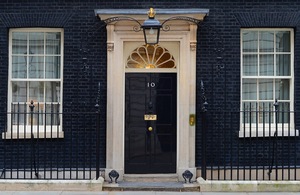


PM Climate Ambition Summit opening remarks: 12 December 2020

Thank you very much Zeinab, thank you Secretary-General Antonio, thank you to my fellow leaders, excellences.

Good afternoon from London, where we are coming to the end of an extraordinary and difficult year, I think with a sudden surge of scientific optimism.

Because after barely 12 months of the pandemic, we’re seeing the vaccine going into the arms of the elderly and vulnerable, vaccines that have been products each and every one of them of vast international efforts in laboratories around the world.

And so my message to you all, is that together we can use scientific advances to protect our entire planet, our biosphere against a challenge far worse, far more destructive even than coronavirus.

By the promethean power of our invention we can begin to defend the earth against the disaster of global warming.

And by that I mean that together we can reduce our emissions, we can radically cut our dependence on fossil fuels, we can change our agricultural practices, and in short we can reverse the process by which for centuries, humanity has been quilting our planet in a toxic tea-cosy of greenhouse gases.

And at the same, we can create hundreds of thousands of jobs, millions of jobs across the planet as we collectively recover from coronavirus.

If you doubt our ability to do that, let me tell you that when I was a child of six, this country depended on coal for 70% of our energy needs. That coal dependency is now down to 3% or less and since 1990, the UK has cut our CO2 emissions by 43% – more than any other G20 nation – and yet our economy has grown by 75%.

Today, we’re putting our foot to the accelerator – in a carbon friendly way of course – with a Ten Point Plan for a Green Industrial Revolution.

We want to turn the UK into the Saudi Arabia of wind power generation, enough wind power by 2030 to supply every single one of our homes with electricity.

We’re going ahead with massive solar programme, even though we can’t hope to emulate the incredible things being done by India, Australia or Morocco for instance. Hydro of course – we’re liberating the awesome potential of hydrogen, whether for homes or all sorts of uses.

On electric vehicles we’re going to ban ICEs, new internal combustion engines by 2030, with a very ambitious programme. We’ll continue to develop new nuclear power.

We want to lengthen the lead of London, the UK, as the natural home of green finance. We want our homes to be emitting progressively less and less CO2 and doing more and more retrofitting of our homes. And wherever the UK may be accused of lagging, we won’t be lagging my friends in lagging.

We want to encourage all modes of green transport, cycling, walking and so on. We want to use the relatively new miracle of carbon capture and storage actually to take carbon from power generation and industrial processes and bury it in under-sea caverns created by the extraction of hydrocarbons.

And we’re now consecrating 30% of our waters, 30% of our land surface, to nature, because we think wild nature is the best way and most effective way of retaining carbon in a natural balance.

We do all these things because they’re right for the world, they’re right for our country – but also because we know that this green industrial revolution will generate as I say hundreds of thousands of high skilled, high paying, good quality jobs for generations to come.

And we’re going to help our friends around the world by moving away from supporting drilling and mining for hydrocarbons, but putting £11.6 billion of our overseas aid to support green technology and decarbonisation across the planet.

We want to work with all of you on this call, on this conference – let’s do it together. Let’s make it our collective commitment, as Antonio has just said, to get to net zero by 2050.

We in the UK, as he says, are going to do our bit, we’re reducing our emissions by 68% at least on 1990 levels over the next decade. And I’m really awed and humbled by the efforts of other countries around the world to set their own targets.

And I just want to repeat that key message. We’re doing this not because we are hair shirt-wearing, tree-hugging, mung bean-munching eco freaks – though I’ve got nothing against any of those categories, mung beans are probably delicious. We’re doing it because we know that scientific advances will allow us collectively as humanity to save our planet and create millions of high skilled jobs as we recover from COVID.

So thank you all very much for joining this conference, this Ambition Summit, thank you to Secretary General Antonio, thank you to my co-host Emmanuel Macron, who I know shares my keen interest in protecting the ecosystems of our seas and oceans, and I look forward to seeing you all in Glasgow face-to-face next year.


PM announces the UK will end support for fossil fuel sector overseas


UK sets out ambitious approach to strengthening climate adaptation and resilience ahead of COP26

The UK has today (Saturday 12 December) set out the UK’s approach to prepare for the effects of climate change at home and support those facing impacts overseas, fulfilling a key commitment of the Paris Agreement.

In becoming one of the first countries in the world to publish its plans – known as an Adaptation Communication – the UK is setting out how it is enhancing resilience to our changing climate.

This comes as the UK today brings countries together for the Climate Ambition Summit, marking the fifth anniversary of the Paris Agreement, and mobilising action ahead of COP26 in Glasgow next year.

The Adaptation Communication will be submitted to the United Nations Framework Convention on Climate Change (UNFCCC), alongside the UK’s enhanced Nationally Determined Contribution (NDC) and the UK’s Biennial Finance Communication. Together, these set out the UK’s commitments under the three pillars of the Paris Agreement – mitigation, adaptation and climate finance.

Rebecca Pow, Environment Minister, said:

The impacts of climate change demand urgent action, and we are determined to be global leaders. We must adapt to these impacts at home and overseas. That is why the UK is fulfilling a key commitment of the Paris Agreement and asking others to do the same both at today’s Climate Ambition Summit, and ahead of COP26 in Glasgow next year as we come together for our planet.

We can’t rest on our laurels, which is why, as well as implementing the bold actions set out today, we’re developing a long-term vision and framework to help us ensure resilience to climate risk up to 2050 and beyond.

The UK’s International Champion on Adaptation and Resilience for the COP26 Presidency, Anne-Marie Trevelyan, said:

We must act now to ensure our communities and economies are resilient to the climate shocks which are coming. From floods to droughts, to rising sea levels and wildfires, we need to be better prepared both at home and overseas to protect lives and livelihoods. We need to make sure those most vulnerable, especially women and girls, are at the forefront of our planning and investment as a world.

The UK is committed to supporting those countries most vulnerable to climate change impacts, whilst taking strong action to prepare at home. Our ambitious plan published today sends a clear signal that the UK is putting adaptation at the heart of its domestic and international climate action and we want to see all countries doing the same ahead of the COP26 climate summit next year.

Emma Howard Boyd, Chair of the Environment Agency and the UK Commissioner to the Global Commission on Adaptation, said:

An increase in the impacts of the climate emergency, like heatwaves and floods, is already happening. The global race to net zero is essential to limit their rise, but if we don’t prepare for new extremes we’re on a hiding to nothing. We also need a race to resilience.

There are social and economic opportunities in helping communities improve resilience. We must invest in traditional infrastructure, like flood walls and early warning systems, but we are increasing our use of nature based solutions to manage water and reach net zero at the same time. We set out our approach in our pioneering Flood and Coastal Erosion Risk Management Strategy, which we are sharing with international partners ahead of COP26.

The UK’s action to adapt to the effects of climate change is integrated across government departments, covering the natural environment, infrastructure, people and the built environment, business and industry, and local government. Examples include:

  • putting nature at the heart of its approach to adaptation and resilience, including committing £640 million through the Nature for Climate Fund to protect, restore, and expand habitats like woodlands and peat bogs. It also means supporting climate mitigation and adaptation through natural carbon capture and helping to alleviate flooding. The Green Recovery Challenge Fund has brought forward £80 million in these funds to kickstart a programme of nature-based solutions, and create and retain jobs in the conservation sector.
  • ensuring that climate science and research, such as the UK Climate Projections 2018, are fully integrated into planning and decision making, including on major infrastructure.
  • building resilience to flooding and coastal change with a long-term flood policy statement and Environment Agency strategy which set out a roadmap to create a nation more resilient to future flood and coastal erosion risk. This has been accompanied by record funding of £5.2 billion for new flood and coastal defences between 2021 and 2027.

Alongside delivering adaptation at home, the UK is also helping countries on the frontline of climate change adapt and build resilience to its effects, by:

  • doubling our International Climate Finance (ICF) contribution to £11.6 billion between 2021-2026. This builds on the support UK ICF has provided, to help 66 million people around the world cope with the effects of climate change.
  • supporting the international Risk-informed Early Action Partnership (REAP) which aims to make one billion people safer from disasters by 2025 through integrated disaster risk management and climate adaptation laws, health and social protection for populations, and improved early warning systems.
  • spearheading changes to adaptation and resilience financing, for example through the Coalition for Climate Resilient Investment and the LIFE AR programme, which will enable the least developed countries to direct at least 70% of climate finance flows to support local level adaptation and resilience actions by 2030.
  • promoting international cooperation, with a Call for Action on Adaptation and Resilience which has been endorsed by 120 countries and 86 institutions and provides a commitment to create the environment, partnerships, and political leverage for countries to take action on adaptation.
  • emphasising the importance of nature-based solutions in adaptation and resilience across the globe, through the Leaders’ Pledge for Nature and government-to-government dialogue to bring effective action on sustainable land use and commodities.

Read the full Adaptation Communication here.