Biological and Toxin Weapons Convention Article 5 Formal Consultative Meeting, September 2022: UK statement

Mr Chair, this process, as instigated by the Russian Federation, concerns issues at the very heart of this Convention. I’d like to start by reaffirming the United Kingdom’s longstanding and deeply-held commitment to the Biological and Toxin Weapons Convention, to actively strengthening this Convention, and to safeguarding against efforts to undermine it. We are committed to following the process for this Formal Consultative Meeting under Article V, fully and in good faith.

We must look at the wider context to Russia’s request. On 24 February Russia invaded Ukraine, an act of aggression in violation of international law, which the United Nations General Assembly voted overwhelmingly to deplore in the strongest terms. Since then the Russian Federation has repeatedly spread false narratives and disinformation to try and justify its illegal aggression, including wild and inconsistent claims involving dirty bombs, chemical weapons, and offensive biological research. It is against that backdrop that the credibility of Russia’s claims must be evaluated.

Mr Chair, Russia’s allegations refer to Articles I and IV of the BTWC. Many delegations have recalled precisely what these Articles require. But it is also worth recalling the first few lines of Article X: that “the States Parties to this Convention undertake to facilitate, and have the right to participate in, the fullest possible exchange of equipment, materials and scientific and technical information for the use of bacteriological (biological) agents and toxins for peaceful purposes.”

The United Kingdom’s experts have analysed the supporting evidence Russia has provided. I will share some key points from our assessment.

Firstly, Russia claims the culture collections held by Ukraine at the Mechnikov Anti-Plague Research Institute are inconsistent with peaceful, protective or prophylactic purposes, and are therefore evidence of a breach of Article I. This allegation is based on specific reference to 422 cholera ‘storage units’ and 32 anthrax ‘storage units’ and a lack of mass outbreaks of these diseases in Ukraine in recent years. The term ‘storage unit’ is ambiguous and misleading. These numbers of samples are to be expected given the presence of these pathogens in Ukraine and the surrounding region. Open source scientific research shows 32 incidents of anthrax infections in Ukraine between 1997 and 2022, and a cholera epidemic in Ukraine between 1994 and 1995. Such strain collections are relevant for research aimed at understanding outbreaks and combatting infectious diseases, not only for the benefit of Ukraine but also for global preparedness and response. Most importantly, the endemic status and previous outbreak history are not the only reason determining whether a research programme on a particular biological agent should take place. Other reasons could include responses to global health security, international research collaboration, infectious disease preparedness, prevention and response, and disease surveillance and monitoring.

All of these are relevant to the provisions of the BTWC, particularly Article X. The evidence that Russia has presented is not indicative of offensive biological warfare activities. Irrespective of the size of the cholera and anthrax culture collections at the Mechnikov Institute, their retention is justifiable and we assess that research in Ukraine in fact, supports the provisions of the BTWC, including Article X.

Secondly, Russia claims a scientific pre-proposal from the Kharkov Institute of Veterinary Medicine, to investigate the potential transmission of avian influenza in wild birds in Europe, and a presentation slide titled ‘Risk of Emerging Infections from Insectivorous Bats in Ukraine and Georgia’ are evidence that the United States and Ukraine were studying the spread of dangerous infections as a means of biological weapons agent delivery. These documents provide no evidence supporting those claims. The proposed projects are consistent with investigations, for peaceful purposes, of wildlife that transmit pathogens. These documents relate to scientific research designed to better understand disease transmission and contribute ultimately to mitigating these pathogens. There are many examples of these types of studies being conducted internationally, including by Russia. We assess this shows Ukraine and the United States upholding the provisions of the BTWC, including Article X.

Thirdly, Russia claims to have recovered drones with 30-litre reservoirs within Ukrainian territory that they allege can be used to spray ‘bioagents’. The only evidence Russia has provided is a letter from Baykar, a Turkish equipment manufacturer, in relation to export control regulations. The Russian claim that the drones have ‘the ability to be equipped with aerosol generating systems with a 20+ litre capacity’ is not actually supported by the documents provided. In fact, on the document, the manufacturer has explicitly written that the drones do not have this capacity. The drones referred to in the Russian documents appear to be of the type used for agriculture, manufactured by Chinese company DJI, supplied under the Chinese ‘Belt-and-Road’ initiative in collaboration with the Ukrainian government. Yet again, no evidence has been presented that demonstrates any non-compliance with the Convention by Ukraine.

Mr Chair, Russia has asked that we take their allegations seriously. It is hard to do so, when their presentation yesterday, delivered by a parade of nameless individuals, contains no more than misrepresentations of assorted public documents quoted incorrectly or out of context, and copy-pasted images from Wikipedia. This is not only an abuse of the time and resources States Parties have devoted to this meeting, in respect for the provisions of the Convention. It is a dangerous attempt to exploit the Convention for aggressive political purposes.

Nevertheless, we, along with all the delegations represented here, have listened carefully to the allegations presented by Russia, and to the exhaustive response given by the United States and Ukraine. We consider that Russia’s allegations have been duly heard, and that on considering their evidence no cause for ongoing concern about compliance with the Convention remains. In our view this process has served its proper purpose and should be concluded.
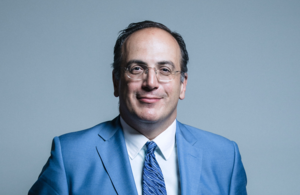



New Law Officers appointed

News story

The Prime Minister has appointed Rt Hon Michael Ellis QC MP as Attorney General and Michael Tomlinson MP as Solicitor General

The Prime Minister has appointed Rt Hon Michael Ellis QC MP as Attorney General for England and Wales, and Michael Tomlinson MP as Solicitor General.

The Attorney General, Rt Hon Michael Ellis QC MP said:

I am honoured to have been appointed as Her Majesty’s Attorney General for England and Wales and delighted to join the Prime Minister’s Cabinet which will get our economy growing, deal with the energy crisis and put the health service on a firm footing. I look forward to working again with the superb civil servants in the Attorney General’s Office who will support me in my role as Attorney General, making law and politics work together.

I am also delighted to take up my role as Advocate General for Northern Ireland.  Strengthening our Union, protecting the security and prosperity of all its nations, and levelling up every part of the country are important to me.  I look forward to working with my fellow Law Officers as we carry out our functions across the whole of the United Kingdom.

Biography

The Rt Hon Michael Ellis QC MP

The Rt Hon Michael Ellis QC MP was appointed Attorney General on 6 September 2022.

He was appointed Paymaster General from 16 September 2021 to 6 September 2022. He was also Minister for the Cabinet Office from 8 February 2022 to 6 September 2022.

He was Solicitor General from 26 July 2019 to 2 March 2021, and re-appointed to that role from 10 September 2021 to 15 September 2021. He was Attorney General from 2 March 2021 to 10 September 2021 while Suella Braverman was designated as a Minister on Leave.

He was previously Minister of State at the Department for Transport from 23 May 2019 to 25 July 2019. He was Parliamentary Under Secretary of State at the Department for Digital, Culture, Media and Sport from January 2018 to May 2019.

He was Deputy Leader of the House of Commons from 17 July 2016 to 8 January 2018.

He was elected Conservative MP for Northampton North in May 2010.

Michael Tomlinson MP

Michael Tomlinson MP was appointed Solicitor General on 7 September 2022.

He was previously a Vice Chamberlain of HM Household (Government Whip) between 8 July 2022 and 7 September 2022, and Government Whip (Lord Commissioner of HM Treasury) between 14 February 2020 and 8 July 2022.

Published 7 September 2022


Readout of the Chancellor’s meeting with the Governor of the Bank of England

News story

A readout of the Chancellor’s meeting with the Governor of the Bank of England on 7 September is below.

  • Today the Chancellor, Kwasi Kwarteng, met with the Governor of the Bank of England, Andrew Bailey, at HM Treasury to emphasise his full support for the Bank’s mission to get inflation under control.

  • The Chancellor affirmed the UK Government’s long-standing commitment to the Bank of England’s independence and its monetary policy remit. The Chancellor and Governor agreed that getting inflation under control quickly is central to tackling cost of living challenges.

  • The Chancellor updated the Governor on his growth and fiscal strategies, noting that reforms which create the conditions for a high-growth economy can help to alleviate inflationary pressures.  He outlined the government’s plans to act this week in response to high energy prices, and reiterated that such action requires fiscal loosening in the short-term. The Chancellor confirmed that over the medium-term, the government is committed to seeing debt falling.

  • The Chancellor and the Governor agreed to re-instate weekly meetings – starting with bi-weekly meetings in the first instance – and coordinate closely to support the economy over the coming months.

Published 7 September 2022


Urgent action is needed to meet Somalia’s acute humanitarian needs

Thank you President,

I’d like to start by thanking SRSG Swan and our AU briefers today.

I congratulate Somalia on the successful completion of the electoral process, and the peaceful transition of power to President Hassan Sheikh.

The UK stands ready to support President Hassan Sheikh’s government to deliver its ambitious agenda and realise his vision of “a Somalia at peace with itself and the world”.

I will focus my remarks today on three subjects: the humanitarian situation; security; and reconciliation.

First, President, urgent action is needed to meet Somalia’s acute humanitarian needs. As Under-Secretary-General Griffiths has warned, after four consecutive failed rains, Somalia faces famine on a scale greater than we last saw a decade ago. The window to prevent it is closing rapidly.

We recognise the efforts of Somalia’s Drought Envoy and of the “system-wide scale up,” but the response must be sustained and prioritised.

On our part this financial year, the United Kingdom has contributed $180 million to respond to drought in the Horn of Africa. We call on all partners to do what they can to step up their humanitarian support to prevent famine.

Secondly, President, the UK welcomes the high priority that the new Somali government has placed on security and on the fight against Al-Shabaab. We join others in extending our condolences to those who suffered and were killed as a result of the Hyatt hotel attack.

We are also proud to provide funding to the African Union Transition Mission in Somalia and the Somalia Trust Fund. We encourage other Member States to join us in this, so that Somali forces can develop the capacity and capabilities they need to end the threat of Al-Shabaab.

However, military effort on its own will not be enough. The upcoming renewal of the mandate of UN Assistance Mission in Somalia and the 751 sanctions regime will be an opportunity for this Council to set out how these tools can work most effectively alongside ATMIS to support Somalia and defeat Al-Shabaab.

Finally, President, we urge Somalia’s political leaders to work together to agree and implement national priorities and solve shared problems. Working together, and with support from their partners, we are confident that Somalia can defeat Al-Shabaab and advance peace, stability and prosperity for the benefit of all Somalis and the region.


Work experience offers opportunities for local students

Over the summer we have had different groups of young people join us on our work experience programme for young nuclear design engineers.

Around 80 Year 10/11 and 12/13 students from local schools and colleges in the Warrington area got an insight into what design engineering involves and the range of opportunities available in science, technology, engineering and mathematics (STEM) careers.

Using a multi-discipline project and individual tasks delivered by our own engineers, graduates and degree apprentices, the students completed 4 engineering modules designed to inform and inspire the workforce of the future.

Their placements were in:

  • process
  • mechanical
  • control electrical and instrumentation
  • civil and structural engineering design

Our ground-breaking work experience programme has had many successes over the years it’s been running.

Those successes include Lorna Sowerbutts who came to our Warrington offices to take part in our work experience programme with no idea what she wanted to do as a career.

After completing her work experience, she joined us as an apprentice in 2017 and has recently graduated with a first class honours degree in civil engineering.

She is now working as a civil engineer in our Infrastructure Strategic Alliance.

Lorna’s story shows the impact that successful work experience can have on young people who are considering their future choices.

Lewis Stanley, one of the students on this year’s programme, said:

This has been a really good experience. My background is film and media so I’ve enjoyed talking to people who work in engineering to understand the work they do.

If you’re interested in engineering I would definitely recommend this programme, especially if you’re studying science and design/technology.

There’s lots of different things to learn about and the team explained how to enter engineering and the different routes for qualifications and jobs.

Simon Wittridge, head of project functions, Sellafield Ltd said:

This really is an exceptional programme and a great way of showing the next generation the opportunities that are available to them – seeing young people embrace opportunities like this is a personal highlight for me.

Mark Duffy, engineering and education development manager added:

This programme is an excellent springboard for early career talent into the organisation.  Through the structured delivery format which mimics the approach to project delivery, the participants have a lens into engineering which brings alive their theoretical studies.

Next year, we are hoping to run the programme throughout multiple holiday periods, to increase opportunities for engagement and to open up the programme to more students.

We are also exploring working with other functions within Sellafield Ltd to widen to scope of our programme.