Jenrick acts to tackle failure of Nottingham City Council

  • Government publishes rapid review into council’s governance and risk management
  • Expert panel to be appointed to help council improve
  • Council to produce recovery plan by end of January 2021

Local Government Secretary Robert Jenrick has today (17 December 2020) announced new measures to address the serious failures at Nottingham City Council and begin to turn it to around so it can again deliver value for money for the taxpayer. This follows a non-statutory review into the council’s finances last month.

An Improvement and Assurance Board, made up of experts in governance and finance, appointed by the department, will be set up to help the council deliver the report’s recommendations on governance and company ownership.

The council must put forward their 3-year recovery plan by the end of January 2021. This will set out how they will improve their financial position and review their investments. They must submit progress reports to the Department on a quarterly basis.

The measures come in response to a rapid non-statutory review commissioned in November to examine serious governance and risk management issues, including those associated with the council’s private energy company Robin Hood Energy.

Councils have a duty to manage taxpayers’ money responsibly and are held to account where they are found to have failed to do so. The review team, led by Max Caller CBE, found that the council’s financial strategy and commercial investment decisions over the past 4 years have resulted in a very significant budget gap and low levels of reserves.

It also highlighted that the council failed to understand the roles and responsibilities associated with managing their companies and, as a result, ended up with significant debts.

Local Government Secretary Rt Hon Robert Jenrick MP said:

The rapid review into Nottingham City Council highlighted appalling financial and management issues within the council. Taxpayers and residents have been let down by years of disgraceful mismanagement and inept ventures such as Robin Hood Energy, that have wasted tens of millions of pounds that should be being spent on public services. These must end now. The council has a window in which to demonstrate that it is capable of running the city and turning the situation it has created around.

I will be appointing an independent expert panel to help them urgently address this by producing and delivering a comprehensive recovery plan.

Given the scale of the changes needed, it is vital that the council act quickly for the benefit of the communities they serve. I will be monitoring progress closely and do not rule out further action.

The department will continue to work with the council to understand the range of financial issues they are experiencing and will consider any request that the council submits for additional financial support from the government.

In the event of a failure by the council to demonstrate significant progress, a more formal statutory intervention will be considered, including the appointment of commissioners.

The findings of the review have been published on GOV.UK alongside the Local Government Secretary’s letter to lead reviewer Max Caller CBE.



G7 Export Credit Agencies: virtual conference

News story

The Heads of G7 Export Credit Agencies (ECAs) met on 15 and 16 December 2020, at a virtual conference hosted by UK Export Finance.

ECA Heads from Canada, France, Germany, Italy, Japan, UK and USA discussed a range of strategic topics, including climate change and clean energy.

The G7 ECA Heads also agreed that a global level playing field in the provision of officially supported export credits was critical, and re-affirmed their full commitment to transparency. The constructive and open discussions then explored the impact of the coronavirus (COVID-19) pandemic, and the vital roles ECAs were playing in stimulating the economic recovery.

G7 ECA Heads agreed to reconvene in 2021.

Published 17 December 2020


Human rights violations and abuses in the Chechen Republic of the Russian Federation: joint statement

I have the honor to deliver this statement on behalf of the Moscow Mechanism invoking participating States: Belgium, Canada, Denmark, Estonia, Finland, France, Germany, Iceland, Ireland, Latvia, Lithuania, the Netherlands, Norway, Sweden, the United Kingdom, the United States, as well as the following countries: Austria, Bulgaria, Croatia, Cyprus, Czech Republic, Greece, Italy, Luxembourg, North Macedonia, Malta, Montenegro, Poland, Portugal, Romania, San Marino, Slovakia, Slovenia, and Spain.

Mr. Chairperson,

In November 2018, 16 participating States took the important step of invoking the OSCE Moscow Mechanism to look into multiple allegations of serious human rights violations and abuses in the Russian Federation’s Republic of Chechnya that allegedly were committed during January 2017 to November 2018 against LGBTI persons, human rights defenders, members of the independent media, lawyers and others.

In December 2018, the Report resulting from the Moscow Mechanism found that “harassment and persecution, arbitrary or unlawful arrests or detentions, torture, enforced disappearances and extrajudicial executions” had indeed occurred. The Report also found “a climate of impunity” surrounding such violations and abuses. We called on the Russian Federation to make full use of the report and to implement all recommendations contained therein, in order to address the issues raised in a constructive manner and to stop the human rights violations and abuses in its Chechen Republic under the leadership of Ramzan Kadyrov.

Mr. Chairperson,

Two years have passed since the report resulting from the Moscow Mechanism was issued. Still, there has been no constructive response to the report or its recommendations from Russian federal and local authorities. Meanwhile, new information has come to light about additional allegations of serious human rights violations and abuses in Chechnya.

Reports of abuses against LGBTI persons continue to emerge. A young woman, Aminat Lorsanova, has come forward and alleges that in 2018 her relatives had her institutionalized successively in two separate treatment centers where she was beaten repeatedly in an attempt to change her sexual orientation. Chechen authorities have created an atmosphere that normalizes and condones such despicable acts of violence against LGBTI persons, while federal authorities continue their deafening silence. In January of this year, Aminat Lorsanova filed a complaint with the Russian Investigative Committee, which still has taken no action.

We also are alarmed by reports of a sharp increase in enforced disappearances in Chechnya. Ramzan Kadyrov’s security forces continue to routinely engage in appalling acts of violence to punish any form of dissent. The Chechen authorities appear to be targeting primarily young persons who have engaged with content on the Internet criticizing the Chechen authorities. According to the human rights group Memorial, at least twenty-two individuals have been unlawfully detained in recent months. Some reportedly remain in incommunicado detention under the control of Chechen authorities.

We are particularly concerned by credible reports of the recent disappearance of nineteen-year-old Salman Tepsurkayev, a moderator for the Telegram social media channel 1ADAT. He was allegedly kidnapped by Chechen security officials on September 6 and taken to the Terek Special Rapid Response Police Compound in Grozny. Subsequently, Salman Tepsurkayev appeared in a video that showed him under conditions of extreme duress for allegedly helping to “spread lies” about Chechen authorities.

We also are deeply troubled by the case of Movsar Umarov, who was arrested at his workplace in Grozny on July 18, allegedly for watching a video blog produced by Tumso Abdurakhmanov, a popular critic of Chechen authorities. In late August, Movsar Umarov’s family was informed that he had “escaped” from detention and was no longer in custody. His family has not heard from him since. In October, local authorities opened a murder investigation at the request of Movsar Umarov’s mother, who fears he may have been extrajudicially killed.

Mr. Chairperson,

Multiple times over the past two years, we have called on the Russian Federation to put an end to the human rights violations and abuses in its Chechen Republic, to protect the victims, and to respect the dignity and human rights of all individuals without discrimination. We have repeatedly called on the Russian Federation to conduct prompt, effective and thorough investigations into all reports of such violations and abuses, in order to ensure that anyone responsible or complicit is held accountable.

Despite these calls the climate of impunity described in the Moscow Mechanism Report continues to prevail in Chechnya.

We renew our call on the Russian Federation to pursue investigations and to act without further delay on the recommendations of the Moscow Mechanism rapporteur to:

  1. “Open an inquiry into the actions of the government of the Chechen Republic towards LGBTI people”
  2. “Express a commitment at the highest level of the executive branch of the Russian Federation to fully investigate the allegations and to bring to justice the alleged perpetrators, including those belonging to the local security forces”
  3. “Make sure that all Chechen authorities, including law enforcement and security agencies, fully comply with Russia’s domestic legislation and international human rights obligations”
  4. “Assure that the pre-investigation in politically sensitive cases in the Chechen Republic is led by investigators from the federal and not the regional level”
  5. “Reform the pre-investigation (pre-check) mechanism in a way that fully ensures its independence and effectiveness; in the case of investigating alleged human rights violations in Chechnya the Federal Investigative Commission and its investigators should be used”
  6. “Open a new pre-investigation/pre-check on the federal level into the case of the 27 persons allegedly killed by Chechen security forces or undertake a special investigation with the inclusion of international experts” We will continue to monitor the situation in Chechnya and to raise our concerns until we receive a substantive response from the Russian Federation and observe tangible progress in Chechnya


Statutory Instrument on Royal Navy Police enforcement powers

News story

A Regulation has been introduced to the Policing and Crime Act 2017 to provide Royal Navy Police with enforcement powers as the transition period for Britain’s exit from the EU comes to an end.

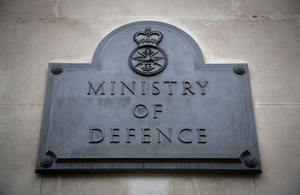
Image depicts the facade of MOD Main Building in London.

The Ministry of Defence has laid a Statutory Instrument in Parliament to introduce a Regulation under the Policing and Crime Act 2017. This will provide Royal Navy Police with additional law enforcement powers as the transition period for Britain’s exit from the EU comes to an end. Additional powers would come into effect on Thursday 07 January 2021 and will apply to England and Wales territorial waters only.

The Government is determined to ensure the security of UK waters from a range of threats under all circumstances. Contingency work for the end of the EU Transition Period has identified that there may be an operational requirement to extend law enforcement powers to Royal Navy Police.

Royal Navy personnel already routinely conduct enforcement activity in UK waters and Royal Navy Police are specially trained to conduct a range of enforcement activity safely and in line with civilian policing procedures. Currently, any interventions at sea are joint operations between the police and military. However, the deployment of civilian police officers to a maritime incident may be impractical in some circumstances. Providing extra powers will give greater flexibility to authorities to act effectively.

Royal Navy Police will only use these powers if requested to do so by civilian police forces. No decisions on the use of enforcement will be taken independently by military personnel, and the new powers are only extended to Royal Navy Police, a specific branch of the Royal Navy with trained military police officers.

The extension of enforcement powers to Royal Navy Police will be reviewed in six months.

Published 17 December 2020


Joint highways and school project is the bee’s knees

Broadwood Primary School, located close to the A1 where Highways England is increasing two lanes along a five-mile stretch to three narrower lanes, were delighted to get involved in creating bug hotels and planting wildflower seeds to help local wildlife flourish.

Dozens of youngsters got stuck in collecting and recycling items to produce an important shelter, attracting flies, bees, moths and butterflies which are integral to flower pollination and act as a food source for various bird species.

Broadwood Primary School project video

Diane Wilkinson-Best, Early Years teacher at the Denton Burn based school, said:

Starting our children off early learning about our environment and looking after the animals we share our planet with is really important.

By getting our pupils creative through this joint initiative they feel a sense of joy at making things that will make a difference and have a lasting effect.

Pupil Sophie, aged 4, said:

We made bug hotels by putting some twigs and leaves in bottles and we put them somewhere safe for the bugs so they can live there.

The strategic road network is one of the country’s largest national assets – stretching for nearly 4,500 miles and connects people, businesses and communities with the places they need to be. It also has approximately 30,000 hectares of green verges which contains a range of habitats and supports a rich variety of plants and animals.

Teams working on major Highways England projects have dedicated officers who work closely with local communities.

Highways England project manager Tom Peckitt said:

We want our roads to work more harmoniously with the communities that live alongside them, and the built, natural and historic environments that surround them.

Educating our next generation about biodiversity and getting young people involved in creating better environments for our wildlife will provide a legacy of healthier habitats and greater diversity alongside our roads.

Highways England’s multi-million investment along the A1, between junction 74 at Spotswood and junction 79 at North Brunton, will provide extra room, improve journey times, support economic growth and improve safety.

Narrower lanes and a temporary safety barrier have been installed on northbound and southbound carriageways and work is under way within the central reservation, which is a pivotal part of the project. The team have started resurfacing and installing the new concrete barrier which will improve safety for the thousands of drivers who use the route every day.

All work is being carried out overnight (8pm to 6am) under lane and full carriageway closures, and clearly signed diversions will be in place. Drivers are urged to register for updates regarding the upgrade, closures and diversion routes by visiting the A1 Scotwood to North Brunton web page or on Twitter @HighwaysNEAST with the hashtag #A1S2NB.

All Highways England sites have strict safeguarding measures, in line with Public Health England guidance, to prevent the spread of Covid-19 and none of the sites are open to the public. 

The latest information on Highways England’s biodiversity work can be found in its 2018-19 biodiversity report and further details are available in its Strategic Business Plan.

Members of the public should contact the Highways England customer contact centre on 0300 123 5000.

Journalists should contact the Highways England press office on 0844 693 1448 and use the menu to speak to the most appropriate press officer.