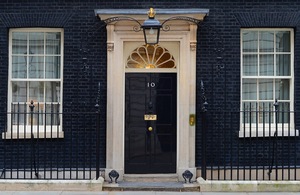
Prime Minister’s call with European Commission President Ursula von der Leyen: 17 December 2020

Press release

Prime Minister’s call with European Commission President Ursula von der Leyen

The Prime Minister spoke to Commission President Ursula von der Leyen this evening about the state of play in the UK / EU negotiations.

The Prime Minister underlined that the negotiations were now in a serious situation. Time was very short and it now looked very likely that agreement would not be reached unless the EU position changed substantially.

He said that we were making every effort to accommodate reasonable EU requests on the level playing field, but even though the gap had narrowed some fundamental areas remained difficult.

On fisheries he stressed that the UK could not accept a situation where it was the only sovereign country in the world not to be able to control access to its own waters for an extended period and to be faced with fisheries quotas which hugely disadvantaged its own industry. The EU’s position in this area was simply not reasonable and if there was to be an agreement it needed to shift significantly.

The Prime Minister repeated that little time was left. He said that, if no agreement could be reached, the UK and the EU would part as friends, with the UK trading with the EU on Australian-style terms.

The leaders agreed to remain in close contact.

Published 17 December 2020


Preparing for a sustainable and inclusive peace in Afghanistan

Thank you, Mr President.

And may I start by thanking Special Representative Lyons and Ambassador Djani in his capacity as Chair of the 1988 Committee for their briefings. I would also like to extend a warm welcome to Ms Zadran and to thank her for her powerful statement – her clear call for peaceful future for the youth of Afghanistan.

Mr President,

On the 12th of September, Afghans took a significant step on the road to peace with the start of the Afghanistan peace negotiations in Doha. We welcome the commitment of the two negotiating teams have shown so far, culminating in their agreement on the rules and procedures, with the talks on the 2nd of December. It is vital that the negotiations resume swiftly on the 5th of January.

Mr President, I would like to emphasise three points today:

First, we must be prepared for a long and challenging process ahead. When the talks resume on the 5th of January, the parties will start negotiating on substance for the first time. In many cases, the distance between the two sides’ positions may seem unbridgeable. There will be setbacks before there are breakthroughs.

This is normal and probably indeed necessary. A successful outcome will require a long, challenging process of building trust, finding common ground and compromising. International partners will need to show commitment and patience in the process as well. The UK, for our part, stands ready to offer support.

Second, even if a final settlement takes time, Afghans should start to see the tangible benefits now. Yet, as we have heard many times today, appalling levels of violence continue to blight the lives of Afghans. And let us be clear: the Taliban is responsible for the majority of this violence, violence which not only kills a menace, but also undermines confidence in the negotiations.

The Taliban claim to want a part in Afghanistan’s future and the international community, as well as relief from UN sanctions. This requires substantive progress in peace negotiations, an end to violence, and a complete and permanent break from terrorism, including from Al Qaeda.

Third, the outcome of the Afghanistan peace negotiations is for Afghans themselves to decide. But the parties, and especially the Taliban, must recognise Afghanistan is not the place it was 20 years ago.

To be sustainable, a peace settlement will need to be inclusive and preserve the rights and freedoms of all Afghans, including women and minorities. To maintain international support, the new Afghanistan will need to adhere to its treaty obligations, including those concerning human rights. And to reach a settlement that achieves these ends, the process will need to be inclusive and broad-based.

For my own part, I look forward to supporting women’s participation in the process in my new role co-chairing the Group of Friends of Women in Afghanistan with Ambassador Raz.

Mr President,

In Geneva last month, the international community reaffirmed its support to Afghanistan. The UK pledged up to $207 million dollars in development assistance for 2021.

For its part, the Afghan government renewed its own commitments, as set out in the new Afghanistan Partnership Framework. Together, the commitments made last month can help strengthen Afghan institutions and the government’s ability to support its citizens – tasks that are vital even as peace talks unfold.

Today, Afghanistan stands a step closer to being at peace with itself and its neighbours, free from conflict and terrorism, and able to protect the rights and freedoms of all Afghans. We should redouble all our collective efforts to make that a reality.

Thank you.


Written Ministerial Statement on Unconscious Bias Training

This government is committed to levelling up opportunity for everyone, no matter what their background. We are also determined to eliminate discrimination in the workplace. To meet those ambitions, we must ensure that policy and advice on equality is evidence-based, and is delivered in a way that means we can respond quickly to new insights.

Earlier this year, the Government Equalities Office commissioned the Behavioural Insights Team for a summary of the evidence on unconscious bias and diversity training. Titled ‘Unconscious bias and diversity training – what the evidence says’, the report highlights that ‘there is currently no evidence that this training changes behaviour in the long term or improves workplace equality in terms of representation of women, ethnic minorities or other minority groups’. It also states that there is emerging evidence of unintended negative consequences.

The report is published alongside this response, and will be deposited in the House Libraries, today. In light of its findings, Ministers have concluded that unconscious bias training does not achieve its intended aims. It will therefore be phased out in the Civil Service. We encourage other public sector employers to do likewise.

Background

Unconscious bias training typically aims to raise awareness of the potential biases and cognitive shortcuts that may negatively affect decision-making and behaviour in the workplace. The intent is usually to reduce both explicit and implicit bias towards members of particular groups that share characteristics protected under law and change behaviour.

Although unconscious bias training takes a variety of forms, it is normally delivered as a discrete individual or group session that aims to set out the theory behind implicit bias, provide exercises that demonstrate how such biases might potentially affect behaviour, and suggest strategies to participants for avoiding that behaviour in future.

Such training sessions have been introduced by a range of organisations as part of a well-intentioned effort to build fairer and more inclusive workplaces. They have often formed part of a wider employer toolkit aimed at tackling discrimination and building inclusion.

However, in recent years a significant debate has emerged over their effectiveness and quality. Despite a growing diversity training industry and increased adoption of unconscious bias training programmes, a strong body of evidence has emerged that shows that such training has no sustained impact on behaviour and may even be counter-productive.

Lack of evidence to support positive change

To be successful in tackling discrimination, unconscious bias training should change behaviour. However, evidence suggests that attitudes and behaviours are each driven by different psychological systems, so a single intervention is unlikely to impact effectively on both. A systematic review of unconscious bias training examining 492 studies (involving more than 87,000 participants), found changes to unconscious bias measures were not associated with changes in behaviour (1). Formal assessments of bias (eg the Implicit Association Test) have also been criticised for failing to generate replicable results even when the same individuals have been re-tested (2).

Further evidence also suggests that unconscious bias training may even have detrimental effects. The Equality and Human Rights Commission found that evidence for its ability effectively to change behaviour is limited and “there is potential for back-firing effects when UBT participants are exposed to information that suggests stereotypes and biases are unchangeable.” Instructions to suppress stereotypes may not only activate and reinforce unhelpful stereotypes, they may provoke negative reactions and actually make people exacerbate their biases (3).

Finally, there is no recognised way of assuring the quality of unconscious bias training and multiple interventions of variable content may be given that label. This has serious implications for organisations, who risk putting funding into poor quality and ineffective training.

Government conclusion

The Civil Service is committed to being an open and inclusive employer. Civil servants work on a range of complex policies every day; working inclusively means that they will make better decisions, solve problems more effectively and ultimately deliver better services to citizens. An individual’s background must never be a limiting factor in the workplace. Our aspiration is clear: a Civil Service open to all, with individuals from a variety of backgrounds adding breadth and depth to our understanding of contemporary British society, providing greater challenge to received wisdom and fresh perspectives to the challenges we face as a nation – united by a commitment to the fundamental values of public life and service.

Efforts to ensure the Civil Service is representative of the whole population it serves, and that its workplaces are free from discrimination, must be based on clear evidence of what works, must uphold the merit principle for recruitment and promotion, and must represent value for taxpayers’ money. This approach is the reason, for example, that the Civil Service uses clear, standardised assessment techniques for recruitment and tests the fairness of any such tools with diverse user groups before deploying them.

Given the evidence, now captured in the report accompanying this statement, an internal review decided in January 2020 that unconscious bias training would be phased out in departments. In addition, while there is clearly a role for training to support a more inclusive workplace and Civil Service, evidence also suggests that even the broader category of ‘diversity training’ as a standalone exercise can undermine such efforts if it appears to be a “tick box exercise”. The Civil Service will therefore integrate principles for inclusion and diversity into mainstream core training and leadership modules in a manner which facilitates positive behaviour change. This new strategy will be published in the new year, and will reassert our commitment to being an inclusive employer with a stronger focus on engaging measurable action.

The government expects other parts of the public sector, including local government, the police, and the NHS, to review their approaches in light of the evidence and the developments in the Civil Service. We will continue to build the evidence on what works to make our workplaces fairer, and unite and level up across our country, with the reformed Equality Hub playing a key role.

The WMS is published on the parliament website here


Uruguay, Namibia and US Virgin Islands removed from travel corridor list of exempt countries.

  • Uruguay, Namibia and US Virgin Islands removed from list of UK travel corridors following data showing a significant increase in confirmed cases
  • two-week pause for any changes to the Travel Corridors list until 7 January when the regular process resumes, unless data from a country shows a significant increase in risk and requires urgent action
  • travellers urged to continue to check the latest advice from the FCDO over the Christmas break

People arriving into the UK from Uruguay, Namibia and the US Virgin Islands from 4am Saturday 19 December will need to self-isolate for 10 days as the countries are removed from the travel corridors list.

There has been a consistent increase in COVID-19 cases per 100,000 of the population in Namibia, Uruguay and the US Virgin Islands since late November, leading ministers to remove these from the current list of travel corridors.

In Namibia, new cases per week have increased by 334% over this time period. In Uruguay, new cases per week have increased by 295% over the same time period. In the US Virgin Islands, new cases per week have increased by 108% over the same time period.

At the same time, the Foreign, Commonwealth and Development Office (FCDO) has updated its travel advice to advise against all but essential travel to Uruguay, Namibia and the US Virgin Islands. These changes reflect the latest assessments by Public Health England of the risk to travellers in each of these destinations.

Passengers arriving into the UK from countries not featured on the government’s travel corridor list are now able to opt-in and pay for a COVID-19 test from a private provider 5 days after they were last in a non-travel corridor location, with a negative test result releasing them from the need to self-isolate. With the Test to Release for International Travel scheme now live, several thousand tests have been sold so far across the 13 providers on the GOV.UK list, which is being updated regularly.

Ministers have agreed a two-week pause to the travel corridor review process, to provide certainty for passengers and industry around travel plans over the festive break. The move will ensure that those who are planning to travel over the Christmas period do not face last minute disruption unless absolutely necessary due to increasing infection rates. There are no planned removals or additions until 7 January when the regular process will resume.

However, the government has made consistently clear it will take decisive action to contain the virus, including removing countries from the travel corridors list rapidly if the public health risk of people returning from a particular country without self-isolating becomes too high.  This remains the case over the festive period, and we will continue to monitor the data on levels of imported infection and take urgent action if the data indicates the need to.

COVID-19 has profoundly changed the nature of international travel. Travellers should always check the latest advice from the FCDO over the festive break, given the potential for changing coronavirus infection rates to affect both the advice about travelling to other countries and rules about self-isolation on return.

All travellers, including those from exempt destinations, will still be required to show a complete passenger locator form on arrival into the UK unless they fall into a small group of exemptions.

Penalties for those breaching the self-isolation rules when returning from non-exempt countries are £1,000 for first offence, rising to up to £10,000 for subsequent offences, mirroring penalties for those breaching self-isolation following a positive COVID test or contact from Test and Trace.


Humanitarian access to Tigray: Minister for Africa statement

Press release

Minister for Africa James Duddridge has called for unfettered humanitarian access to Tigray.

James Duddridge MP

Minister for Africa James Duddridge said:

The UK remains deeply concerned about the situation in Tigray, following reports of continued violence, ethnic discrimination and dire shortages of food, water, fuel and cash.

People across the region will face further suffering, if the ongoing challenges humanitarian agencies have accessing Tigray do not improve.

We have repeatedly called on all parties involved to urgently allow unfettered access and for the independent investigation of alleged violations of human rights.

Published 17 December 2020