Tough new rules crackdown on sellers to save important cultural items for the public

  • The increased protections will help prevent some of the nation’s greatest treasures from being lost to overseas buyers
  • New rules will see an end to ‘gentleman’s agreement’ in first shake up of export deferral system in over 65 years

Culture Minister Caroline Dinenage has announced that new protections will be introduced for museums and galleries trying to save our most important treasures from overseas buyers.

Following a public consultation, the introduction of legally binding offers will see an end to the ‘gentleman’s agreement’ that has caused issues for UK museums and galleries when a seller pulls out at the last minute, causing fundraising efforts to be wasted and the work to be lost to public collections.

Under the current system, a pause in the export of national treasures overseas can be ordered by the Culture Minister to give UK museums and buyers the chance to raise funds and keep them in the country. If a UK institution puts in a matching offer on an item subject to an export deferral, and the owner has agreed to sell, it is down to the seller to honour that commitment.

Although a rare occurrence, in the last five years, eight items have been lost to UK collections when a seller refused to honor the ‘gentleman’s agreement’ resulting in months of vital fundraising work by national institutions going to waste. For example, in 2017 the National Gallery raised £30 million to acquire a work which was subsequently pulled from sale by the owner.

The new rules announced today will mean that this can no longer happen. The introduction of legally binding offers will mean that once a UK institution has stepped forward, and an owner has agreed to sell, then they must proceed with the sale.

Culture Minister, Caroline Dinenage, said:

Our museums and galleries are full of treasures that tell us about who we are and where we came from. The export bar system exists so that we can offer public institutions the opportunity to acquire new items of national importance.

It is right that this crackdown will make it easier for us to save items and avoid wasted fundraising efforts by our museums. It will mean that more works can be saved for the nation and go on display, educating and inspiring generations to come.

I welcome the new rules that remove the ambiguities that have led to major works of art being lost to the nation. The clarity will be beneficial to museums and vendors alike.

Funds from the Department for Digital, Culture, Media and Sport have also been made available for the development of a new digital system for export licences, which will be overseen by Arts Council England. This will allow sellers to apply for their export licence online, saving time, effort and expense for exporters. The new system is expected to be live by Autumn 2021.

The new rules, which will come into force on 1 January 2021, will be the first changes to the export bar system in over 65 years and reaffirm the Government’s commitment to the protection of our national treasures, owners’ rights, world-class museums, and the UK’s reputation as a successful international art market in light of the ongoing covid-19 pandemic.

Items that have been saved through the current system include the sledge and flag from Ernest Shackleton’s Nimrod Antarctic Expedition of 1907-09, which has been acquired by the National Maritime Museum and the Scott Polar Research Institute. Salvador Dali’s Lobster Telephone and Mae West Lips Sofa which were acquired by the National Galleries of Scotland and the Victoria and Albert Museum. Lawrence of Arabia’s steel and silver dagger which found a home at the National Army Museum, and the notebooks of Charles Lyell, Darwin’s mentor that were acquired by the University of Edinburgh.

In the ten year period to 2018-19, 39% of items at risk of leaving the UK – worth a total of £103.3 million – were saved for the nation by UK institutions.

ENDS

Notes to editors:

Until 1939, the UK had no legal controls on the export of works of art, books, manuscripts and other antiques. The outbreak of the Second World War made it necessary to impose controls on exports generally in order to conserve national resources.

Items that are being sold abroad are assessed at the point of application for an export licence by the Reviewing Committee on the Export of Works of Art and Objects of Cultural Interest, which establishes whether an object is a national treasure because its departure from the UK would be a misfortune on the basis that it meets the ‘Waverley criteria’.

These are:

Is it closely connected with our history and national life? Is it of outstanding aesthetic importance? Is it of outstanding significance for the study of some particular branch of art, learning or history?

The export control process has always sought to strike a balance, as fairly as possible, between the various interests concerned in any application for an export licence.

The rules will apply to applications for export licences made on or after 1 January 2021. The form can be downloaded from the Arts Council’s website.


New sites to test how connecting people with nature can improve mental health

Seven sites which will test the ways in which connecting people with nature can improve mental wellbeing have been awarded a share of a £5.77 million pot, Environment Minister Rebecca Pow has announced today (Saturday 19 December).

The new test and learn sites, which are based across England, will focus on communities hardest hit by coronavirus. This could include those living in deprived areas, people with mental health conditions or BAME communities. Since the coronavirus pandemic, when many people have experienced distress, loneliness or anxiety, there has been an increased public awareness of the benefits of regular access to green spaces. Studies have shown that this has the potential to improve mental health and wellbeing.

The sites announced today will each explore and bring together opportunities for communities to get involved in their natural environment. This could include activities such as walking, cycling, community gardening and food-growing projects, and practical conservation tasks such as tree planting. For people who need help to get involved this could include supported visits to local green spaces, waterways and the coast, and other outdoor activities to reduce isolation and loneliness.

This will benefit thousands of people across the country, including people in urban, rural and coastal areas. The successful projects are:

  • Humber Coast and Vale Health and Care Partnership
  • South Yorkshire and Bassetlaw Integrated Care System
  • Nottingham and Nottinghamshire Integrated Care System
  • Joined Up Care Derbyshire Sustainability and Transformation Partnership
  • Greater Manchester Health & Social Care Partnership
  • Surrey Heartlands Health and Care Partnership
  • Bristol, North Somerset and South Gloucestershire Sustainability and Transformation Partnership

Today’s announcement builds on the fund announced in July by Environment Secretary, George Eustice supported by a cross-governmental partnership of Department for Environment, Food and Rural Affairs, Department of Health and Social Care, Natural England, NHS England, Public Health England, and Ministry of Housing, Communities and Local Government, and welcoming two new partners: Sport England and the National Academy for Social Prescribing (NASP). A further £1.5 million has been confirmed today, boosting the total to £5.77 million and supporting more sites across the country.

This will support the Green Social Prescribing programme, which is the practice of supporting patients to engage in nature-based activities, and play an important role in the nation’s recovery as we build back better and greener. If successful, the test and learn sites could be rolled out across the country.

Environment Minister, Rebecca Pow, said:

Many of us have seen first-hand during this difficult time the benefit that connecting with nature can have on our health and mental wellbeing, and I am delighted to announce the first sites for this inspiring scheme which will improve people’s access to and engagement with nature and green spaces.

As we build back better and greener from the pandemic, we are looking forward to working closely with these sites to deliver an enhanced green social prescribing offer which will deliver real benefits for individuals across the country.

Evidence from Natural England shows that almost half the population say that they are spending more time outside than before the pandemic, while the majority of adults surveyed by Forest Research agreed that their level of happiness when in nature has increased. However, the outbreak also has exacerbated health inequalities and levels of mental ill health whilst also highlighting the inequalities of access to greenspaces.

Chief Executive of Natural England, Marian Spain, said:

Natural England’s evidence has made clear that nature is good for our health. For many years we’ve been working closely with our health professional colleagues to make sure we can create a healthy society , which is even more important as part of a green recovery to help everybody cope with the long term impacts of the restrictions on day to day life necessitated by the coronavirus.

I’m delighted that Natural England has been able to shape this innovative partnership to consolidate green social prescribing as a core part of the government’s wider ambitions for health care and health prevention within the NHS. A much needed increase the use of green social prescribing services will improve the nation’s mental health, reduce demand on our health system and – crucially – reduce the stark inequalities in access to nature, which have been bought into sharp focus during the pandemic.

It’s vital that the whole of our society has access to these benefits. I’m delighted that Natural England will be working with the seven areas who have been awarded funding to help support a resurgence in the provision and use of parks, nature reserves and greenspaces in towns and in the countryside.

The projects will be managed by NHS England and NHS Improvement with support from Defra, Department of Health and Social Care, Natural England, Public Health England, Ministry of Housing, Communities and Local Government, NASP and Sport England.

Health Minister, Jo Churchill, said:

The response to our call for projects has been impressive and these pilots signal the exciting next stage of green social prescribing.

Nature-based activities can improve people’s physical and mental wellbeing which is especially important for those communities and groups which have been hit hardest by the pandemic.

I look forward to seeing how these innovative schemes help tackle health inequalities, and improve outcomes for both those taking part and the environment.

James Sanderson, NHS England’s director of personalised care and chief executive of the National Academy of Social Prescribing, said:

The pandemic has reminded us how much open spaces and exercise can do for our health so I’m pleased to see this further progress in the NHS’ drive to offer people personalised support for their individual health and wellbeing needs, and thank the people leading these seven sites.

Social prescribing link workers are already helping NHS patients across the country and this latest initiative will support even more people in some parts of the country hit hard by Covid-19.

Professor John Newton, Director of Health Improvement at Public Health England, said:

PHE is delighted to support the seven pioneering test and learn sites and be part of the next stage of this programme.

The COVID-19 pandemic has made many more of us aware of how much we value and rely on outdoor spaces to support our health and wellbeing.

We look forward to working with the seven selected sites, seeing how they use the funding to help local communities access green spaces, maintain a healthy weight, and boost mental health, and sharing this learning across the country.

The seven successful test and learn sites will run for over two years.

Today’s announcement builds on the government’s commitment to transform mental health services and increase social prescribing, set out in the NHS Long Term Plan and supported through the work of the National Academy for Social Prescribing.

The government’s 25 Year Environment Plan sets out an ambition to help more people, from all backgrounds, to engage with and spend time in green and blue spaces in their everyday lives, and the landmark Environment Bill will put the environment at the centre of policy making to ensure that we have a cleaner, greener and more resilient country for the next generation.

The green social prescribing pilots are being taken forward as part of HMT’s £200m Shared Outcomes Fund, a fund announced by HM Treasury to pilot innovative ways of working that will improve collaboration on priority policy areas that sit across, and are delivered by, multiple public sector organisations to improve outcomes and deliver better value for citizens. HMT have approved a grant of £4.27 to this programme of work. Additional funding and support has now been given by NHSE, NASP and Sport England.

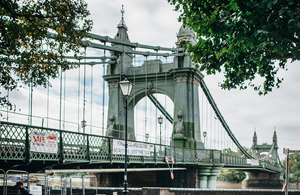


Hammersmith Bridge Taskforce meeting, 17 December 2020

News story

Joint statement on progress made by the taskforce at its meeting on 17 December 2020.

Hammersmith Bridge.

The tenth meeting of the Hammersmith Bridge Taskforce was held yesterday, 17 December 2020.

It was chaired by Transport Minister, Baroness Vere. Attendees included the Project Director Dana Skelley plus representatives from the London Borough of Hammersmith and Fulham, the London Borough of Richmond upon Thames, the Greater London Authority, Transport for London (TfL), and the Port of London Authority.

Dana Skelley, speaking on behalf of the Hammersmith Bridge Taskforce, said:

At yesterday’s taskforce we were glad to be joined by Sir John Ritblat and representatives from Fosters & Partners and COWI who presented their proposal for a temporary bridge, involving laying a truss over the existing bridge structure. We agreed to explore the proposal in more detail.

Following the publication last week of DfT-commissioned reports by consultants AECOM and Professor Norman Fleck, taskforce members discussed the reports’ conclusions and recommendations. We look forward to the completion of a report by the London Borough of Hammersmith and Fulham’s consultants’ Mott MacDonald, and of the blast cleaning of the bridge’s two western pedestals.

The taskforce was also pleased to confirm that, starting 20 December, Sundays will be a regular day when river users can schedule transits under the bridge, under certain controlled conditions.

Finally, the taskforce reaffirmed its commitment to restoring the Bridge to full use – to all forms of traffic including motor traffic.

The taskforce agreed to meet again in the new year.

The Hammersmith Bridge Taskforce was set up by the Department for Transport in September 2020 to work towards safely reopening the Hammersmith Bridge. The taskforce is chaired by Baroness Vere and includes representatives from TfL, London Borough of Hammersmith and Fulham, London Borough of Richmond upon Thames, Network Rail, the Greater London Authority and the Port of London Authority.

Published 18 December 2020


Armed Forces support for vaccine roll-out in Wales

Members of the Armed Forces will be deployed across Wales this winter to help set up and operate vaccination centres in the community.

Secretary of State for Wales Simon Hart and the Defence Minister for the Armed Forces James Heappey have approved a Military Aid to the Civilian Authorities (MACA) request for the Welsh Government. The MACA provides more than 90 service personnel to support Wales’ Health Boards in rapidly establishing and operating vaccination centres.

As the vaccination programme is rolled out during the rest of December and into January, military personnel will support the setting up of additional capacity as greater quantities of vaccine are made available. And for the first time since the vaccine has been rolled out, trained defence medics will also support the administering of the vaccine.

The military aid request runs between 4 January to 28 February 2021 and will see members of the Armed Forces delivering the vaccine, setting up equipment and carrying out a number of other functions.

Welsh Secretary Simon Hart said:

The roll-out of the vaccine is a considerable logistical challenge, so we have approved the deployment of Armed Forces personnel to help with its distribution in Wales.

The use of the military to help with this vital work shows how we can pull together to meet the needs of the whole of the United Kingdom as we tackle the pandemic.

With case rates high across many areas of Wales, it is important that we continue to support the Welsh Government. The huge number of vaccines that the UK Government has procured and the assistance of the Armed Forces in distributing them will help turn the tide in this fight.

Defence Minister James Heappey said:

Since the beginning of the pandemic, our Armed Forces have stepped up to support health services across the UK.

In Wales, our personnel have already helped with the distribution of PPE, construction of a temporary hospital in Cardiff and, most recently, the rollout of community testing in the South Wales Valleys.

I’m pleased we can now support the vaccine rollout and I am proud defence has responded quickly to support this urgent task.

After becoming the first country to approve a vaccine for use, the UK Government has bought vaccines on behalf of all parts of the UK and distributed them around Wales, England, Scotland and Northern Ireland ahead of last week’s (8 December) initial rollout.

Approved vaccines will be available across the UK, free at the point of delivery and according to need.

Vaccination will be managed by the health services in each nation: NHS England and NHS Improvement, NHS Wales, NHS Scotland, and Health and Social Care Northern Ireland. Armed Forces personnel have deployed to assist the NHS and the Devolved Nations with planning and logistic support for the delivery of a vaccine.

The UK Government has also invested over £230m into manufacturing a vaccine. The UK Government will also meet the cost of vaccines which will be distributed to all nations of the UK, Crown Dependencies and Overseas Territories.

The MOD currently has around 14,000 personnel held at graduated readiness as part of the Winter preparedness 2020 Package. This package will ensure defence remains ready to respond to requests for support at necessary pace, including but not limited to COVID-19 support.

ENDS


Post-Christmas work to activate Operation Brock

Operation Brock – a series of measures that improve Kent’s resilience in the event of disruption to services across the English Channel – will be deployed overnight on Sunday 27 December, with the contraflow active from Monday 28 December, in preparation for the end of the EU Transition Period on 31 December 2020.

A significant part of Operation Brock is keeping the M20 open in both directions by using a contraflow road layout on the M20 London-bound carriageway between junctions 8 and 9 (from Maidstone to Ashford) and directing lorries heading for mainland Europe onto the coastbound carriageway, where they can be queued if necessary.

To make sure the contraflow is deployed safely, the M20 will be closed overnight in both directions between junctions 8 and 9 on the nights of 27 and 28 December.

Traffic volumes permitting, the M20 will close at 10pm on 27 December with both carriageways set to reopen by 10am on 28 December, or earlier if possible. These times have been chosen to minimise disruption to road users and avoid the key Christmas travel period. The M20 will also be closed overnight on 28 December between 10pm and 10am.

Once the barrier is in place, the road will reopen in its new configuration, with HGVs and other freight heading for the Port of Dover or Eurotunnel using the coastbound carriageway on the M20, where it will be queued if necessary. All other traffic – including local freight – should follow the signs and cross over to enter the contraflow on the M20 London bound carriageway. Drivers should look out for signs directing them to either stay on the coastbound carriageway or to enter the contraflow. All cars and motorbikes should enter the contraflow.

Highways England south east operations director Nicola Bell said:

The live test last weekend went really well with the contraflow system operating as expected. It gave us and our Kent Resilience Forum partners a valuable insight into timings for deployment and was a very successful exercise. The test also gave the DVSA the opportunity to test their plans.

The two moveable barrier machines worked exceptionally well with over 14,000 tonnes of concrete blocks being moved in just a few hours, together with more than 8,000 cones.

Head of Kent Resilience Team Mark Rolfe said:

To help keep the county moving, the Kent Resilience Forum has brought together Department for Transport, Highways England, Kent Police, and Kent County Council to agree a single plan to minimise the impact of any cross-Channel disruption.

Ensuring the M20 moveable barrier is in place ahead of Transition Day is part of this plan and our joint commitment to keep Kent’s transport network running safely and providing reliable travel information.

About Operation Brock 

  Operation Brock is a series of measures which crucially keeps the M20 open in both directions using a contraflow system. As with previous deployments in 2019, Operation Brock has stages that can be deployed sequentially, scaling up or down to meet demand.     When Operation Brock is in force it is a legal requirement to use the signed routes only for HGV journeys to Port of Dover and Eurotunnel.    Depending on the scale of disruption, and whether HGVs are travelling to Port of Dover or Eurotunnel, they will be directed to a holding site.     Failure to comply with instructions may result in fines and further delays.     Kent Police take decisions on when to use the different phases of the system. Options include: 

  • A20 Dover TAP: A queuing system which holds lorries until space becomes available at the Port
  • M20 Moveable Barrier: A concrete barrier than can be deployed quickly between junctions 8 and 9 of the M20 to install a contraflow. HGVs bound for Dover and/or Eurotunnel will be held on the coastbound carriageway
  • Manston Airfield: an off-road site designed to hold traffic heading for the Port of Dover. Border readiness checks will take place here to ensure hauliers have the correct paperwork
  • Ashford Sevington Inland Border Facility: an off-road site next to junction 10A of the M20, likely to be used if the M20 contraflow approaches capacity

For more information on Operation Brock and other contingency measures in Kent, visit: 

General enquiries

Members of the public should contact the Highways England customer contact centre on 0300 123 5000.

Media enquiries

Journalists should contact the Highways England press office on 0844 693 1448 and use the menu to speak to the most appropriate press officer.