The MHRA Innovative Licensing and Access Pathway is open for business

The ambition of this new licensing and access pathway is to reduce the time to market for innovative medicines. The ILAP combines the MHRA’s globally recognised strengths of independence and high standards of quality, safety, and efficacy, with improved efficiency and flexibility, readying the MHRA for a new era in medicines approvals in the UK.

Central to realising this ambition is how the ILAP provides a single integrated platform for sustained collaborative working between the MHRA, partners and the medicine developer.

By harnessing expertise at the right time from the MHRA’s partners, the National Institute for Health and Care Excellence (NICE), the Scottish Medicines Consortium (SMC) and NHS England and NHS Improvement (NHSE&I), the ILAP allows for enhanced coordination and monitoring of important product development activities. Patients are also key partners and the patient voice will be integrated at every stage.

The “Innovation Passport”, a new medicine designation, acts as the gateway to entry into the pathway and will be awarded to innovative products submitted to the ILAP. This passport step incorporates broad and inclusive concepts of innovation and patient need, allowing the ILAP to encompass a wide range of medicines undergoing development, including Advanced Therapy Medicinal Products (ATMPs), medicines for rare diseases and repurposed medicines.

A successful Innovation Passport designation then triggers the MHRA and partners to create the “Target Development Profile” (TDP) document. This “living document” will set out a unique product-specific roadmap towards patient access in the UK healthcare system. The TDP includes access to tools from a toolkit that can be selected to design an efficient and “regulation and access ready” development programme. Available tools include continuous benefit-risk assessment, increased support for novel development approaches and enhanced patient engagement.

Lord Bethell, Minister for Innovation says:

We are absolutely determined to make sure UK patients can access the latest cutting-edge medicines as quickly as possible to help everybody live longer, healthier and happier lives.

Now we have left the EU, we have the freedom to innovate and cut red tape to speed up the approval process for new treatments and ensure patient safety is at the heart of everything we do.

The new pathway represents a totally new way of thinking and is a truly collaborative approach between the healthcare system, the pharmaceutical industry and patients with the common goal of getting the best products to the people who need them as safely and quickly as possible.

Dr June Raine CBE, Chief Executive, Medicines and Healthcare products Regulatory Agency comments:

Transforming the way innovative medicines reach patients in the UK is not a ‘nice to have’. It’s a ‘must do’. An imperative. And the time to do it is now.

We are transforming the MHRA, making the regulator an enabler of innovation. Our new Innovative Licensing and Access Pathway has established new partnerships to robustly and safely support all new medicines at any point in their development, and most important of all, involve patients in all aspects of decision-making.

Prof Gillian Leng CBE, Chief Executive of NICE said:

NICE has a central role in ensuring flexible and swift access to innovative medicines for patients in England and supporting the life sciences sector to launch their products here. Partnering with the MHRA and others to build this frictionless pathway to the timely availability of cost-effective medicines is one of the ways NICE is delivering benefits for patients, the NHS, and life sciences industry.

A spokesperson from Healthcare Improvement Scotland, of which SMC is part, said:

Our aim is to ensure patients in Scotland can benefit from the best, most clinically effective and cost-effective treatments that are available. The ILAP offers a genuine and significant opportunity to ensure new and innovative products reach patients across the UK, safely and quickly. The SMC has a pivotal role in supporting the ILAP and stands ready to deliver for patients, partners and industry.

High quality health and social care research improves health and wellbeing. The ILAP will ensure that innovative new studies can start quickly without compromising standards, and that more people can benefit. The ILAP builds on a strong foundation of joint working between the MHRA and HRA to streamline approvals and ensure that trials are always safe, legal, ethical and fair, and we’re very pleased to support it.

Steve Bates OBE, Chief Executive of the BioIndustry Association (BIA) said:

The BIA welcomes the new Innovative Licensing and Access Pathway which was announced at our joint BIA-MHRA Conference in September. We are supportive of a joined-up life sciences ecosystem which would enable the UK to become a leading location for research and development of innovative medicines to the benefits of patients.

Richard Torbett, Chief Executive of the ABPI

It is really encouraging to see the MHRA launch a new Innovative Licensing and Access Pathway which will help our companies get new treatments to patients faster by offering them a similar rolling review as was done with the Pfizer/BioNTech vaccine and concurrent review by all parts of the health system. This is something we’ve been calling for as the MHRA prepares for Brexit.

Further information about the ILAP and how to apply for an Innovation Passport

Notes to editors:

  • Information about the Innovative Licensing and Access Pathway.
  • The Medicines and Healthcare products Regulatory Agency is responsible for regulating all medicines and medical devices in the UK by ensuring they work and are acceptably safe. All our work is underpinned by robust and fact-based judgements to ensure that the benefits justify any risks.
  • The Medicines and Healthcare products Regulatory Agency (‘the agency’) has three centres. The MHRA, the National Institute for Biological Standards and Control (NIBSC) and the Clinical Practice Research Datalink (CPRD). The agency is an executive agency of the Department of Health and Social Care.
  • The Scottish Medicines Consortium (SMC) is the national source of advice on the clinical and cost-effectiveness of all new medicines for NHS Scotland. As part of Healthcare Improvement Scotland, our aim is to ensure that people in Scotland have timely access to beneficial new medicines. Find out more at www.scottishmedicines.org.uk.


Tampon tax abolished from today

News story

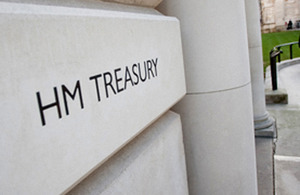
The ‘tampon tax’ has been abolished – with a zero rate of VAT applying to women’s sanitary products coming into effect today (1 January 2021).

  • tampon tax abolished – from today (1 Jan 2021) VAT no longer applies to women’s sanitary products
  • part of wider government action to End Period Poverty which includes the roll out of free sanitary products in schools, colleges and hospitals
  • move made possible by end of the transition period and freedom from EU law mandating VAT on sanitary products

The move honours a government commitment to scrap the tax and is part of a wider strategy to make sanitary products affordable and available for all women which includes:

  • January 2020’s roll out of free period products for all young people in English state schools and colleges and extension of the scheme into 2021
  • the NHS offering period products to every hospital patient who needs them (including long-term in-patients) since 2019
  • the Tampon Tax Fund, established in 2015, which allocated the funds generated from VAT on period products to projects supporting vulnerable and excluded women and girls

Chancellor Rishi Sunak said:

I’m proud that we are today delivering on our promise to scrap the tampon tax. Sanitary products are essential so it’s right that we do not charge VAT.

We have already rolled out free sanitary products in schools, colleges and hospitals and this commitment takes us another step closer to making them available and affordable for all women.

The Chancellor announced that the tampon tax was to be abolished from 1 January 2021 at March 2020 Budget. As the transition period ended on December 31st, the UK is no longer bound by the EU VAT Directive which mandates a minimum 5% tax on all sanitary products.

Felicia Willow, Fawcett Society Chief Executive, said:

We warmly welcome the scrapping of VAT on all sanitary products from 1 January 2021 and congratulate the government on taking this positive step.

It’s been a long road to reach this point, but at last the sexist tax that saw sanitary products classed as non-essential, luxury items can be consigned to the history books.

The Tampon Tax Fund will continue to provide funding for projects supporting vulnerable women and girls. Successful applicants to the £15 million funding for 2020/21 were announced last month.

Further information

  • The UK is therefore no longer legally bound by EU laws which have seen sanitary products subject to five different rates of VAT since 1973 – the latest of which was 5%, effective since January 2001.
  • Although the UK was bound by the EU VAT Directive, Parliament approved the move to a zero rate, with a provision included in Finance Act 2016 for such an eventuality. The UK also established the Tampon Tax Fund in 2015 to donate money to charity equivalent to the amount of VAT revenue collected, with £47 million donated since then to charities working with vulnerable women and girls.
  • The zero rate was legislated for in the Finance Act 2016, enabling the change to come in to force as soon as the UK has discretion to do so under its legal obligations.
  • While the UK was a Member State of the EU, we were unable to apply any rate of VAT lower than a reduced rate of 5% to sanitary products because of the EU VAT Directive.

Published 1 January 2021


Letter to the profession from the UK Chief Medical Officers on the UK COVID-19 vaccination programmes


Ghana-UK Joint Ministerial Statement on a Continuity Trade Agreement

The Hon. Alan Kyerematen, Ghana’s Minister of Trade & Industry and the Rt Hon Liz Truss MP, UK Secretary of State for International Trade met via video conference.

Today we are pleased to announce that we have reached a consensus on the main elements of a new trade agreement. This provides the basis to replicate, the effects of the existing trade relationship between the UK and Ghana – a relationship which is underpinned by our strong people to people connections and has driven economic growth, created jobs, and inspired creativity and innovation in both our countries.

The intention is for the Agreement to provide duty free and quota free access for Ghana and the same preferential tariff reductions for British exporters as provided by the arrangement that is currently in force. We intend over the next few weeks to finalise the text of the Agreement to reflect progress made in relation to rules of origin, cumulation arrangements, time bound commitments, provisions for development cooperation and commitments to human rights and good governance.

We re-affirm our shared ambition to further strengthen our partnership in the future and to work with the West African partners to make progress towards a regional agreement.

Published 31 December 2020


Letter from Michelle Donelan to higher education students

[unable to retrieve full-text content]An open letter from Michelle Donelan MP, Minister of State for Universities, to higher education students about returning to their studies in spring 2021.