Metallurgy buyout raises competition concerns

Press release

The CMA has found that Tronox’s anticipated purchase of TTI raises competition concerns in the supply of chloride slag and titanium dioxide pigment.

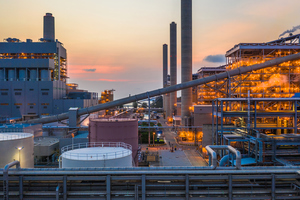
Metallurgical factory

Both companies are involved in the supply of materials used in the production of titanium dioxide, a white powder found in every-day items such as paint, sunscreen, paper and plastics. TiZir Titanium & Iron (TTI) is one of the 2 main global suppliers of chloride slag, one of the most important minerals used to make titanium dioxide pigment and Tronox is one of the main producers of titanium dioxide pigment.

The Competition and Markets Authority’s (CMA) initial, Phase 1, investigation found that Tronox intends to use all of TTI’s chloride slag in its own production of titanium dioxide and halt future sales of chloride slag to third parties. This would leave Rio Tinto, TTI’s main chloride slag competitor, with what is effectively a monopoly position.

The CMA has found that the removal of TTI as a main competitor from the market could significantly limit customer supply and lead to higher prices for chloride slag globally, as well as for titanium dioxide in the UK and Europe. Although other minerals are available to make titanium dioxide, the CMA found that customers have limited substitutes for chloride slag.

Andrea Gomes da Silva, the CMA’s Executive Director for mergers and markets said:

Our investigation showed that Tronox’s purchase of TTI removes a key player in the global supply of chloride slag which, in turn, could have a knock-on effect on the creation of titanium dioxide pigment.

Any deal that leaves one company as the only significant supplier in a market deserves closer scrutiny and, in this case, the acquisition could leave buyers and their customers facing higher prices.

Tronox now has the opportunity to address the CMA’s concerns within 5 working days. If they are unable to do so, the deal will be referred for an in-depth, Phase 2, investigation.

For more information, visit the Tronox Holdings plc / TiZir Titanium and Iron merger inquiry case page.

Notes to editors:

  1. Tronox is headquartered in Connecticut, USA, and listed on the New York Stock Exchange. Tronox’s activities in the UK include the operation of a titanium dioxide pigment facility in Lincolnshire.

  2. TiZir Titanium & Iron is part of the wider TiZir business owned by Eramet, a global mining and metallurgical group, listed on the Euronext Paris Stock Exchange. TTI owns and operates a titanium feedstock smelter in Norway which upgrades titanium and iron ilmenite into feedstock.

  3. With media queries, contact the CMA press office via press@cma.gov.uk or on 020 3738 6460.

Published 4 January 2021


First people to receive Oxford University/AstraZeneca Covid-19 vaccine today (4 January 2021)

The NHS is the first health service in the world to deploy the life-saving jab, which has been authorised by the Medicines and Healthcare products Regulatory Agency (MHRA) after meeting strict standards of safety, quality and effectiveness. It is the only approved vaccine which can be stored at fridge temperatures.

The Government has secured access to 100 million doses of the vaccine on behalf of the whole of the UK, crown dependencies and Overseas Territories.

More than half a million doses are available today, with tens of millions more to be delivered in the coming weeks and months once batches have been quality checked by the MHRA. More than 730 vaccination sites have already been established across the UK and hundreds more are opening this week to take the total to over 1,000, helping those who are most at risk from Covid-19 to access vaccines for free, regardless of where they live.

Health Secretary Matt Hancock said:

I am delighted that today we are rolling out the Oxford vaccine – a testament to British science. This is a pivotal moment in our fight against this awful virus and I hope it provides renewed hope to everybody that the end of this pandemic is in sight.

Through its vaccine delivery plan the NHS is doing everything it can to vaccinate those most at risk as quickly as possible and we will rapidly accelerate our vaccination programme.

While the most vulnerable are immunised, I urge everybody to continue following the restrictions so we can keep cases down and protect our loved ones.

The first Oxford/AstraZeneca vaccinations will be delivered at hospitals for the first few days, as is standard practice, before the bulk of supplies are sent to hundreds of GP-led services and care homes later in the week. More than a million people in the UK have already been vaccinated with the Pfizer/BioNTech vaccine and its roll out will continue at pace.

The Oxford/AstraZeneca vaccine can be stored at fridge temperatures, between two to eight degrees, making it easier to distribute to care homes and other locations across the UK. The vaccines will be deployed through:

  • hospital hubs for NHS and care staff and older patients to get vaccinated
  • local community services with local teams and GPs already signing up to take part in the programme
  • vaccination centres across the country, ensuring people can access a vaccine regardless of where they live

An army of current and former NHS staff have applied to become vaccinators, with tens of thousands having already completed their online training. These are being processed as quickly as possible and volunteer vaccinators will be deployed as more vaccine supplies become available. GPs and local vaccination services have been asked to ensure every care home resident in their local area is vaccinated by the end of January.

The MHRA, Joint Committee on Vaccination and Immunisation (JCVI) and the four UK Chief Medical Officers agreed to delay the gap between the first and second dose of vaccines to protect the greatest number of people in the shortest amount of time.

In line with the recommendations of the JCVI, the vaccine will be rolled out to the priority groups including care home residents and staff, people over 80 and health and care workers, then to the rest of the population in order of age and risk, including those who are clinically extremely vulnerable.

Background

There are more than 730 vaccination sites across the UK.

Up to 100 more hospital sites are due to come online in England this week, subject to final assurance checks. There are also another 180 GP-led services which are due to come online this week.

The following hospitals in England will start delivering the vaccine today ahead of the rollout to hundreds of GP-led services later in the week:

  • Royal Free Hospital London NHS Foundation Trust
  • Brighton and Sussex University Hospitals NHS Trust
  • Guy’s and St Thomas’ NHS Foundation Trust
  • Oxford University Hospitals NHS Foundation Trust
  • University Hospitals of Morecambe Bay NHS Foundation Trust
  • George Eliot Hospital NHS Trust


Government opens further COVID-19 testing locations for hauliers heading to France

  • 10 new testing centres for HGV drivers open across country, with more to open over course of week, as Army is deployed to offer support
  • additional support for haulage firms to establish their own testing centres at depots, with kits provided free of charge
  • HGVs using Dover and Eurotunnel will get fast-tracked past queues if they get tested before arriving in Kent
  • hauliers urged to ensure all correct documentation, including Kent Access Permits, in order before arriving in Kent to ensure they can cross the channel

The government is taking further steps to help hauliers get tested before they travel to Kent or any port heading to France, in an effort to reduce disruption for drivers as they carry goods across the Channel.

The Transport Secretary, Grant Shapps, today (2 January 2020) announced the creation of 10 new testing locations across the country, with a further 10 opening tomorrow (3 January 2020), and more being added this week.

In addition, to help hauliers cross the Channel as quickly as possible, the government is offering to help any business to set up a testing centre at its own premises to ensure trucks heading for France depart ‘COVID ready’.

The Department of Health and Social Care will support this, including the provision of testing kits entirely free of charge, and any business able to take advantage of this offer is urged to so to avoid the risk of delays waiting for tests either in Kent or at the public sites.

Transport Secretary Grant Shapps said:

As a result of the heroic efforts of hundreds of military and civilian personnel who have worked hard over the past 10 days, we have made incredible progress in clearing the queues of drivers left stranded as a result of the French government’s actions.

If we are to keep traffic flowing in Kent, it is essential drivers are tested before they travel down to the area and that they have a Kent Access Permit before heading to the border, and these new testing centres both at service stations and inside businesses, will help reduce delays.

Tests will be available at the information advice sites the government has set up for hauliers around the country, originally to provide advice about the requirements for travelling to the continent after leaving the EU. Now military personnel will be at 10 of these sites to provide COVID testing for haulage drivers, providing a negative result in the required 72-hour window before arriving in Kent, fast-tracking their access to the ports.

Lateral flow devices are being used to test hauliers that provide results within the hour and provide the necessary negative test result to allow them to continue on their journey into France. The Armed Forces are experienced in using these devices having used them for mass testing in Liverpool, Merthyr Tydfil and Medway.

As well as delivering testing, staff at the sites can also provide guidance on new border processes after EU transition and check whether drivers have all the right paperwork.

Significant progress has been made in ensuring over 25,500 lorries have crossed the Channel since the French government introduced unprecedented restrictions due to the new coronavirus variant.

Minister for the Armed Forces James Heappey said:

The Armed Forces are once again demonstrating their flexibility, redeploying to new testing sites to ensure quicker access and minimal disruption on the approaches to Dover and the Eurotunnel.

As we saw throughout the festive period the Armed Forces are dedicated to help keeping the country moving, healthy and secure in 2021.


New Institute of Teaching set to be established

A new Institute of Teaching is set to be established in England to provide teachers and school leaders with prestigious training and development throughout their career.

Training will be delivered through at least four regional campuses, launching in September 2022, with the Institute being the first of its kind in the world.

The national initiative will deliver evidence-based approaches to teacher training, and also include mentoring and early career support, alongside leadership courses and continued professional development, building on existing high-quality provision.

It will be funded as part of £22 million for teacher quality agreed at the Spending Review, which also includes funding for mentor time for early career teachers as part of the Early Career Framework reforms.

Education Secretary Gavin Williamson said:

When I visit schools around the country, it is clear that the very best combine high standards of pupil behaviour and discipline with a broad knowledge-based and ambitious curriculum, so that every child can learn and flourish.

Our new Institute of Teaching will help equip all teachers to deliver an education like this, by training them in the best, evidence-based practices. The Institute’s cutting-edge approach to teacher training will ensure a new generation of teachers have the expertise they need to level up school standards across the country.

Through adding diversity and innovation to the existing teacher development market, the Institute will revolutionise teacher training and make England the best place in the world to train and become a great teacher.

The Institute will become England’s flagship teacher training and development provider, showcasing exemplary delivery of the Government’s ambitious reforms through the new ITT Core Content Framework and Early Career Framework, and its changes to National Professional Qualifications (NPQs).

The training is likely to be delivered through a blend of online, face-to-face and school-based means. When the Institute is at full capacity, it is expected to deliver training for:

  • Around 1,000 ITT trainees annually

  • Around 2,000 Early Career Teachers and 2,000 mentors annually

  • 1,000 NPQ participants annually

It will continue to build evidence around the most effective approaches to training and developing teachers, and will use this to support other teacher development organisations, including new Teaching School Hubs, to understand and implement best practice.

The Department for Education is also set to resume its review of the ITT market, following a pause due to the Covid-19 pandemic. The review will focus on how the ITT sector can provide consistently high-quality training in line with the Core Content Framework in a more efficient and effective market. It will be led by Ian Bauckham, CEO of Tenax Schools Trust, acting Chair of Ofqual and Chair of Oak National Academy, with the support of officials and a small expert group.

The group will work with the sector during the review. The Department has committed to improving support and professional development for teachers at all stages of their career, particularly for those in their vital first few years of teaching, through the Early Career Framework reforms.

A reformed suite of NPQs, previously announced in 2019 as part of the Teacher Recruitment & Retention Strategy, will also be launched from September 2021. They will offer valuable professional development for teachers and school leaders at all levels, from those who want to improve teaching practice to those leading multiple schools across trusts.


Green boost for regions to cut industry carbon emissions

  • Projects in the West Midlands, Tees Valley, North West, Humber, Scotland and South Wales win share of £8 million government backing to develop ways to cut carbon emissions from major industrial areas
  • UK drive to lead global green industrial revolution will create 4 low-carbon industrial hubs by 2030 and at least one net zero emission cluster by 2040
  • new funding is latest phase of government’s £170 million Industrial Decarbonisation Challenge which has the potential to create tens of thousands of jobs as UK builds back greener

Six projects across the UK will today receive a share of £8 million in government funding as part of a drive to create the world’s first net zero emissions industrial zone by 2040. Projects in the West Midlands, Tees Valley, North West, Humber, Scotland and South Wales will see local authorities working with industry to develop plans to reduce carbon emissions, with one scheme alone – across the North West of England and North East Wales – aiming to create over 33,000 new jobs and more than £4 billion of investment as it bids to become the world’s first net zero industrial zone.

A net zero industrial zone will see all industries in a region collectively reducing their carbon dioxide emissions to as close to zero as possible using low-carbon energy sources and new technology like carbon capture.

All 6 areas receiving funding today have high concentrations of industrial activity and will get a share of up to £8 million towards the development of decarbonisation plans.

Energy Minister Kwasi Kwarteng said:

The UK is leading the world’s green industrial revolution, with ambitious targets to decarbonise our economy and create hundreds of thousands of jobs.

As we continue to level up the UK economy and build back greener, we must ensure every sector is reducing carbon emissions to help us achieve our commitment to net zero emissions by 2050.

This funding will help key industrial areas meet the challenge of contributing to our cleaner future while maintaining their productive and competitive strengths.

Decarbonising UK industry is a key part of the government’s ambitious plan for the green industrial revolution, which is laid out in its Ten Point Plan and Energy White Paper and is set to create 220,000 jobs as we build back greener over the next decade.

The Industrial Clusters Mission aims to support the delivery of 4 low-carbon regional zones by 2030 and at least one net zero green hotspot by 2040, kickstarted by the government’s £170 million Industrial Decarbonisation Challenge.

The 6 winners will now produce detailed plans for reducing emissions across major areas of industrial activity, where related industries have congregated and can benefit from utilising shared clean energy infrastructure, such as carbon capture, usage and storage (CCUS) and low-carbon hydrogen production and distribution.

All the winners have produced initial plans for reducing emissions across major industrial clusters across the UK and, in subsequent years, will build on these preliminary successes by bringing together industry and public sector bodies in a comprehensive effort to devise a route to net zero emissions.

Bryony Livesey, UKRI Challenge Director, Industrial Decarbonisation, said:

Today’s announcement shows that the industrial clusters campaign is proceeding at pace. This second phase of the competition asks companies and partners to plan for comprehensive changes to industries, products and supply lines.

This is a crucial step in the government’s plans to develop cost-effective decarbonisation in industrial hubs that tackle the emissions challenge UK industry faces. The move to low carbon industry is a huge opportunity, with the chance for the UK to take the lead and seize a large share of a growing global market.

Notes to editors

The Industrial Decarbonisation Challenge will commit £170 million towards deploying technologies like carbon capture and hydrogen networks in industrial clusters, supporting the Industrial Clusters Mission to establish the world’s first net zero industrial cluster by 2040.

The Industrial Decarbonisation Challenge supports co-ordinated research, technology and infrastructure that allows UK industry to reduce carbon emissions across a large scale and in a way that can be easily replicated.

The funding for the £170 million Industrial Decarbonisation Challenge is being made through the UK Research and Innovation (UKRI) Industrial Strategy Challenge Fund.

Regional cluster leads

  • in the West Midlands, the Black Country Consortium will be the cluster plan lead
  • in the Tees Valley, the cluster plan will be overseen by the Tees Valley Combined Authority
  • in the North West of England and North East Wales, the cluster plan will be led by Peel Environmental
  • in the Humber it will be led by the Humber Local Enterprise Partnership
  • in Scotland NECCUS, an alliance of industries and experts, will lead
  • in South Wales, the cluster plan will be led by CR Plus consultancy

List of IDC Phase 2 Cluster Plan Projects

Project title: South Wales Industry – A Plan for Clean Growth

Region: South Wales
Project Lead: CR Plus consultancy

The South Wales Industrial Cluster (SWIC) is a diverse mix of critical industry that have come together to collaboratively achieve common objectives for decarbonisation and clean growth delivering job security.

Led by CR Plus consultancy the SWIC plans centres around a 5 stepped approach to net zero carbon (NZC), 5 spatial zone types will allow SWIC to take immediate steps toward NZC with a low chance of incurring ‘Regret Capital’. As well as targeting a NZC cluster by 2040, this plan focuses on societal needs, circular economy and clean growth aspirations of the region, tackling the common and unique commercial and operational challenges facing SW industry.

Project title: Repowering the Black Country Phase 2 Cluster Plan

Region: Black Country
Project Lead: The Black Country Consortium

The Black Country is 1 of 7 strategic industrial clusters across the UK being supported by BEIS and Innovate UK to decarbonise by 2040. By 2030, without radical action, Black Country industry will be responsible for 2.3 MtCO2 emissions a year, from an industrial base of more than 3000 energy-intense businesses, many still engaged in the region’s traditional metal processing operations.

This project, led by the Black Country Consortium (a partnership of private, public and voluntary sector organisations), aims to reduce these emissions to zero by 2030 through a co-ordinated programme of transformational projects focused around a new type of industrial estate: the zero carbon hub.

Zero carbon hubs will be based around anchor industrial processes, strategically-selected to match Black Country skills and strengths (for example aluminium reprocessing). Each hub will contain a mix of businesses carefully selected to complement each other by thinking about their energy and waste flows.

Project title: Net Zero Tees Valley: Cluster Plan Stage 2

Region: Teesside
Project Lead: Tees Valley Combined Authority

The Tees Valley is the UK’s most compact and integrated industrial cluster with a radius of 5 miles. The cluster includes several of the UK’s top CO2 emitters and is responsible for 8.8 million tonnes of CO2. The Tees Valley industrial cluster generates £12 billion of exports annually, employs over 12,000 people and currently contributes some £2.5 billion to UK gross value added (GVA).

The cluster plan will be led by the Tees Valley Combined Authority and will identify the most appropriate range of technologies and potential pathways for the various industrial producers and energy generators in the Tees Valley, considering both existing and future new entrants. It is expected that this plan will combine carbon capture at scale, fuel switching to hydrogen, integration of renewables, low carbon energy sources, feedstocks changes, together with improved process and energy efficiencies.

Project title: Scotland’s Net Zero Roadmap (SNZR)

Region: Scotland
Project Lead: Neccus

To achieve net zero by 2045 Scotland needs to decarbonise industry, transport, heat and power. Scotland’s Net Zero Roadmap project (SNZR) will provide the roadmap to enable large-scale industrial CO2 emissions reduction in a way that focuses on ensuring the continued, but evolving, contribution of high-value industry and employment in a future net zero economy.

Led by Neccus, an alliance of industries and experts, the SNZR will provide the roadmap that enables the deployment of options in a way that ensures competitive decarbonisation through continued and growing prosperity across the economy.

Scotland is in a strong position to lead this new large scale CO2 management industry. Offshore Scotland has some of Europe’s best-characterised and largest CO2 storage sites while CCS and hydrogen will create opportunities for jobs and economic activity and help transition staff employed in sectors such as oil and gas.

Project title: The Net Zero NW Cluster Plan

Region: North West
Project Lead: Peel Environmental

The Net Zero NW Cluster Plan, led by Peel Environmental, a development company, will set out the transition to net zero for industry in the North West of England and North East Wales. It will describe the investments, technologies, infrastructure changes and sequencing required to fulfil the UK’s Industrial Clusters Mission.

Industry and public sector bodies, building on the preliminary research completed in Phase 1, will collaboratively promote and engage on plans to decarbonise, ensuring businesses have a strong voice in planning decarbonisation activity in line with current and future business needs whilst leveraging inward investment opportunities.

By enabling multiple industrial facilities to reduce their emissions by the greatest possible extent, with knock-on effects in the reduction of commercial, domestic and transport emissions, the Net Zero NW Cluster Plan hopes to realise over 33,000 new jobs, over £4 billion investment and the world’s first net zero industrial cluster.

Project title: Humber Industrial Cluster Plan

Region: Humber
Project Lead: Humber Local Enterprise Partnership

The Humber Local Enterprise Partnership (Humber LEP) and membership organisation CATCH will lead on the project and work with industrial partners across the Humber to develop the Humber Cluster Plan (HCP) that will enable the Humber industrial cluster, the UK’s largest by carbon emissions, to achieve net zero by 2040.

The Humber emits more CO2 than any other industrial cluster (30% more than the next largest), while the area is one of the most vulnerable to climate change. A quarter of the Humber’s GVA and 1 in 10 jobs depend on these industries, making safeguarding their competitiveness imperative for the local economy as well as strategically important for the UK.

A phased approach will prioritise near-term deliverable investments that will see quick results, significantly reducing the Humber’s emissions by 2030, mapping out how carbon capture and storage (CCS) and hydrogen infrastructure can be scaled up over time, and identifying the full range of interventions required to achieve net zero by 2040.

HCP will also outline the potential for the Humber’s industrial decarbonisation to support decarbonisation beyond the industrial cluster, including maritime in the UK’s largest ports complex, road/rail transport and decarbonisation of the gas supply (25% of the UK’s supply passes through the Humber). Linked opportunities and implications for renewable energy, especially bioenergy with carbon capture and storage (BECCS) and offshore wind (both of which the Humber leads on and are integral to decarbonising industry), will also be identified.