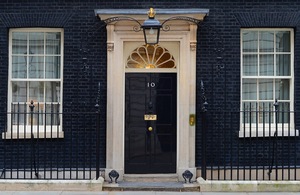
PM call with Prime Minister Trudeau of Canada: 6 January 2021

Press release

Prime Minister Boris Johnson spoke with Prime Minister Trudeau of Canada.

The Prime Minister spoke to Prime Minister Trudeau of Canada this afternoon.

They discussed the international response to the coronavirus pandemic and the work underway in the UK and Canada to roll out vaccines as quickly as possible.

The leaders also spoke about the growing trading relationship between our countries, as well as foreign policy issues, including the recent arrests in Hong Kong which they agreed were deeply concerning.

The Prime Minister said he looked forward to welcoming Prime Minister Trudeau to the UK for the G7 Summit later this year, and to working together during the UK’s G7 Presidency to advance common interests and address shared challenges.

The leaders also looked ahead to the COP26 Summit in Glasgow in November, and agreed on the importance of ambitious international action to tackle climate change.

Published 6 January 2021


Oral statement on new COVID-19 regulations

Thank you very much Madam Deputy Speaker, I beg to move these regulations are approved.

The new variant of the coronavirus, Madam Deputy Speaker, presents us with a renewed challenge – here in Britain and around the world.

And our strategy throughout has been to suppress the virus until a vaccine can make us safe. And while collectively, our efforts were working on the old variant, when faced with a new variant that is between 50 to 70% more transmissible, there has been no choice but to respond.

And I understand that these regulations that we debate today have serious consequences and I regret the huge costs that they bring.

But I know, just as surely, that these costs are by far outweighed by the costs that we would bear without action.

Madam Deputy Speaker, when I have come to this House before, to ask for the House’s support for national restrictions, we’ve had to take it on trust that there would be an exit before the vaccine is approved.

Today, I come to the House seeking approval of these regulations knowing from the huge pressure on the NHS right now, that this action is necessary today but also with the certain knowledge that we have a way out.

Madam Deputy Speaker, before turning to the details of the regulations I just want to set out that plan for how we get out of them because that is critical.

This country was the first in the world to deploy not one, but 2 vaccines.

And more than 1.3 million have already been vaccinated already including a quarter of the over-80s.

And from the middle of next month we plan to have offered the first dose to everyone in the 4 top-priority groups, and they currently account for more than 4 out of 5 COVID fatalities. And I am not sure this is a point that has fully been addressed, which is, because of the strong correlation between age and fatality from COVID, sadly, it means that we will be able to vaccinate those groups that account for 4 out of every 5 fatalities within the top-4 cohort. Now it does then take 2 to 3 weeks from the first dose to reach immunity but the vaccine, therefore, is the way out of this pandemic – and it’s the way to a better year ahead.

But, Madam Deputy Speaker, this hope for the weeks ahead doesn’t take away from the serious and immediate threat posed now. And I just want to turn now to what is in the regulations and the actions we need to take now.

The Office for National Statistics has reported that 1 in 50 of the population has the disease – some with symptoms, some without.

The latest figures show that we have 30,074 COVID patients in UK hospitals – and that the NHS is under significant pressure.

Admissions are now higher than at any point in the pandemic. And so, on Monday, all 4 UK Chief Medical Officers recommended we move the country to COVID-19 alert level 5.

In practice, this means they believe that, without action, there is a ‘material risk of healthcare services being overwhelmed’.

It’s for this reason that we have placed England into a national lockdown, alongside action taken in each of the devolved nations.

And every single citizen needs to take steps to control this new variant, and this personal responsibility is important, and to give the NHS a fighting chance to do its vital work – of saving lives – it is on all of us to support them.

These regulations set out that everyone must stay at home, save for a limited number of reasons permitted in law, including:

  • essential shopping
  • work – if you cannot reasonably do so from home
  • education or childcare – if eligible to attend
  • medical needs – including getting a COVID test or getting vaccinated
  • exercise
  • escaping domestic abuse
  • and for support bubbles, where people are eligible

These regulations are based on the existing Tier 4 regulations, with some additional measures, which reinforce the stay at home imperative.

These include:

  • stopping the sale of alcohol through takeaway or click-and-collect services
  • closing sport and leisure facilities – although allowing playgrounds and allotments to remain open

Now I know that these further restrictions are difficult. But they are unfortunately necessary because we have to absolutely minimise social interaction to try to get this virus back under control.

And these measures came into force first thing this morning under the emergency procedure and will remain in force subject to this House’s approval today.

I just want to return for the moment to the support that has been outlined because we are providing an additional £4.6 billion of support to businesses including to those in retail, hospitality and leisure who have been forced to close their doors once again, on top of, of course, our £280 billion plan for jobs, which includes the extension of the furlough scheme until April.

Madam Deputy Speaker, I will close now just by reiterating that if we don’t act now we know that eventually the NHS will not be able to cope.

And I know that no member of this House wants to see the scenes we have witnessed elsewhere in the world, of hospitals overrun or of doctors forced to make the choice of who to treat and who to turn away.

And we know that while the winter weeks will be difficult, we now know what the way out looks like.

And accelerating the deployment of our COVID vaccines, making the most vulnerable groups safe, and everyone playing our part on the way to get us there – that is the route out of this pandemic.

And in the meantime, Madam Deputy Speaker, we must stay at home, protect the NHS and save lives.

And that eventually will carry us to a brighter future.


Education Secretary outlines plans to support young people

Support for the continued education of young people has been outlined by the Education Secretary today, following the announcement that attendance at schools and colleges is now limited to all but vulnerable children and children of critical workers.

During the period of national lockdown strengthened remote education expectations will be put in place, with schools expected to provide a set number of hours of high-quality remote education for pupils, supported by further deliveries of laptops and tablets for the most disadvantaged.

With GCSEs and A Levels not going ahead as planned, the exams regulator Ofqual will launch a consultation – alongside the department – on the options for alternatives to the exams to ensure every young person gets a fair grade for their work, with the expectation that teacher assessment will be used.

Families entitled to free school meals will also be offered food parcels or vouchers, funded by the government.

The full package of measures set out by the Education Secretary in parliament today includes:

  • Strengthened minimum standards of remote learning: schools will be expected to offer pupils online lessons and a set number of hours of remote education for pupils – increased from the government’s previous minimum expectations. Ofsted will play an important role in holding schools to account for the quality of remote education.

  • Next steps on exam alternatives arrangements: students will not be asked to sit GCSE, AS and A level exams this summer. The Education Secretary expects Ofqual to consider a teacher assessed system as a replacement for GCSEs, AS and A levels. A consultation will be launched next week and conclude swiftly to give certainty to schools, colleges and students, while also giving them the opportunity to have their say.

  • Free school meals: extra funding will be provided to support schools to provide food parcels or meals to eligible students. The national voucher scheme will also re-open so that in the event schools cannot offer food parcels or provide an alternative local solution, every child can access free school meals while they are learning at home.

Education Secretary Gavin Williamson said:

The last thing any Education Secretary wants to do is close schools and this is not a decision that the government ever wanted to take. But the closing of schools for the majority of pupils does not mean the end of their education, and the outlook for schools, parents and young people is far more positive than the one we faced last year.

Schools and colleges are much better prepared to deliver online learning – with the delivery of hundreds of thousands of devices at breakneck speed, data support and high quality video lessons available. We are working with Ofqual, headteachers and the education sector to make sure those young people who were due to sit exams can take their next step and progress in education or into the world of work.

We are keeping schools and colleges open to vulnerable children and those of critical workers and I would like to thank all our teachers, support staff and all who work in education as we deal with this evolving situation and know that together we will get through this and be able to reopen all our schools to all pupils.

Given exams will not go ahead this summer, the department, with Ofqual, has worked up a range of contingency options, and the details of the approach will be developed in consultation with the exam boards and the sector. This will be based on teacher-assessment, with training and support provided to ensure grades are awarded fairly and consistently.

Assessments in some vocational qualifications can still take place in January, where schools and colleges judge it right to do so. The department is working with Ofqual on arrangements for those who do not take their January assessments, as well as for vocational and technical assessments scheduled for February onwards.

Statutory key stage 1 and key stage 2 tests and teacher assessments planned for summer 2021, including the key stage 2 tests in reading and mathematics, will not take place.

The department will publish updated guidance for schools regarding remote education, including increasing the number of hours schools are expected to provide for pupils, building on the legal requirements already in place to ensure young people receive high quality remote education.

The government expects schools to have a digital platform, such as G-Suite or Microsoft Education, and should provide at least some of their remote provision via video lessons – this can be done by school-led videos or using other providers like Oak National Academy.

As the government announced in December, Ofsted will carry out monitoring inspection in the Spring term of schools most in need of challenge and support. These inspections will have a strong focus on remote education. In addition, Ofsted can inspect schools – of any grade – where it has significant concerns about safeguarding or the quality of education being provided, including remote education. Parents should raise concerns about remote education with their school, and can report those concerns to Ofsted if the matter is not resolved.

The government has committed to providing over one million devices to help schools and colleges throughout the pandemic – with over 560,000 of these delivered through 2020. The scale of deliveries has now been increased, with a further 50,000 devices sent to schools across the country on Monday alone. The government will deliver well over 100,000 devices over the course of this week.

The government is working with the UK’s leading mobile network operators to provide access to educational sites. Schools can already request free mobile data uplifts for disadvantaged families, via the Department for Education’s website.

The level of additional data for families will vary by provider, but for example Three customers will receive unlimited data and EE customers will receive an extra 20 gigabytes per month. Other providers supporting the offer include Tesco Mobile, Smarty, Sky Mobile, Virgin Mobile, Vodafone and O2.

The rapid testing programme for secondary schools and colleges will continue for those on site, with daily testing of close contacts available to students and staff and weekly testing available for staff. Primary staff will be included later in January as planned, and more detail will be set out in due course about reaching all secondary students as they return to face-to-face education.

Lutz Schüler, Chief Executive Officer at Virgin Media, said:

We know how important it is for children to take part in online lessons and remote learning, and we’re pleased to be working with the Department for Education by offering free mobile data to Virgin Mobile customers who need it. This is the latest in a series of measures we have taken this year to support our customers during this challenging time.

Elaine Carey, Chief Commercial Officer, at Three UK said:

Education is crucial for everyone in society and it is vital no child misses out. Three UK wants to support those families that need access to connectivity to support their child’s learning needs during the pandemic.

Marc Allera, Chief Executive of BT’s Consumer brands, said:

Connectivity is essential for children to keep up with learning at home during the pandemic, particularly while lockdowns and further restrictions have such an impact on the way we all live our lives. As a national champion, BT has a responsibility to help ensure no one is left behind while face-to-face teaching is on hold, which is why we have partnered with the Department for Education to give pupils from disadvantaged families the mobile data they need to stay connected.

Nick Jeffery, CEO, Vodafone UK, said:

We are absolutely committed to doing what we can to keep the UK connected during the pandemic, including helping children to continue their education in lockdown. We launched our schools.connected programme last year, providing 350,000 free data SIMs for teachers to offer to pupils that need them most. We are also delighted to be joining the Get Help with Technology programme.

Notes to editors

  • Further details on the national voucher scheme will be provided shortly. Schools should work with their catering providers so that meals continue to be available to any eligible pupils still attending school – including all infants and those receiving benefits-related free school meals – as well as for meals or food parcels for eligible pupils staying at home where necessary.
  • Every secondary school is now able to place their order for devices, and the vast majority will have received their full allocation by the end of this week. We will be systematically delivering devices to primary schools over the next two weeks, with the most disadvantaged areas being prioritised.
  • We are also extending support to disadvantaged 16-to-19-year-olds, during the spring term, including those in further education. Schools with sixth forms, colleges and other FE institutions will be invited to order laptops and tablets to further support disadvantaged learners to access remote education.
  • As announced in December, Ofsted’s routine graded inspections will remain suspended for the spring term but during this period Ofsted will conduct a programme of monitoring inspections in inadequate schools and some that require improvement. These will have a strong focus on the quality of remote education being provided. In addition, Ofsted can inspect a school of any grade if it has serious concerns about the quality of remote education being offered to pupils.


Government announces preferred candidate for BBC chair

Press release

Richard Sharp is the Government’s preferred candidate for the BBC Chair, the Culture Secretary Oliver Dowden announced today.

Richard Sharp, the Government's preferred candidate for BBC chair

Mr Sharp, a former Chair of the Royal Academy of Arts with a background in finance and public service, has been selected following an open and rigorous competition and in line with the Governance Code.

He will bring his extensive experience in global commerce, the creative industries, and in public service to lead the BBC Board, supporting the Director General to deliver the BBC’s Mission and Public Purposes in the fast-changing media landscape.

Mr Sharp will now appear before MPs on the Digital, Culture, Media and Sport Select Committee for pre-appointment scrutiny on 14th January 2020. He is expected to take up the post at the end of Sir David Clementi’s term in February.

Culture Secretary Oliver Dowden said:

Richard’s leadership in the top flight of finance and commerce, combined with his passion for culture and public service make him the ideal person for this hugely important role.

He is exactly the Chair the BBC needs right now. I’m confident he will drive forward reforms to the BBC to ensure it impartially reflects and serves the needs of all parts of the UK, and evolves to remain a global success that is central to British national life in the decades ahead.

Mr Sharp said: “The BBC is at the heart of British cultural life and I’m honoured to be offered the chance to help guide it through the next chapter in its history.”

Under the terms of the BBC Royal Charter the appointment of the BBC Chair is made by The Queen through Order in Council on the recommendation from ministers (the Secretary of State for Digital Culture, Media and Sport, through the Prime Minister).

Ministers were assisted in their decision-making by an Advisory Assessment Panel which included a departmental official and a senior independent panel member approved by the Commissioner for Public Appointments.

ENDS

Notes to editors

  • Richard Sharp has over 30 years of experience in the financial sector, including commercial banking, derivatives, fixed income, private equity and investment banking. He spent 23 years at Goldman Sachs, joining in 1984 to start and head its European Capital Markets Group. He subsequently held a number of senior roles, most recently as Chairman of Goldman Sachs’ principal investment business in Europe. Prior to this, he worked in both commercial banking and investment banking for JP Morgan. He is also a Director of Oncimmune, a former Chairman and an Emeritus Trustee of the Royal Academy and a Director of International Rescue UK.

  • Mr Sharp was a member of the Bank of England’s Financial Policy Committee (FPC) from its formal inception in 2013 through to April 2019. The FPC is the entity charged by the UK Government with the powers and the duty to ensure financial stability in the UK. Elsewhere, Richard has headed the primary Eurobond business, the European Investment Banking Services, the UK investment Banking Business, the European Private Equity and Mezzanine Business. Richard was a Partner of Goldman Sachs and was a member of the European Management Committee.

  • Richard is Chief Executive of DII Capital UK Adviser LLP, and a partner in Roundshield Partners LLP and SW7 Asset Management (UK) LLP These commercial interests have all been placed into a blind trust due to his current role serving as a Special Economic Advisor to the Treasury, addressing national financial issues arising from the current pandemic.

  • This appointment process was run in accordance with the Governance Code on Public Appointments.

  • Remuneration for the new BBC Chair will be £160,000 annual salary for 3 to 4 days per week. The BBC Board comprises fourteen members: a non-executive Chair, a designated non-executive member for each of the Nations of the UK (England, Northern Ireland, Scotland and Wales); five other non-executive members and four executive members, including the BBC Director-General. The Chair and four non-executive members for the Nations are appointed by The Queen-in-Council. The other non-executive members are appointed by the BBC Board through its nominations committee. The executive members are also appointed by the Board through its nominations committee.

Published 6 January 2021


Planners give green light to Otter Valley project

East Devon District Council has approved a pioneering project to help a river valley on England’s Jurassic Coast adapt to climate change and create an internationally important wildlife reserve.

The EU-funded Lower Otter Restoration Project (LORP) will reconnect the River Otter to its historic floodplain and return the lower Otter Valley to a more natural condition; creating more than 50ha of intertidal mudflats, saltmarsh and other valuable estuarine habitats.

LORP is a partnership between the Environment Agency, local landowner Clinton Devon Estates, and the East Devon Pebblebed Heaths Conservation Trust that currently manages the estuary. It also has the support of Natural England, RSPB and Devon Wildlife Trust.

The success of the £15 million project rested on it being given the thumbs up by East Devon District Council. Planning approval means work on the project can start this spring (2021) and be completed by early 2023.

The Lower Otter Restoration Project is mainly funded by the European Interreg programme through an initiative called Promoting Adaptation to Changing Coasts (PACCo). It is partnered with a similar project in the Saâne Valley in Normandy, France. Both are pilot projects that aim to demonstrate an important principle – that early adaptation to climate change brings greater benefits than a delayed response or inaction. If successful, the adaptation model for these two projects will be rolled out to other locations in the UK and France.

The Lower Otter estuary lies within the Jurassic Coast, a World Heritage Site and is a Site of Special Scientific Interest (SSSI). Planning approval marks the culmination of seven years of public consultation, careful planning and detailed discussions between a wide range of stakeholders.

The River Otter is already known as one of the first locations in England to successfully reintroduce the beaver.

Although much loved, the Lower Otter Valley has been heavily modified by human hand in the last 200 years with the construction of an embankment, a road, a rubbish tip, an aqueduct and an old railway line. These structures are difficult and expensive to maintain and restrict natural processes including the movement of water. This reduces habitat quality and diversity. Since the creation of an embankment in the early 19th Century, the River Otter has been disconnected from much of its natural flood plain.

The creation of new habitats and restoration of the site will be achieved by breaching the embankment.This will allow a much greater extent of the original floodplain to flood at high tide and drain at low tide producing important intertidal habitat, mudflats and saltmarsh for wading birds. There will also be areas of reedbed and grazing marsh.

Once established, the new site will become a wildlife reserve of international importance within five years, fulfilling the aspirations of all partners involved.

Mark Rice, Environment Manager for the Environment Agency, said:

Climate change is affecting the way we manage our coasts and estuaries and we must adapt to that change.

The Lower Otter Restoration Project is an example of how we can do that.

We aim to deliver long term benefits for people and wildlife by working in partnership and through more sustainable management of the Otter Estuary.

Dr Sam Bridgewater, Head of Wildlife and Conservation at Clinton Devon Estates, said:

The Estate is proud to be associated with this project. Coastal communities must adapt as sea levels rise and storm events become more frequent.

It is our belief the Lower Otter Restoration Project will provide a more sustainable and certain future for the threatened Otter valley. It will also deliver very significant benefits to people and wildlife.

The granting of planning approval is a major step forward in helping us deliver this vision. 

We have worked very closely with a wide range of stakeholders who have helped us reach this milestone and we are grateful for their input over the years.

The project website can be found at www.lowerotterrestorationproject.co.uk