COVID-19 critical worker status

News story

Clarification on when a security operative is considered to be a “critical worker”.

On Monday 4 January 2021, the Prime Minister announced that the Government will be introducing new national COVID-19 measures in England to protect the NHS and save lives.

The SIA has spoken with the Home Office to obtain information and guidance for individuals and security businesses/employers in the sector to enable them to consider working requirements during the on-going period.

A security operative is considered a critical worker if they are deployed in the following:

  • critical security provision in hospitals, social care, the courts, government estate buildings, as well as key supermarkets/food supply chain, the transport network and critical national infrastructure and utilities
  • roles essential to supporting law and order, or which have the potential to limit any further likely pressures on the Police or national emergency services – this could include the guarding of empty or closed commercial property judged at risk, closed retail sites or sensitive office premises, or the monitoring of similar through CCTV or other remote means, and the provision of alarm response centres including mobile units

If you are providing essential security to a service which itself remains critical and functioning, which attracts critical worker status, then you are likely to be covered. If in doubt, check with whoever contracts for your services.

To further assist in determining locally which private security roles are critical, decisions will need to be taken on a case-by-case basis by those contracting security provision and security businesses/employers. Any access to school places is role dependent and will be decided on by the relevant local authority.

These are challenging and unprecedented times. The questions arising are not easy and no-one else can answer them for you. You will need to apply judgement, with the aim of following the Government’s guidance and always minimising social contact where possible.

For further information please refer to the Government’s guidance published on GOV.UK.

Published 7 January 2021


Civil news: amendments to legal aid eligibility criteria

News story

Compensation provided to claimants of specific compensation schemes will now be disregarded when assessing civil legal aid eligibility.

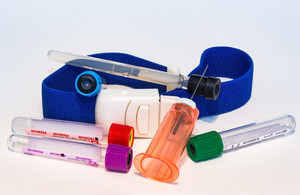
A blood collection kit

Legal aid eligibility criteria has changed and will now allow more people to access justice in civil cases of law.

The Legal Aid Agency (LAA) has implemented the changes made to the regulations to ensure that claimants of specific compensation schemes are not disadvantaged in applying for legal aid.

LAA Chief Executive, Jane Harbottle said:

I welcome this change as it will ensure that many more people are able to access the justice they need.

The Legal Aid Agency has worked to implement these important changes as quickly as possible and I would like to acknowledge this work to support families experiencing difficult circumstances.

There will now be a mandatory disregard for these 6 schemes, when applying for civil legal aid:

  • Relevant Infected Blood Support Schemes covering England, Wales, Northern Ireland and Scotland (and earlier support schemes)
  • Payments under the Vaccine Damage payment Act
  • Compensation for person diagnosed with variant Creutzfeldt-Jakob disease (vCJD)

In addition, there will be a discretionary approach applied to these 4 schemes:

As a result of receiving a compensation payment from these compensation schemes or any connected payment (e.g. to a relative) some individuals applying for legal aid would have failed the financial eligibility criteria if the change to the means test had not been made, due to such payments being considered as income or capital.

Mortgage cap removal

The legislation also removes the existing cap on the amount of mortgage debt that can be deducted from a property’s value, so that all mortgage debt will be deducted. This means that more individuals will pass the financial eligibility criteria for civil legal aid. This change will come into effect from 28 January 2021.

Further information

Disregard of payments from Infected Blood Support Schemes (and other specified compensation payments) guidance – full information for legal aid providers

Published 7 January 2021


Access Consortium regulators pledge support to tackle COVID-19

News story

The Access Consortium regulatory authorities have pledged our collective support in countering the COVID-19 global pandemic.

To address this worldwide public health crisis, Access Consortium members are collaborating to advance the regulatory science needed to support the rapid development of diagnostic tests, as well as vaccines and treatments against COVID-19. Members are committed to sharing vital information as we all investigate and evaluate medical products for quality, safety and efficacy, and strive to ensure that the benefits of any new medical product outweigh its risks.

During these unprecedented times, the Consortium is building on its proven ability to benefit from work-sharing that has recently led to the approval of numerous medicines. Consortium members remain committed to review and collaborate on COVID-19 vaccine candidates and treatment options, with the goal of expediting their review and availability on the market. Through this partnership, Access will reduce regulatory duplication and increase each agency’s capacity to ensure that, globally, there is access to high-quality, safe and effective solutions to address the COVID-19 emergency.

We remain committed to work together to find innovative solutions to counter COVID-19, the largest, most severe and most complex international disease outbreak in a generation.

Notes

  • The Access Consortium was formed in 2007 by ‘like-minded’ regulatory authorities to promote greater regulatory collaboration and alignment of regulatory requirements.

  • The Consortium was initially formed by the regulatory authorities from Australia (Therapeutic Goods Administration), Canada (Health Canada), Singapore (Health Sciences Authority), and Switzerland (Swissmedic). More recently, the United Kingdom’s Medicines and Healthcare products Regulatory Agency joined the Consortium.

  • Its goal is to maximise international cooperation, reduce duplication, and increase each agency’s capacity to ensure consumers have timely access to high quality, safe and effective therapeutic products.

Published 7 January 2021


London office closed

News story

Customer filing services suspended until further notice.

Following the introduction of new restrictions, as part of the national lockdown in England, the IPO’s London office has been closed to all but critical workers with immediate effect.

This means that customers are unable to gain access to file in person. It also means that the London post room is not operating so no paperwork will be processed after today (Thursday 7 January).

If customers need to submit papers by post then Concept House, our Newport office, remains open.

The London office will remain closed at least until 18 February when current restrictions will be reviewed.

If you have any further questions please contact our Information Centre on 0300 300 2000 or at information@ipo.gov.uk.

Published 7 January 2021


NHS patients to receive life-saving COVID-19 treatments that could cut hospital time by 10 days

  • Patients in intensive care units across the UK are to receive potentially life-saving treatments for COVID-19
  • Government ensures life-saving drugs will be available in NHS healthcare settings with immediate effect

Patients across the UK who are admitted to intensive care units due to COVID-19 are set to receive new life-saving treatments which can reduce the time spent in hospital by up to 10 days, the government has announced today (Thursday 7 January).

Results from the government-funded REMAP-CAP clinical trial published today showed tocilizumab and sarilumab reduced the relative risk of death by 24%, when administered to patients within 24 hours of entering intensive care.

Most of the data came from when the drugs were administered in addition to a corticosteroid, such as dexamethasone – also discovered through government-backed research through the RECOVERY clinical trial – which is already provided as standard of care to the NHS.

Patients receiving these drugs, typically used to treat rheumatoid arthritis, left intensive care between 7 to 10 days earlier on average. The rollout of these treatments could therefore contribute significantly towards reducing pressures on hospitals over the coming weeks and months.

Updated guidance will be issued tomorrow by the government and the NHS to trusts across the UK, encouraging them to use tocilizumab in their treatment of COVID-19 patients who are admitted to intensive care units, effective immediately.

Supplies of tocilizumab are already available in hospitals across the UK and clinicians will be able to treat all those admitted to intensive care units, potentially saving hundreds of lives. The department is working closely with Roche, who manufacture tocilizumab, to ensure treatments continue to be available to UK patients.

Health and Social Care Secretary Matt Hancock said:

The UK has proven time and time again it is at the very forefront of identifying and providing the most promising, innovative treatments for its patients.

Today’s results are yet another landmark development in finding a way out of this pandemic and, when added to the armoury of vaccines and treatments already being rolled out, will play a significant role in defeating this virus.

We have worked quickly to ensure this treatment is available to NHS patients without delay, meaning hundreds of lives will be saved.

I am hugely proud of the significant role our NHS and its patients have played in this international trial, and grateful to the outstanding scientists and clinicians behind REMAP-CAP who have brought this treatment to our patients.

Deputy Chief Medical Officer Professor Jonathan Van-Tam said:

This is a significant step forward for increasing survival of patients in intensive care with COVID-19. The data shows that tocilizumab, and likely sarilumab, speed up and improve the odds of recovery in intensive care, which is crucial for helping to relieve pressure on intensive care and hospitals and saving lives.

This is evidence of the UK’s excellent research infrastructure and life sciences industry advancing global understanding of this disease, which we have done both through our own programme of clinical research and through our ability to make very large contributions to international studies.

In June last year, the UK government approved dexamethasone as the world’s first treatment proven to reduce mortality for COVID-19. The REMAP-CAP trial found that the rate of death for those in intensive care units on corticosteroids, such as dexamethasone, and respiratory support alone was 35%, which was reduced to 28% when tocilizumab was also administered.

The government continues to work in partnership to ensure global equitable access to safe and effective treatments. Only multilateral collaboration can deliver at the speed and scale needed to end the global pandemic, and the government remains committed to participating in international trials such as this that seek to answer important questions about the virus.

The UK has played an integral role in these international efforts: three-quarters of patients enrolled globally have been NHS patients, in 142 hospitals across the UK – roughly half of the 289 total sites across the world. A quarter of all patients in intensive care with COVID-19 have enrolled and continue to volunteer to enrol in the REMAP-CAP trial – all of whom have made a vital contribution to the research needed to beat this disease.

Support also came from the UK’s National Institute for Health Research (NIHR), its well-established Clinical Research Network and the UK’s Chief Medical Officers. The UK government has, to date, provided £1.2 million to support the REMAP-CAP trial.

Professor Stephen Powis, NHS national medical director, said:

The fact there is now another drug that can help to reduce mortality for patients with COVID-19 is hugely welcome news and another positive development in the continued fight against the virus.

This signals how the NHS is working all the time to find new treatments and therapies, but the best advice for individuals is to remember the hands, face, space guidance.

The REMAP-CAP analysis has not yet been peer-reviewed.

Tocilizumab is administered intravenously in a one or two-dose regime. It has been demonstrated to be effective for patients requiring organ support when administered soon after admission to ICU.

Other trials such as the RECOVERY trial are assessing efficacy in wider patient groups outside of intensive care settings, but these are still ongoing. REMAP-CAP has not tested the effectiveness of tocilizumab in primary care settings.

Tocilizumab will be used to further reduce mortality from COVID-19 and in addition to dexamethasone, which is already standard of care for hospitalised patients receiving supplemental oxygen.

Tocilizumab and sarilumab have already been added to the government’s export restriction list, which bans companies from buying medicines meant for UK patients and selling them on for a higher price in another country. This will protect supply for UK patients by enforcing regulatory action on those who flout the restrictions.

The REMAP-CAP trial showed that mortality was 35.8% for patients receiving current standard of care alone, and that this was reduced to 27.3% using tocilizumab and sarilumab. This was a 24% relative reduction in risk of mortality for patients who entered intensive care.