UK signs agreement with ICES demonstrating commitment to international marine science collaboration

The government has set out its commitment to international marine and fisheries science by signing an agreement which will ensure continued partnership with the International Council of the Exploration of the Sea (ICES).

ICES is a network of nearly 6,000 scientists from over 700 marine institutes in 20 member countries. The Memorandum of Understanding (MoU) came into effect on 1 January and sets out how the UK will work with ICES as an independent coastal State. It outlines how UK scientists will contribute to ICES and the advice ICES will provide to the UK on conservation, protection, the sustainable use of the marine environment and sustainable fisheries.

The partnership will assist the UK in meeting its international and domestic commitments to achieving a sustainable marine environment, support vital ecosystems and improve fish stocks which will in turn also benefit our aquaculture and fishing industries.

The UK has a long-running history with ICES as a founding member at its inception in 1902, before becoming a formal contracting party during the ICES Convention of 1964. Throughout our historic collaboration with ICES, UK scientists across Cefas, Marine Scotland Science, AFBI and ICES partner nations, have been key contributors to the development of a greater understanding of marine ecosystems and continue to do so to meet our vision of achieving a clean, healthy and sustainable marine environment.

Fisheries Minister Victoria Prentis said:

Now that we are an independent coastal State, we are moving forward with a strong vision as world leaders in marine and fisheries science. UK scientists are key contributors to ICES, and we will continue to play a leading role.

We are committed to achieving a clean and healthy marine environment as well as promoting global efforts to protect and enhance marine ecosystems internationally. We must all work together to ensure our seas and oceans are sustainably managed for future generations.

Carl O’Brien CBE, Chief Fisheries Science Adviser at Cefas, said:

Science is strengthened through collaboration, and the signing of the MoU provides a basis for continued collaboration between UK scientists across our Devolved Administrations and our peers in ICES with its 20 member nations; embracing the rest of Europe and more widely. We will continue to work together to research and understand the challenges our oceans face and how we can meet them.

The working partnerships between Cefas and other organisations have been developed over more than a century and I look forward to the innovative scientific findings they bring in our efforts towards a sustainable marine environment, for human activity and healthy ecosystems; as well as to the continued sharing of marine data. This information and advice will support the UK in meeting its international and domestic obligations in sustainability.

The MoU outlines the advice and information ICES will provide to the UK on conservation, protection, the sustainable use of the marine environment, sustainable fisheries and aquaculture, as well as marine data. This information and advice will assist the UK in meeting its international and domestic commitments to achieve a sustainable marine environment, support vital ecosystems and improve fish stocks which will in turn also benefit our aquaculture and fishing industries.

ICES will also provide annual advice on fishing opportunities as well as analysis of the status of our marine ecosystems so that we can manage our fisheries in a way that balances the needs of both our fishermen and our vibrant marine life.


Ofsted publishes short guide to what works well in remote education

Last week, the government published new guidance that strengthened expectations for the provision of remote education while schools and colleges remain closed to most pupils. Today, Ofsted has published some useful advice for leaders and teachers, aimed at helping them develop their remote education offer.

The advice has been written by the head of Ofsted’s research team, Professor Daniel Muijs, and draws on findings from Ofsted’s interim visits, as well as wider sources. It sets out some common myths about remote education and counters them with evidence-based pointers. The guide has been designed to help schools and colleges deal with some of the difficulties and challenges they face under current circumstances.

The guide sets out that the remote education curriculum should be aligned to the classroom curriculum as much as possible, and carefully sequenced to ensure pupils obtain the building blocks they need to move on to the next step. It suggests that whether learning is delivered through worksheets, textbooks, or via an online platform, it is a good idea to keep resources simple and straightforward to use. And feedback and assessment are still as important remotely as they are in the classroom.

From 18 January, Ofsted will resume monitoring inspections of schools judged to be inadequate at their previous inspection, as well as some schools graded ‘requires improvement’. Monitoring inspections look at the progress a school is making and encourage improvement. Unlike full inspections, they do not result in a grade.

Inspectors will look at how well schools are educating pupils in the current circumstances – which for most pupils means being educated remotely. Unlike during the first lockdown last year, the government has set a clear expectation that schools must provide remote education, so pupils can continue to learn away from the classroom.

Inspections will be carried out in line with the operational note published in December. A new framework for inspecting remote education is not required, as inspectors will be looking at it as part of the overall quality of education.

Inspectors will consider the school’s remote learning provision, to give reassurance to parents. They will also consider any complaints made by parents about remote education, to help resolve issues and make sure children are being well-served. If parents feel their child’s school is not providing suitable remote education, they should first raise their concerns with the teacher or headteacher. If issues are not resolved, they can report the matter to Ofsted.

Her Majesty’s Chief Inspector, Amanda Spielman, said:

Children and learners have lost a lot of education over the past year and there are understandable concerns, not least from parents, about how well children will learn during this lockdown.

So I’m pleased there are now clear requirements for remote education – something I have called for throughout the pandemic. Teachers, Heads and other school staff are working incredibly hard to keep education going and I hope they find our short guide useful.

It’s important in these challenging times that we return to our work in a constructive way. So we won’t be grading schools this term, but our inspections will consider how well children are being served, in order to provide reassurance to parents.

Monitoring inspections will be carried out in a proportionate way and appropriate to current restrictions. Inspectors will adhere to the required social distancing measures and other public health guidance. Ofsted is also arranging for inspectors to be tested for coronavirus before face-to-face visits.


Community engagement on Tenbury Wells flood risk management scheme

Press release

People in Tenbury Wells have until 31 January 2021 to visit a virtual engagement room to find out about a proposed flood risk management scheme.

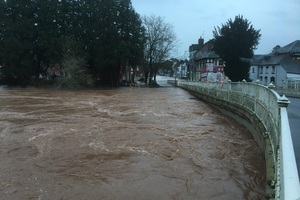
High river levels in Tenbury Wells

Tenbury Wells

  • Facilitated telephone calls will also be held on 26 January and 28 January to provide the same information as the virtual engagement room, for those without access to the website materials.

  • Construction of the scheme is due to start in March 2022 and aims to reduce the risk of flood to Tenbury Wells, benefitting approximately 120 residential and 145 commercial properties.

Residents and business owners in Tenbury Wells, Worcestershire are reminded they have until the end of the month to visit a virtual engagement room to find out about a proposed flood risk management scheme for their town.

As well as the virtual engagement room, two facilitated telephone calls will be held on 26 and 28 January at 11am and 6pm respectively, for those without internet access to find out about the scheme and ask any questions.

To join these calls telephone: UK Local UK-Wide: +44 (0) 33 0551 0202 or UK Toll Free: 0808 109 0701 for both dates. Conference PINs: 26 January 1557694; 28 January 5740455.

The flood defence plan to protect homes and businesses in Tenbury Wells has been put forward by the Environment Agency. It will see a mix of new flood walls and embankments to reduce flood risk to 120 residential and 145 commercial properties, after the government announced funding for the scheme in July 2020.

The virtual engagement room has been created due to current coronavirus restrictions, so the local community can be provided with all of the information that a face-to-face meeting would offer.

Information boards are also displayed in a number of locations around the town, to allow those without internet access the opportunity to get involved.

Dave Edwards, Flood Risk Management Team Leader for the Environment Agency said:

We are urging the local community to visit our virtual engagement room to find out about the proposed Tenbury Wells flood risk management scheme. Or, for those who are unable to access the online site, we have set-up 2 facilitated telephone calls which will provide exactly the same information, and give them the chance to find out about the scheme.

Due to the current coronavirus restrictions we have not been allowed to hold face-to-face events, but we hope that by visiting the virtual event or through the facilitated telephone calls, local residents and business owners will receive a similar experience.

Construction of the scheme is due to start in March 2022. Ground investigation and site survey work is due to start in early 2021.

The virtual engagement room can be accessed by clicking on the following link: https://virtualengage.arup.com/Tenbury-FRMS.

Notes to editors

  • The 2 facilitated telephone calls will be held on 26 January at 11am and 28 January at 6pm. The calls will be for approximately 1 hour. Telephone: UK Local UK-Wide: +44 (0) 33 0551 0202 or UK Toll Free: 0808 109 0701 for both dates. Conference PINs: 26 January 1557694; 28 January 5740455.

  • Tenbury Wells lies within the flood plain of the River Teme and Kyre Brook. Tenbury has suffered from extensive flooding to large parts of the town on a number of occasions, most recently in November 2019 and in February 2020.

  • After the February 2020 floods, the government committed an additional £4.9 million towards a scheme for Tenbury. This funding has allowed the Environment Agency to progress plans.

  • To check if your property, business, or place of work is within the new warning area, visit https://gov.uk/check-flood-risk or call Floodline on 0345 988 1188.

  • Since 2015, we have been investing £2.6bn to better protect the country from flooding and coastal erosion. We are on course to have better protected 300,000 homes by March 2021.

  • Earlier this year the government announced a record £5.2 billion investment in flood and coastal defences – double the previous investment – to build around 2,000 new flood and coastal defences and better protect 336,000 properties.

  • In July, the government announced an additional £170 million to accelerate the construction of flood defence projects in 2020 and 2021, where they would drive growth and benefit local economies, including £4.9 million for Tenbury.

  • The Environment Agency has also published its Flood and Coast Erosion Risk Management Strategy, a blueprint setting out how it will work with communities to deliver the government’s plan.

Published 11 January 2021


Bankrupt sentenced for hiding thousands from trustees

Harvey Tudor (74), of Brookhouse, Lancaster, appeared at Preston Magistrates’ Court on Wednesday 6 January where he appeared before District Judge Garland.

He was sentenced to 6 months imprisonment, suspended for 18 months, as well as a 3-month curfew and a contribution to prosecution costs of £2,200.

The court heard that Harvey Tudor was made bankrupt in January 2014 owing creditors just over £52,000. Bankruptcy restrictions are normally lifted after 12 months but Harvey Tudor failed to cooperate with the Official Receiver and his discharge from bankruptcy was suspended indefinitely.

Whilst still a bankrupt, in February 2015 Harvey Tudor sold a property in Kirkby Stephen, Cumbria, that he jointly owned with his wife.

Harvey Tudor split the proceeds, receiving just under £59,000, but failed to inform the Official Receiver of this amount as he was obliged to do before spending the sum over the course of the next two years.

On 6 November 2020 at Lancaster Magistrates’ Court, Harvey Tudor pleaded guilty to one count of failing to declare property whilst bankrupt.

District Judge Garland told Harvey Tudor that it was his duty to report the house sale and not doing so was a “big mistake”.

Julie Barnes, Chief Investigator at the Insolvency Service, said:

Harvey Tudor knew his legal obligations when he was made bankrupt. Despite this, he tried to hide the proceeds from the sale of his house from his trustees to avoid repaying his creditors.

This case shows that we will not hesitate to take these matters to the criminal courts where it is appropriate to do so, and this sentence should act as a warning to others who try to hide their assets while bankrupt.

Harvey Tudor is of Brookhouse in Lancaster and his date of birth is June 1946.

Harvey Tudor’s discharge from bankruptcy has been suspended indefinitely. Details are confirmed on the Individual Insolvency Register

Bankruptcy restrictions are wide ranging. The effects are the same whether you are subject to a bankruptcy restrictions order or to an undertaking. Guidance on the main statutory consequences flowing from a bankruptcy restrictions order or undertaking.

Further information about the work of the Insolvency Service, and how to complain about financial misconduct.

You can also follow the Insolvency Service on:


UK supports South African female GreenTech entrepreneurs

The UK, powered by the UK-South Africa Tech Hub and in partnership with the Future Females Business School, will support 30 female entrepreneurs to grow their GreenTech businesses.

As the world looks to manage its way out of the COVID-crisis, which has affected millions of lives and decimated economies, it is important to remember we are still tackling an even greater crisis – climate change. But we also have an opportunity now to drive clean, resilient and inclusive recoveries – shaping the low carbon economy of the future that will create new jobs, attract green investment and protecting the global environment for future generations.

As incoming COP26 President the UK is working hard in advance of COP26 to increase the level of global ambition necessary to provide confidence that we are on track to limit global warming to below 2 degrees. As a bilateral partner, the UK is committed to support South Africa deliver an accelerated and just transition, not only to meet the climate imperative but to ensure the country is at the forefront of the global economic shift. This support, like the transition itself, is at all levels, from £200 million flowing into major clean technology programmes through International Climate Finance to entrepreneurs, designing and developing the small and micro enterprise sustainable companies of the future.

Future Females is therefore excited to announce that the Future Females Business School, in partnership with UK-South Africa Tech Hub will be launching a new programme focusing on supporting 30 South African female founders through the Future Females Business School GreenTech programme.

Seeing the positive Impact that the Future Females Business School, together with the UK-South Africa Tech Hub, has had on the 5 cohorts they have graduated to date, it is important to build on this and increase the scope and support female entrepreneurs who are working to care of and protect our planet. This led to the introduction of the Future Females Business School GreenTech programme.

UK-South Africa Tech Hub Director, Shirley Gilbey:

The Future Females Business School GreenTech Programme is a three-month virtual programme, equipping local female entrepreneurs with the entrepreneurial skills and best practices needed to start and grow successful tech businesses. These businesses not only generate wealth for the founders, but also create a positive impact in communities and environments.

British High Commissioner to South Africa, Nigel Casey said:

A Just Transition is not just about Government policy and major infrastructure and energy projects. It is about inclusion and the creativity and drive of businesses to shape the economy and create the jobs of the future. I am therefore delighted that, through the UK-South Africa Tech Hub and the Future Females Business School, we are addressing both by supporting women entrepreneurs.

Applications are open until 25 January 2021, with only 30 spots available in the three-month pilot programme commencing on the 8th of February 2021. Apply here now.

1. Who is Future Females?

Future Females is a movement that exists to increase the number of and better support the success of female entrepreneurs. Future Females has shown immense growth since its conception in August 2017 in Cape Town, currently boasting a presence in 36 locations world-wide, hosting regular events for their engaged community of over 80,000 members, and offering the Future Females Business School online training programme.

2. Who is this programme for?

This programme is for South African female entrepreneurs with an early-stage business that aims at protecting the environment and conservation of natural resources using alternative technologies that are less harmful to the environment. Examples of these businesses include:

  • Waste Management
  • Generation of power
  • Water management (harvesting, filtering/treatment and metering)
  • Farmer’s Market
  • Organic produce & retail
  • Green blogs
  • Eco-friendly fashion
  • Eco-friendly beauty or cleaning products
  • Upcycling furniture
  • Green app development
  • Used bookstore
  • Herbal remedy
  • Food plant nursery and such other industries

The founders of these enterprises should be ready to upskill and utilise technology to grow their business, gain valuable practical entrepreneurial skills, to scale their businesses and be guided to generate more profit and create impact.

3. What’s included in the programme?

The Future Females Business School GreenTech, in partnership with UK-South Africa Tech Hub is a three-month programme, made up of 10 modules that guide entrepreneurs through the fundamental building blocks of starting and growing a GreenTech business. Supported by a sustainability coach, members will learn how to write an effective business plan, how to find and reach their ideal customers and how to use technology to build their online presence and scale. The programme also features guest experts – serial entrepreneurs, executives, coaches – who cover critical personal development topics such as how to overcome fear of failure, and how to uncover your true passion.

The programme is delivered online, and will have a virtual graduation event at the end, where completion certificates will be awarded, with all members invited to attend – to network, meet the team, and celebrate their achievements and their businesses!

4. Who is UK-South Africa Tech Hub?

The UK-South Africa Tech Hub forms part of the International Tech Hub network delivered by DCMS (Department for Digital, Culture, Media & Sport), under the Digital Access Programme – a UK government initiative designed to build inclusive prosperity through capitalising on digital services and opportunities in partner countries.

5. How to apply

Applications are open now for the Future Females Business School Green Tech programme, in partnership with the UK-South Africa Tech Hub.

The application starts with simply completing a form and sharing information about the business you are building, with successful candidates being invited to a 1:1 consultation with a programme team member. This consultation will help you validate your business idea and direction, and ensure this programme is the best fit for you!

Applications are open until 25 January 2021, with only 30 spots available in the three-month pilot programme commencing on the 8th of February 2021. Apply here now.

Future Females:

Cerina Bezuidenhout,

Co-founder and COO, Future Females

cerina@futurefemales.co

British High Commission:

Isabel Potgieter,

Head of Communications, British High Commission

+27 (0) 833911606

Isabel.potgieter@fcdo.gov.uk

UK-South Africa Tech Hub:

Twitter: @UKSATechHub

Instagram: @UKSouthAfricaTechHub

LinkedIn: UK South Africa Tech Hub

Future Females:

Twitter: @future_females

Instagram: @futurefemales

LinkedIn: @Future-Females

Facebook:@futurefemalesofficial