Prime Minister’s address to the One Planet Summit

Christine thank you very much, I want to thank you and I want to thank Emmanuel for organising this One Planet Summit, because I think it’s an absolutely crucial subject.

After all, we’re making a lot of progress as humanity in finding the technological solutions to tackle climate change and reduce carbon. Clearly there’s a huge amount still to do but we’re starting to see a way forward since the Paris Summit five years ago which was I think a huge success, we can see that humanity can do this.

But the problem is that we are destroying species and habitat at an absolutely unconscionable rate. I think we’ve lost about 500 species in the last century, of all the mammals in the world – the biomass of mammals – I think I’m right in saying that 96% of mammals on our planet are now human beings or oxen or pigs or the livestock that human beings rely on. 70% of all the birds in the world are chickens.

In other words, there has been a total or near-total destruction of wildlife. Only 4% of the mammals in the world are now wild mammals, from whales to monkeys, to you name it.

That in my view is a disaster. We’re seeing a parallel loss of habitat, of forests and plant species of all kinds. So that’s why the UK is pledged to protect 30% of our land surface, 30% of our marine surface, to create marine protected areas – vast protected areas – which is something by the way an objective that we share very much with France, with Canada – we’re all engaged in this same effort.

And of the £11.6 billion that we’ve consecrated to climate finance initiatives, we’re putting £3 billion to protecting nature, whether it’s marine life, or timber conservation or sustainable food production.

I think that as global leaders, we must go further and I’m very pleased therefore that so many countries have signed up to the UN Leaders Pledge for Nature so that we have really hard-edged targets for the preservation of species and wildlife, but also the re-wilding of our planet in the way that Sir David Attenborough has suggested.

And I would like to see a world in which we give real meaning to those Aichi targets that were set so many years ago at Kyoto and I hope that our Chinese colleagues will be pushing that agenda at their Biodiversity Summit in Kunming. I know that we will be working with colleagues under the auspices of the UN to do that at the COP26 summit in Glasgow.

Obviously it’s right to focus on climate change, obviously it’s right to cut CO2 emissions, but we won’t achieve a real balance with our planet unless we protect nature as well. One final thought, don’t forget that the coronavirus pandemic was the product of an imbalance in man’s relationship with the natural world.

Like the original plague which struck the Greeks I seem to remember in book one of the Iliad, it is a zoonotic disease. It originates from bats or pangolins, from the demented belief that if you grind up the scales of a pangolin you will somehow become more potent or whatever it is people believe, it originates from this collision between mankind and the natural world and we’ve got to stop it.

And that’s why I think that this summit is so important and this focus on the natural world and on biodiversity is absolutely critical. Yes we must tackle climate change, but climate change must be seen as part of an overall agenda to protect the natural world and I think the One Planet agenda is completely right.


Economic Update speech

Mr Speaker,

Before I begin, I’m sure the whole House will join me in wanting to send our very best wishes to my Right Honourable Friend the member for Old Bexley and Sidcup.

I’ve been fortunate to work closely with him, and he is one of the nicest and most decent people in politics, a fantastic Minister, and a tireless advocate for his constituents.

We all look forward to a speedy recovery and seeing him back in this place as soon as possible.

Mr Speaker,

Last week, the Prime Minister set out the actions we must take to control the spread of coronavirus.

With your permission, today I’d like to update the House on the economic situation we currently face, the action we are taking to support the British people and businesses through this crisis, and the factors influencing our outlook.

Mr Speaker,

As the House knows well, coronavirus has already caused significant harm to our economy.

The scale of this impact bears repeating. GDP fell by 18.8% in the second quarter of 2020.

And while the economy grew as the country opened up over the Summer, it remained 6.7 percent smaller than it was before the crisis.

The OBR’s November forecast showed GDP falling again in the final quarter of last year, and also forecast the largest fall in annual output for over 300 years.

Even with the significant economic support we’ve provided, over 800,000 people have lost their job since February.

And while the new national restrictions are necessary to control the spread of the virus, they will have a further significant economic impact.

We should expect the economy to get worse before it gets better.

Mr Speaker,

In response, the Government has put in place a comprehensive economic plan.

We have provided a fiscal stimulus of over £280 billion.

To fund our Plan for Jobs.

To support public services like the NHS.

And to provide financial support for millions of people and businesses.

1.2 million employers have furloughed almost 10 million employees.

Almost 3 million people have benefitted from our self-employment grants, taking total support for the self-employed to nearly £20 billion.

Over 1.4 million small and medium sized companies have received government-backed loans, worth over £68 billion.

Tens of billions of pounds of tax cuts, tax deferrals and cash grants have been delivered to businesses.

And the United Kingdom government has guaranteed at least £16.8 billion of additional funding for the devolved administrations in Scotland, Wales and Northern Ireland.

In response to the new national lockdown, we are extending and increasing our financial support.

We are providing a bridge for people and businesses until the economy reopens, and to give them the chance to rebuild productive capacity.

To do that, we have extended the furlough scheme to April.

We’re supporting self-employed people with a fourth income grant.

And we’ve announced, alongside the introduction of new restrictions, an extra £4.6 billion to protect UK jobs and businesses.

All business premises in England which are legally required to close – including in retail, hospitality and leisure – can now claim one-off grants of up to £9,000 for each of their business premises, benefitting over 600,000 businesses and coming on top of the existing grants worth up to £3,000 paid each month.

We’ve also made available discretionary funds of half a billion for local authorities in England to support local businesses in those areas on top of the £1.1 billion of discretionary funds we’ve already provided to local councils.

Sadly, we have not, and will not, be able to save every job and every business.

But I am confident that our economic plan is supporting the finances of millions of people and businesses.

Across almost all areas of economic policy, we are providing comparable or greater support than all our international peers.

And, as the Office of Budget Responsibility, the Bank of England, and the IMF have all recognised, our economic response is making a difference saving jobs, keeping businesses afloat, and supporting people’s incomes.

Mr Speaker,

Now, looking forward, there are signs of hope.

Firstly, with the vaccine, we can start to see a path out of coronavirus.

Vaccine rollout is our most important economic lever, so and we’ve made available over £6 billion.

We’ve now administered over 2.4 million vaccine doses across the United Kingdom.

And by February the 15th, we aim to have offered a first vaccine dose to everyone in the top four priority groups identified by the Joint Committee on Vaccination and Immunisation.

And the data shows there are potential sources of underlying resilience in our economy. In aggregate we have seen the household savings ratio reach record levels and, taken as a whole, corporate sector cash buffers have improved.

And, of course, we have now agreed a new trading partnership with the European Union.

We have removed that uncertainty from businesses and can now start to do things differently and better. Not least in financial services, where in November I outlined for the House our plan to reinforce the UK’s position as a globally preeminent financial centre.

Mr Speaker,

While the vaccine provides hope, the economy is going to get worse before it gets better.

Many people are losing their jobs.

Businesses are struggling.

Our public finances have been badly damaged and will need repair.

The road ahead will be tough.

Now it is time for responsible management of our economy; taking the difficult but right long-term decisions for our country.

But Mr Speaker, I am confident that with the comprehensive support the Government is providing and, above all, the determination, enterprise and resilience of the British people we will get through this.

And I commend this statement to the House.


More than 2.2 million people in UK receive first dose of COVID-19 vaccine

Press release

The number of people who have received the first dose of a COVID-19 vaccine between 8 December 2020 to Sunday 10 January 2021 is 2,286,572.

""

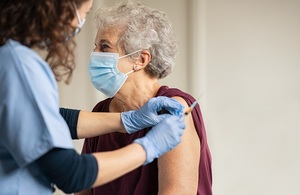
More than 2.2 million people in the UK have received the first dose of a COVID-19 vaccine, the latest figures show as the government begins daily publications on vaccination uptake.

The number of people who have received the first dose of a COVID-19 vaccine between 8 December to Sunday 10 January is 2,286,572.

The breakdown in each nation is:

  • England: 1,959,151
  • Scotland: 163,377
  • Wales: 86,039
  • Northern Ireland: 78,005

More than 2.6 million vaccine doses (2,675,213) have been administered overall in the UK – excluding the number of second doses in Scotland – over the same time period.

NHS England will publish a more detailed breakdown of their figures every week – starting from Thursday – which will include vaccinations in England by region.

The daily vaccination statistics are published daily on the COVID-19 dashboard.

The NHS will be offering a vaccination to everyone in the top four priority groups as set out by the Joint Committee on Vaccination and Immunisation by 15 February. This includes:

  • all residents in a care home for older adults and their carers
  • all those 80 years of age and over and frontline health and social care workers
  • all those 75 years of age and over
  • all those 70 years of age and over and clinically extremely vulnerable individuals

The prioritisation of vaccinations is in accordance with the advice of the Joint Committee on Vaccination and Immunisation (JCVI), the independent experts who advise government on which vaccine(s) the UK should use and provide advice on prioritisation at a population level.

The committee has advised that the first priorities for any COVID-19 vaccination programme should be the prevention COVID-19 mortality and protection of health and social care staff and systems. Secondary priorities could include vaccination of those at increased risk of hospitalisation and at increased risk of exposure, and to maintain resilience in essential public services.

Taking this into account they have listed 9 priority cohorts. These include:

  • residents in a care home for older adults and their carers
  • all those 80 years of age and over and frontline health and social care workers
  • all those 75 years of age and over
  • all those 70 years of age and over and clinically extremely vulnerable individuals
  • all those 65 years of age and over
  • all individuals aged 16 years to 64 years with underlying health conditions which put them at higher risk of serious disease and mortality
  • all those 60 years of age and over
  • all those 55 years of age and over
  • all those 50 years of age and over

The first 7 vaccination sites opening this week are:

  • Ashton Gate in Bristol (South West)
  • Epsom Racecourse in Surrey (South East)
  • Excel Centre in London (London)
  • Centre for Life (North East and Yorkshire)
  • Eithiad Tennis Club in Manchester (North West)
  • Robertson House in Stevenage (East of England)
  • Millennium Point in Birmingham (Midlands)

Published 11 January 2021


Business Secretary calls with business leaders: 11 January 2021

News story

Business Secretary Kwasi Kwarteng hosted a series of calls with business leaders on his first day in office.

Kwasi Kwarteng, Secretary of State for Business, Energy and Industrial Strategy

Following his appointment as Secretary of State for Business, Energy and Industrial Strategy on 8 January, Kwasi Kwarteng this afternoon hosted a virtual meeting with some of the UK’s leading business representative organisations: the British Chambers of Commerce, Confederation of British Industry, Federation of Small Businesses, The Institute of Directors and Make UK.

The Business Secretary opened the call by acknowledging the extraordinary pressures that British businesses are facing as a result of the coronavirus pandemic, and promised to be a champion of business and workers at the Cabinet table and across government. He thanked the 5 organisations for continuing to promote the government’s support measures to their members, and praised businesses for playing its part in helping to defeat the virus, including those working on vaccine manufacturing and deployment, and those working to maintain essential services in a COVID-secure way to keep the country moving.

The Business Secretary set out his priorities for the year ahead, noting that there was clear cause for optimism with both vaccines and a trade agreement with the European Union now secured. He called on businesses to work with government to take advantage of our new-found sovereignty as an independent trading nation to drive prosperity and economic growth for all, as well as the government’s Plan for Jobs.

The Business Secretary reaffirmed the government’s commitment to build back better from the pandemic by making Britain the best country in the world to start and grow a business and unleashing a new wave of investment to create jobs and level up economic activity. He also discussed the vital importance of delivering on the Prime Minister’s Ten Point Plan for a Green Industrial Revolution, reaching our legally-binding target of net zero emissions by 2050, and unleashing innovation across all four nations of the UK, cementing the country’s position as a science superpower while building the foundations for the new industries of tomorrow.

The Business Secretary also held a number of bi-lateral calls with leading British employers today and will continue to have further calls throughout this week.

Published 11 January 2021


The RPA delivers best ever December payment performance

The Rural Payments Agency (RPA) has delivered its best ever December payment performance and paid just under 98% of Basic Payment Scheme (BPS) claims despite the challenges caused by the Coronavirus pandemic. Payments during December were made to around 82,500 eligible claimants and were worth more than £1.77 billion in total, making it the best performance since the scheme opened in 2015.

In addition the RPA brought forward more full Countryside Stewardship (CS) and Environmental Stewardship (ES) payments in December, with just under 68% of eligible CS revenue and just over 57% of ES claims paid, totalling £67 million. There was also an increase in the number of CS 2021 agreements issued with over 63% of applicants receiving their offers by the end of the year.

RPA Chief Executive, Paul Caldwell, said:

We understand how important our services are to farmers and land managers across the country and I’m pleased that we have been able to show year on year improvements.

It has been a difficult year for many and I am pleased that we have shown our commitment to agricultural and rural communities, and to those that have kept the nation fed during such challenging times.

After a difficult year the RPA extended further support to customers by delivering a range of services to agricultural and rural communities across the country while the majority of staff worked from home.

Earlier in the year the RPA supported the Dairy Response Fund. As some dairy farmers faced financial difficulties and excess milk due to the coronavirus outbreak and the closure of hospitality, the new fund provided grants of up to £10,000 to help dairy farmers most in need of support to sustain their business and maintain animal welfare. Working closely with Farming Help Organisations the RPA implemented enhanced support measures for vulnerable farmers that allowed them to submit their paperwork in a timely manner.

The agency also issued 236 eligible agreements under the Flood Recovery Fund worth £1.7 million to support farmers who suffered uninsurable damage to their property in the devastating floods in November 2019.

In light of the disruption caused by the coronavirus outbreak the RPA took the decision to extend the window to submit applications for the Basic Payment Scheme (BPS) and make a claim for Countryside Stewardship (CS), Environmental Stewardship (ES) and woodland legacy revenue payments by one month. This gave farmers and their agents an extra month to submit applications and claims, helping them to avoid penalties for late applications.

Through the launch of the third round of the popular Countryside Productivity Small Grants scheme worth £25m, the RPA helped rural businesses invest in equipment, technology and infrastructure that will not only boost productivity, but also deliver significant environmental benefits. This means that £60 million has been allocated to farmers investing in technology to boost their productivity since the scheme opened in 2018.

This effort to improve and simplify the way the agency delivers for its customers will continue throughout the Agricultural Transition Period as the RPA will be at the forefront of this change in agricultural policy. It will support the opening of the applications for the Environmental Land Management scheme National Pilot – the cornerstone for developing and co-designing the final Environmental Land Management scheme.

The launch of the National Pilot in late 2021 will involve up to 5,500 farmers over a three-year period and will build on the lessons from the 68 live tests and trials being carried out by farmers across England to assess how the fundamental building blocks of the scheme will work on the ground. This will ensure that the new scheme delivers for our farmers and land managers, as well as delivering greener, cleaner landscapes and reversing the decline of some of our most cherished species.

An improved Countryside Stewardship scheme will open to applications for 2022 agreements in early February 2021 – an important stepping stone for many farmers ahead of the full roll-out of the future Environmental Land Management scheme, expected in late 2024.

Steps will be taken to simplify the administration of the scheme, making it easier for more people to take part whilst it remains open to new applications for the first few years of the agricultural transition period. This will help them to springboard into the future scheme, which will reward them for delivering environmental outcomes, such as those already paid for by the Countryside Stewardship scheme.