Home Secretary to introduce ‘Kay’s Law’ reform to better protect victims

New laws to reform pre-charge bail will provide better protection for victims and witnesses in cases of violent and sexual offences, Home Secretary Priti Patel announced today (Thursday 14th January).

The Home Office has published its response to a consultation on pre-charge bail, which allows police to release a suspect from custody subject to conditions, while they gather evidence or await a charging decision.

The new measures will ensure a system where individuals are not held on bail for unreasonable lengths of time, whilst enabling police to impose strict conditions on more suspects in high-harm cases, including most cases of domestic abuse and sexual violence.

The full package of reforms will be named ‘Kay’s Law’ in memory of Kay Richardson, who was murdered by her ex-partner following his release under investigation, despite evidence of previous domestic abuse.

The name ‘Kay’s Law’ also intends to help raise awareness of the new reforms amongst police and the public, and encourage greater use of pre-charge bail where necessary and proportionate, as well as increased engagement with victims.

The measures will be brought before Parliament in a major criminal justice bill, which will be introduced as soon as parliamentary time allows. The Bill will provide better support and protection to police, create safer communities, and make sure those guilty of heinous crimes spend longer behind bars.

Home Secretary Priti Patel said:

I can’t imagine the pain and suffering of the families of victims like Kay Richardson, and I want them to know their voices have been heard.

Victims and witnesses of the most distressing crimes – including domestic abuse and sexual violence – must be protected while allegations are investigated.

It is my priority to deliver justice for victims and Kay’s Law will put victims at the heart of the bail system, empower police to ensure that suspects are closely monitored, and protect the public.

Ellie Butt, Head of Policy at Refuge says:

Refuge is pleased to see the government making changes to pre-charge bail. Far too many survivors of domestic and sexual abuse who bravely report crimes to the police see alleged perpetrators released under investigation, meaning there are no restrictions on contacting the survivor.

This puts many women and children at real risk of harm and is a huge disincentive to reporting. Due to the dynamics of domestic abuse and sexual violence it is vital that bail is used in all cases, we hope these changes will achieve this and will be swiftly passed into law.

The pre-charge bail consultation ran between February and May last year, and received a total of 844 responses from groups including law enforcement, charities and legal bodies.

More than four in five respondents agreed with removing the presumption against pre-charge bail. This presumption has led to large numbers of suspects being released under investigation for lengthy periods, where they are not required to report to police at regular intervals.

Reforms to pre-charge bail timescales will also be introduced, with the initial pre-charge bail period increased from 28 days to three months (90 days), with further extensions requiring sign-off from an inspector or above.

The new timescales will cut red tape for police while also ensuring that individuals are not held on bail for unreasonable lengths of time.

National Police Chiefs’ Council Lead for Bail Management, Chief Constable Darren Martland said:

We are committed to doing everything we can to protect victims and witnesses as investigations progress.

It’s important to ensure bail is properly used to best effect, which includes respecting the rights of suspects and balancing the impact on victims and witnesses.

We will continue to work with the Home Office and College of Policing so that we are striking that balance between protecting vulnerable victims and witnesses while upholding the rights of suspects. Our first priority will always be to keep people safe.

The new measures also come as the Home Office today launches its domestic abuse codeword scheme, to help domestic abuse victims get immediate help from police or other support services. Working with independent pharmacies and Boots pharmacy chains during the new lockdown, the scheme helps ensure victims receive easier access to much needed support from thousands of pharmacies across the UK.


COVID-19: January Update to Contact Centre opening hours

News story

Due to COVID-19, DBS Contact Centre hours have temporarily changed.

Image of Update to Contact Centre opening hours

The opening hours for the DBS Contact Centre have temporarily changed, as detailed below, in response to coronavirus-related measures:

Our call centre is currently closed on a Saturday.

You may also experience some delays or longer waiting times. Our peak times are between 9am to 10am and 4pm to 5pm, and you will likely experience more significant delays during these periods.

We will also be offering a reduced telephone service on our Disputes team which is currently only available 9am – 3pm

Services across GOV.UK remain unaffected.

You can track your application online:

  • Online tracking for basic DBS checks, here
  • Online tracking for standard and enhanced DBS checks, here

If you have a general enquiry, you can still contact DBS via:

Published 14 January 2021


Nick Herbert appointed Chair of College of Policing

News story

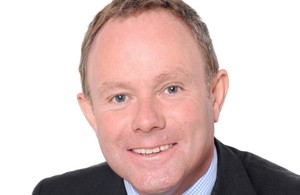
Home Secretary appoints Nick Herbert (Lord Herbert of South Downs) as Chair of College of Policing to succeed outgoing interim Chair, Christine Elliott.

""

The Home Secretary has today (Thursday 14 January) announced the appointment of Nick Herbert (Lord Herbert of South Downs) as the new Chair of the College of Policing, following a robust open competition in line with the Governance Code on Public Appointments.

Lord Herbert has highly relevant experience, having served as Minister of State for Policing and Criminal Justice across both the Home Office and Ministry of Justice. In his position he introduced Police and Crime Commissioners and the College of Policing. He was previously Shadow Minister for Police Reform, Shadow Secretary of State for Justice and a member of the Home Affairs Select Committee.

He was MP for Arundel & Downs from 2005 to 2019, and in September 2020 he was created Lord Herbert of South Downs, taking the Conservative Whip in the House of Lords.

Home Secretary Priti Patel said:

I welcome Nick as the new Chair of the College of Policing – he will bring with him a wealth of experience and knowledge of policing and the criminal justice system.

The College of Policing plays a vital role in delivering the training that makes our police force the best in the world, and is playing a crucial role in the recruitment of 20,000 additional police officers.

I would like to extend my thanks to Christine for her part in leading the College through the challenging demands on policing in 2020.

Lord Herbert said:

I am delighted to have been appointed to chair the College and very much look forward to working with the police service again.

I drove the formation of the College nearly a decade ago because l believe it has a vital role to play in promoting leadership, setting standards and supporting the drive to reduce crime.

I think it’s timely to begin with a fundamental review of the College, its effectiveness and place in the policing landscape. I want to ensure that the College fulfils its mission and is highly valued by every section of policing, from officers on the frontline to Chief Constables and Police and Crime Commissioners.

This is a demanding time for policing but also an exciting one as we recruit 20,000 new officers. With new forms of crime and the advance of technology, it has never been more important to ensure that we have a well led, highly trained and skilled service.

A priority will be to recruit a new Chief Executive, and I would like to thank Mike Cunningham for everything he has done to build the College and lead it through the challenging period of Covid.

Lord Herbert took up responsibility at the College from 1 January.

Published 14 January 2021


NHS Test and Trace reaches one million people over new year, as record numbers test positive

  • A record one million people were reached by NHS Test and Trace contact tracers during the reporting week
  • A record 683,124 contacts of people who tested positive were reached by NHS Test and Trace during the reporting week
  • The Test and Trace Support Payment Scheme is extended until 31 March
  • The number of mobile testing units will double to 500, with new and improved vehicles able to store twice the number of tests

More than one million people were contacted and told to self-isolate during the first week of 2021 – people who might otherwise have gone on to infect others. This means that 92.7% of contacts, and 86.6% of those who tested positive, were reached over the new year week. This is an increase of 48% (331,758 more) compared with the previous week.

As many more people are being reached and told to self-isolate, the government is extending the Test and Trace Support Payment Scheme until the end of March 2021. The scheme provides £500 payments to people who are told to self-isolate but are on a low income, cannot work from home and risk losing earnings, making it easier for people to adhere to self-isolation requirements.

People can also have confidence that if they have symptoms and need a test, they can get one. NHS Test and Trace’s vastly expanded test site network now has more than 800 test sites in operation, including 432 local test sites. The median distance travelled for a test is just 2.4 miles, compared with 5.1 miles as recently as September.

To add to this, a fleet of 500 new and improved mobile testing units (MTUs) will be hitting the streets this week. MTUs were first introduced in April 2020 and they have carried out over 4.3 million tests to date. Over the past 9 months, MTUs have been the first at the scene at a significant number of outbreaks and critical moments, including testing hauliers in Dover and supporting the mass testing pilot in Liverpool.

The new vehicles offer twice the daily testing capacity of the original model, with the ability to store 1,000 test kits compared with the original’s capacity of 500. This, combined with the doubling of the fleet’s numbers overall from around 250 to 500, will significantly increase the testing capacity offered by the UK’s mobile testing capability.

Alongside the existing symptomatic testing service, NHS Test and Trace has stood up a significant programme to pilot new testing technologies to proactively test individuals without symptoms and to improve the service’s detection of positive cases.

This follows last week’s announcement that the community testing offer is being expanded across all local authorities in England to test people without symptoms.

Health Minister Lord Bethell said:

NHS Test and Trace is delivering an essential and impressive service. It is truly extraordinary that a service that was only established last spring could now have contacted more than one million people in a single week, telling them to self-isolate and protect those around them. Although the rates of infection are continuing to rise, there can be no doubt that the rates would have increased by much more if NHS Test and Trace had not tested the 2.6 million people it provided tests to, or contacted such a large proportion of those who tested positive. I want to pay thanks to the efforts and dedication of everybody involved.

While our testing capacity continues to grow as part of the government’s winter plan, NHS Test and Trace is also deploying hundreds of thousands of rapid tests to identify asymptomatic cases. Around 1 in 3 people with COVID-19 don’t display symptoms, meaning you can infect others unknowingly. It is therefore crucial that we continue to follow public health guidance, and all play our part by following the rules and reducing our social contact to slow the spread of the virus.

Interim Executive Chair of the National Institute for Health Protection Baroness Dido Harding said:

As cases rise across the country, so the demands on NHS Test and Trace increase. It gives me great pride to see our teams rising to meet that challenge. We are making tests available to anyone who needs one, and reaching a large proportion of those that test positive and their contacts – more than a million this reporting week. Everyone working in NHS Test and Trace and using the service can feel confident that what they are doing is contributing to saving lives and protecting the NHS.

We’re not stopping there. We are continually seeking to make the system quicker and easier to use. A fleet of 500 new and improved mobile testing units will be deployed to areas of greatest need, adding to our already extensive network of test sites, while testing capacity in our labs continues to increase, with capacity now at more than 790,000 tests per day.

In total during the week of 31 December to 6 January, 1,019,253 people who had either tested positive or were a recent close contact of someone who had tested positive were reached and told to self-isolate.

Over the past months, the government has put in place the largest network of diagnostic testing facilities created in British history. More than 58 million tests have been conducted in the UK so far and more than 6 million cases and contacts have been reached and told to self-isolate by contact tracers.

NHS Test and Trace now has the capacity to carry out more than 790,000 tests per day, compared with 2,000 just 9 months ago.

Launched on 28 September 2020, the Test and Trace Support Payment Scheme is administered by lower-tier and unitary authorities in England, with an initial £50 million of government funding for local authorities to cover the cost of administering the scheme.

To ensure people continue to have access to the support they need to stay at home, and reduce the transmission of COVID-19, the government is now providing an additional £20 million to local authorities to cover the cost of the scheme. This includes an additional £10 million to enable local authorities to continue making discretionary payments to people who fall outside the scope of the main scheme, but who will still face hardship if required to self-isolate.

Testing

As of 6 January, more than 58 million tests have been processed in the UK in total since testing began, more than any other comparable European country.

For this reporting period, turnaround times for test results have remained consistent with the previous week, with 62.9% of in-person test results returned the next day after the test was taken, compared with 63.0% the week before. 94.7% of pillar 1 test results were made available within 24 hours. This has remained broadly consistent since NHS Test and Trace began.

The NHS Test and Trace laboratory network processed samples as normal with the same level of capacity, including on bank holidays, to ensure continuity of service.

Tracing

Tracing performance has remained high with 86.6% of cases and 92.7% of contacts reached last week. The proportion of contacts reached within 24 hours as a proportion of those reached is 97.3%.

388,257 positive cases were transferred to contact tracers between 31 December and 6 January, 86.6% of whom were reached and told to self-isolate, compared with 85.8% the previous week.

Between 31 December and 6 January, a record 736,939 people were identified as recent close contacts, with 95.9% of those with communication details provided reached and told to self-isolate. Since Test and Trace launched, 87.5% of close contacts for whom communication details were provided have been reached.

Background information

The weekly statistics from the 32nd week of NHS Test and Trace show in the most recent week of operations (31 December to 6 January):

  • the proportion of contacts reached by tracing service remains consistent at 92.7%
  • 86.6% of people who tested positive and were transferred to the contact-tracing system were reached and asked to provide information about their contacts, compared with 85.8% the previous week
  • 95.9% of contacts where communication details were given were reached and told to self-isolate, compared with 96.0% the previous week
  • 62.9% of in-person test results were received the next day after the test was taken, compared with 63.0% of tests the previous week (England only)
  • 94.7% of pillar 1 test results were made available within 24 hours, compared with 93.6% the previous week
  • 31.5% of in-person test results were received within 24 hours after the test was taken, compared with 33.0% the previous week
  • 86.8% of satellite tests were received within 3 days, compared with 79.9% the previous week


Guidance published to support business following deal with European Union

Following agreement of a trade deal with the EU, the Office for Product Safety and Standards (OPSS) is helping ensure business understand what is expected of them, including on issues such as the use of the UKCA marking.

It has produced a range of guidance and advice, all of which is available on GOV.UK.

This now includes a ‘What’s Changed?’ summary guide to key changes regarding the specific product safety and metrology legislation amended by The Product Safety and Metrology etc. (Amendment etc.) (EU Exit) Regulations 2019.

This guidance provides a clear indication of what rules and regulations you will be required to comply with now that the Transition Period has come to an end.

To be notified when new material is published on the OPSS pages of GOV.UK, you can sign up for OPSS email alerts. Half way down, under ‘Latest from OPSS’, there is a ‘get email alerts’ button.

The process for placing goods on the UK market changed on 1 January 2021.

Northern Ireland will continue to align with all relevant EU rules relating to the placing on the market of manufactured goods.

Find out about the product safety regulatory framework in Great Britain and Northern Ireland from 1 January 2021

Find out about the metrology regulatory framework in Great Britain and Northern Ireland from 1 January 2021

General guidance is also available on placing goods on the UK and GB markets, conformity assessment marking, and trade between NI and GB markets.

Find out about placing manufactured goods on the market in Great Britain from 1 January 2021.

Find out about placing manufactured goods on the market in Northern Ireland from 1 January 2021.

You can see a Summary Explainer of the Agreement with the EU, on GOV.UK.