Up-rating report 2021 – focus on the National Insurance Fund

News story

The Government Actuary has published the Up-rating Report 2021 on the National Insurance Fund. It will be considered by MPs as they scrutinise draft government legislation.

miniature people on coins

The Government Actuary’s annual report on the National Insurance Fund (NIF) has been published. The report:

  • provides advice to MPs as they scrutinise the government’s draft legislation for up-rating social security benefits and pensions and updating National Insurance Contribution (NIC) terms

  • projects contribution income, benefit payments and the balance of the NIF over the coming financial years

Coronavirus impact

The coronavirus pandemic is impacting the NIF in several ways:

  • increased levels of unemployment and lower salaries (for example where employees are furloughed) are reducing income to the NIF with receipts in 2020-2021 expected to be £5.4bn lower compared with the previous (pre-pandemic) projection last year

  • payments of working age benefits are increasing while ‘excess deaths’ caused by the pandemic are reducing payments of pensioner benefits

  • an unusual pattern of average earnings (ie a sharp drop followed by an expected recovery) is projected to cause state pension payments from the NIF to be around £1bn per year higher from 2022 (than with a more even progression of average earnings)

Headline results

Allowing for the impact of the coronavirus pandemic the headline results are that:

  • income is projected to exceed expenditure by £1.3bn increasing the NIF balance to £40.8bn by 31 March 2022

  • costs of the proposed changes to NICs to be paid from April 2021 are projected to be £0.2bn

  • costs of the proposed increases to benefits to be paid from April 2021 are projected to be £2.0bn

  • the NIF is not expected to need any top-up from HM Treasury over the next 5 years

  • 5-year projections show the NIF balance decreasing in each year from the end of 2023

All the headline results are sensitive to future economic conditions.

Remote working

In line with government guidance GAD staff have been working from home during the pandemic. Bringing together a remote team to deliver this report added a new dimension to this annual project.

GAD Senior Consulting Actuary Chris Morley led the project. He said: “People from across the department have overcome remote working barriers and carried out the complex modelling underpinning this report in a collaborative and effective manner.

“I’m proud to have led this team and they have produced this report on time and on budget in challenging circumstances.”

Published 19 January 2021


100th Nationally Significant Infrastructure Project decision reached

The A1 Birtley to Coalhouse Improvement Scheme is the 100th Nationally Significant Infrastructure Project (NSIP) to be decided following examination by The Planning Inspectorate. The examination completed its hearings virtually and to the original timetable.

Applications for projects considered to be of national significance are made under the Planning Act 2008. The Act was introduced to streamline the decision-making process, making it fairer and faster for communities and developers alike and to encourage investment in the country’s vital infrastructure by providing certainty on decision timescales.

Prior to the introduction of the 2008 Act, it could take several years to decide major planning applications.

The Planning Act 2008 requires developers to consult with affected communities and to thoroughly prepare applications before submitting them for examination. The Planning Inspectorate examines the application and makes a recommendation to the relevant Secretary of State who makes the final decision. The regime imposes strict timescales on key stages of the process, and it typically takes 14-16 months from the day an application is submitted to a decision being made. Overall, the process increases confidence and provides the certainty of knowing when a decision will be made for developers, investors and all those with an interest in the project.

The first project to be examined and decided under the Planning Act 2008 was the Rookery South Energy from Waste Facility project in 2013. Since then, projects as diverse as the Thames Tideway Tunnel, the Hinkley Point C New Nuclear Power Station and Dogger Bank Offshore Wind Farm have been consented through this process.

Recent high-profile projects examined include the likes of A38 Derby Junctions and Norfolk Boreas Offshore Wind Farm, as the Planning Inspectorate has risen to the unique challenges posed by the COVID-19 pandemic with hearings currently being held virtually.

Sarah Richards, Chief Executive of The Planning Inspectorate, said:

This is the 100th application for a Nationally Significant Infrastructure Project to be decided following examination by The Planning Inspectorate – it is a significant milestone, particularly bearing in mind the challenges posed by working through three separate lockdown periods in the last 12 months. Every application has met the statutory timescales laid down in the Planning Act 2008 for examination by the Inspectorate.

This is a tremendous achievement for our Inspectors and casework staff. The Planning Act 2008 has streamlined and greatly improved the decision-making process for major infrastructure that the country needs, whilst ensuring proposals are properly and robustly examined and ensuring local people can have their say.

We have had to change how we work over the past few months, have done so with great success, and are aware that we have to keep evolving and challenging ourselves as an organisation in order to keep improving.

Of the 100 projects decided to date, 61 were energy, 36 transport, 2 waste and 1 waste water developments.

There are currently 63 Nationally Significant Infrastructure Projects at Pre-Application stage, in a pipeline of projects which developers are designing and consulting on ready for examination over coming months and years. A further 13 are either awaiting Acceptance for Examination, are under Examination or in the Decision stage.

Details of these projects can be found on http://infrastructure.planninginspectorate.gov.uk.

NSIPs are not only significant in their importance to the country but are large applications of particular interest to many local people.

The Planning Inspectorate places great importance on being fair, open and impartial. No matter the type, size or location of a project, it ensures that local communities have the opportunity to make their views known and are able to participate in the examination process. The examinations of the projects examined to date considered thousands of written representations and examiners have heard directly from thousands of affected people at Hearings held in the locality of the projects.

Graham Stallwood, Director of Operations at The Planning Inspectorate, added:

We encourage individuals and communities to get involved in the examination of major projects when developers are consulting on their proposals before submitting an application, at the pre-application stage and when we are examining their application. We listen carefully to what all interested parties tell us about a project that affects them, and we give full consideration to their views when making a recommendation to the Secretary of State.

Notes to editors:

Journalists wanting further information should contact The Planning Inspectorate Press Office, on 0303 444 5004 or email: pressoffice@pins.gsi.gov.uk

The decision letter, Recommendation and Development Consent Order for the A1 Birtley to Coalhouse Improvement Scheme can be viewed on the National Infrastructure Planning website.

Planning Inspectorate role

On 1 April 2012, under the Localism Act 2011, the Planning Inspectorate became the agency responsible for operating the planning process for nationally significant infrastructure projects (NSIPs).

NSIPs are usually large-scale developments such as new harbours, power generating stations (including wind farms), and electricity transmission lines, which require a type of consent known as ‘development consent’ under procedures governed by the Planning Act 2008 (as amended).

The 2008 Act sets out thresholds above which certain types of infrastructure development are considered to be nationally significant and require development consent.

In England, the Planning Inspectorate examines applications for development consent from the energy, transport, waste, waste water, water and business and commercial sectors. In Wales, it examines applications for energy and harbour development, subject to detailed provisions in the Act; other matters are for Welsh Ministers.

The Planning Inspectorate recently produced a video highlighting its work.

Any developer wishing to construct an NSIP must first apply for consent to do so. For such projects, the Planning Inspectorate examines the application and will make a recommendation to the relevant Secretary of State, who will make the decision on whether to grant or to refuse development consent.


A1 Birtley to Coal House Improvement Scheme granted development consent

Press release

Today, Tuesday 19 January 2021, the application for the A1 Birtley to Coal House Improvement Scheme has been given development consent by the Secretary of State for Transport.

The project comprises improvements as follows:

The scheme is 6.5 km in length and will consist of online widening of the A1 south of Gateshead to four lanes between junction 65 and 67 on the southbound carriageway and three lanes with lane gain/ drop between junctions on northbound carriageway to provide additional capacity. The scheme will also include the off-line replacement of Allerdene Railway Bridge immediately south of the existing structure to tie into the existing structure at Junction 67 Coal House.

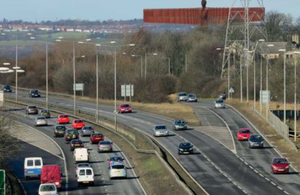
The approved development consent order provides for the upgrading of the A1 in the route which runs adjacent to the Angel of the North including hearing directly from the sculptor, Anthony Gormley. The sensitivity of this location was carefully considered during the examinations and additional requirements added to control lighting and noise to protect the Angel and its setting. The examination was completed to the original timetable using virtual hearings.

The application was submitted to the Planning Inspectorate for consideration by Highways England on 14 August 2019 and accepted for examination on 10 September 2019. Following an examination during which the public, statutory consultees and interested parties were given the opportunity to give evidence to the Examining Authority, a recommendation was made to the Secretary of State on 21 October 2020.

The Planning Inspectorate’s Chief Executive, Sarah Richards said:

This marks the 100th Nationally Significant Infrastructure Project and 36th transport application to have been examined and decided within the timescales laid down in the Planning Act 2008. The Planning Inspectorate is committed to giving local communities the opportunity of being involved in the examination of projects that may affect them. Local people, the local authority and other interested parties were able to participate in the examination where the Examining Authority listened and gave full consideration to local views before making their recommendation.

The decision, the recommendation made by the Examining Authority to the Secretary of State and the evidence considered by the Examining Authority in reaching its recommendation is publicly available on the National Infrastructure Planning website.

ENDS

Journalists wanting further information should contact the Planning Inspectorate Press Office, on: 0303 444 5004 or 0303 444 5005 or email: Press.office@planninginspectorate.gov.uk

Notes to editors:

The Planning Inspectorate, National Infrastructure Programme of Projects details the proposals which are anticipated to be submitted to the Planning Inspectorate as applications in the coming months.

Published 19 January 2021


Letter from Local Government Minister to the Leader of Croydon Council about Postponement of Elections and Referendums amended regulations

[unable to retrieve full-text content]Letter from Luke Hall MP, Minister of State for Regional Growth and Local Government, to Councillor Hamida Ali, Leader of Croydon Council.


Carprieve 5% w/v Small Animal Solution for Injection – Product defect recall alert

News story

Product defect recall alert for Carprieve 5% w/v Small Animal Solution for Injection (Vm 02000/4229) by Norbrook Laboratories Ltd.

Packaging for Carprieve 5% w/v Small Animal Solution for Injection (Vm 02000/4229)

We wish to make veterinary surgeons aware that Norbrook Laboratories Ltd have initiated a Class 2 recall to veterinarian level for the product Carprieve 5% w/v Small Animal Solution for Injection. This is as a precautionary measure due to higher than usual impurities.

A health hazard assessment has been completed by the company veterinary surgeon. This concludes that any risk to animal and human health is likely to be low and no greater than expected for this product under normal conditions, as described on the product labelling. This recall is for the following batches only:

Batch Numbers:

  • 0265-90
  • 0302-90
  • 0246-90
  • 0112-90
  • 0295-90
  • 9053-91
  • 9103-91

Norbrook Laboratories Ltd are contacting veterinary surgeons to examine inventory immediately and quarantine products subject to this recall.

For further information regarding the recall please contact Gary Mckee on +44 2830 264435 or email gary.mckee@norbrook.co.uk

Published 19 January 2021