Nottingham City Council: Chair of the Improvement and Assurance Board appointment letter
[unable to retrieve full-text content]Letter to Sir Tony Redmond appointing him as Chair of the Nottingham City Council Improvement and Assurance Board.
[unable to retrieve full-text content]Letter to Sir Tony Redmond appointing him as Chair of the Nottingham City Council Improvement and Assurance Board.
The interim findings from the eighth report of REACT, one of the country’s largest studies into COVID-19 infections in England, have been published today by Imperial College London and Ipsos MORI.
Over 142,900 volunteers were tested in England from 6 to 15 January to examine the levels of infection in the general population. The findings show infections in England have plateaued at the highest level recorded by a REACT study, with suggestions of a potential uptick. The report does not yet reflect the impact of national lockdown.
Prevalence from 6 to 15 January was highest in London, with 1 in 36 people infected – more than double compared to the previous REACT report in early December. Infections had also more than doubled in the South East, East of England and West Midlands compared to the previous REACT report in early December.
The main findings from the eighth REACT study show:
While prevalence has decreased in Yorkshire and the Humber and has remained stable across the East Midlands and North East, infection numbers remain high in all of these regions.
The figures demonstrate everyone must stay at home to reduce infections, protect the NHS and save lives.
Health Secretary Matt Hancock said:
These findings show why we must not let down our guard over the weeks to come.
Infections across England are at very high levels and this will have a knock-on effect on the already significant pressures faced by our NHS and hospitals.
It is absolutely paramount that everyone plays their part to bring down infections. This means staying at home and only going out where absolutely necessary, reducing contact with others and maintaining social distancing.
Professor Paul Elliott, director of the programme at Imperial, said:
Our data are showing worrying suggestions of a recent uptick in infections which we will continue to monitor closely.
To prevent our already stretched health system from becoming overwhelmed infections must be brought down; if prevalence continues at the high rate we are seeing then hospitals will continue to be put under immense pressure, and more and more lives will be lost. We all have a part to play in preventing this situation from worsening and must do our best to stay at home wherever possible.
There has been increasing pressure on the NHS with 15,000 people admitted to hospitals since Christmas Eve – over 20 hospitals’ worth of new patients. While the vaccine programme continues to accelerate and expand to protect as many people as possible, with over 4 million people vaccinated, we do not know whether being vaccinated stops someone from passing the virus on to others. It will also be some time before the impact of the vaccination programme reduces pressures on hospitals.
It is critical everyone continues to follow the rules, stays at home, reduces contact with others and maintains social distancing – remembering hands, face, space.
Kelly Beaver, Managing Director of Public Affairs at Ipsos MORI said:
As we reach a milestone of over a million people in England having COVID-19 at any one time of our study, the real time tracking of COVID-19 across England is more important than ever. Our study’s ability to find individuals who have the virus, but do not display symptoms, is due to the millions of members of the public that have taken part, who I would like to thank for volunteering, helping to provide the Government with an invaluable tool as we fight this pandemic.
This report is the latest from the REACT study which was commissioned by DHSC and carried out by a world-class team of scientists, clinicians and researchers at Imperial College London, Imperial College Healthcare NHS Trust and Ipsos MORI.
Read more information on the Real-time Assessment of Community Transmission (REACT) programme of work
This study falls under Pillar 4 of the COVID-19 National Testing Programme, which focuses on mass surveillance in the general population.
Thank you, Mr President. Let me also start by marking Ambassador Craft’s final meeting with simply saying how much I have appreciated her honesty, integrity, her compassion and her friendship on her time on the Council. And I have no doubt that she is proud of that too.
I want to thank Special Envoy Pedersen and I want to thank Under-Secretary-General Mark Lowcock for their briefings.
Now, Mr President, I listened carefully to the Russian ambassador’s statement, as I always do, and I think he would be the very first to admit that it was a lengthy statement – longer than the five minutes that we, as Security Council members, recommend to each other in Note 507. And I in no way wish to be impolite about this – it’s an issue we all have, not only he. And that tells me, as winter bites in Syria and as Geir Pedersen seeks action on the Constitutional Committee, we need to take the proper time as a Council to consider these two issues and return to separate meetings, as has been our practice over many years.
Mr President, as the Syrian conflict approaches its eleventh year, the situation continues to deteriorate. Over 500,000 people have died during the conflict, the vast majority civilians.
The conditions for the millions of civilians displaced by the conflict are dire. Since the beginning of the crisis, the United Kingdom has given over $4 billion in humanitarian aid in Syria and in surrounding countries. And I encourage others – especially those who support the Syrian regime and who say they are so worried about the impact of sanctions – do more themselves to support the Syrian people.
COVID-19 continues to compound the humanitarian situation, with confirmed cases having now passed 42,000. The true figure is undoubtedly much higher. All donors will need to work together to ensure the equitable distribution of COVID-19 vaccines across Syria, ensuring that those in most acute need of a vaccine are prioritised. The United Kingdom is committed to working with the United Nations to lay the groundwork for delivery of vaccines and longer-term pandemic preparedness. There are complex challenges to overcome, but the World Health Organization and other UN delivery agencies have the UK’s full support.
Efficient, effective cross-border and cross-line access, as we have heard from the UN and from NGOs for many months now, remains essential to meeting the needs of the Syrian people. Over the course of 2020, we saw the loss of three border crossings and a further increase in humanitarian needs by over two million people. Cross-line access alone is sadly not enough to sustain the humanitarian needs of 30 million people – about three quarters of the population.
Aid running through Bab al-Hawa has never been more important, and the rationale for renewing the cross-border mandate in the summer has not diminished. Indeed, with the prospect of a vaccine, the delivery of which may well require complex storage and supply chains, it only grows stronger. .
Mr President, in order for the humanitarian response to keep up with growing needs, the volume and frequency of aid being delivered via Damascus to northeast Syria needs to increase, including to those areas outside of regime control. This means alleviating bureaucratic hurdles and ending arbitrary denials of access for aid workers, an abhorrent example noted by Under-Secretary-General Mark Lowcock last month of the blocking of food aid to 220,000 people in Raqqa is simply unacceptable.
We are also concerned about the recent water crisis in regime-controlled Syria. As with many serious problems, rampant corruption has played its role, with regime diesel supplies designated for the city’s water pump generators being sold illegally. The food, fuel and economic crises – all of the regime’s making – sadly continue.
An improvement in the humanitarian situation is only possible with a reduction in violence. We remain deeply concerned by ongoing violations of agreed ceasefires, with routine violence in the northwest, including shelling and sporadic air strikes; an escalation in tensions in the northeast; and a surge in attacks claimed by Daesh.
Now, Mr President, the political settlement envisaged in Resolution 2254, which this Council adopted unanimously just over five years ago, remains the best means of resolving Syria’s multiple crises. It is vital that the parties engage constructively on the substantive issues of the Constitution during the fifth meeting of the Constitutional Committee this month.
Progress to date has been too slow, but there is a sense that we are approaching a watershed moment. We hope the regime delegation will arrive in Geneva willing to engage in good faith in the talks.
Without a new constitution, free and fair elections involving all Syrians, including members of the diaspora, cannot take place as envisaged in Resolution 2254. Plans to hold elections according to the previous constitution would contradict the political process by this Council. The UK will not recognise elections which are neither free nor fair.
Free and fair elections should involve all Syrians, including members of the diaspora. If the Syrian regime wants refugees to return, they need to ensure that the conditions set out in paragraph 14 of Resolution 2254 are met and that Syrian citizens will not be returning to the status quo that led to and sustained this conflict.
Mr President, let me turn to the subject of sanctions. The Syrian regime and its Russian backers blame ‘Western’ sanctions for the failing economy in Syria. In reality, the regime has devastated its own economy through nepotism, corruption and by funding brutal violence against its people. It must bear responsibility for this. On 1 January, the United Kingdom’s autonomous Syria sanctions regime designated 353 individuals and entities responsible for repressing civilians in Syria. It is the UK’s most extensive sanctions regime. I want to be clear: UK sanctions target those individuals in the regime responsible for civilian suffering and prevent those who support and benefit from the regime from entering the UK, channelling money through UK banks and profiting from our economy. Food and medicine are not subject to sanctions, and exemptions are in place for humanitarian aid and the COVID-19 response.
Mr President, as we have said so often, the path to the removal of sanctions is clear. Rather than interfering with aid, bombing schools and hospitals and detaining and torturing its people, the Syrian regime must heed the calls of its population, engage seriously the Special Envoy Pedersen and the UN-led political process, and achieve a peaceful end to the conflict.
Thank you, Mr President.
News story
Two severe flood warnings have been issued, meaning there is a threat to life and significant disruption.
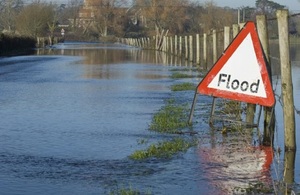
A flood warning sign on a closed country road
Heavy rain from Storm Christoph falling on already saturated ground has continued to affect parts of Greater Manchester and flooding is expected in East Didsbury, West Didsbury and Northenden.
Two severe flood warnings have been issued (as of 8pm, 20 January), meaning there is a threat to life and significant disruption. Flood warnings mean that flooding is expected, and flood alerts mean that flooding is possible. It is expected that numbers will continue to increase in the next 24 hours.
People living in the North West are being urged to prepare for the risk of significant flooding for the rest of this week. The public should sign up to flood warnings and check the latest safety advice as heavy downpours are likely to fall on saturated ground.
The Environment Agency is working with the emergency services to keep communities and people safe. Teams are operating flood defences, flood storage reservoirs and putting up temporary barriers where needed to help protect communities.
Sally Sudworth, Environment Manager at the Environment Agency, said:
More heavy rain falling on already saturated ground will bring significant surface and river water flooding in parts of Greater Manchester today, tomorrow (Thursday) and into the weekend, which could cause damage to buildings in some communities.
Environment Agency teams are out on the ground clearing grilles, screens, deploying temporary flood defences and closing flood barriers. We urge people to keep away from swollen rivers and not to drive through flood water – it is often deeper than it looks and just 30cm of flowing water is enough to float your car.
People should check their flood risk, sign up for free flood warnings and keep up to date with the latest situation at via Gov.uk or follow @EnvAgencyNW on Twitter for the latest flood updates.
Published 20 January 2021
Community-led groups are being invited to bid from today (20 January) for a share of up to £500,000 to develop and host events which celebrate the Windrush Generation and recognise their contribution to British Life.
The annual Windrush Day Grant Scheme will provide up to £25,000 to local councils, charities and community groups seeking to create projects and host events for Windrush Day in 22 June 2021 and throughout the year.
Projects seeking funding need to demonstrate that they will bring communities together, create a lasting impact and improve education and learning through building a deeper understanding of the Windrush Generation and their contributions to British society.
This year MHCLG would particularly like to hear from projects proposing to record the memories and testimonies of the Windrush Generation for posterity and also those with plans to organise activities with schools.
Windrush Day 2021 follows two successful events in 2019 and 2020 in which nearly 100 projects which celebrated the British Caribbean community’s culture and heritage were supported by the scheme.
Previous awardees included the Manchester-based Louise Da-Cocodia Education Trust whose project ‘Women of the Soil’ focused on the empowerment of young women. The Trust organised and produced ‘Windrush Women – The Backbone of the NHS’ at Z-arts in Hulme. Following in the footsteps of Louise Da-Cocodia, herself a nurse who worked for the NHS for 30 years, the play focused on three generations of women working in the NHS, highlighting how the Windrush generation helped shape what the NHS is today.
SoCo Music Project in Southampton. SoCo, together with members of Black Heritage Southampton Centre, ran music-making workshops where participants learnt, performed and recorded traditional Caribbean folk songs.
Museumand, the National Caribbean Heritage Museum which produced an online book called 70 Objeks n Tings. The project involved conducting 184 interviews with members of the Windrush Generation to create a book used by families, schools and universities.
Hackney Council held a Windrush Festival and developed a range of activities including an intergenerational song writing project which brough together a group of young musicians with Caribbean elders to compost songs telling their personal stories.
The project Kick it Out produced radio programme and a film to educate young people and adults about Windrush history and their communities. As part of this they developed an education pack that was shared with 23 secondary schools and 3 universities in the West Midlands which continues to be used as part of an ongoing educational programme.
This announcement comes as work begins to find the artist for the landmark Windrush Monument expected to be unveiled in London Waterloo by Windrush Day 2022.
The monument will be an ambitious public artwork that stands as a testament to the contribution of Caribbean pioneers in communities across the United Kingdom. It will create a permanent place of reflection and inspiration and be a visible statement of our shared history and heritage. The project is being overseen by MHCLG and led by the Windrush Commemoration Committee (WCC), chaired by Baroness Floella Benjamin DBE.
Communities Minister Lord Greenhalgh said:
Following two hugely successful national Windrush Days, I am delighted to confirm that applications for funding Windrush Day 2021 are now open.
The story of the Windrush Generation and their descendants is one of fortitude. This government is committed to ensuring that we never forget their story.
We want to hear original and inspiring proposals to record the memories and testimonies of the Windrush Generation this year as well as plans to work with schools – so that generations to come remember the huge contribution they made and continue to make to this country.
Chair of the Windrush Community Funds and Windrush Schemes group Paulette Simpson CBE (chair) said:
For over half a century The Windrush Generation and their descendants have contributed immensely to the economic, cultural and social life of modern Britain. Windrush Day and the Windrush Day Grant Scheme, now in its third year, provide a unique opportunity for communities to come together and commemorate the immense contributions of Caribbean communities, which have enriched our country’s heritage.
The commitment, ambition and creativity the 2020 Windrush Day Grant Scheme projects showed, especially in adapting their plans in the wake of the pandemic where needed, was truly commendable. I am eagerly looking forward to Windrush Day 2021 and the positive impact that this year’s Grant Scheme will bring.
Those bidding for this year’s grant should be able to show that their projects support the central aims of Windrush Day – to tell the story of the Windrush Generation and celebrate and recognise how they have shaped Britain’s heritage. Projects should be rooted in communities and involve the Windrush Generation descendants in as many areas as possible as well as those from different age groups and background.
For applications for funding for Windrush Day 2021, the Department is particularly keen to hear from projects who can:
2019 saw the first national Windrush Day take place, with activities and events taking place up and down the country. Through educational workshops, theatre performances and historical exhibitions communities honoured that landmark day over 70 years ago when the Empire Windrush arrived at Tilbury Docks.
The government is committed to building on the success of Windrush Day 2019 and 2020 and embedding 22 June in the national conscience, ensuring we continue to honour and recognise the outstanding resilience, innovation and creativity of the Windrush Generation and their descendants.
The Grant Scheme will now be overseen by the Windrush Cross-Government Working Group, which brings together community organisations with government representatives. The Windrush Community Funds and Windrush Schemes sub-group of the Working Group will ensure that winning bids meet the objectives and requirements of the Grant Scheme. See more information on the Windrush Cross-Government Working Group
The Ministry of Housing, Communities and Local Government will be hosting two online bidder workshops in February, which will give an overview of the scheme and an opportunity for bidders to ask questions.
Further information can be found on the 2021 Windrush Day Grant Scheme
The location of the monument has been carefully considered to recognise its status as a national tribute to the diverse Windrush Generation and their descendants who arrived from across the Caribbean. With the endorsement of WWC members, MHCLG has appointed UP Projects to manage the process of selecting the artist who will design and construct this significant civic monument. UP Projects will begin by engaging in conversations with British Caribbean community stakeholders and leaders in the UK’s cultural sector which will inform a longlist of around ten artists. Further details will be announced over the spring.