Government Chief Scientific Adviser, Sir Patrick Vallance on the new variant of COVID-19 in the UK

Press release

Government Chief Science Adviser, Sir Patrick Vallance comments on the new variant of COVID-19.

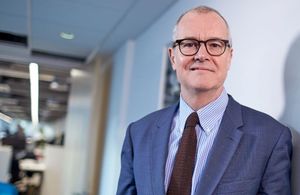
Picture of Sir Patrick Vallance, Government Chief Scientific Adviser

Commenting on the new variant of COVID-19 in the UK the Government’s Chief Scientific Adviser, Sir Patrick Vallance, said:

The new UK variant comprises a significant number of the our cases. It is spreading 30 to 70% more easily than the old variant. It doesn’t differ in terms of age distribution to the original variant.

When we look at severity and mortality, data for patients who are in hospital with the virus suggest the outcomes for those with the original variant look the same as the new variant. However, when looking at the data for people who have tested positive, there is an indication that the rate for the new variant is higher. Although these data are currently uncertain, it does appear that this variant has increased mortality compared to the old virus, as well as increased transmission. For context, with the original variant, if you took a group of 1,000 infected men in their 60s roughly 10 would die. But with the new variant, roughly 13 or 14 of that group might be expected to die.

There is increasing evidence from studies that vaccines will still work against the UK variant.

A paper from the New and Emerging Respiratory Virus Threats Advisory Group (NERVTAG) on the new coronavirus (COVID-19) variant B.1.1.7 explains this further.

Published 23 January 2021


UK to host G7 Summit in Cornwall

  • Summit will be held in Carbis Bay, Cornwall from 11-13th June 2021
  • Australia, India and South Korea invited as guest countries

Prime Ministers and Presidents from the world’s leading democracies will come together in Cornwall in June to address shared challenges, from beating coronavirus and tackling climate change, to ensuring that people everywhere can benefit from open trade, technological change and scientific discovery.

The Prime Minister will use the first in-person G7 summit in almost two years to ask leaders to seize the opportunity to build back better from coronavirus, uniting to make the future fairer, greener and more prosperous.

The G7 – which is made up of the UK, Canada, France, Germany, Italy, Japan, the USA and the EU – is the only forum where the world’s most influential and open societies and advanced economies are brought together for close-knit discussions.

The Prime Minister’s ambition is to use the G7 to intensify cooperation between the world’s democratic and technologically advanced nations. To that end, he has invited leaders from Australia, India and South Korea to attend as guest countries to deepen the expertise and experience around the table. Between them, the 10 leaders represent over 60% of the people living in democracies around the world.

The choice of Cornwall as the location for the Summit will mean the eyes of the world are on the beautiful, historic and innovative region. The leaders’ meeting itself will be held in the coastal town of Carbis Bay, supported by neighbouring St Ives and other towns across the region. The whole of Cornwall will reap the benefits of hosting the G7.

The region is already a powerhouse for green innovation, providing an ideal setting for a Summit focused on building back better from the coronavirus pandemic.

Visit Cornwall estimates the total economic impact for the county will be £50 million, including through an increase in future tourism. The Government will also work closely with Cornish leaders and institutions to ensure the Summit leaves a long term legacy for the region, reaping the benefits of hosting the G7 for years to come.

The UK will also host a number of meetings throughout the year between Government Ministers from the G7, both virtually and in different locations across the UK – ensuring many areas of the country experience the benefits of the UK’s G7 Presidency. These ministerial summits will cover economic, environmental, health, trade, technology, development and foreign policy issues.

The Prime Minister said:

As the most prominent grouping of democratic countries, the G7 has long been the catalyst for decisive international action to tackle the greatest challenges we face. From cancelling developing world debt to our universal condemnation of Russia’s annexation of Crimea, the world has looked to the G7 to apply our shared values and diplomatic might to create a more open and prosperous planet.

Coronavirus is doubtless the most destructive force we have seen for generations and the greatest test of the modern world order we have experienced. It is only right that we approach the challenge of building back better by uniting with a spirit of openness to create a better future.

Cornwall is the perfect location for such a crucial summit. Two hundred years ago Cornwall’s tin and copper mines were at the heart of the UK’s industrial revolution and this summer Cornwall will again be the nucleus of great global change and advancement. I’m very much looking forward to welcoming world leaders to this great region and country.

2021 marks a crucial year of international leadership for the UK. In addition to the G7 Summit, during February the UK will assume the Presidency of the UN Security Council, and later this year the UK will host COP26 in Glasgow and a global education conference aimed at getting children in the developing world into school.


Foreign Secretary sets out UK’s unique offer to East African nations on visit to region

On a three-country tour of East Africa, one year on from the UK’s Africa Investment Summit, Foreign Secretary Dominic Raab met with political leaders, NGO’s and civil society in Kenya, Sudan and Ethiopia for important talks on tackling shared challenges including COVID-19, security and climate change.

Starting in Kenya on Wednesday (20 January) the Foreign Secretary and President Uhuru Kenyatta met to discuss further opportunities to boost the UK-Kenya trade partnership – worth £1.4 billion annually – following the signing of one of the UK’s first trade agreements in Africa in December.

The Foreign Secretary had meetings with senior politicians including Foreign Minister Raychelle Omamo and announced £48 million of new UK climate initiatives for Kenya as we build momentum ahead of COP26 in Glasgow in November.

On a visit to KEMRI Laboratory in Nairobi the Foreign Secretary heard how Kenyan and British scientists have been working together to develop the Oxford Astra-Zeneca vaccine. Here he signed a new health partnership with Health Minister Mutahi Kagwe, to help maximise knowledge sharing between medical professionals in both the UK and Kenya.

Alongside Defence Cabinet Secretary Monica Juma, the Foreign Secretary met soldiers at the UK-backed Counter-IED centre at the Humanitarian Peace Support School in Embakasi, and heard how joint Kenya-UK efforts are countering terrorism.

On Thursday (21 January) Mr Raab travelled to Sudan – the first visit to the country by a British Foreign Secretary in over a decade. He met Prime Minister Abdalla Hamdok and Foreign Minister Omer Gamereldin as well as the Chair of the Sovereign Council, Lt. Gen. Abdel Fattah al-Burhan to express the UK’s commitment to Sudan’s democratic transition and confirm the contribution of £40 million of UK funding to the Sudan Family Support Programme – helping Sudanese communities while critical economic reforms are implemented.

The Foreign Secretary also highlighted that, as part of a coordinated international package, the UK stands ready to provide a £330m bridging loan to clear arrears to the African Development Bank if Sudan stays on track with its economic reforms agreed with the IMF, and the Boards of the IMF and World Bank approve similar arrears clearance packages.

Meeting some of the women and young people who played a pivotal role in the revolution, the Foreign Secretary heard how their actions in the protests helped bring about life-changing democratic reforms. In talks with key legal figures working to deliver transitional justice, the Foreign Secretary discussed the incredibly important work they are doing to secure justice for victims of abuses committed during the revolution and under the Omar al-Bashir regime.

At World Food Programme (WFP) sites in Sudan and Ethiopia, the Foreign Secretary saw first-hand the vital role that UK aid is playing in helping those most in need of humanitarian assistance. In Sudan he visited a WFP nutrition centre, where UK funding is providing life-saving food assistance to vulnerable communities, and spoke to families benefiting from this support.

In Gondar, Ethiopia, the Foreign Secretary visited a World Food Programme warehouse, central to distributing humanitarian aid such as food and sanitation supplies to those displaced by the crisis in Tigray. The UK is providing £11.4 million of humanitarian support – with money for healthcare and clean water, as well as shelter, nutrition kits and protection for children. This is in addition to a £94 million package to support Ethiopia’s response to the triple threats of COVID-19, climate change and locusts, which are having a devastating impact on the country.

Arriving back in Addis Ababa the Foreign Secretary visited a school with President Sahle-Work Zewde to see how the UK is supporting girl’s education and spoke to Prime Minister Abiy Ahmed Ali about humanitarian access and a solution to the Tigray crisis, as well as climate change and prosperity. Mr Raab also signed a climate partnership agreement with Deputy Prime Minister Demeke Mekonnen Hassen for collaboration between the UK and Ethiopia ahead of COP26.

Speaking at the end of his visit, Mr Raab said:

This trip has been an invaluable opportunity to strengthen key partnerships in East Africa, boosting trade, security and our ability to tackle global challenges including Covid-19 and climate change.

We are committed to bringing the best of British expertise to the region, defusing tensions, doing business with integrity and forging strong partnerships on health, climate and other global challenges.

Extra funding for organisations that steer women away from crime

  • around £2 million to support community services that work with vulnerable women
  • cross-government agreement to reduce the number of women in the Criminal Justice System
  • extra investment in prison places to improve conditions for women in custody

The funding comes as the government reiterates its commitment to reduce the number of women in custody and improve conditions for those that are serving time.

Over £5 million has already been invested in services supporting women in the criminal justice system since 2018. This latest funding will help cover running costs such as wages, rent and bills at a time when many charities have additional demand for their services due to the Covid-19 pandemic.

The Ministry of Justice has pledged to work alongside other government departments and public services such as the National Health Service and Public Health England to more effectively support vulnerable women in addressing the issues which can lead them to commit crimes, while up to 500 new prison places will be built in existing women’s prisons to improve conditions.

Lucy Frazer QC MP, Minister for Prisons and Probation said:

This funding boost will allow frontline services to continue the incredible work they do with some of the most vulnerable women in our society to prevent them being drawn into crime.

Many female offenders suffer complex issues and have experienced very traumatic lives – and it’s only by addressing this that we will break the costly cycle of reoffending.

The funding announced today (23 January 2021) will support organisations such as Shropshire based Willowdene, which was awarded nearly £60,000 and uses a mixture of therapy that addresses traumatic life experiences and work placements to rehabilitate women dealing with issues such as substance misuse and exploitation. A grant of £60,000 will allow Cheshire Without Abuse to continue its vital work with domestic abuse victims, as cases continue to rise during lockdown. These services play a crucial part in preventing women being drawn into crime and help reduce rates of reoffending for those that are. 

Dr Matthew Home, CEO of Willowdene Rehabilitation Ltd said:

Referrals to our service have increased during lockdown, particularly for women leaving custody and aiming to complete a period of rehabilitation prior to going home. This funding will allow us to maximise the number of women we can help at any one time, as our core costs are covered through the grant.

While women who commit the most serious crimes will always be sent to prison, custody should always be a last resort. The number of women in custody has fallen by 10% since 2010 and government investment in community services should see this trend continue in the long-term. However, the recruitment of an extra 20,000 police officers is expected to cause a temporary increase in in the female prison population.

Up to 500 new places will be built in existing prisons to increase availability of single cells and improve conditions. These will include in-cell showers and will allow more women to be held in open conditions, providing greater opportunities for employment and education while completing their sentence. Some of the new places will also allow women to have overnight visits with their children to prepare for life back home. If, as expected, the female prison population falls longer-term, these modern facilities will allow the Prison Service to close old accommodation.

Around half of women in prison have a mental health issue and a similar proportion have a history of drug use. Dealing with these underlying issues can help reduce the chance of women entering the criminal justice system in the first place and reduce reoffending rates when they do.

This requires a whole host of different agencies, local and national, to work together to help each individual offender, whether that be, getting into addiction treatment, finding a stable home or escaping an abusive partner. This ‘whole-system approach’ gives women a better chance of turning their lives around and has been endorsed again by government today in the National Concordat on Female Offenders.  

The drive to cut offending by women also stands to benefit from the largest increase in drug treatment funding in fifteen years announced earlier this week. An extra £80 million is being invested in services across England to increase the number of treatment places for prison leavers and those diverted into tough and effective community sentences.


Transport Secretary launches £794 million investment to boost rail links in north and south

  • £794 million investment into next phase of East West Rail and reopening of the Northumberland line as part of government’s ambition to build back better
  • final round of Restoring Your Railway Ideas Fund opens to develop proposals to restore railway lines, services and stations axed under the Beeching cuts
  • investment to reconnect communities and stimulate economic growth, with East West Rail works set to create 1,500 skilled jobs

A £794 million investment package to reopen 2 important rail routes closed more than 50 years ago has been announced today (23 January 2021) by Transport Secretary Grant Shapps.

The new funding includes £760 million for the delivery of the next phase of East West Rail, which will create 1,500 skilled jobs, and reinstate direct rail services between Bicester and Bletchley for the first time since 1968.

Short video on the next phase of East West Rail and the reopening of the Northumberland Line

It also includes £34 million to rapidly progress plans to reopen the Northumberland line between Newcastle-upon-Tyne and Ashington, which closed to passengers in 1964 as part of the Beeching cuts.

The Transport Secretary has also today called on local authorities, MPs and community groups to submit bids for a share of the third and final round of the Department for Transport’s Ideas Fund, designed to encourage proposals to reopen railway lines, services and stations.

Today’s announcement forms part of the government’s commitments to build back better from the coronavirus (COVID-19) pandemic and level up transport infrastructure across the country by investing in rail connections that will boost economic growth, unlock new housing, and create jobs and opportunity.

Transport Secretary Grant Shapps said:

Restoring railways helps put communities back on the map, and this investment forms part of our nationwide effort to build back vital connections and unlock access to jobs, education and housing.

Returning these routes to their former glory, and progressing work to reopen even more lines and stations shows our commitment to levelling up journeys across the country as we build back better from the pandemic.

Simon Blanchflower, Chief Executive Officer at East West Railway Company, said:

We are delighted that the government has shown a big commitment to East West Rail and the Oxford-Cambridge arc with today’s investment decision. This funding will enable us to get on with the construction work that will connect communities who live on the East West Rail link.

We are committed to improving connectivity across the Oxford-Cambridge arc, and fully recognise our responsibility to ensure that it is delivered in a way that minimises disruption, supports the regional economy, maximises benefits and supports jobs across the region.

Today’s funding marks an important milestone in the delivery of East West Rail, which will provide better connectivity along the Oxford-Cambridge arc and shorten journey times between routes outside of London, boosting economic growth and serving major new housing developments.

The works between Bicester and Bletchley are expected to create 1,500 jobs. This phase of the project will include the construction of a new stations at Winslow, as well as enhancements to existing stations along the route, including Bletchley. By 2025, 2 trains per hour will run between Oxford and Milton Keynes via Bletchley.

The investment on the Northumberland line will fund preparatory works, including land acquisition, detailed design work and early site works.

Northumberland County Council Leader Glen Sanderson said:

This is absolutely fantastic news, and means we can now finalise our plans to deliver this transformational project for both Northumberland and the wider region.

The Northumberland line will bring a huge boost to the area in terms of economic growth, housing, employment and education opportunities, as well as providing a fast and efficient new transport link between the south-east of the county and Tyneside.

Plans for the project include new stations at Ashington, Bedlington, Blyth Bebside, Newsham, Seaton Delaval and Northumberland Park in North Tyneside, as well as upgrades to the track and changes to level crossings where bridges or underpasses may need to be built.

The latest round of the Ideas Fund will run until 5 March 2021 with successful bids due to be announced later this summer.