WTO Trade Policy Review of Myanmar: UK statement

News story

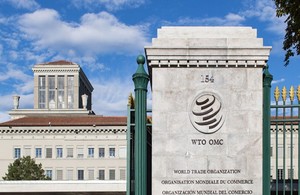
The UK delivered this statement at the WTO Trade Policy Review of Myanmar on 15 February 2021.
Thank you, Chair.

Like other Members who have spoken this morning, we are gravely concerned by the current situation in Myanmar. The United Kingdom condemns the military coup in Myanmar and the arbitrary detention of members of the democratically elected civilian government and civil society, including President Win Myint and State Counsellor Aung San Suu Kyi.

Both the Secretariat and the Government Reports prepared for this Trade Policy review note a number of initiatives since the first review, such as efforts to improve the climate for business and to encourage investment, which aim to facilitate the emergence of a more prosperous, peaceful and democratic Myanmar. More open and transparent international trade has contributed to the economic progress we have seen in Myanmar in the last 10 years, but is dependent on the rule of law and good governance. The current situation undermines these efforts and creates uncertainty for trade partners and investors alike, threatening to compound the economic damage caused by the pandemic and limit Myanmar’s economic growth and development.

Similarly, it creates uncertainty for this review. In its Government Report, Myanmar expresses its intentions to undertake further reform work in the area of trade and trade policy, to support small and medium-sized enterprises, to accelerate the transition to a digital economy, and to improve environmental protections, including taking action against environmental crimes such as the illegal trade, poaching and trafficking of protected flora and fauna. Laudable though these objectives are, it is not clear how they will now be advanced and how domestic and international stakeholders will be able to provide input into the development of relevant policies.

The human rights situation continues to deteriorate. We are extremely concerned by the reports and images of violence emerging from Myanmar perpetrated by the police and military.

We stand with the people of Myanmar who are now bravely exercising their democratic right to protest this coup. Their wishes, and the result of the November 2020 General Election, must be respected.

Thank you, Chair.

Published 15 February 2021



OSCE Economic and Environmental Forum session on building women’s human capital: UK statement

Mr Moderator,

The profile of jobs in the UK is changing and roles which require STEM skills are set to rise at twice the rate of other occupations between now and 2023. STEM graduates are in short supply. And the challenges presented by the COVID epidemic – and the need to respond to an increasingly technologically-advanced world – put STEM careers at the forefront of skills demands.

To fill these careers we need to understand what works to encourage groups that are historically underrepresented to consider STEM, most obviously girls and women. For example, in the UK, in 2019, only 12% of workers in engineering occupations were female.

I would like to take a moment to share with you the findings of a recent UK Department for Education study of under-representation of women and girls in STEM fields.

Despite outperforming boys in most STEM subjects at age 16, at age 18 – in the UK the first point at which students can choose whether to proceed with STEM subjects – gender disparity starts to emerge. In 2019, female students represented just 13% of examination entries in computing, 22% in physics, and 39% in maths. Importantly, only 22% of girls opted to take two or more STEM subjects, versus 35% for boys, a requirement to access many STEM degrees.

Women’s underrepresentation in the industry also presents problems in terms of gender equality and diversity. As our society becomes increasingly dependent on technology, STEM jobs grow in terms of income, status, and influence. It is important that these jobs are not overwhelmingly held by a limited section of society.

So why the gender disparity?

First, girls’ expectations of success in STEM subjects appear to be lower than those of boys, even though their performance is no worse. Despite girls outperforming boys in most STEM subjects at age 16, they are less confident in their abilities.

Second, parents’ beliefs about their child’s abilities in a given subject determine those of the child, and are influenced by the child’s gender. Even when girls outperform boys in both maths and English, parents are more likely to think sons are more talented in maths than daughters. There is evidence that the better a parent thinks their child is at English, the worse the child thinks they are at maths. Teachers are more likely to attribute girls’ success in physics to ‘hard work’ and boys’ success in physics to being ‘naturally bright’, even when they do not perform as well as girls.

Third, girls’ perception of the personal value of STEM subjects relative to others is lower than that of boys. Girls are more likely than boys to endorse communal goals – for example – working with or helping others, and there is a stereotype that STEM subjects do not help fulfil these goals. Interestingly, in health sciences, females are equally represented.

Fourth, girls do not see ‘people like them’ represented in STEM, and do not think it aligns well with the stereotypical female gender identity.

So what can we do?

Students are much more likely to select post-16 maths and/or physics if a key adult – typically a family member or teacher – has conveyed the worth of the subject, along with the belief that they can do well in it. Teachers need knowledge about the range of STEM careers available; and parents need a better understanding of where science can lead, as well as guidance on how to talk with their child about course choices.

Successful interventions that target girls provide information on the limiting impact of gender stereotypes; the importance of self-concept for success; testimony from other students about the usefulness of STEM; and the unhelpful frame-of-reference effects that can occur in the classroom – when students evaluate their ability by comparing their performance to others’, rather than their own performance over time.

Other successful interventions show how the career of a scientist can actually afford communal goals. In studies, girls were more positive about the career of a scientist when it was presented as involving more collaborative, as opposed to independent, work.

I hope delegates found this useful. I would be happy to share further details with any who are interested.

Thank you.


Gloucestershire security business and the SIA work together to address use of fake security licence

Press release

A man has been caught trying to work illegally as a security operative after a Cheltenham security firm spotted that his documents were fake.

Samuel Chimize Ugorji of Gloucester was prosecuted on Wednesday 10 February at Gloucestershire Magistrates’ Court on two counts of fraud and one count of infringement of the Private Security Industry Act. The prosecution was brought by the Security Industry Authority (SIA).

In November 2019 Ugorji sought legal employment from Cheltenham-based Sterling Security. Ugorji presented Sterling Security with a counterfeit door supervisor’s licence and a driver’s licence in someone else’s name.

Sterling Security alerted the SIA, whose investigators discovered that while Ugorji was living in the UK legally, he had no right to work. He was using a counterfeit SIA licence card and a non-existent address as his identification.

On 4 December 2019 Ugorji was invited to attend a job interview and induction at Sterling Security’s offices. However, he was met by officers from Gloucester Constabulary and SIA investigators who arrested him on the premises.

Further investigation revealed that Ugorji, who was carrying the counterfeit licence, had worked for another security company in Birmingham where he had used the same fake identity documents and licence. He had also been working illegally at several locations in West London between October and December 2019.

Nathan Salmon, one of the SIA’s Criminal Investigations Managers, said:

This case is a good example of a security business getting in touch with us when they found a fake licence. We have been reminding companies to carry out physical checks on licences and not to accept copies at face value.

Ugorji was sentenced on Wednesday to a three-month curfew between the hours of 7am and 11pm daily. He was also ordered to pay a contribution to court costs of £50 and a £90 victim surcharge. The magistrates took into account his previous good character and an early guilty plea.

Notes to editors:

  • by law, security operatives working under contract must hold and display a valid SIA licence
  • read about SIA enforcement and penalties
  • the offence relating to the Private Security Industry Act 2001 that is mentioned in the above news release is:
    • Section 3(1): working without a licence
  • the offences relating to the Fraud Act 2006 that are mentioned in the above new release are:
    • Section 3 Fraud Act 2006
    • Section 6 Fraud Act 2006
  • read the Private Security Industry Act 2001

Further information:

  • The Security Industry Authority is the organisation responsible for regulating the private security industry in the United Kingdom, reporting to the Home Secretary under the terms of the Private Security Industry Act 2001. Our main duties are: the compulsory licensing of individuals undertaking designated activities; and managing the voluntary Approved Contractor Scheme.
  • For further information about the Security Industry Authority visit www.gov.uk/sia. The SIA is also on Facebook (Security Industry Authority) and Twitter (SIAuk).
  • Media enquiries only please contact: 0300 123 9869, media.enquiries@sia.gov.uk

Published 15 February 2021


Vacancy for Principal Inspector of Marine Accidents at MAIB, Southampton

News story

We have an exciting opportunity to join our team of accident investigators.

MAIB logo

Your responsibilities will include but not be limited to:

  • acting as duty co-ordinator and the Branch’s initial point of contact for out of hours accident notifications within a 4-week cycle; leading and managing a team of specialist accident investigators;

  • deploying to accident sites, at short notice during duty weeks, to manage the more demanding investigations; this could include travel worldwide;

  • directing the progress, conduct, and quality assurance of investigations, the development of recommendations, and overseeing production of the report;

  • dealing with individuals and organisations involved in marine accidents in what can often be stressful situations;

  • representing the Branch at industry fora;

  • contributing to MAIB’s wider management strategies.

You will have:

  • STCW 95 A-II/2 (Deck) Unlimited; or STCW Deck Officer (Fishing Vessel) Class 1 Certificate of Competency or STCW III/2 (Engineering) Unlimited or a degree in Naval Architecture or a Post-Graduate Certificate or higher in marine accident investigation. Royal Navy equivalency is accepted.

  • Relevant industry experience utilizing the above qualifications. This is taken to mean any of: experience in command or as the senior engineer afloat, or senior management in role ashore; industry experience as a naval architect; or experience as a marine accident investigator.

You will need a full driver’s licence valid in the UK and must be prepared to travel throughout the UK, as well as overseas.

Closing date: Sunday 7 March 2021.

Published 15 February 2021


Closed financial notice to improve: St Mary’s College

Published 15 March 2017
Last updated 26 August 2022 + show all updates

  1. We have closed the financial notice to improve for St Mary’s College.

  2. A financial notice to improve has been issued to St Mary’s College replacing the March 2017 publication.

  3. Additional schedule for St Mary’s Sixth-Form College has been added.

  4. First published.