DHSC SSRB remit letter: 2021 to 2022

We use some essential cookies to make this website work.

We’d like to set additional cookies to understand how you use GOV.UK, remember your settings and improve government services.

We also use cookies set by other sites to help us deliver content from their services.


ESFA Update: 17 February 2021

We use some essential cookies to make this website work.

We’d like to set additional cookies to understand how you use GOV.UK, remember your settings and improve government services.

We also use cookies set by other sites to help us deliver content from their services.


UK and Australia collaborate to accelerate advanced materials integration

Defence research and development ties between the UK and Australia are already strong, but have been strengthened further under a bilateral international program to accelerate the integration of advanced materials into military platforms.

Nine teams of partners across both nations have received Phase 2 funding worth a total of £1.48 million (A$2.82 million) from the UK and Australian governments to develop innovative proposals covering integration of composites, adhesives for structural joining, joining high temperature structures and improving armour systems.

In the UK successful consortia are:

  • Foresight Innovations Limited, Hephaestus Consulting, Nottingham Trent University and Matrix Composites
  • TWI Limited
  • University of Surrey and QinetiQ
  • Zentraxa Limited and QinetiQ Australia

Successful Australian teams are:

  • Western Sydney University, Imperial College London, Metrologi Pty Ltd, UNSW and AirBus Australia Pacific
  • Qinetiq Australia Pty Ltd and RMIT
  • University of New South Wales, Imperial College London, Advanced Composite Structures Australia Pty Ltd
  • University of Adelaide, Research Institute of Saint-Louis (ISL – France) and Materials Science Institute
  • RMIT University and BAE Systems Pty Ltd

This program is jointly funded by the Australian Next Generation Technologies Fund run by DST Group; and the Ministry of Defence Materials for Strategic Advantage programme in the UK. Both nations used a common assessment framework managed by the UK’s Defence and Security Accelerator (DASA). Assessment and Moderation of the competition was carried out collaboratively by Dstl (Defence Science and Technology Laboratory) in the UK and DST Group in Australia.

The UK’s Minister for Defence Procurement, Jeremy Quin MP, said:

“The UK and Australia have an enduring defence relationship. As we take on a range of new challenges, I am delighted we will be working together to ensure our personnel are armed with the most advanced technologies.

“These joint challenge projects represent both countries’ innovative visions for the future, whilst supporting our academic and industry partners.”

Australian Minister for Defence Industry, Melissa Price, said the joint research proposals demonstrated the close practical cooperation between defence industry and universities across Australia and the UK.

“These joint challenge projects have not only strengthened our bilateral defence relationship but provide support to each country’s respective defence industries to overcome capability challenges we face.

“Academic and industry partners are vitally important to both defence forces. Through the Next Generation Technologies Fund the Australian Government is committed to providing the best capability possible to the men and women who serve our nation.”

The Joint Effort gives both nations access to international research using a total pooled fund of around £2.52 million (cA$4.79 million) from the two phases of the competition so far. Across the themes, individual proposals were also chosen to support mutual reliance with one nation taking the lead. The new projects start in the financial year 2020/21 and run for up to two years.



Newcastle man jailed for longer

News story

Dean Stewart has had his sentence increased following an intervention by the Solicitor General, Rt Hon Michael Ellis QC MP.

A Newcastle man has had his sentence increased following an intervention by the Solicitor General, Rt Hon Michael Ellis QC MP.

Dean Stewart, 25, assaulted Ryan Covell in the early hours of 15 June 2020 during an argument. Stewart lashed out with a knife using considerable force to stab Ryan Covell in the neck and lacerate his liver, as well as inflicting wounds from behind, causing life changing injuries.

Stewart has 27 previous convictions for violence, robbery and assault, and was subject to a suspended sentence at the time of his attack.

Stewart was convicted of wounding with intent and sentenced to 7 years and 10 months’ imprisonment on 30 November 2020 at Newcastle Crown Court.

Following the court’s decision, the Solicitor General referred the sentence to the Court of Appeal under the Unduly Lenient Sentence (ULS) scheme. On 17 February 2021 the sentence was found to be unduly lenient and increased to 10 years and 6 months’ imprisonment.

Speaking after the hearing, the Solicitor General said:

Stewart’s vicious actions have blighted a young man’s life. Ryan Covell has suffered life changing injuries, and so I welcome the Court’s decision to increase Stewarts’ sentence.

Published 17 February 2021


Upper Tamar rivers to benefit from fishery and habitat improvements

Press release

Three tributaries of the River Tamar in Devon are about to be improved thanks to a new partnership project supported by the Environment Agency.

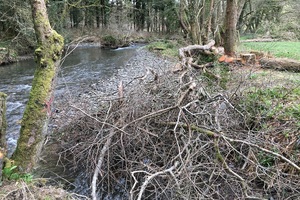
Clear river lined with trees on river bank

The health of Tamar’s tributaries are key to helping fish numbers recover

Working alongside the Westcountry Rivers Trust and local angling associations, Environment Agency officers are helping to boost fish numbers on the Rivers Deer, Claw and Carey through a targeted programme of habitat and ecological improvements.

The project is part-funded with £38,000 from the Environment Agency’s Fisheries Improvement Programme (FIP) which reinvests rod licence money into projects which benefit anglers and fish stocks. The FIP money has been matched by partners including local fishing associations.

Bruce Stockley at Westcountry Rivers Trust said:

Numbers of salmon and trout have dropped significantly on the Tamar over recent years.  By working in partnership with farmers and landowners we can make it a place where fish can thrive again.

Rob Price, Catchment Coordinator for the Environment Agency said:

This work is part of an integrated approach addressing a range of environmental pressures facing the Upper Tamar water bodies. We are working closely with our catchment and Defra partners.

We have held a number of mapping workshops and shared information and expertise to help the Westcountry Rivers Trust and angling associations target much needed habitat improvements and will remain on hand to provide advice to the lead partner.

Work on the project is due to start this month and will include tree planting, bank repairs to reduce erosion, sediment management and replenishing important fish spawning gravels.

Both the Claw and Carey were found to be in poor ecological condition following assessments carried out in 2019. The River Deer was classified as being in a moderate condition. All 3 water bodies were assessed as failing fish under the Water Framework Directive.

Rob Price said:

Planned enhancements over the next 3 years should have a positive influence both on ecological performance of these rivers and the number of anglers utilising them.

Published 17 February 2021