Readout of G7 leaders’ virtual meeting: 19 February 2021

We use some essential cookies to make this website work.

We’d like to set additional cookies to understand how you use GOV.UK, remember your settings and improve government services.

We also use cookies set by other sites to help us deliver content from their services.


G7 Leaders’ Statement: 19 February 2021

We, the leaders of the Group of Seven, met today and resolved to work together to beat COVID-19 and build back better. Drawing on our strengths and values as democratic, open economies and societies, we will work together and with others to make 2021 a turning point for multilateralism and to shape a recovery that promotes the health and prosperity of our people and planet.

We will intensify cooperation on the health response to COVID-19. The dedication of essential workers everywhere represents the best of humanity, while the rapid discovery of vaccines shows the power of human ingenuity. Working with, and together to strengthen, the World Health Organisation (WHO), and supporting its leading and coordinating role, we will: accelerate global vaccine development and deployment; work with industry to increase manufacturing capacity, including through voluntary licensing; improve information sharing, such as on sequencing new variants; and, promote transparent and responsible practices, and vaccine confidence. We reaffirm our support for all pillars of the Access to COVID-19 Tools Accelerator (ACT-A), its COVAX facility, and affordable and equitable access to vaccines, therapeutics and diagnostics, reflecting the role of extensive immunisation as a global public good. Today, with increased financial commitments of over $4 billion USD to ACT-A and COVAX, collective G7 support totals $7.5 billion. We invite all partners, including the G20 and International Financial Institutions, to join us in increasing support to ACT-A, including to increase developing countries’ access to WHO-approved vaccines through the COVAX facility.

COVID-19 shows that the world needs stronger defences against future risks to global health security. We will work with the WHO, G20 and others, especially through the Global Health Summit in Rome, to bolster global health and health security architecture for pandemic preparedness, including through health financing and rapid response mechanisms, by strengthening the “One Health” approach and Universal Health Coverage, and exploring the potential value of a global health treaty.

We have provided unprecedented support for our economies over the past year totalling over $6 trillion across the G7. We will continue to support our economies to protect jobs and support a strong, sustainable, balanced and inclusive recovery. We reaffirm our support to the most vulnerable countries, our commitment to the Sustainable Development Goals, and our partnership with Africa, including to support a resilient recovery. We will work through the G20 and with the International Financial Institutions to strengthen support for countries’ responses by exploring all available tools, including through full and transparent implementation of the Debt Service Suspension Initiative and the Common Framework.

Recovery from COVID-19 must build back better for all. Looking to UNFCCC COP26 and CBD COP15, we will put our global ambitions on climate change and the reversal of biodiversity loss at the centre of our plans. We will make progress on mitigation, adaptation and finance in accordance with the Paris Agreement and deliver a green transformation and clean energy transitions that cut emissions and create good jobs on a path to net zero no later than 2050. We are committed to levelling up our economies so that no geographic region or person, irrespective of gender or ethnicity, is left behind. We will: champion open economies and societies; promote global economic resilience; harness the digital economy with data free flow with trust; cooperate on a modernised, freer and fairer rules-based multilateral trading system that reflects our values and delivers balanced growth with a reformed World Trade Organisation at its centre; and, strive to reach a consensus-based solution on international taxation by mid-2021 within the framework of the OECD. With the aim of supporting a fair and mutually beneficial global economic system for all people, we will engage with others, especially G20 countries including large economies such as China. As Leaders, we will consult with each other on collective approaches to address non-market oriented policies and practices, and we will cooperate with others to address important global issues that impact all countries.

We resolve to agree concrete action on these priorities at the G7 Summit in the United Kingdom in June, and we support the commitment of Japan to hold the Olympic and Paralympic Games Tokyo 2020 in a safe and secure manner this summer as a symbol of global unity in overcoming COVID-19.


Wheelabrator Kemsley Generating Station (K3) and Wheelabrator Kemsley North (WKN) Waste to Energy Facility development consent decisions announced

Press release

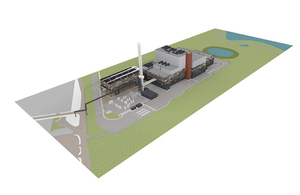
Today,  Friday 19 February 2021, the application for the  Wheelabrator Kemsley Generating Station (K3) has been given development consent by the Secretary of State for Business, Energy and Industrial Strategy.  Wheelabrator Kemsley North (WKN) Waste to Energy Facility was not granted consent.

The Order grants development consent for this Nationally Significant Infrastructure Project comprising a power upgrade and increase in tonnage throughput to the existing Kemsley Generating Station (K3) to allow for generation of up to 75MW.

The Secretary of State has decided, following consideration of the report of the Examining Authority which conducted the examination of the application, to accept the Examining Authority’s recommendations to grant development consent only to Wheelabrator Kemsley K3 Generating Station.

The application was submitted to the Planning Inspectorate for consideration by WTI/ EFW Holdings Ltd on  11 September 2019  and accepted for examination on 08 October 2019. Following an Examination during which the public, Statutory Consultees and Interested Parties were given the opportunity to give evidence to the Examining Authority, a recommendation was made to the Secretary of State on 19 November 2019. 

This is the 102nd Nationally Significant Infrastructure Project and 61st energy application to have been examined by The Planning Inspectorate within the timescales laid down in the Planning Act 2008.

The Planning Inspectorate’s Chief Executive, Sarah Richards said: 

The Planning Inspectorate has examined more than 100 nationally significant infrastructure projects ensuring local communities had the opportunity of being involved in the examination of projects that may affect them. Local people, the local authority and other interested parties were able to participate in the six-month long examination. The Examining Authority listened and gave full consideration to local views and the evidence gathered during the Examination before making their recommendation.

The decision, the recommendation made by the Examining Authority to the Secretary of State and the evidence considered by the Examining Authority in reaching its recommendation is publicly available on the project page of the national infrastructure planning website. 

Journalists wanting further information should contact the Planning  Inspectorate Press Office, on 0303 444 5004 or 0303 444 5005 or email:  Press.office@planninginspectorate.gov.uk    Notes to editors: 

The Planning Inspectorate, National Infrastructure Programme of Projects details the proposals which are anticipated to be submitted to the Planning Inspectorate as applications in the coming months.  

Published 19 February 2021


Homes England set to launch bidding for strategic partnerships

Strategic partnerships at Homes England

Strategic partnerships are an exciting approach to increase the delivery of affordable housing. Rather than applying for funding on a scheme-by-scheme basis, strategic partners enter into a multi-year grant agreement with Homes England to deliver affordable housing. This allows partners to benefit from the certainty of grant for the duration of the partnership, as well as access to Homes England’s wider expertise, insight and influence.

We first launched strategic partnerships in 2018 – since then, we have signed 23 partnerships with 27 housing associations, delivering around £1.8 billion grant investment and over 40,000 additional affordable homes.

We know there is more appetite, experience and capacity across the sector to deliver affordable housing. So, for the new affordable homes fund, we’ve redesigned our strategic partnership model, with an increased focus on the relationship element, and are opening this offer to a broader range of partners from across the housing sector.

Strategic partnerships play a pivotal role in Homes England’s mission to use everything at our disposal to intervene in the market to make homes happen.

We are looking for ambitious, successful organisations that share our aims and values to become strategic partners, so that together we can do just that.

Read more about the requirements in the affordable housing funding guide.

Who can be a strategic partner

For 2021, we’re offering our strategic partnerships to a broader range of organisations than ever before, including not for profit registered providers, for-profit providers and developers, and local authorities.

We’re utilising our expertise and influence to support our strategic partners as much as possible, but in return we ask that our partners can demonstrate a significant commitment to Homes England’s broader aims, from increasing the use of Modern Methods of Construction (MMC) to promoting great design.

Read about the different types and requirements of strategic partnerships.

 The benefits of becoming a strategic partner

The certainty and flexibility of grant funding is just one element of a strategic partnership – it is the collaborative, working relationship with Homes England that really sets it apart.

Our first cohort of strategic partners told us that working with Homes England in this way has allowed them to do things that wouldn’t otherwise have been possible – for example:

  • unlocking difficult sites for development
  • attracting finance and investment
  • accelerating delivery of much needed homes.

Strategic partners will benefit from a broad range of support from across Homes England. That means providing advice for accessing other funding from Homes England, brokering relationships across the sector, co-developing delivery plans and so much more.

Strategic partners will also have access to our technical expertise in delivery, land, infrastructure and investment to address local capacity and capability challenges. 

To ensure our strategic partners get as much out of the relationship as possible, each of our partners will have a dedicated Key Account Manager (KAM) – a senior colleague from Homes England that will act as a conduit to the rest of the agency’s resources.

How to become a strategic partner

We expect to launch a competitive bidding round for proposals to access Affordable Homes grant funding through the strategic partnership route in March 2021. We anticipate that the window for submitting proposals will be around 6 weeks, however this may be subject to change.

We will publish the confirmed timescales in due course.

You can read our guidance for updated timescales and to understand more about how to apply for affordable housing grant funding in a strategic partnership.

If you are not seeking affordable housing grant

If you’re still interested in working with us to deliver new homes at scale, then there is no need to wait. You can get in touch with us to discuss how we can work together, and whether a strategic partnership could be right for you. You can contact your regular Homes England contact, or email us: enquiries@homesengland.gov.uk



New Trade Commissioner for LATAC announced

Press release

International Trade Secretary, Liz Truss, appoints Jonathan Knott as a new HM Trade Commissioner (HMTC)

As the UK announces its intention to join the Comprehensive and Progressive Trans-Pacific Partnership (CPTPP), International Trade Secretary Liz Truss, appoints Jonathan Knott as the new HMTC for Latin America and the Caribbean region, to champion British trade with important economic partners in the region.

As HMTC for the LATAC region and Consul General São Paulo, Jonathan will look to grow trade and investment between the UK and Latin America and the Caribbean, as the UK moves forward with its new independent trade policy. Joining CPTPP would see the UK deepen its access to fast-growing markets and major economies including Mexico, Chile and Peru.

Jonathan joins the Department for International Trade (DIT) from the Foreign, Commonwealth and Development Office (FCDO), where he was most recently British Ambassador to Poland and Director of the UK government’s Central Europe Network. Jonathan speaks 5 languages including Spanish, Portuguese and French.

Secretary of State for International Trade Liz Truss said:

I am delighted to welcome Jonathan to his new role, he brings a wealth of experience and expertise working with international partners and promoting the UK overseas.

The LATAC region has enormous opportunities for UK businesses and is home to some of the largest economies in the world.

HMTC Jonathan Knott said:

I am thrilled to be appointed as Her Majesty’s Trade Commissioner for Latin America and the Caribbean. We already enjoy a strong relationship with the region, and I look forward to building on this. My focus in this new role will be to create more opportunities for our countries to forge deeper trading ties and helping our businesses recover from the impacts of the Covid-19 pandemic.

The UK will be taking a leading role in promoting the benefits of free and fair trade, including at the WTO, our potential future membership of CPTPP, and pushing the global climate agenda through our COP26 Presidency this year. I look forward to working closely with our friends and partners across the LATAC region.

The UK enjoys a thriving trade and investment relationship with countries across the Caribbean and Latin America. Total trade between the UK and LATAC was £26.3 billion in the year to Q3 2020.

Published 19 February 2021