Environment Agency swoops to seize vehicle linked to flytipping

Officers from the Environment Agency’s environmental crime team, along with Kent police officers, seized a vehicle from a farm near Iwade, Kent, on Thursday 25 February 2021.

The seized vehicle is an 8-wheeled tipper truck. It is believed the vehicle was being used to fly tip waste in Rainham, Kent.

Alan Cansdale, Area Environment Manager for Kent at the Environment Agency, said:

This sends out a strong message that we will use all our powers possible to stop waste crime which harms the environment, wildlife and the community, as well as undermining the work of companies that operate legitimately.

To help avoid your waste ending up at an illegal waste site, we encourage you to ask for your waste collector’s waste carrier’s registration number and ask to see their waste transfer note, they must have these.

The owners of the vehicles now have until 18 March 2021 to claim to have the vehicles returned to them by the Environment Agency. If no legitimate claim is made, the vehicles will be sold or crushed.

Further information

Members of the public can report illegal waste activity anonymously to Crimestoppers on 0800 555 111 or via the online form.

Check your waste collector’s waste carriers registration or call 03708 506 506.

The Environment Agency can seize and impound a vehicle, trailer or mobile plant without a warrant if it suspects:

  • waste is being carried without a valid waste carriers licence
  • the vehicle has been or is about to be used in an alleged waste crime offence
  • the waste duty of care is being or has been breached

When a vehicle is seized, the police and the registered keeper will be notified in writing. To claim the vehicle they must register their claim within 15 working days of the date of the notice. We may need to keep the seized vehicle and any contents for the duration of an investigation or criminal proceedings. If the vehicle isn’t claimed, or nobody is entitled to it, we may sell, destroy or dispose of the vehicle and its contents.

Earlier this year the Environment Agency and partners launched the Joint Unit for Waste Crime, aiming to stop serious and organised crime in the UK.

NDA Annual Report highlighted amongst best in the public sector

News story

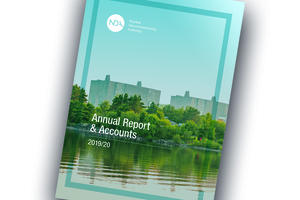
The NDA’s Annual Report and Accounts has been recognised by the National Audit Office (NAO) as an example of best practice amongst public sector organisations.

NDA Annual Report and Accounts 2019 to 2020

NDA Annual Report and Accounts 2019 to 2020

The NAO uses examples of high-quality Annual Reports and Accounts (ARAC), from across the whole of the public sector, that equip stakeholders with trusted information which they can use to hold organisations to account. National Audit Office Good practice in annual reporting 2021

Mel Zuydam, Group Chief Financial Officer at the NDA, said:

We are delivering a large and complex mission, and our Annual Report and Accounts is one of a number of key documents that help inform our stakeholders on our activities during the year, and on how we have allocated our resources to deliver our outcomes and manage our risks.

The areas of good practice that have been cited by the NAO underpin how we allocate and use a complex mix of income and funding against our capital and operating expenditure to deliver our mission to clean up 17 of the UK’s oldest nuclear sites.

The ‘Mission Progress’ section of the NDA’s 2019-20 Annual Report and Accountswas used by the NAO to highlight a good example of detailed analysis set out in accessible table, describing it as “a good representation of a complex area”.

The ARAC is an important document for the NDA and a vital tool in telling the story of progress across the NDA group, which will continue to develop and improve as we deliver our mission.

Published 1 March 2021


Draft guidance for heads of centre, heads of department and teachers

News story

Consultation on guidance on how to generate the evidence used to determine grades this summer.

As part of a consultation on our rules for awarding GCSEs, AS and A levels in 2021, we published (on Thursday, 25 February) draft guidance for heads of centre, heads of department and teachers on how to generate the evidence that will be used to determine their students’ grades this summer.

The grades submitted to exam boards must reflect a fair, reasonable and carefully considered judgement of the student’s performance across a range of evidence, on the curriculum content that they have been taught. Heads of centre should emphasise the need for judgements to be objective and fair. To promote this, exam boards will set out detailed quality assurance requirements.

We’d like views on this draft guidance from heads of centre, heads of department and teachers. You have until 23:45 on 11 March to respond to the consultation.

This is part of a technical consultation and necessary for us to set the rules so exams boards deliver and award qualifications in accordance with the latest policy decisions.

We are also seeking views on the proposed rules, and the proposed ‘information for centres about making objective judgements’. We are not seeking views on the underlying policy decisions, which we announced following our joint consultation with the Department for Education and explained in our analysis and decisions documents.

Published 1 March 2021


Drug dogs to detect new versions of spice to stay one step ahead of criminals

Press release

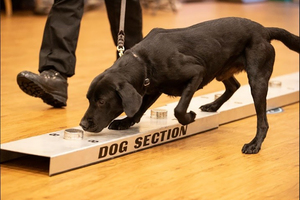
Prison drug dogs will be trained to sniff out new and emerging strands of Spice as part of the government’s comprehensive plan to tackle violence and disorder behind bars.

  • £300,000 investment will see sniffer dogs trained to detect new compounds of Spice
  • partnership between Ministry of Justice and Defence Science and Technology Laboratory will support scientists to create expanded detection programmes
  • this is part of the government’s £100 million package to crack down on crime behind bars

In the last year alone over 100 kilograms of illegal drugs, including Spice, have been detected by drug dogs in England and Wales. But the efforts of some suppliers to outwit detection by changing the chemical make-up of Spice makes it difficult for dogs to find.

The new funding announced today will mean scientists can develop enhanced training courses which will help sniffer dogs in detecting new and adapted variants of Spice – keeping illegal drugs out of prison and reducing reoffending which costs the tax-payer £18bn a year.

Prisons Minister Lucy Frazer MP, said:

Spice drives violence, self-harm and crime behind bars so it’s crucial we prevent it getting into the hands of prisoners.

That’s why we’re investing millions in technology, sniffer dogs and training to cut smuggling and ensure prisons are places where people can turn their backs on crime.

The partnership between the Ministry of Justice and the DTSL will see scientists analysing the psychoactive substance as it changes, to determine the most effective and safest way to train dogs to sniff out new blends of Spice.

The sniffer dogs will then undergo training in scent recognition followed by an operational assessment before they are placed into prisons.

Dog handler and trainer, Kev Appleton from the National Dog Inspectorate, said:

This partnership will significantly increase our dogs’ effectiveness in the fight against trafficking, substance misuse and violence in our prisons.

A DSTL spokesperson said:

DSTL is pleased to be joining this new partnership with the Ministry of Justice to tackle drug use in UK prisons, with a team of expert scientists supporting investigations. DSTL is also working more broadly with government to counter evolving drug threats.

The partnership and training are being funded by the government’s £2.75 billion commitment to transform the prison estate. This includes:

  • £100 million to bolster prison security, clamping down on contraband such as drugs, weapons, and mobile phones that fuel violence, self-harm and crime behind bars.
  • £2.5 billion to provide 10,000 additional prison places and create modern, efficient jails that rehabilitate offenders, reduce reoffending and keep the public safe.
  • £156 million to tackle the most pressing maintenance issues to create safe and decent conditions for offender rehabilitation.

Notes to editors

  • Between April 2019 to March 2020 there were 2,236 finds of illicit items by dogs in prisons
  • There can be more than 1 item within a find i.e. 2 phones in one find
  • The value of illicit items varies within prisons. The current price of Psychoactive Substances (PS) ranges from £130 to £1000 for an A4 sheet of impregnated paper. Smaller pieces of impregnated paper, credit card-sized, can range from £40 to £100 based on recent intelligence.
  • The Defence Science and Technology Laboratory (Dstl) delivers high-impact science and technology (S&T) for the UK’s defence, security and prosperity.
  • Dstl is an Executive Agency of the MOD with around 4,500 staff working across four sites; Porton Down, near Salisbury, Portsdown West, near Portsmouth, Fort Halstead, near Sevenoaks, and Alverstoke, near Gosport.

Published 1 March 2021


Devon and Cornwall homeowners urged to check their oil tanks

Press release

The Environment Agency is urging people to check their oil tanks for leaks to protect the environment and reduce the risk of potentially large financial losses.

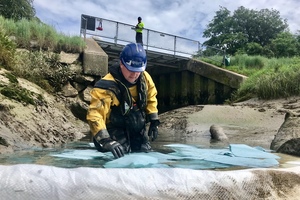
Image of an Environment Agency worker putting a floating barrier into place to trap oil on the surface

Heating oil can escape into watercourses and threaten wildlife and water quality

Over the past 3 months 32 oil-related incidents were reported to the Environment Agency in Devon and Cornwall – a 50% rise from the same period last year.

With the recent cold weather, many households – particularly in rural areas – have been using their heating more. Second homes in the area will also not have had their oil tanks used or inspected recently due to lockdown travel restrictions. But cold weather can weaken joints and damage underground pipes.

Senior Environment Officer Brian Grant said:

Oil pollution is one of the most common problems recorded by the Environment Agency and across Devon and Cornwall it is on the increase.

Not only can heating oil affect our aquifers it can also have major impact in our rivers and streams and harm fish, birds and aquatic life. Not only is the cost of losing the oil expensive, clean-up costs can be large and often not covered by household insurance.

Leaked oil can end up in drains, many of which lead directly to rivers, streams, lakes and even garden ponds, having the same effect as pouring it directly into the watercourse. It can also pose a risk to aquifers. In East Devon one aquifer supplies water to about 250,000 people.

Oil is poisonous to fish and other wildlife and smothers plants – just 2 litres of oil could seriously pollute the volume of fresh water needed to fill an olympic-sized swimming pool.

Householders with domestic oil tanks should take the following action to ensure they are safe for use:

  • Position tanks as far away as possible from drains, streams and ponds.
  • Inspect tanks, pipes and other equipment for leaks, damage and interference once a week. Any problems should be fixed as soon as possible by an Oil Firing Technical Association (OFTEC) technician.
  • Arrange for the boiler and tank to be serviced at least once a year by an OFTEC technician. This should include any underground pipe work.
  • Monitor how much oil you use. If the volume of oil being used suddenly increases, there could be a leak.
  • Supervise oil deliveries. Never allow your tank to be overfilled and don’t order more oil than you can safely store.
  • Check your home insurance covers clean-up costs on both your property and neighbouring land. Always notify insurers immediately in the event of a spill or suspected spill.
  • If a tank starts leaking, you should try to stop the oil soaking into the ground or going down drains. Contact your insurance company to arrange for an OFTEC technician or UKSpill accredited clean-up company to attend.
  • Secondary containment, such as a bund, will prevent oil from escaping into the environment if a leak occurs. This is a legal requirement for domestic tanks which store more than 3,500 litres.

To report an oil spill or leak, contact the Environment Agency’s 24-hour emergency hotline on 0800 80 70 60. There is more guidance on the oil care campaign website at http://oilcare.org.uk/.

Published 1 March 2021