E3 Statement to the IAEA Board of Governors on Verification and monitoring in the Islamic Republic of Iran, March 2021

Thank you Madame Chair,

France, Germany, and the United Kingdom would like to thank DG Grossi for his latest report contained in GOV/2021/10 and DDG Aparo for the Technical Briefing.

As E3 we remain fully committed to the JCPoA, which, when implemented, is in the collective security interests of all.

We remain extremely concerned by Iran’s continued violations of its nuclear-related commitments in recent months, including the significant new escalatory steps taken since November 2020. Iran’s announcement that it will no longer allow JCPoA-related monitoring arrangements, and that it will cease application of the Additional Protocol, is of particular concern. This will make it harder for the international community to assure themselves that Iran’s activities remain exclusively peaceful.

Some of the measures have irreversible consequences for Iran’s nuclear capabilities. Iran’s actions seriously undermine the non-proliferation benefits of the JCPoA and further complicate its revitalization. As reported by the Agency, the LEU stockpile is now more than fourteen times higher than the limit of 202,8 kg we agreed to in the JCPoA. For the first time since the start of the JCPOA, Iran now enriches uranium up to 20%. There is no plausible civilian reason for this activity, and we urge Iran to reverse course without delay. Iran continues to install over a thousand advanced centrifuges in the underground facility of Natanz and is preparing the installation of hundreds more at Fordow. Several cascades are already being used for uranium enrichment, and others could be put in use in the near future. Some of these activities are providing Iran with irreversible knowledge gain that it did not possess prior to signing the JCPoA, as well as permanently and significantly enhancing Iran’s enrichment capacity.

In addition to its significant violations of commitments related to uranium enrichment, Iran is preparing the technical infrastructure for the production of uranium metal and has already started producing uranium metal at laboratory scale. Iran has no plausible civilian reason for such activity, which will provide weapons-applicable knowledge gain. Iran should halt the production of uranium metal immediately.

Furthermore, Iran formally suspended implementation of the IAEA Additional Protocol, and of all its transparency commitments under the JCPoA. This significantly reduces the IAEA’s access and may deprive the Agency of its ability to verify that Iran’s nuclear programme is being used for exclusively peaceful purposes. Iran’s stated intention to cease applying modified Code 3.1. of the Subsidiary Arrangements to Comprehensive Safeguards Agreement is a matter of deep concern. We remind Iran that the Code is legally binding and cannot be modified unilaterally or revoked. This has previously been affirmed by this Board in its resolution contained in GOV/2009/82 and the United Nations Security Council Resolution 1803 (2008).

In this context, we welcome the conclusion of a temporary technical understanding between the IAEA and Iran. However, this understanding does not diminish the core need for Iran to restore all accesses. Iran must fully cooperate with the IAEA to ensure the Agency can continue to fulfil its reporting mandate.

In view of the seriousness of the situation, we considered tabling a resolution at this Board meeting. We know that our very serious concerns at Iran’s actions, in particular its decision to suspend the implementation of key transparency provisions under the JCPoA and the safeguards regime, are widely shared among members of this Board.

We have decided to pause on this initiative for now, despite clear support within the IAEA Board of Governors, to allow time for the Director General to conduct the renewed effort he announced to this Board earlier this week to break the deadlock and to clarify and resolve these issues without further delay. We support the DG’s initiative. We hope that Iran will use this time to enter into a substantial dialogue with the Agency on outstanding issues. We encourage the DG to keep the Board informed regarding progress on monitoring and verification in Iran in all its aspects.

We will closely monitor developments and reserve the right to call an extraordinary Board if there is not sufficient progress on this or any of the developments discussed in this meeting. It is right that this Board keeps the very serious and significant issues addressed today under active review.

The goal of the broader diplomatic process must be for Iran to reverse its steps and fully restore IAEA accesses. This is the only way that the international community can be reassured as to the exclusively peaceful nature of Iran’s nuclear programme. The E3 is working intensively to support these efforts. We call upon Iran to accept, without preconditions, the proposal by the Coordinator of the JCPoA for an informal meeting of the JCPoA participants and the United States. A diplomatic solution is the only way out of this crisis.

We once again thank the IAEA for its accurate reporting and welcome the most rigorous and impartial implementation of its mandate conferred to it by the United Nations Security Council.

We would welcome that the Agency’s latest quarterly report on monitoring and verification in Iran be made public.

Thank you.


E3 Statement to the IAEA Board of Governors on NPT Safeguards Agreement with the Islamic Republic of Iran, March 2021

Madam Chair,

Germany, France and the United Kingdom would like to thank Director-General Grossi for his report on the implementation of safeguards in Iran, contained in GOV/2021/15, and Deputy Director-General Aparo for the Technical Briefing of 25 February.

We fully support and trust the professional, independent and impartial verification conducted by the IAEA regarding Iran’s safeguards obligations. We re-emphasise the importance of the IAEA evaluating all safeguards-relevant information available to it in line with standard practice, and we encourage it to continue doing so. We are deeply concerned about the findings in the DG’s report stating that Iran has still not provided technically credible explanations for the presence of nuclear particles of man-made origin detected by the Agency at the first site mentioned in the report, originally identified in February 2019. According to the IAEA, these particles include man-made forms of natural uranium as well as isotopically altered particles of low enriched uranium and of slightly depleted uranium. Despite repeated intensive interactions between the IAEA and Iran, over a period of roughly 18 months, Iran has still not provided sufficient and plausible explanations. As a result, the IAEA cannot exclude that undeclared nuclear material may have been present at this undeclared location and that such nuclear material may remain unreported by Iran. This is a safeguards concern.

Therefore, we strongly urge Iran to extend full cooperation to the Agency and clarify this issue in a technically credible manner without further delay.

With regard to the second location mentioned in the DG’s report, we note with dissatisfaction that the current location of a metal disc made of natural uranium – which has been the subject of previous reporting by the IAEA – still has to be clarified.

It is of utmost importance that Iran should swiftly respond and facilitate the additional verification activity which the Agency needs to conduct in this respect. We will follow up on this issue and look forward to further updates by the IAEA.

Furthermore, the Agency has stated that it has detected man-made uranium particles at the third and fourth locations mentioned in the report. These findings are the analytical result of environmental samples taken by the Agency during two accesses to undeclared locations conducted in August and September 2020.

We note that the IAEA requested that Iran provide clarifications to the IAEA in January 2021, and call on Iran do so in a comprehensive and timely manner.

In this context of mounting unresolved safeguards questions, it is deeply concerning that Iran has decided to suspend application of the Additional Protocol and transparency measures agreed under the Joint Comprehensive Plan of Action (JCPoA), as of 23 February. The implementation of the Additional Protocol in Iran is crucial for the Agency to ascertain the absence of undeclared nuclear material and activities in Iran.

Moreover, we have taken note with deep concern of Iran’s stated intention to stop the implementation of Modified Code 3.1 of the Subsidiary Arrangements to Iran’s Safeguards Agreement. We fully share the position of the DG, expressed in his report, and previously affirmed by the Board and the United Nations Security Council, that the implementation of this code is a legal obligation under the Comprehensive Safeguards Agreement and cannot be modified unilaterally or revoked by Iran.

We strongly urge Iran to implement Modified Code 3.1 and to resume implementation of all transparency measures as envisaged in the JCPoA, including implementation of the Additional Protocol.

We are clear that Iran should refrain from any step impeding the IAEA’s work and provide full cooperation to the Agency with a view to clarifying and resolving all outstanding safeguards issues without further delay. We encourage the Director General to continue reporting to the Board of Governors, as appropriate, and would welcome making this report public.

Thank you, Madam Chair.


Foreign Secretary Oral statement: Update on Counter Daesh

Mr Speaker, I would like to update the House on our ongoing campaign to counter Daesh.

The safety and security of our citizens is the Government’s highest priority. It is at the core of our work in tackling Daesh, which remains our most significant terrorist threat at home and abroad. This month marks the two-year anniversary of the liberation of Syria and Iraq from Daesh’s barbaric rule. But, as we saw on 21 January in Baghdad, Daesh is still able to carry out deadly attacks.

The Global Coalition against Daesh estimates that there are still around 10,000 Daesh members at large in Syria and Iraq. Many terrorists remain in detention facilities, but others are hidden in civilian populations and camps for Internally Displaced Persons, and support for Daesh still lingers in many communities. At the same time, while Iraq and Syria remain Daesh’s primary focus, it presents a growing global threat. Diminishing Daesh’s ability to operate elsewhere in the world, including Africa and Asia, must be a priority for the international community.

Meanwhile, here at home, the threat we face from Islamist extremism is all too clear. The ongoing inquest into the horrific Manchester Arena attack, which killed 23 people, provides a daily reminder. So we will continue this struggle. The UK will continue to be a leading member of the 83-member Global Coalition, providing military support to tackle the remnants of Daesh, delivering essential aid to liberated communities, and countering Daesh propaganda.

With that in mind, let me set out the steps we are taking.

Mr Speaker, since the start of the UK’s military intervention against Daesh, known as Operation Shader, the UK has trained over 120,000 Iraqi and Iraqi Kurdish soldiers and released over 4,000 munitions at enemy targets during the air campaign.

The Global Coalition as a whole has invested more than $4 billion to ensure that our partners on the ground and in the region are better trained and better equipped than Daesh. As part of the Coalition efforts to prevent the resurgence of Daesh, the UK has provided support and funding to a range of initiatives across the region. That includes the improvement of detention facilities in North East Syria which house Daesh fighters. Military support to the sovereign government of Iraq is now adapting, in line with the changing security situation and Iraq’s growing military capabilities.

Thanks to UK efforts and those of the Coalition, the Iraqi Security Forces are increasingly able to conduct successful, independent, counter-Daesh operations. They now have the capability to deliver tactical training to their own armed forces. And this has allowed the Coalition to reduce troop numbers, focusing instead on providing specialist operational support and advice to our Iraqi counterparts.

For this purpose, the UK maintains troops deployed to the region supporting Iraqi security forces, including officers working with NATO and Coalition allies. On 18 February, the Secretary of State for Defence joined NATO Ministers in agreeing to incrementally expand NATO Mission Iraq in line with that focus.

The Royal Air Force also continues to conduct routine armed reconnaissance missions to support the Iraqi security forces. And, Mr Speaker, I can report to the House that on Thursday 11 February, a Coalition surveillance aircraft located a number of Daesh fighters. They were occupying two dispersed encampments on the banks of the Tharthar [THER-THAR] River, west of the city Of Bayji [BAY-GEE]. Two UK Typhoon FGR4s conducted a careful check of the surrounding area for civilians, before carrying out simultaneous attacks, using two Paveway IV guided bombs against each group. The bombs hit their targets within the encampments, eliminating the terrorist threat.

Our support in the region continues to be challenged, including by the persistent threat from Iranian-aligned Shia Militia Groups. We have seen a concerning pattern of attacks in recent weeks including an attack on a Coalition airbase in Erbil which tragically killed two civilians, as well as injuring several Coalition staff. We condemn these attacks on Coalition bases and diplomatic premises, and will continue to be resolute and robust in our response. Iran’s proxies must not be allowed to destabilise Iraq and the region. We work very closely with our allies to support the Government of Iraq in protecting Coalition forces and foreign missions. And we are working together to prosecute those responsible for attacks, where the Iraqi people are often the victims.

Mr Speaker, the presence of COVID-19 in Syria and Iraq remains an acute challenge. Healthcare systems in both countries are under acute pressure. The impacts on jobs, livelihoods and communities will last years and we need to be particularly vigilant to make sure that this does not provide the conditions which Daesh can exploit to gain support.

In this sense, the humanitarian response is indistinguishable from our security objectives. The UK remains one of the largest humanitarian donors to the Syria Crisis, having spent over £3.5 billion since 2012. Over this period we have distributed 28 million food rations, delivered 20 million medical consultations, and dispensed 14 million vaccines.

In addition to our existing aid commitments in Syria, the UK has provided funding to delivery partners to help mitigate the impact of COVID-19. This complements our ongoing support to deliver activities which help tackle transmission of the virus, such as healthcare, water, hygiene kits and sanitation support.

In relation to Iraq, clearly the economic challenges are compounded by COVID-19, as well as the fall in oil prices. The resulting crisis threatens Iraq’s stability, and risks creating room for extremism to grow. So we are working to counter this. We have committed £272 million in humanitarian support in Iraq since 2014, providing a vital lifeline to millions with shelter, medical care and clean water. To date, UK funding has helped provide: food assistance to over 500,000 people, life-saving healthcare services to over 4.3 million people, and safe drinking water and hygiene facilities to more than 3.5 million people.

We are working with the Government of Iraq and the international community to stabilise and reform the economy. In order to create opportunities for all Iraqis. As friends of Iraq, we stand behind the Government’s reform vision, together with all members of the Global Coalition.

Mr Speaker, Daesh’s ability to plot external operations is being degraded. As a result it is more reliant than ever on its perverse propaganda and warped narrative to maintain its relevance and encourage supporters to conduct terrorist attacks. Daesh maintains a steady drumbeat of violent communications, distributed via encrypted messaging applications. With that in mind, I want to express my appreciation to the British media, who have generally shown both restraint and editorial judgement in reporting on these matters.

Because, Mr Speaker, this is a critical moment. Even though Daesh’s brand is weakened, it remains globally recognised.

It has been adopted by an assortment of violent groups from Mozambique to the Philippines. In December 2020, the UK Counter-Terrorism Internet Referral Unit saw a 7% rise in the volume of terrorist content online, and a worrying rise in the proportion of children and teenagers arrested for terrorism offences. Assistant Commissioner Neil Basu of the Metropolitan Police described lockdown and the accessibility of terrorist content online as a “perfect storm”, because terrorists have digital access to those who are most susceptible to extremist narratives. So we are tackling Daesh’s evil propaganda head on. I am proud that the FCDO leads on this work on behalf of the Global Coalition.

The UK has carried out a range of targeted and effective offensive cyber operations. During the fight to liberate Mosul from Daesh control, we used these capabilities to disrupt Daesh’s battlefield communications, sowing confusion in their ranks and helping Coalition forces to surprise and, then, overwhelm them. And in November, we revealed that the National Cyber Force is now bringing together the expertise of GCHQ, MI6, the Defence Science and Technology Laboratory and the Ministry of Defence to take the online fight to terrorists, including groups like Daesh.

We are degrading their propaganda network, we are dismantling their lies, and we are building resilience to their violent extremist narrative. This particular battle may be invisible to the public, but it is absolutely essential, and we are prosecuting it with the utmost vigour and determination.

Mr Speaker, we continue to play our full role in combatting Daesh across each one of these fronts, to ensure the safety and security of the UK, Iraq, and our people and interests around the world. As the Prime Minister has said, we will never be complacent in this struggle. We will not let up, until Daesh is consigned to the history books. And I commend this statement to the House.


State Pension correction exercise update

We are committed to making sure that those people found to have been underpaid State Pension receive the money they are rightly entitled to.

We became aware of issues with State Pension underpayments in 2020 and we took immediate action to investigate the extent of the problem. This is an issue that dates back many years across successive governments.

Rectifying these cases is a priority for the department and we will do it as quickly as possible.

From August 2020 to January 2021 the department carried out a number of complex scans of legacy computer systems that analysed many millions of State Pension records. The scans identified cases requiring further investigation.

These cases can be categorised into the following groups:

  • People who are married or in a civil partnership who reached State Pension age before 6 April 2016 and may be entitled to a Category BL uplift based on their partner’s National Insurance contributions.

Following a change in the law in 2008, when their spouse became entitled to a State Pension, some people should have had their basic State Pension automatically reviewed and uplifted. Underpayments occurred in cases when this did not happen.

  • People who have been widowed and their State Pension was not uplifted to include amounts they are entitled to inherit from their late husband, wife or civil partner.
  • People who have not been paid Category D State Pension uplift as they should have been from age 80.

For each group of individuals affected, DWP IT systems produce an electronic prompt to consider if an individual’s State Pension amount should be increased. The prompt requires DWP staff to take further manual action and, in some cases, this did not take place.

Following the scan activity, the department formally commenced a correction exercise on 11 January 2021, clerically examining each of the cases identified through the scans. We have already reallocated a number of staff onto this work and are exploring urgently what else we can do to speed up the process.

Given the complexity of the work, it can take time to assess the most complex cases. This work involves a thorough examination of the State Pension payments, and consideration of any changes to the individual’s circumstances since the original State Pension award was made, to establish if an underpayment has occurred.

Where underpayments are identified, the department will contact the individual to inform them of the changes to their State Pension amount and of any arrears payment they will receive in accordance with the law.

The department’s current estimate of the total costs of repaying these arrears is £2.7 billion. There will also be increased expenditure on corrected live cases of around £90 million per year on average in the coming years. This estimate is based on the system scans and analysis of DWP administrative data. As more information becomes available from the correction exercise, we will refine our estimates.

In addition to the formal correction exercise, the department is continuing to review thoroughly all State Pension records where an individual has contacted the Pension Service.

The government is fully committed to ensuring that any historical errors, unaddressed by previous governments, are put right as quickly as possible.

I will update Parliament as the correction exercise progresses.


SMC responds to Budget 2021

News story

The Budget could have gone further to ensure funds will drive the right outcomes for the most disadvantaged, says Social Mobility Commission.

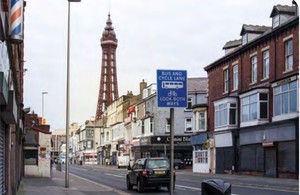
Street in UK

In response to the Budget 2021, announced on Wednesday 3 March 2021 by the Chancellor of the Exchequer Rishi Sunak, a Social Mobility Commission spokesperson said:

“This week’s Budget rightly focused on COVID-19 relief to ensure that social mobility does not get worse. While this was welcome, it could have gone further to ensure funds will drive the right outcomes for those hardest hit.

“Bringing work to towns in the North of England could address regional inequalities and will hopefully bring opportunities to new areas. But we would be keen to see this better targeted at deprived communities and clear outcomes to ensure that people in these places benefit.

“Our work has shown that where you are from matters. Disadvantaged young people can earn up to two times more in some areas of the country, even with the same levels of education. For too long, social mobility has been about moving out to move on; we need regional funding policies that give people the choice to stay and contribute to their local towns and cities. National and local government leaders will need to ensure employers, schools and colleges are encouraged to work together so that young people, particularly from disadvantaged backgrounds, have the skills needed to enter and develop in the workforces in their local area.

“It is therefore positive that the Chancellor of the Exchequer’s introduction of an additional £126 million for traineeships to help people aged between 16–24 is a positive step to giving young people work placements that will give them the best start to their careers. We were also glad to see a continued focus on apprenticeships; however, it is unclear how this funding will ensure those who need access to apprenticeships the most will benefit.

“While we welcome the extension of the £20 uplift to Universal Credit and other measures aimed at helping those who have been hardest hit by COVID, we hope to see more focus on socio-economic inequalities in the Autumn statement. The poor and the young will suffer most from an economic downturn – they need to be put at the heart of every policy and financial decision the government makes in the coronavirus recovery plan.”

Published 4 March 2021