Change of British High Commissioner to Barbados and the Eastern Caribbean: Mr Scott Furssedonn-Wood MVO

Press release

Mr Scott Furssedonn-Wood MVO has been appointed British High Commissioner to Barbados, and non-resident High Commissioner to Dominica, Grenada, Antigua & Barbuda, St Vincent & the Grenadines, St Lucia and St Christopher & Nevis in succession to Ms Janet Douglas CMG.
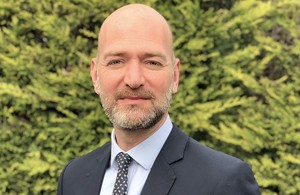
Mr Scott Furssedonn-Wood MVO has been appointed British High Commissioner to Barbados, and non-resident High Commissioner to Dominica, Grenada, Antigua & Barbuda, St Vincent & the Grenadines, St Lucia and St Christopher & Nevis in succession to Ms Janet Douglas CMG who will be retiring from the Diplomatic Service. Mr Furssedonn-Wood will take up his appointment in April 2021.

Full name: Scott Furssedonn-Wood

Married to: Elizabeth Furssedonn-Wood

Children: Two daughters, one son

Dates Role
2017 to Present Deputy Private Secretary to HRH The Prince of Wales and HRH The Duchess of Cornwall
2016 FCO, Temporary Additional Head, EU Exit, Europe Directorate
2013 to 2016 Kolkata, Deputy High Commissioner
2010 to 2013 Washington DC, Head of Political Team
2008 to 2010 Washington DC, First Secretary – Strategic Threats
2006 to 2008 FCO, Private Secretary to the Minister of State for the Middle East & the Americas
2004 to 2006 Brussels, Head of European Parliament Section, UK Permanent Representation to the EU
2001 to 2003 Brussels, Second Secretary – Institutions, UK Permanent Representation to the EU
2000 to 2001 FCO, Head of Forced Marriage Unit, Consular Directorate
2000 Joined FCO

Newsdesk

Press and Digital Department l Foreign, Commonwealth and Development Office
All the latest news is available on the Foreign, Commonwealth and Development Office page of the gov.uk website at: www.gov.uk/fcdo Follow the FCDO on twitter for the latest news @FCDOGovUK and travel advice @FCDOtravelGovUK

Published 8 March 2021


IWD spotlight on Executive Director, Bernice McNaught

Bernice McNaught is Executive Director, Repayments and Customer Compliance at SLC

Technology careers are still often seen as being male-dominated and perhaps, not a traditional road to business leadership. But women are making headway in both tech and the boardroom, getting there through many different routes. What’s the key? Follow what interests you and have the right support around you at the right point of your career.

I have benefited from very specific interventions from teachers, lecturers, managers who pushed and encouraged me to overcome the doubts we all have when it comes to our abilities. Indeed I have a lot to thank my guidance teacher Ms Duncan; without her support I wouldn’t have considered studying science. She passionately believed that your choices in life should be based on your ability and not your gender.

I wasn’t particularly interested in academic study, but LEAN (from Toyota) and systems thinking fascinated me. I spent the last year of my degree here in Scotland, followed by a PhD at Manchester, studying manufacturing and product development techniques in high tech industries. I loved the practical application of theory.

The completion of my PhD aligned with a period in the early ‘90s when large technology companies were hiring software developers in their droves, so it seemed natural to join Oracle as a developer and I spent almost 8 years in product development and latterly, on client projects. This led to a long stint at Deloitte where I was able to marry the technical skills with business and functional skills. Again, that marriage of learn and do (what we now call agile delivery) appealed to me.

What I didn’t realise at the time was that I was developing some foundational skills which I still call upon today. Technology and engineering, both science topics, teach us to approach a problem or to design, build, test, measure a solution methodically and analytically, using proven techniques, keeping a constant eye on data at the heart of the process. Those skills serve me well in the various roles I play here at SLC, as the executive director in charge of SLC’s repayments and customer compliance business, the change function and as the business sponsor of our transformation programme, Evolve, which is fundamentally a technology- enabled transformation. Both the business and the technical skills we need to exploit the new technologies we are implementing are a critical part of our transformation.

The people side is of course vital to both executive leadership and to transformation. That mostly comes with the experience I’ve gained as I’ve taken on more responsibility, working with teams here at SLC, seeing people develop and grow skills is a highly rewarding part of the job.

It is a broad mix of skills that are required to sustain us and allow us to thrive into the future. We live in a technology-enabled world, more women working their way through STEM careers will ensure that we have the best balance of diversity across the business and in the boardroom.


All female Ambassadors posted to the Netherlands join influential Dutch SER Topvrouwen network

On 8 March we celebrate International Women’s Day, marking women’s achievements and contributions to our societies. However, women still encounter significant obstacles. This year’s theme for International Women’s Day is to ‘Choose to Challenge’ and call out gender bias and inequality. The diplomatic community in the Netherlands and SER Topvrouwen are united in their mission for equal representation of women in business and government. Investing in the potential of women and girls benefits the whole of society and we have a shared responsibility to build a more inclusive world.

Joanna Roper, British Ambassador to the Netherlands, says:

The UK and the Netherlands are close partners, working together to promote gender equality and inclusion in our own countries and around the world. As part of our EmbasShe initiative, we strive to achieve equality for women and girls in all aspects of life: access to education, equal pay, and representation in top positions across all sectors.

Caroline Holtgrefe, SER Topvrouwen Director, says:

SER Topvrouwen is proud that the ambassadors have joined the SER Top Women network. This connection contributes to our shared mission. And no doubt we can learn from and inspire each other!

Adia Sakiqi, Albanian Ambassador to the Netherlands, says:

I am privileged to chair such a powerful and fast-growing group of the Women Ambassadors to the Netherlands. Becoming part of SER Topvrouwen will take our group to another level, that of connectivity, as this network is there to inspire, support and empower.

About SER Topvrouwen

SER Topvrouwen endorses the importance of having a larger share of women at the top levels of business in the Netherlands. By including women with talent and ambition in our database, we want to stimulate the rise of women to top positions. The database is open to women with relevant work experience in business or public and semi-public organisations at administrative, management or executive level. The desire to enhance innovative capacity and achieve balanced decision-making and the broadest possible sensitivity to development in society means that gender diversity in companies belongs at the top of the agenda in the boardroom. SER Topvrouwen will involve all parties – companies, executive search agencies, men and women – in the debate about diversity and accelerating diversity.

The Women Ambassadors Group is a collective of female Ambassadors accredited to the Kingdom of the Netherlands. The coordinator this year is the Albanian Ambassador to the Netherlands, H.E. Adia Sakiqi. The group organises events and highlights work by the female Ambassadors and like-minded organisations in the Netherlands.

About British Embassy The Hague

The British Embassy’s EmbasShe campaign has been active on gender equality and female leadership since 2018. The campaign focuses facilitating conversation and opportunities within the Embassy and by working with external partners. The UK’s Foreign, Commonwealth and Development Office (FCDO) is dedicated to inclusion and diversity in all areas of work. The Girls Education campaign is one of their important foreign policy priorities this year. British Ambassador to the Netherlands, H.E. Joanna Roper previously served as the FCDO’s Special Envoy for Gender Equality.


Proposed new byelaws to protect salmon stocks on the Severn

The Environment Agency is urging anglers, netsmen and interested parties to have their say on proposed new byelaws that aim to protect the salmon and sea trout stocks on the River Severn and Severn estuary.

It is hoped that the proposed new measures, which will also protect stocks on the River Usk and Wye, will be in place for the next 10 years* and contribute to a reversal of the current decline of returning adult salmon numbers.

A consultation which seeks views on the Environment Agency’s proposed measures to better manage salmon fishing on the Midlands rivers opens from 5 March 2021 and runs for 4 weeks.

Evidence shows an international decline in wild Atlantic salmon stocks. This consultation provides the opportunity to express views on the suggested byelaws to improve the chances of salmon survival and further increase numbers that can successfully spawn. Leading to recovery and the long term future sustainability of this iconic species.

The proposed new byelaws would:

  • Prohibit the operation of the commercial draft net and putcher fisheries, and require the release of all salmon and sea trout caught by the lave nets in the Severn Estuary.

  • The number of available lave net licences to be set at 22 through a new Net Limitation Order, to allow this heritage method to continue without impacting the fish stocks.

  • Require mandatory catch and release of all salmon and sea trout caught by rod and line and lave nets.

  • Restrict angling fishing methods in order to improve the handling and survival of released salmon.

Kevin Austin, Deputy Director of Agriculture, Fisheries and the Natural Environment at the Environment Agency, said:

We are taking decisive action to protect salmon stocks by introducing rod and net fishery byelaws where necessary in order to protect salmon and dependent fisheries.

The decline in the numbers of wild salmon seen not just in English rivers but throughout the North Atlantic is of great concern and we are determined to protect the future of this important species. We must all work together to successfully protect this iconic fish for future generations.

Chris Bainger, Fisheries Technical Specialist at the Environment Agency, said:

It is essential we take urgent action now to prevent any further decline in our salmon stocks. Recent evidence has showed a significant reduction in returning adult salmon to the Severn, and levels are now below the set minimum conservation limits.

Following the introduction in 2019 of emergency regulations for salmon on the River Severn for both rod and net fisheries, the salmon stock is still in decline and fragile. Long lasting measures are now needed to provide greater protection to make sure those fisheries that continue to fish these stocks do so in a sustainable manner to support stock recovery as quickly as possible.

Chris continues:

We are not taking these steps lightly and understand the impact of the proposed byelaws may not be popular with some, but we believe we must act now, before it is too late.

The Environment Agency is encouraging all anglers to review the proposals and participate in the consultation and play a part in the recovery. The next generation should also be able to enjoy the benefits of sustainable salmon and sea trout fishing.

Reducing the taking of salmon is only one part of the Environment Agency’s larger national programme to protect salmon stocks. Actions taken by the Environment Agency and its partners that contribute to protecting salmon stocks include removing barriers, improving water quality, minimising predation and implementing better agricultural practices and addressing unsustainable water abstractions.

*With a review after 5 years.

Note to editors

  • The Environment Agency is consulting on a River Severn Net Limitation Order and a proposed new and updated suite of byelaws to limit the exploitation of salmon by both rod and net fisheries in order to conserve salmon stocks and ensure the future sustainability of the Severn salmon fishery.
  • You can view the consultation documents and respond online.
  • This consultation will be of interest to anyone who fishes for salmon and sea trout on the River Severn as well as those who are dependent upon salmon rod fishing to support or supplement their livelihood. This includes residents, businesses, recreational and commercial river users, charities, statutory organisations and members of the public.
  • River Severn salmon populations have declined in recent years and are now falling below the Conservation Limit, the minimum target that is deemed necessary to sustain the populations at a sustainable level. Similar levels of declining salmon stock status have been observed on the River Usk and Wye. Salmon destined for these rivers are caught in the Severn estuary net fishery. All rivers are classified as being ‘Probably At Risk’.
  • In recent years Natural Resources Wales have introduced mandatory measures of 100% catch and release on all Welsh rivers. With further measures which include angling method restrictions to improve survival of rod caught salmon. There is also a prohibition of taking salmon from any net fisheries.
  • The proposed new regulations are designed to protect salmon and sea trout stocks in the River Severn as well as those stocks on the River Usk and Wye which contribute adult salmon that support the Severn estuary net fishery. The proposed measures include: Severn Estuary and River Severn Salmon and Sea Trout Protection Byelaws 2021 and Environment Agency (Limitation of Severn Estuary Lave Net Fishing Licences in England) Order 2021.
  • Responsible fishing provides a wonderful opportunity to connect with nature and feel the range of benefits doing so can bring. However, it is important to remember that if you decide to take up fishing, you must have a valid rod fishing licence and adhere to fishing byelaws and fishery rules.
  • It’s easy to buy a rod fishing licence online.
  • Rod fishing licence income is vital to the work of the Environment Agency to maintain, improve and develop fisheries. Revenue generated from rod fishing licence sales is reinvested to benefit angling, with work including tackling illegal fishing, protecting and restoring habitats for fish and improving facilities for anglers.


The government response to commercial spaceflight consultations

On Friday 5 March 2021, I published the government’s response to the consultations that were held in the summer and autumn of 2020 on the secondary legislation which will implement the Space Industry Act 2018.

We sought views on the operability and effectiveness of the draft space industry regulations and associated guidance and supporting documents (July), as well as the government’s approach to liabilities, insurance and charging (October).

We also asked respondents to provide evidence and test the assumptions in the consultation-stage impact assessment.

This government is committed to growing the space industry in the UK and cementing our leading role in this sector by unlocking a new era in commercial spaceflight across the UK.

The draft space industry regulations, together with draft instruments covering accident investigation and appeals, will pave the way for a new commercial licensing regime for spaceflight activities from UK.

It will support safe and sustainable activities that will drive research, innovation and entrepreneurship, exploiting the unique environment of space.

This will feed into our emerging national space strategy as we develop our priorities for levelling up the UK and promote the growth of this thriving sector in the long term.

We also recognise the importance of ensuring that the environment is protected from the adverse effects of spaceflight activities.

This is why the Space Industry Act 2018 requires applicants for a launch or spaceport licence to submit an assessment of environmental effects as part of their application.

We also published a consultation on 10 February 2021 setting specific environmental objectives for the spaceflight regulator to take account of when considering these assessments, reinforcing government’s wider policies towards the environment and sustainability.

Our spaceflight legislation has been designed from the outset to support commercial operations. This, together with the Technology Safeguards Agreement signed with the US in June 2020, means that the UK is well-placed to attract new commercial opportunities in this rapidly growing sector.

Together with industry, we set a target to grow the UK’s share of the global space market to 10% by 2030. Today we are a step closer to reaching this goal.

The government welcomes the thoughtful and detailed responses received from across the 4 nations of the UK. Invaluable insights were provided by those who responded to the consultation and included enthusiastic responses from schoolchildren.

We’re pleased to report that our modern regulatory framework was supported by the vast majority of respondents with many applauding the flexibility of our proposed approach, which fosters adaptability through an outcomes-based focus.

The response I have shared sets out the ways we’ve adjusted the draft space industry regulations and associated guidance material to reflect, and where possible accommodate, the suggestions and recommendations made through the consultation process.

We believe that this collaborative approach will not only strengthen the licensing regime we’re implementing but also demonstrates the government’s ongoing commitment to growing this exciting sector.

My department has worked closely with the Department for Business, Energy and Industrial Strategy (BEIS), the UK Space Agency and Civil Aviation Authority (CAA) to legislate for a wide range of new commercial spaceflight technologies, including:

  • traditional vertically launched vehicles
  • air-launched vehicles
  • sub-orbital spaceplanes and balloons

It’s our intention to bring this legislation before the House later this year.

Next steps

Following the publication of the government’s response, I’ll update the House once we’re ready to submit the secondary legislation for Parliamentary scrutiny.