Recovered appeal: 193 Camp Hill, Birmingham, B12 0JJ (ref: 3250072 – 8 March 2021)

We use some essential cookies to make this website work.

We’d like to set additional cookies to understand how you use GOV.UK, remember your settings and improve government services.

We also use cookies set by other sites to help us deliver content from their services.


PM call with President Erdoğan of Turkey: 8 March 2021

Press release

Prime Minster Boris Johnson spoke to Turkish President Recep Tayyip Erdoğan this afternoon.

The Prime Minster spoke to Turkish President Recep Tayyip Erdoğan this afternoon.

They discussed the importance of the UK-Turkey relationship and ways to deepen that relationship across trade, the links between our people and defence – particularly recognising the UK and Turkey’s status as NATO allies.

On trade, both leaders welcomed the agreement of the UK-Turkey Free Trade Agreement in December and agreed that it should form the basis of further trade and investment between our countries.

The Prime Minister and President Erdogan discussed the upcoming UN Cyprus talks. The Prime Minister emphasised that the UK continues to be a strong supporter of a comprehensive, just and lasting settlement of the Cyprus issue, based on the internationally accepted model of a bi-zonal, bi-communal federation.

The leaders also talked about the situation in Libya. The Prime Minister stressed the importance of implementing the ceasefire agreement and reducing tensions in the country.

The Prime Minister offered his condolences following the deaths of thirteen Turkish citizens in northern Iraq and condemned killings by PKK terrorists. The Prime Minister and President Erdogan agreed on the importance of the UN Security Council Resolution facilitating cross-border humanitarian access from Turkey to north west Syria being renewed.

The Prime Minister noted the importance of ambition in tackling the fight against climate change and the leaders looked forward to continuing cooperation ahead of COP26 in November.

Published 8 March 2021


Minister Anne-Marie Trevelyan addresses International Women’s Day event

Thank you, Renata for that kind introduction, to our esteemed panellists, and to you, our audience, for joining our important discussion today on gender equality and climate change.

As the COP26 Adaptation & Resilience Champion, I have met with some amazing female activists, advocates and leaders to hear their views and ideas about how we can ensure that gender is at the centre of our efforts to adapt and build resilience.

This is essential, because historically marginalised groups are, indisputably and primarily as a result of wider discrimination, socio-cultural barriers, and inequality, more vulnerable to those climate impacts.

This includes but is not limited to those living in poverty, people with disabilities, youth, indigenous peoples, and of course, women and girls.

Women and children are significantly more likely than men to die during climate-related disasters, and they comprise up to 80% of those displaced by natural disasters.

Women constitute more of the world’s poor and are often directly dependent on threatened environmental resources as their primary source of food and income.

Women often don’t have the same access to other resources – such as education, information, land and credit – that would help them to respond to a changing climate.

And climate change also worsens existing inequalities, increasing gender-based violence and the exploitation of women and girls, particularly for the most marginalised.

Around 12 million more young girls are thought to have been married off as the frequency of natural disasters has increased.

It also impacts girls’ education, as after natural disasters, girls are often the first to drop out of school to help their families.

It could be easy, in light of this incontrovertible evidence, to paint a picture of women and girls, as mere victims of climate change.

However, we know, and the panellists here today can attest to the fact that women and girls – as educators, decision makers and advocates, at all levels – are critical in the fight against the climate crisis.

When we take action to confront climate change, in our communities, in our countries and organisations, we should, of course, be mindful of the ways in which climate change affects men and women differently.

And we should work to actively promote gender equality and to empower women and girls.

Their insights and experiences are invaluable if we are to find the right solutions. We must therefore do all we can to amplify their voices.

This will not only improve gender equality, but it will also lead to more sustainable, better outcomes for the climate and our societies.

140 million years of productivity are lost annually because of the hours that women and girls spend using slower, more polluting cooking methods. Just try and get your heads around that statistic.

By investing in clean cooking solutions, emissions will be reduced, and girls will have more time to pursue education.

There is also evidence of better outcomes when women are brought into adaptation and resilience action.

Lower death rates following on from hurricanes in Central America, for example, have been ascribed to women’s involvement in preparedness education.

So through our Presidency of COP26, we will deliver on the Gender Action Plan agreed by all countries at the last COP.

For us, this means committing to integrating gender equality and inclusion into climate action, and enabling women, girls and marginalised peoples to be a critical part of the fight.

And I see this is an essential part of my role.

I am committed to ensuring that our adaptation action is gender-responsive.

Without actively addressing the unequal power dynamics that drive vulnerability – including gender inequality – adaptation efforts risk failing to reach their core objectives, or even further exacerbating marginalisation and climate vulnerability.

So the UK has also supported women’s empowerment and leadership within our clean energy sector, investing in women’s skills and setting specific targets for diversity and gender equality.

Prioritising gender equality in our mitigation work will help us deliver net zero by 2050.

And we know that education of girls goes hand in hand with their empowerment.

So we have set an ambitious global target to get 40 million more girls into school.

Ensuring 12 years of quality education for girls will support girls, their families and their communities to be more resilient in the face of those climate shocks.

And we also see gender as a key part of our work on climate finance.

And we’ve worked to fund efforts to integrate gender and social inclusion into climate change planning and budgeting processes.

Because climate finance can only be effective if it gets to the people who need it most.

All of this is why I’ve convened this group of experts and advocates here today.

We look forward to learning from your experiences integrating gender equality for better climate outcomes.

We want to know what challenges you faced and how you overcame them.

Our panellists have led inspirational work in this area, both internationally and here in the UK.

Whether that’s through a project working to embed gender into international climate programming, or by ensuring climate finance reaches grassroots communities.

Let’s learn from them today and resolve to apply their lessons to our own work.

After all, now is the time to close the gap on both gender equality and climate action.

Thank you Renata.


How the National Theatre tackled the COVID-19 challenge

In our last episode of the #DynamicUK webinar series, the British High Commission in Cyprus talks to Flo Buckeridge, Senior Producer for National Theatre Live. The webinar focuses on the National Theatre’s creative response to the COVID-19 pandemic and how they continue to innovate on their engagement with their audience, bringing theatre closer to the people around the globe.

Flo Buckeridge, talked to Meropi Moyseos, an experienced local journalist covering the field of culture, about the immediate response of the National Theatre, National Theatre Live and National Theatre at Home, the streaming platform which launched in December.

Throughout this insightful talk, Flo Buckeridge, discusses what’s happened since NT closed down because of the pandemic, the importance of sharing their work and world-known productions, as well as the value of engaging with their audience. Moreover, the NT’s Senior Producer, discusses National Theatre at Home, the availability of the National Theatre Collection, how NT Live returns to cinemas and the filming of Olivier in the Round and Romeo and Juliet, produced by NT.

Commenting on how the National Theatre responded to the pandemic, Buckeridge states:

Well, I think like everyone in the world, we didn’t know how long this was going to last for, and we didn’t know if we were closing for just a few weeks or whether it was going to be much longer than that. I think we all thought that it was much more likely to be a shorter period than it has been, so we’ve kind of had to think quickly, I guess about ways in which we continued to engage with audiences.

Because everything we did, from our cinema screenings, to our touring internationally, to being in the West End in London, and then of course, our Southbank theatre, had to be closed. And we were very-very fortunate with having done NT Live, having a back catalogue of high quality recordings that we thought we wanted to make available to audiences in the broadest way that we could and the fastest way that we could.

So very quickly, we created what we called “National Theatre at Home” and it started in April. We made a recording of “One Man, Two Guvnors”, available on YouTube for free, it had a premiere moment at 7 o’clock (GMT) on a Thursday, which was in keeping with the NT Live performance time, which is always at 7 o’clock on a Thursday, and we made it available for audiences to watch around the world from their homes.

The online streaming was thought to last for about four weeks, but it turned out to be much longer than expected, as the pandemic is still on the rise and the whole world is on lockdown. Eventually 16 productions were made available to the public and the whole program ran for 16 weeks. Through this initiative, the National Theatre was able to keep engaging with its audiences, and they reached a total global audience of 15 million people that watched those recordings.

For NT Live, we are very sure that what we are filming isn’t a film of ‘One Man, Two Guvnors’… When we know that we are going to film a production for NT Live, we don’t ask the directors, or the creative teams to change anything about the production for the broadcast. We would come in and film around what exists and we would make it work.

There are challenging things from a filming perspective – that’s kind of our challenge to resolve with the director. And, whereas we are still making something for television, when you know that the output it’s only going to be seen that way, there isn’t going to be a live audience, that’s quite a shift in thinking and planning, and allows you to approach it in a different way.”

Having worked at the National Theatre since 2013, Flo has produced many broadcasts working across National Theatre productions but also regularly with partner theatres across the UK. Flo has responsibility for ensuring projects maximise their financial contribution and increase audience reach. Flo oversees the production of the broadcasts including from production through to budget, rights and contracts and the distribution of NT Live into cinemas globally.

Discover more and gain insights on National Theatre Live and National Theatre at Home, by watching the entire webinar in the video below.

#DynamicUK – Flo Buckeridge, National Theatre

The British High Commission opened up an invitation to six highly innovative British professionals from various industries to share their knowledge and expertise on how the current pandemic affected their fields.

Check out our YouTube channel for all of the exciting discussions that took place in this webinar series.


An inspection of the use of contingency asylum accommodation – key findings from site visits to Penally Camp and Napier Barracks

News story

During the week of 15 February 2021 inspectors from ICIBI and Her Majesty’s Inspectorate of Prisons (HMIP) visited Penally Camp and Napier Barracks, spending two days at each site.

Accommodation Icon

During the week of 15 February 2021, as part of ICIBI’s inspection of contingency asylum accommodation, inspectors from ICIBI and Her Majesty’s Inspectorate of Prisons (HMIP) visited Penally Camp and Napier Barracks, spending two days at each site. The Independent Chief Inspector made a follow-up visit to Napier Barracks on 4 March.

HMIP is producing a detailed written report, which the Independent Chief Inspector will append to ICIBI’s full inspection report on completion of this inspection. As well as Penally Camp and Napier Barracks, ICIBI’s report will cover hotels and any other forms of contingency asylum accommodation. ICIBI’s report and recommendations will be submitted to the Home Secretary and published in the usual way. Meanwhile, the points below, which have been shared with the Home Office, provide a high-level overview of what inspectors found during their site visits. The headings are those typically used by HMIP.

ICIBI’s inspection of contingency asylum accommodation is ongoing and inspectors are continuing to gather, analyse and test written and oral evidence from the Home Office, the contracted third parties, national and local stakeholders, and asylum seekers who are or have been in contingency accommodation. While the public ‘call for evidence’ has closed, ICIBI is still keen to receive evidence, including the latest information, about contingency asylum accommodation in general and about specific sites, including Penally Camp and Napier Barracks.

Leadership and management

  • Opening Penally Camp and Napier Barracks as contingency asylum accommodation, particularly doing so safely during a pandemic, presented substantial logistical and other challenges. Despite this, the Home Office gave its accommodation contractors less than two weeks to make each site operational.

  • Local stakeholders who needed to set up essential services for residents, such as healthcare, were not consulted in advance of the Home Office taking the decision to proceed. They were given insufficient time to prepare before the first asylum seekers arrived and there seems to have been little understanding or regard on the Home Office’s part of what impact this would have at the local level.
  • In September/October 2020, Public Health England had advised the Home Office that opening multi-occupancy dormitory-style accommodation at Napier was not supported by current guidance, and both they and Public Health Wales expressed concerns about the COVID-safety of the accommodation. Both sites were opened before Public Health Wales and Public Health England recommendations had been actioned.
  • Public Health England further advised that if the accommodation was to be used, the ability to isolate positive cases and/or establish effective cohorting arrangements was essential to containing any COVID-19 outbreak. Given the cramped communal conditions and unworkable cohorting at Napier, once one person was infected a large-scale outbreak was virtually inevitable. In our resident survey at Napier, none of those who responded felt they had been kept safe from COVID-19. At Penally, where overall numbers were lower and cohorts smaller, the vast majority still did not feel they were being kept safe from the risk of infection.
  • The Crown Premises Fire Safety Inspectorate (CPFSI) informed us of serious concerns about fire safety at Napier that had not been fully addressed at the time of the ICIBI/HMIP inspection visit. The work recommended by CPFSI at Penally had been largely completed.
  • While COVID-19 restrictions had meant that some asylum seekers had been accommodated at Penally Camp and Napier Barracks for much longer than had been originally envisaged, the Home Office had been slow to recognise the impact on residents of prolonged isolation in accommodation that was not designed or intended for long-term stays.
  • The resources, skills and assurance systems required to support long-term communal accommodation were inadequate at both sites:

    • On-site management structures were unclear, partly because of the multiple sub-contractors and partly because of inadequate oversight by the contracting companies.
    • Managers at both sites lacked the experience and skills to run large-scale communal accommodation.
    • The Home Office did not exercise adequate oversight at either site and Home Office staff were rarely present. There were fundamental failures of leadership and planning by the Home Office.

Safety

  • We met many men who described feeling depressed and hopeless at their circumstances. In our resident survey, all of those who responded at Napier and the vast majority at Penally said they had felt depressed at some points. At both sites about a third of respondents said they had mental health problems; about a third of respondents at Napier said they had felt suicidal.
  • We had serious safeguarding concerns in relation to Napier. There was inadequate support for people who had self-harmed. People at high risk of self-harm were located in a decrepit ‘isolation block’ which we considered unfit for habitation. Residents who may have been children were also housed in the same block pending an age assessment; in one case we were told that this had been for up to two weeks.
  • Residents at both sites were normally able to come and go. The exception was during the major COVID-19 outbreak at Napier, when over a hundred people were confined to their billets for approximately four weeks and unable to go outside except to use the mobile toilets or showers. They were warned that they might be arrested if they left the camp. In at least one case, a resident was forcibly returned to the camp by the police.
  • At both sites, residents described feeling trapped in poor conditions and feared that if they moved out they would jeopardise their only source of support and possibly their asylum cases.
  • Residents at both camps, especially Napier, told us they had been shouted at and intimidated by protestors and members of the public who did not want them there and that this was another reason they did not want to leave the camp. While Napier was close to a town (Folkestone), Penally Camp was isolated and the nearest town (Tenby) was a long walk.

Respect

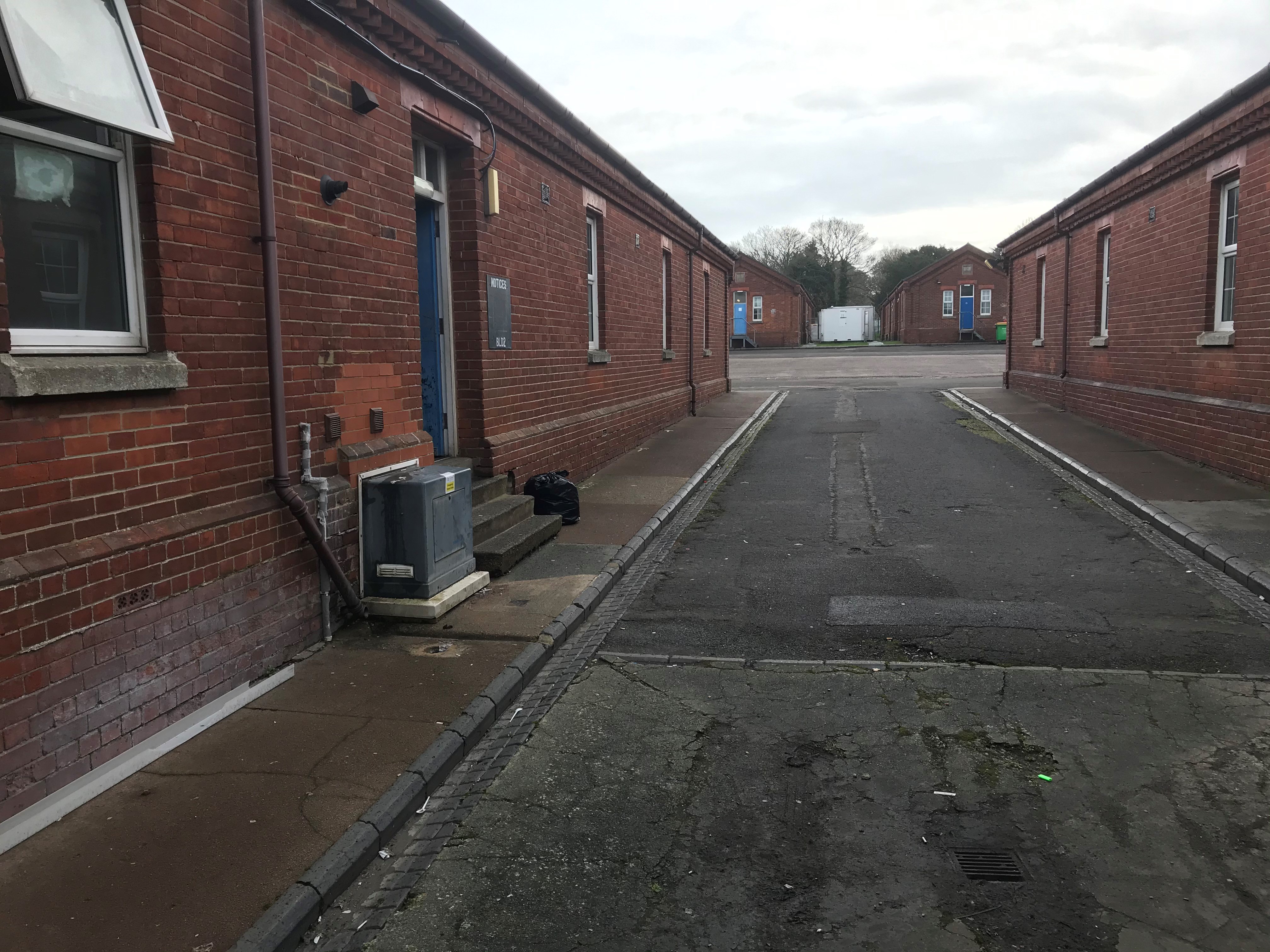
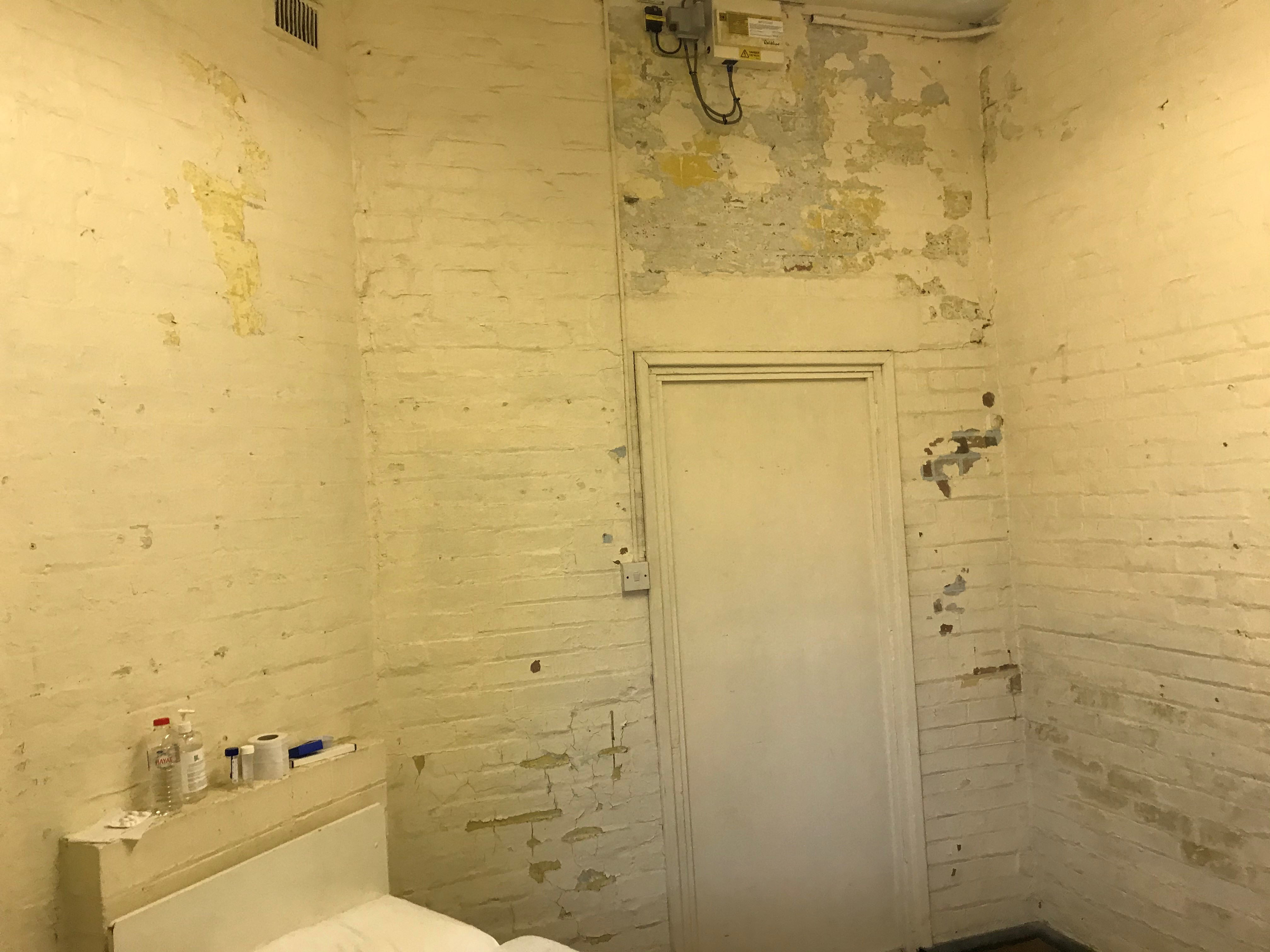
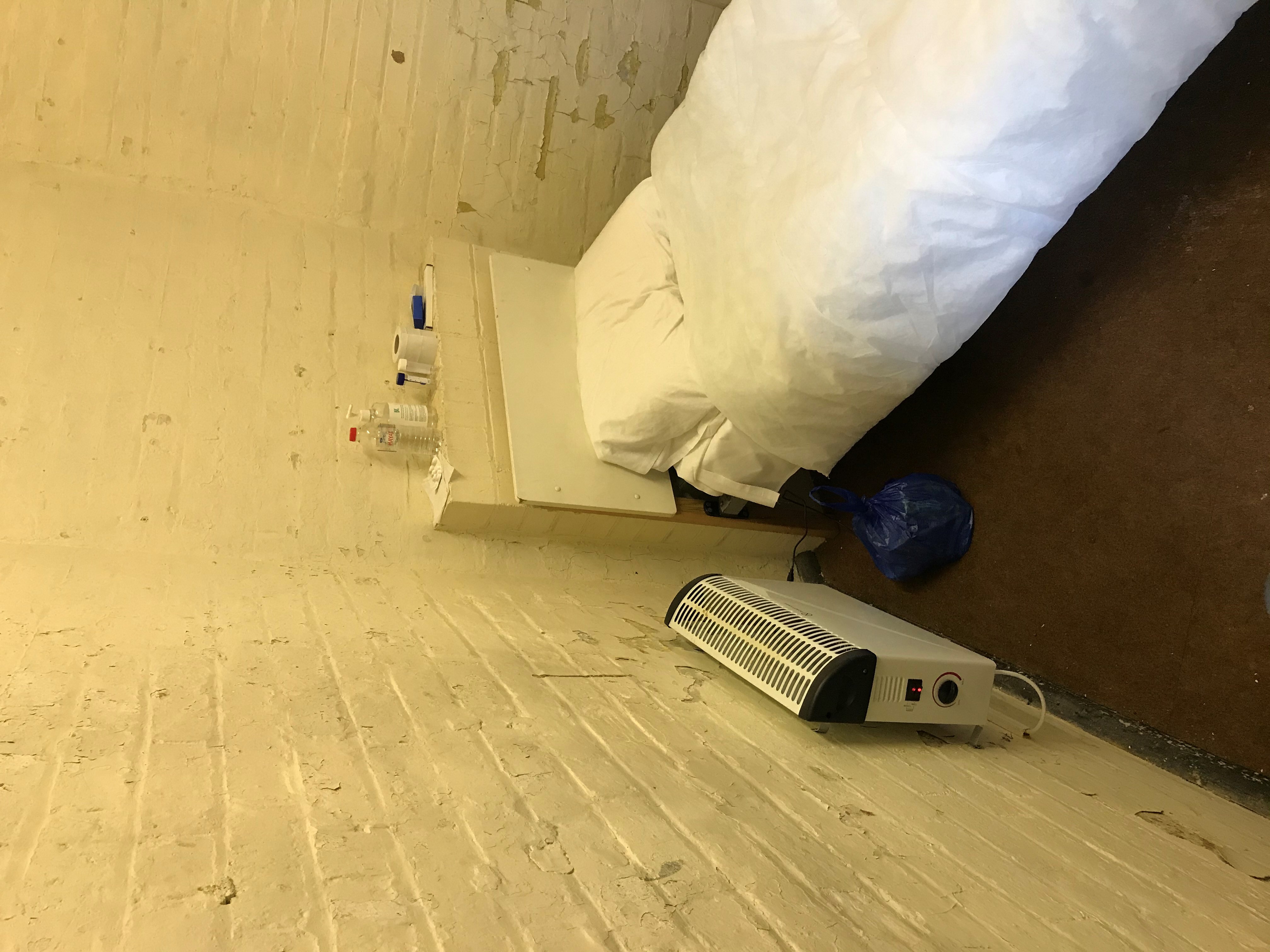
  • The environment at both sites, especially Napier, was impoverished, run-down and unsuitable for long-term accommodation.
  • Cleanliness at both sites was variable at best and cleaning was made difficult by the age of the buildings. Some areas were filthy.
  • The accommodation contractor had made efforts to improve the facilities (for example, installing mobile shower and toilet units), and at the beginning of March 2021 work was in hand at Napier to reconfigure the interior of some blocks into smaller living units. However, the age and general condition of the buildings made the costs of more substantial refurbishment prohibitive given the uncertainty over how long they would be required as asylum accommodation.
  • At Napier, the number of residents had reduced from almost 400 in mid-January 2021 to 62 in mid-February. Since December 2020, the number at Penally had reduced to c.80, having been double this at its height. The multi-occupancy billets at both sites were cramped, which made effective social distancing difficult, and inspectors heard that this had been impossible before the numbers were reduced.
  • Most current residents had been in Penally or Napier for several months. They did not know how much longer they would be in the camp and this was a major cause of distress. They had been told initially that they would be there for a few weeks. Over the months, they had been told various things about their stay and about moving on and now did not trust anything they heard. Residents told inspectors they did not understand why they were still in the camp while others had been moved out, and some believed (mistakenly) that it was in some way connected to the Home Office’s view of the strength of their asylum claim, and the fact they had been in Penally or Napier would count against them.
  • Most residents were awaiting a substantive asylum interview but did not have a date for this. Home Office communication with them was poor. It had only recently commenced video meetings with residents. These meetings did not provide information about individual asylum claims, which was what concerned residents most. The dearth of official information gave rise to misunderstandings and rumours, which had a negative effect on individuals and the collective mood.
  • Managers did not systematically survey or consult residents.
  • Most residents we spoke to said that onsite security and services staff were friendly and treated them with respect.
  • All residents had a mobile phone throughout their stay and could access the internet, although WIFI at Penally had been poor until recently. They had little to do to fill their time, a lack of privacy, a lack of control over their day-to-day lives, and limited information about what would happen to them. These factors had had a corrosive effect on residents’ morale and mental health.
  • While there were some restrictions regarding access to the sites, mostly COVID-related, local voluntary groups were supporting residents at both camps, including with clothing and other necessities, by organising activities and signposting and facilitating access to legal representatives. Meanwhile, to supplement its contracted telephone helpline service, Migrant Help had arranged to have someone onsite at both sites.

Preparation for leaving the accommodation

  • Most residents had been in hotel accommodation before being moved to either Penally or Napier. Typically, they received little notice (a matter of hours) of the plan to move them to one of the camps and no explanation of why. The same was true of moving them from Penally or Napier. Most were moved back to a hotel. At the beginning of March 2021, Napier residents were informed that they would all be relocated by 2 April. They were not told to where. Most did not believe it would happen and feared that if there were new arrivals before they left they could again become trapped by a new COVID-19 outbreak.
  • There was little focus on helping residents to prepare for next steps, but the visiting agencies and charities provided useful practical support for those who were moving on.

Penally Camp Images

Napier Barracks Images

Published 8 March 2021