Prime Minister to chair meeting of Crime And Justice Taskforce to discuss Violence against Women and Girls

Press release

Prime Minister Boris Johnson will today chair a meeting of the government’s Crime and Justice Taskforce to discuss further steps to protect women and girls and make sure our streets are safe.
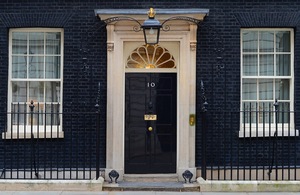
Prime Minister Boris Johnson will today chair a meeting of the government’s Crime and Justice Taskforce to discuss further steps to protect women and girls and make sure our streets are safe.

The meeting will be attended by ministers, senior police officers and representatives from the Crown Prosecution Service.

Ahead of the meeting the Prime Minister said:

Like everyone who saw it I was deeply concerned about the footage from Clapham Common on Saturday night.

I have spoken with the Metropolitan Police Commissioner who has committed to reviewing how this was handled and the Home Secretary has also commissioned HM Inspectorate of Constabulary to conduct a lessons learned review in to the policing of the event.

Tomorrow I will chair a meeting of the Government’s Crime and Justice Taskforce to look at what further action we need to take to protect women and ensure our streets are safe.

The death of Sarah Everard must unite us in determination to drive out violence against women and girls and make every part of the criminal justice system work to protect and defend them.

On the agenda for today’s meeting will be:

  • The strategy on Violence against Women and Girls

    It is right that we listen to the powerful experiences of people across the country which is why we reopened our survey to inform this work. Since it launched again on Friday evening it has already had 53,000 responses.

  • Government work on securing Safer Streets

    We are already working with forces on local schemes, backed up by £25m, to help prevent crime, such as increased street lighting and CCTV. We will look at how this work can further help to make the streets safer for women.

  • Rape prosecutions and the Criminal Justice System

    We are conducting an in-depth review into the criminal justice system from end to end when it comes to rape and sexual assault. Every part of the criminal justice system has to play its role in bringing perpetrators to justice and better supporting victims.

Home Secretary Priti Patel said:

With Sarah and her family in my thoughts and prayers, I will continue to do all I can in my role as Home Secretary to protect women and girls.

Everyone should be free to walk our streets without fear of harassment, abuse or violence.

The Home Office survey on tackling violence against women and girls has received an unprecedented 53,000 responses since it reopened on Friday and I’d urge everyone to give us their views.

Published 15 March 2021


Prime Minister: “Our international ambitions must start at home”

  • Landmark foreign policy and national security review will set out the PM’s vision for a stronger, more secure, prosperous and resilient UK in 2030

  • New strategy will drive investment in domestic industries like defence, technology and alternative energy

  • More foreign and defence work will be done outside of London with the expansion of the FCDO’s East Kilbride office, the National Cyber Force HQ in the North and the creation of regional trade hubs

The Integrated Review of security, defence, development and foreign policy, published tomorrow, will make the case for a UK international policy that rests on strong domestic foundations – in particular our security, resilience and a robust economy at home.

At the heart of our ability to be a strong international player is shoring up those foundations and the Integrated Review will make a case for more investment in national infrastructure, innovation and skills to ensure the UK can compete on a global level.

In November the Prime Minister announced the first conclusion of the Integrated Review: a £24bn programme of investment in defence. This will allow the government to invest in cutting-edge technology while creating 40,000 British jobs over the next four years.

Further commitments will be made to strengthening the UK’s core industrial base in the Integrated Review, from building ships in Scotland and armoured vehicles in Wales, to lithium mining in Cornwall and manufacturing satellites in Northern Ireland.

These investments will create jobs for the future and maximise our advantage in science and technology while diversifying the UK’s supply in goods critical for our defence and economy.

The Prime Minister said:

The foundation of our foreign policy is who we are as a country: our values, our strengths and – most importantly – our people. So I am determined to ensure we have a foreign policy that delivers for those people.

Our international ambitions must start at home, and through the Integrated Review we will drive investment back into our communities, ensuring the UK is on the cutting-edge of innovation and creating an entire country that is match-fit for a more competitive world.

The review also recognises the greatest source of strength – at home and abroad – is the Union between England, Scotland, Wales and Northern Ireland. By combining the resources of our Union and pooling the expertise of our citizens in areas such as science and health we have been able to respond to global challenges and project our influence overseas.

We will therefore ensure our international policy thinking is driven by the whole UK. The Integrated Review will announce that the number of staff at the Foreign, Commonwealth and Development Office hub in East Kilbride will increase by 500, taking the total number of jobs now based in Scotland to 1,500. Further jobs will also be created outside of London by the establishment of the new National Cyber Security Force HQ in the North of England and trade hubs in Wales and Northern Ireland. The new trade hubs will work on the same model as the one established in Edinburgh last year.

The UK is a country with uniquely global interests. While our success internationally is built on domestic foundations, our prosperity is inextricably linked to our integration into the global economic and financial system.

With less than 1% of the global population we were the world’s 5th biggest exporter in 2019. We sold £690 billion of goods and services to the rest of the world, sustaining millions of jobs – of which three quarters were outside London. The government will therefore prioritise the creation of an open international order where free trade thrives.

We will expand our trading relationships, champion free trade and reinvigorate the World Trade Organisation. The UK is currently negotiating Free Trade Agreements with the US, Australia and New Zealand, and we are applying for accession to the CPTPP. These negotiations and others will help realise the government’s manifesto commitment to agree trade agreements with countries covering 80% of UK trade by the end of 2022.


Further MHRA response to the precautionary suspensions of COVID-19 Vaccine AstraZeneca

Published 14 March 2021
Last updated 16 March 2021 + show all updates

  1. We have issued an updated statement. It is still the case that it has not been confirmed the reported blood clots were caused by the COVID-19 Vaccine AstraZeneca.

  2. We have updated our statement.

  3. First published.


Iran: Foreign Secretary issues statement on Nazanin Zaghari-Ratcliffe case

News story

The Foreign Secretary has issued a statement on Nazanin Zaghari-Ratcliffe’s case, following a further hearing today.

Foreign Secretary Dominic Raab said:

It is unacceptable and unjustifiable that Iran has chosen to continue with this second, wholly arbitrary, case against Nazanin Zaghari-Ratcliffe. The Iranian government has deliberately put her through a cruel and inhumane ordeal.

Nazanin must be allowed to return to her family in the UK without further delay. We continue to do all we can to support her.

Published 14 March 2021


International Policy Review Puts Cyber at the centre of the UK’s Security

  • This week’s Integrated Review will commit to a new, full spectrum approach to the UK’s cyber capability – keeping our people safe, staying ahead of our enemies and improving the lives of the British people
  • The PM will announce the establishment of a ‘cyber corridor’ across the North of England, creating and sustaining thousands of jobs
  • The National Cyber Force is transforming the UK’s ability to conduct targeted offensive cyber operations to impose real-world costs on our adversaries

Our ability to detect, disrupt and deter our adversaries while taking advantage of the revolution in the use of smart and cyber technology will be dramatically enhanced by commitments in the Integrated Review of security, defence, development and foreign policy, to be published this week.

The review will set out the importance of cyber technology to our way of life – whether it’s defeating our enemies on the battlefield, making the internet a safer place or developing cutting-edge tech to improve people’s lives.

Cyber Security is the foundation of our cyber power and the UK has been at the cutting edge of the use of intelligence to disrupt threats online and defend against attacks. We established the National Cyber Security Centre in 2016 to help critical organisations, businesses and the general public protect themselves.

In recent years our adversaries have invested in their own capabilities and are constantly finding new ways to exploit our weaknesses and gain advantage in cyberspace. To cement our competitive edge and keep ahead of our enemies a full spectrum approach is therefore needed.

The Integrated Review will announce a new cyber strategy to create a cyber ecosystem fit for the future, with more investment in education, partnerships with industry and integration across our defence and intelligence services.

The Prime Minister said:

Cyber power is revolutionising the way we live our lives and fight our wars, just as air power did 100 years ago. We need to build up our cyber capability so we can grasp the opportunities it presents while ensuring those who seek to use its powers to attack us and our way of life are thwarted at every turn.

Our new, full-spectrum approach to cyber will transform our ability to protect our people, promote our interests around the world and make the lives of British people better every day.

The Prime Minister will announce this week that the home of the new National Cyber Force and the nexus of this strategy will be in the North of England, establishing a ‘cyber corridor’ across the region.

Opening the HQ of the NCF in the North of England will drive growth in the tech, digital and defence sectors outside of London and help create new partnerships between government, the sector and universities in the region, placing it in the international centre of cutting-edge developments to keep our people safe.

Defence currently sustains more than 35,000 jobs in the North West of England alone. Digital and cyber jobs will build on the region’s history of being on the cutting edge of defence technology – 10,000 people are employed in maritime design in Barrow and 12,000 people work in advanced aerospace engineering and manufacturing at Samlesbury Aerospace Enterprise Zone, where the UK is producing the fifth generation F-35 stealth aircraft.

The North of England is already home to a GCHQ office in Manchester, which is and is Europe’s fastest growing major tech cluster, with more than 15% of Manchester’s population employed by the digital, creative and technology sector.

The National Cyber Force was created last year to transform the UK’s capacity to conduct targeted offensive cyber operations against terrorists, hostile states and criminal gangs. It draws together personnel from both defence and the intelligence agencies under one unified command for the first time.

The kinds of operations the NCF is able to carry out include:

  • Interfering with a mobile phone to prevent a terrorist being able to communicate with their contacts
  • Helping to prevent cyberspace from being used as a global platform for serious crimes, including the sexual abuse of children
  • Keeping UK military aircraft safe from targeting by weapons systems

Recognising the importance of cyber to defence, in addition to the NCF last year the MoD created the 13th Signals Regiment, the first dedicated cyber regiment, and expanded the Defence Cyber School. These enhanced cyber capabilities bolster our defence and will play a vital part in operations including HMS Queen Elizabeth’s first global deployment this year. MoD cyber experts comprise almost half of the NCF’s cyber operators.

In addition to national security and defence applications, cyber technology can also be used to improve people’s lives through smart technology and helping people use the internet safely. In the last year, GCHQ has partnered with tech start-ups to help them develop and use AI to help train companies ensure more space for passengers during the COVID pandemic, alert haulage companies to stowaways in their containers and prevent the spread of misinformation online.

The Government’s new cyber strategy will support companies developing dual-use and consumer technology to ensure the UK is a cyber power in every sense. It will also be critical to our ambition to establish the UK as a global services, digital and data hub.