How I became a Trainee Software Engineer in just 4 steps!

Before becoming a Trainee Software Engineer, I had worked in various enjoyable roles within DVLA. However, digital had always been my passion and it was a discipline I really wanted to pursue.

So in 2023, with a view to beginning a new career, I joined DVLA’s digital advocacy group, Digital Voices, which promotes digital careers and opportunities within DVLA. This provided the initial spark to help me take the first step to becoming a Trainee Software Engineer.

In this blog, I want to share with you the 4 steps that helped me get my dream digital role!
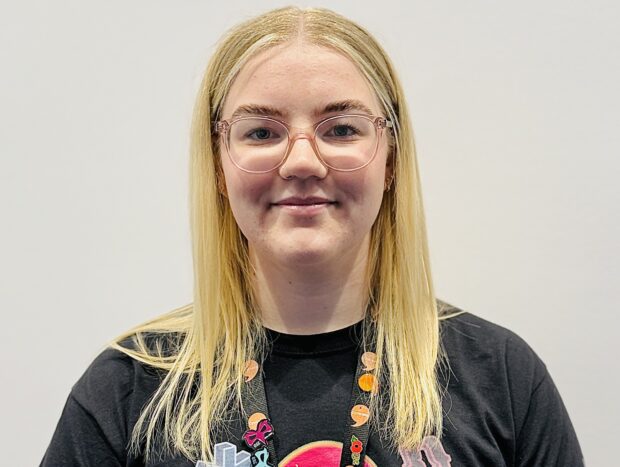
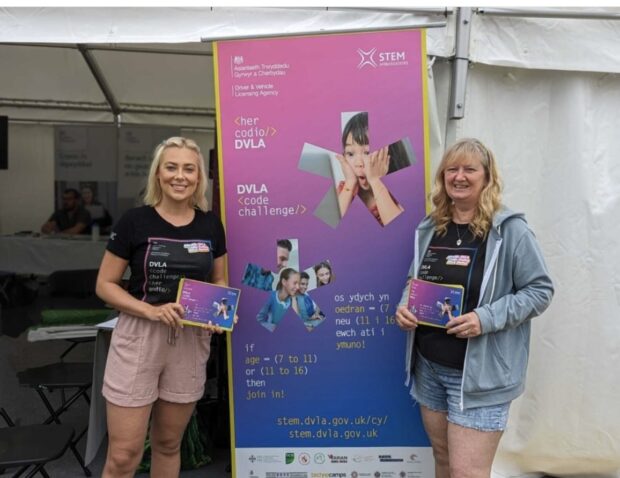
Kloe Chaplin, STEM Ambassador, at the DVLA Code Challenge 2024.

1. Becoming a digital advocate

My first step was to find out how to get involved in all things digital at DVLA. Joining Digital Voices gave me the chance to meet new people and build my confidence speaking to senior colleagues. I really appreciate the inclusivity of the community; the group is open and welcoming to anyone, regardless of their role within the agency.

It’s an amazing opportunity to network with colleagues who you might not normally work with. I still try to attend as many activities as possible to learn more about digital careers and skills. Now that I’ve started my digital career, I hope to continue advocating for others who want to follow a similar path.

2. Finding a mentor

Through the new connections I made, I learned about DVLA’s mentorship programme. I joined the programme and was paired with an Agile Delivery Manager in the agency’s Information and Technology Services directorate. My mentor gave me advice on digital careers and shared relevant skills like Agile methodologies, project management and service delivery. By observing her work, her squad, and seeking her advice, I gained a deeper understanding of the skills needed to succeed in a digital career.

Her mentorship helped to build my confidence and navigate challenges with support and practical advice. For example, my mentor worked with me on improving my interview skills, particularly in tailoring my responses to specific job requirements.

I aspire to become a mentor myself and help others navigate their career paths. Mentorship has been crucial to my development, and I’d love to give back in the same way.

3. Attending ethical hacking workshops

Last year, I joined an 8-week ethical hacking programme, which taught me how to find weaknesses in IT systems and protect them from threats. The workshops were a fantastic experience. They not only equipped me with new technical skills but also provided me with a deeper understanding of the importance of ethical hacking.

Hearing directly from the ethical hacking team was a highlight. Their passion for protecting systems was inspiring, and I left with a greater appreciation for how ethical hacking supports organisational security.

My positive experience inspired me to apply for the Software Engineer Apprenticeship, a 2-year programme focusing on Microsoft Dynamics, a suite of cloud-based business applications that we use at DVLA.

4. Applying for the Software Engineer Apprenticeship

I took the plunge and applied for the Software Engineer Apprenticeship in October 2024. The programme offers staff with an interest in software engineering a chance to develop the skills they need to become a Software Engineer. It was a proud moment when I was told that my application was successful and I could start my role as Trainee Software Engineer, learning skills on the job.

The first few weeks of the programme were a whirlwind! At first, I felt self-doubt as the only woman in my group, but I soon gained confidence. It was exciting to meet so many talented developers. I’ve already successfully passed the Power Platform Fundamentals exam and I’m now focused on preparing for the next certification. My goal is to apply my knowledge to practical projects which will help improve the user experience of DVLA systems and services.

As I reflect on my career journey so far, every experience has helped me grow. The challenges I’ve faced have made me more resilient, and the successes I’ve achieved have boosted my confidence. I’m excited to continue my career in digital and encourage others to take the first step towards theirs.

Start your digital career!

If you’re thinking about starting a career in digital at DVLA, go for it! There are lots of opportunities for growth and development and you’ll be fully supported in your role.

If you’re considering a career in digital, make sure you:

  • stay curious and explore new technologies
  • build relationships across teams and seek mentorship
  • volunteer for projects and show enthusiasm for your work
  • take advantage of training and development opportunities
  • see setbacks as learning opportunities

View our current vacancies and our upcoming development programmes at Civil Service Jobs. Good luck!
Adblock test (Why?)


Celebrating 10 years of DVLA’s STEM programme

For a decade, DVLA’s STEM programme has supported learners across Wales get into science, technology, engineering and mathematics (STEM).

Our STEM ambassadors, Mark Jones and Karen Pitt, have been at the forefront of this voluntary initiative over the past 10 years. Ahead of this year’s annual Code Challenge, they discuss what it’s taken to keep the programme thriving. 

Attendees taking part in an activity at the Code Challenge.
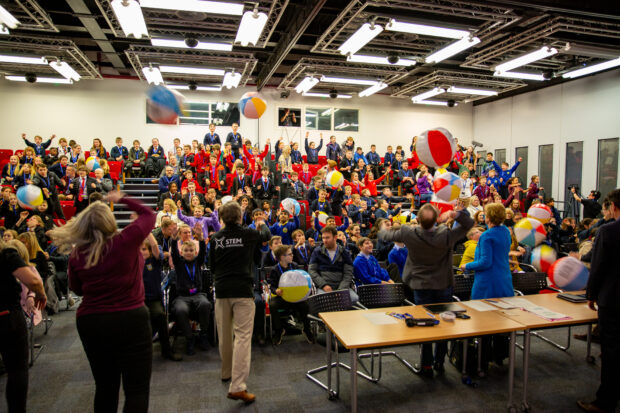
Attendees taking part in ‘Beachball Bingo’ at the Code Challenge.

Why did you decide to start the STEM volunteer programme?

Mark: I’ve always had a passion for encouraging young people to get into digital, and I know first-hand the importance of STEM subjects when building the foundational skills of our next generation.

The volunteer STEM programme was built with a single purpose – to encourage grassroots learning and provide digital skills in a fun and engaging way. That single purpose has flourished into a number of exciting initiatives that have paved the way for young people to get into digital.

Code clubs are a big feature of the STEM programme – what are they?

Karen: As part of the programme, our volunteers set up code clubs across several local schools. The clubs provide pupils and teachers with the digital skills needed to begin their digital journey. Since 2014, with the support of volunteers from across DVLA, the programme has hosted several after-school clubs, as well as reaching out to the community to provide digital upskilling to a wide range of people.

Mark: After a year of teaching children in after-school clubs, the first ever STEM school hosting event was launched, which raised awareness of STEM learning to other primary and secondary schools, as well as the wider business community. I still remember the first event; we were all full of anticipation and excitement.

Over the course of a day, we guided school children through interactive coding activities, which showcased the talent that the children had, increased their confidence, and encouraged businesses to start their own STEM programmes. Ten new code clubs started in the region as a direct result of this first code event.

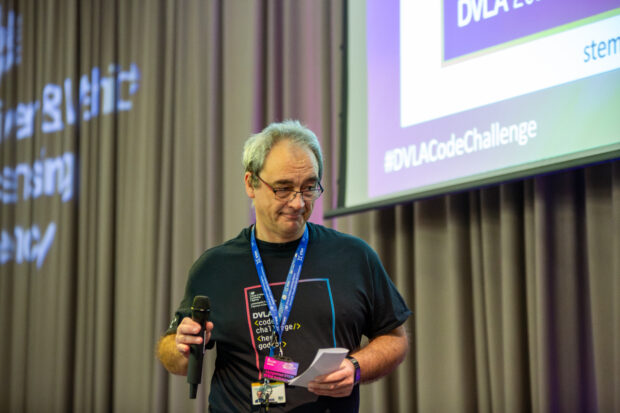
Mark Jones on stage at the Code Challenge.

It’s great looking back and appreciating how far we’ve come but also how many children have enjoyed the code clubs and associated events. It’s a real privilege to have been able to witness the development of their digital skills. Each year, we’re astounded with what our future digital innovators can achieve.

Karen: From the very first code club, DVLA’s STEM programme has continued to develop and mature, leading to new events and opportunities to help the next generation.

We’ve also supported education and curriculum improvements across Wales, including donating IT equipment that DVLA no longer needs to primary and secondary schools as part of our Digital Inclusion Scheme. By using our experience as a digital employer, combined with our commitment to support the next generation, we’ve been able to illustrate the fundamental importance that digital skills have at a young age.

DVLA’s annual Code Challenge is coming up in December – tell us more.

Karen: Code Challenge was launched in 2017, and now runs annually. It challenges learners across Wales to create games using coding in the hope of winning some exciting prizes for their school or college. It’s a privilege to support school children across Wales, and our annual Code Challenge is a great celebration of this.

Using coding and other digital skills, children are encouraged to use their imagination and team work to build exciting games, create a video and, if they get through to the final, present these on stage in front of a live audience. It’s much more than just a game, with the creations often tackling real-world problems such as sustainability and humanitarian aid. Every year, I’m blown away by the calibre of nominations and the sheer determination to push the envelope that much further.

Karen Pitt and her colleague promoting the Code Challenge at the Eisteddfod.
Karen Pitt (right) and her colleague promoting the Code Challenge at the Eisteddfod.

The event, which has previously been presented by Sian Lloyd at the Richard Ley Development Centre in Swansea, enables school children from the ages of 7 to 16 to get involved. It also includes the Commerce in Code Challenge, which encourages students aged 16 to 18 to submit a tender to redesign the Code Challenge website. The process includes design briefs, specifications, requirements and a commercial scoring matrix, giving students the feel of business and IT in a real-world situation.

What other events have you supported and what’s next?

Karen: Aside from Code Challenge and the code clubs, the volunteer programme has also had a big part to play in other events happening across Wales. It’s always challenging finding the time to make everything happen, but through the efforts of our amazing volunteers, we do.

We’ve attended the Eisteddfod in previous years and are regulars at the Swansea Science Festival, where we encourage parents and children to learn all about coding and other digital skills, together.

Mark: After a decade of giving back to the next generation and ahead of the next annual Code Challenge taking place on 3 December, I’d like to thank everyone that has made this journey possible.

The legacy of the STEM programme wouldn’t be what it is today if it wasn’t for our important sponsors and volunteers. Every year, they come on board and provide us with much-needed investment and input into their various sectors. To all our volunteers and sponsors, past and present, thank you for everything.

There’s still a long way to go and we know there’s much that needs to be done to promote digital in our community, but by working together, we do make a difference. We’re looking forward to the upcoming Code Challenge and supporting our community in the years ahead.

If you’re interested in finding out about DVLA’s STEM volunteer programme or the annual Code Challenge, please visit our website (also available in Welsh).

Adblock test (Why?)


DVLA’s Digital Voices group celebrates Ada Lovelace Day

Earlier this month, our Digital Voices advocacy group hosted an event to mark Ada Lovelace Day, an international celebration of the achievements of women in science, technology, engineering and mathematics (STEM).

Colleagues from across the agency joined us at our Richard Ley Development Centre for a half day event of STEM activities. The event also hosted several guest speakers, and its aim was to encourage more women to consider a career in digital.

Our Digital Attraction and Engagement Manager, Lucy Whitaker, tells us more…

A generational approach to talent

The day included an inspiring lineup of talks from internal and external speakers, as well as networking activities.

To start the event, I had the chance to welcome Amy Taaffe-Evans, member of the IT directorate’s Senior Leadership Team, to the stage. Amy introduced DVLA’s digital and technology team, and discussed the scale of the services we provide. She shared our vision to be recognised as a Centre of Digital Excellence (CoDE) for both the services we build and the learning and development opportunities we offer, which allow us to attract, retain and develop the skills we need for now and in the future.

Amy also talked about our evolving services, designed to simplify the process for our customers to interact with DVLA online, ultimately helping them save time and money. She voiced how important it is to have the skills and capability to support our transformation journey, placing our people at the heart of everything we do.

As a leading digital and technology employer in the region, Amy emphasised the importance of our generational approach to digital talent at DVLA, which includes promoting digital careers to girls and young women in education, alongside those restarting or changing their careers. Some of the ways we achieve this is through school, college and community outreach, our STEM programme, and our CoDE apprenticeship and development programmes.

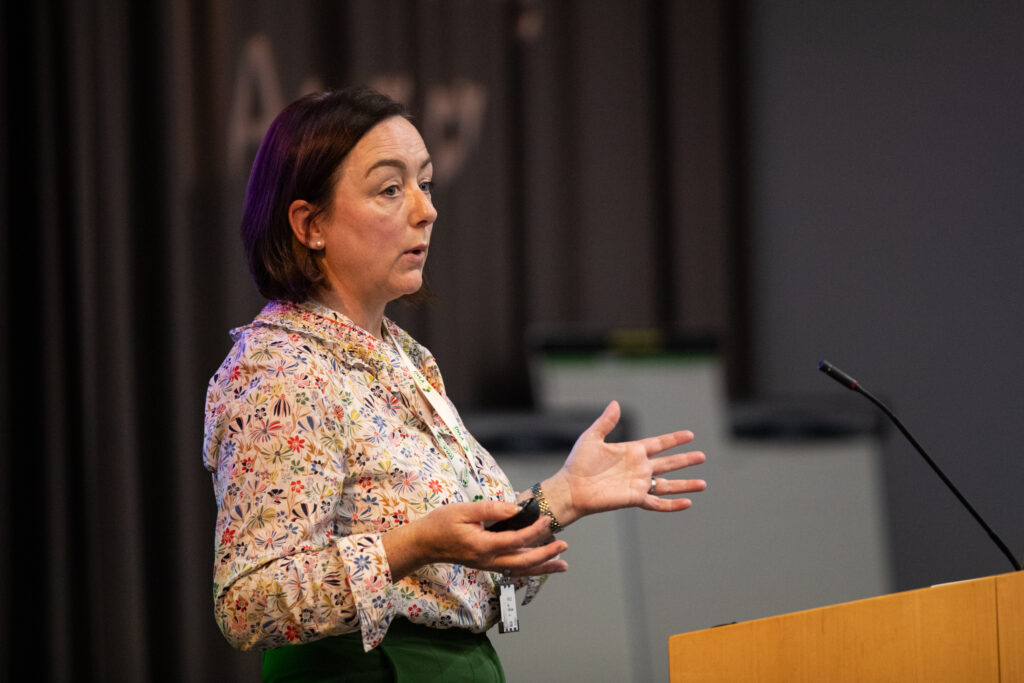
Amy Taaffe-Evans speaking at the Ada Lovelace day event.

A look back at pioneering women in STEM

We then had the chance to reflect on the achievements of women who came before. One of my favourite stories of a pioneering woman in STEM was shared by Stacey Harries, Capability Management Lead. She talked about the incredible story of Grace Hopper.

Grace Hopper was a computer pioneer and naval officer who made many contributions to computing. She was one of the first women to earn a doctorate in mathematics and the first woman to program a computer in the United States. Despite being initially rejected from joining the US Navy due to her small size and age, she didn’t give up. She obtained a waiver to join the US Naval Reserve during World War II to work on the Mark I computer, an early prototype of the electronic computer.

One of the attendees, Thirowshie Srijeyaram, shared how she felt inspired by Grace Hopper’s journey:

“Grace Hopper’s journey demonstrates that determination and expertise can overcome barriers, such as age, gender, and appearance. Her contributions to computing opened doors for future female technologists and showed the value of diversity within the digital and technology sector. Her story has inspired me to embrace challenges and pursue my passions.”

Exploring digital career opportunities

Next, it was time to shine a spotlight on digital career opportunities! Emily Bollom, Capability and Talent Manager, shared the variety of digital careers at DVLA, how she ended up in digital, and practical advice on starting a digital career. Emily showed that whether you’re aspiring to be a Business Analyst or an Infrastructure Engineer, there’s a career path for you, and resources and support to help you get there.

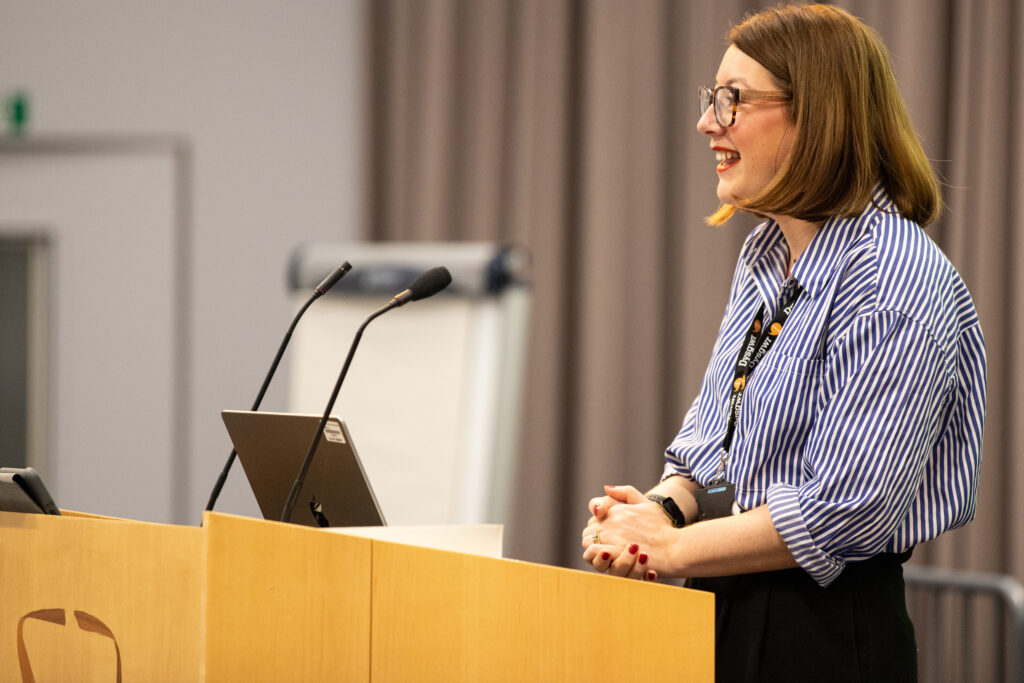
Emily Bollom speaking at the Ada Lovelace day event.

It was then my turn to take the stage. As the lead for the Digital Voices group, it has been a privilege to see our community grow to more than 250 members. I had the chance to highlight the benefits of becoming a Digital Voice, including networking and development opportunities, and access to regular events, training opportunities, and mentoring.

Our growing community is made up of like-minded individuals who are interested in, or already working in, digital and technology roles. Interestingly, 74% of our members work in areas outside of our IT department, including some of the attendees. That’s why events like this are so important. They allow our experienced advocates to meet with members across the business and share their knowledge.

A different perspective on tech

It was a pleasure to welcome Kerrie Hughes, a Lead Designer at BJSS, a technology and software delivery consultancy. Kerrie uses human-centred design approaches to help organisations understand their customers’ needs and align them with their business strategy to create products, services, and experiences that provide real value.

During her talk, Kerrie shared her unexpected journey into tech. Despite struggling with maths and science, she found her place in the industry and discovered that there’s more to tech than just code and algorithms. She also realised that she had hidden strengths that contributed to her success, such as bringing people together.

Kerrie had a great response, and I particularly enjoyed her ‘technology through the decades’ segment where she described her earliest encounter with technology with ‘The Little Professor’ device in the 1970s, right the way through to her love of music and the ‘Roland XP-50’ in the late 1990s.

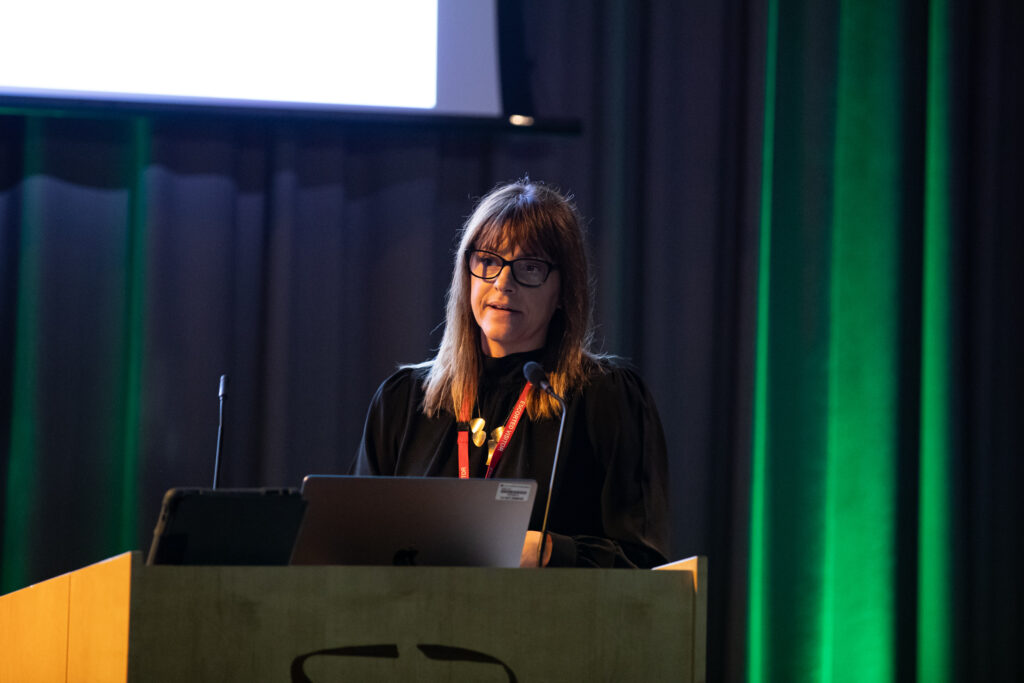
Kerrie Hughes speaking at the Ada Lovelace day event.

Networking and tips from our digital advocates

The groups then had the chance to network and discuss their insights. Some of the topics included career advice and Civil Service interview tips.

We finished the event with a panel discussion featuring our female digital advocates, who all had unique paths into digital roles. We covered important topics such as learning and development opportunities, transferable skills, and maintaining work-life balance.

The panellists also shared insights about what they wish they had known before starting their digital careers. One of the panellists, Ffion Fox, spoke of taking note of ‘sunshine moments’, which emphasise the importance of recording your achievements, whether big or small. I thought this was a beautiful way to end the day, inspiring and empowering women to believe in themselves and kickstart their own digital journeys.

Attendees enjoying the Ada Lovelace day event at DVLA.

Reflections

Here’s what some of the attendees had to say about the day:

“The presentations were interesting and very inspirational. The speakers delivering them were incredibly engaging and enthusiastic. It was also lovely to meet others from across the organisation whom I wouldn’t have had the opportunity to meet otherwise.”

“I loved the networking and meeting people from across DVLA. I found the whole event really inspiring.”

“I enjoyed hearing about women with careers in IT – historical and present day. I also really enjoyed getting to spend time with other women from different areas of DVLA.”

Pursue a digital career

DVLA’s Digital Voices advocacy group believes strongly in opportunities for all and champions digital diversity at DVLA. We support colleagues who want to build their confidence, knowledge, and skills as well as those seeking a new career path.

If a digital career interests you, why not join us at DVLA? Check Civil Service Jobs for all the latest career opportunities. You can also learn more about digital careers at DVLA.

Adblock test (Why?)


How we’re protecting and enhancing biodiversity at DVLA

Autumn is here! As we move into a season of falling leaves, foggy mornings and fireworks, we’re looking back on some of our key sustainability milestones of the year so far.

From pollinating our crops to regulating the air that we breathe, the natural environment is crucial to our survival and it’s important to us that we do everything we can to preserve it. At DVLA we’re dedicated to protecting and enhancing biodiversity across the estate in line with our Greening Government Commitments (GGC).

Our Sustainability and Environment Manager, Harry Harding, takes us through our most recent initiatives to promote and protect biodiversity across our estate…

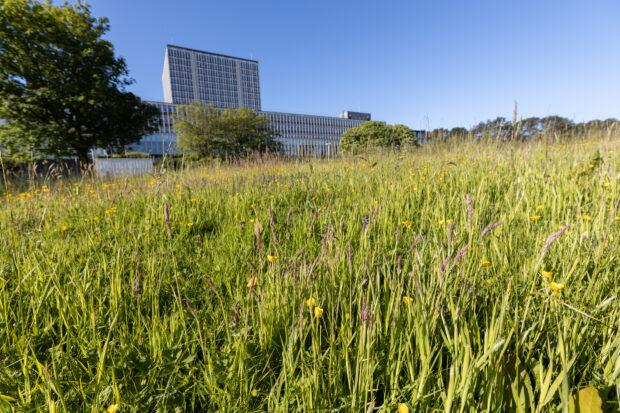
Wildflower meadow with DVLA building in the background.

No Mow May

Did you know that we’ve lost around 97% of wildflower meadows since the 1930s? This means that there’s much less pollen and nectar for pollinating insects to survive on – at DVLA, we’ve made a pledge to improve this!

Since 2021, DVLA has taken part in No Mow May, a campaign by Plantlife calling on all lawn owners not to mow during the month of May. The movement aims to increase areas of grass and wildflowers, benefitting wildlife, and even helping to reduce pollution.

DVLA is a largely urban estate, but we’re lucky to enjoy green spaces which flourish in the springtime. We’ve allowed the green areas of our estate to thrive during this period, providing food for pollinators like bees and butterflies, which are critical to our ecosystems and way of life. Not only do our flourishing wildflower meadows support biodiversity, they also provide a calming space for staff to enjoy nature – it’s a win-win!

Putting down roots

Planting various species of tree is essential for an environment rich in biodiversity. As part of our commitment, we’ve recently planted trees across our estate that are native species. These will boost the local ecosystem by providing habitat and berries for local birds. Some of the trees we’ve planted include:

  • Alder Buckthorn
  • Common Wayfaring Tree
  • Small Leaved Lime
  • Common Hawthorn
  • English Oak
  • Common Walnut
  • Field Maple

These trees are DVLA’s legacy for local wildlife and will provide habitat for many years to come!

Plan bee!

Bees are vital to our planet and essential for our survival. Unfortunately, our busy bees are reducing in numbers due to factors such as habitat loss, pollution and climate change.

Bees on honeycomb,

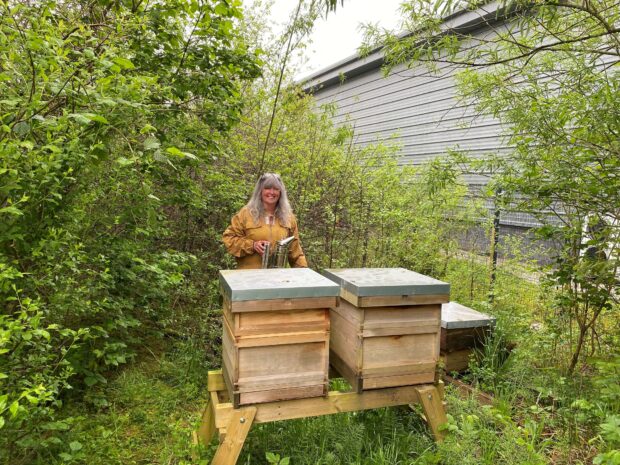
To support our bees, our Sustainability Team proudly maintain 2 bee colonies and are responsible for looking after the beehives, making sure the colonies stay healthy. Our bee colonies provide support to local meadow habitats by delivering pollination services.

Our goal is for the colonies to become self-sufficient and produce enough honey to last through the winter months. No Mow May also greatly benefits the bees, as it provides them with plenty of wildflowers to pollinate and collect nectar from.

A member of DVLA's Sustainability Team with the bee hives on DVLA's estate,

A flourishing future

To continue our efforts in protecting and enhancing the biodiversity of our estate, it’s important for us to meet the targets set out in our biodiversity action plan, which details our biodiversity objectives and how we’ll achieve them.

To better understand the current condition of our estate, and how our initiatives are progressing, we use the services of qualified ecologists to conduct surveys to assess biodiversity at DVLA. Surveys include a preliminary ecological assessment, bat surveys, herpetofauna surveys and a tree survey.

The plan also contains 6 specific habitat action plans (HAPS) and 5 specific species action plans (SAPS) which focus on species and habitats that are considered priorities by the Environment (Wales) Act 2016.

We’re excited to begin working on DVLA’s next biodiversity action plan, covering 2025 to 2030. We’ll be looking at how we can manage our estate to increase biodiversity through habitat creation and protecting the species who already have a home on our estate. We’ll be paying a particular focus to species and habitats that have a protected status to make sure we’re doing everything we can to give them the best opportunity to flourish.

Find out more about how DVLA is planning to increase biodiversity, and protect species and habitats across our estate in our biodiversity action plan.

Follow DVLA on Xfollow us on Facebook and connect with us on LinkedIn. You can also subscribe to the DVLA digital services blog.

Adblock test (Why?)


National Apprenticeship Week at DVLA: growing talent and creating new opportunities

Amy Taaffe-Evans

Today marks the start of National Apprenticeship Week 2024, which recognises the difference made by apprentices across the country. The theme for this year’s campaign is ‘skills for life’, reflecting on how apprenticeships can develop the skills and knowledge required for a rewarding career, while helping employers to develop a workforce with skills for the future.

At DVLA, we’re committed to making long-term, consistent investment in our talent pipelines. Within our digital teams, we have a clear vision which sees us established as a Centre of Digital Excellence (CoDE), not just for the services we provide but for our investment in talent, now and for the future. We’ve developed a generational approach to talent attraction based around 4 key pillars…

Inspire, attract, grow and retain

We invest in outreach, typically through local education providers and third sector organisations, to provide everyone with the opportunity to develop digital skills, no matter what their background is. This includes attending careers fairs in the region and engaging with children and young people by showcasing how fun IT and coding can be!

Our outreach programme also delivers familiarisation sessions to signpost prospective students to the apprenticeship opportunities available at DVLA. We aim to attract exciting talent, who may not have had the experience of working within the industry but can bring new and diverse ideas to DVLA.

We know that our approach to creating new opportunities and growing our own talent is working, with many learners securing a promotion or permanent position following their development journey. A great example of this is Lewis Jones, who started as an apprentice with us in 2018. He won DfT Apprentice of the Year in his first year and has since achieved 3 promotions to his current role as a Senior Software Engineer.

Looking back at our development programmes

Our CoDE Apprenticeship and Development programme continues to go from strength to strength and now covers 13 development programmes with academic qualifications from Level 3 to Level 7. More than 155 individuals have successfully joined DVLA through this route. Last year also saw the launch of our new Digital Academy foundation learning programme – we’ve already seen the first cohort successfully complete the bootcamp before joining their teams this month.

As a leading digital and technology employer, we play a critical role in supporting the development of a strong digital skills economy in the region and across Wales. This year, we’re preparing to release several exciting new opportunities, including for members of staff already within the agency.

New year, new opportunities…

We’re excited to launch our 2024 apprenticeship programme, which continues from our previous successes, as well as introducing new development schemes across several business areas. Software engineering, data engineering, data and reporting, infrastructure engineering, ethical hacking and business analysis are all areas that will have opportunities in the very near future. These ‘earn as you learn’ apprenticeship and development opportunities will sit alongside our Year in Industry programme and wider Digital Academy.

Recruitment has opened across a number of Year in Industry placements, and we welcome applicants from a range of backgrounds and experiences. If you have the skills to excel in digital or the experience from other careers, our apprenticeship and Year in Industry programme could be your next career milestone. View our current vacancies, including any development programmes.

Read our blog to find out more about the journey and experiences of DVLA’s Year in Industry students and apprentices, who form part of the Centre of Digital Excellence.

Adblock test (Why?)