New pollution prevention advice for fishing communities

A new leaflet outlines how to protect the natural environment by preventing pollution incidents and minimising waste at boatyards, harbours and marinas.

Storage and disposal information is a key part of the leaflet. There is a specific focus on fishing nets, pots, oils and anti-foul products, including hazardous waste type storage advice pages.

There is also a poster inviting members of the fishing community to pledge their support by carrying out a series of actions to protect the ocean. This includes avoiding single-use plastics in galleys, keeping on-board equipment to collect lost gear, and using available waste facilities.

The materials have been funded by the Interreg Preventing Plastic Pollution project – a partnership of 18 organisations in England and France. The partnership aims to reduce the impact of plastic pollution in river and marine environments. This includes embedding behaviour change in local communities and businesses, and implementing effective solutions and alternatives.

Project lead Imogen Douglas, from the Environment Agency’s plastic and sustainability team, said:

Oil is a highly visible form of pollution and the most frequently reported type of water pollution incident. Without proper shoreside waste management, it harms plants and animals, damages water and land, and destroys natural habitats.

Similarly, abandoned, lost or otherwise discarded fishing gear can impact on fish stocks and navigation. It can cause marine life to become tangled in plastic pollution, demonstrating the importance of proper disposal for end of life equipment.

We hope this new leaflet and pledge poster will help faciliate good waste practice at ports and change behaviours to help our planet thrive. This is a significant step forward for the Environment Agency as we continue to meet the goals and commitments outlined in our 5 year plan to create better places for people, wildlife and the environment, and the government’s 25 year environment plan.

The leaflet and poster will be issued to ports and harbours across England, and circulated to relevant stakeholders. This includes the Marine Management Organisation, the British Ports Association and trawler firms. It can also be found on the Interreg Preventing Plastic Pollution website.

As a regulator, the Environment Agency prevents waste plastic entering the environment by cracking down on waste crime and poor waste management. As an influencer, its ambition is to promote better environmental practices that result in a reduction of plastic waste.

Background

Interreg Preventing Plastic Pollution: Working in partnership with 18 organisations from across France and England, Preventing Plastic Pollution (PPP) seeks to understand and reduce the impacts of plastic pollution in the river and marine environments. By looking at the catchment from source to sea, the project will identify and target hotspots for plastic, embed behaviour change in local communities and businesses, and implement effective solutions and alternatives.

PPP is a €14million funded EU INTERREG VA France (Channel) England Programme project co-financed by the European Regional Development Fund which works mainly across seven pilot sites: Brest Harbour, Bay of Douarnenez, Bay of Veys, Poole Harbour, and the Medway, Tamar, and Great Ouse estuaries.

Partners are the Environment Agency, Department for Environment, Food and Rural Affairs, Queen Mary University of London, LABOCEA Conseil, Expertise et Analyses, Syndicat mixte établissement public de gestion et d’aménagement de la baie de Douarnenez, Office Français De La Biodiversité, Parc naturel marin d’Iroise, Brest Métropole, Centre national de la recherche scientifique, Counseil départemental de la Manche, Institut français de recherche pour l’exploitation de la mer, The Rivers Trust, Syndicat de bassin de l’Elorn, ACTIMAR, Brest’aim, Westcountry Rivers Trust, South East Rivers Trust, and Plymouth City Council.


Catch recording service: Routine website maintenance 13 October

News story

The catch recording website for under 10m vessels will be unavailable on Thursday 13 October, 08:00-13:00 due to routine maintenance.

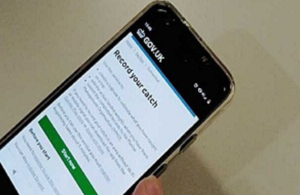
This also means that advisors will not be able to log records by phone. However, catches can still be recorded 24/7 using the ‘Record Your Catch’ app or by calling the automated helpline.

We recommend you download the app in advance to familiarise yourself with the system. All records completed using the app will be saved to your device and uploaded to the system as soon as the website maintenance has been completed.

The app, which you can download for Android or Apple, allows you to record your catch in an area without a mobile signal – watch our useful video ‘how to’ guide below.

YouTube.

Alternatively, register your catch through our automated phone service: 0300 0203 788.

For more information about recording catches for under 10m vessels, visit gov.uk: https://www.gov.uk/guidance/record-your-catch

Published 11 October 2022


Fostering collaboration to overcome innovation challenges

  • Plextek has secured funding through a variety of DASA Themed Competitions, developing software and engineering solutions in areas such as aviation security, unmanned air system payloads, and countering hostile drones
  • A long-term engager with DASA, Plextek is a key enabler of collaborations, providing other innovators bespoke design and technology support with DASA competitions to help them complete innovative projects
  • Support and encouragement from DASA has encouraged a diversity of thought in defence and security innovation, enabling companies of all types and size to work together and collaborate to solve defence and security challenges

Introducing Plextek

With the growth of technologies such as artificial intelligence, drones and robotics, the UK faces many defence and security capability requirements and challenges. Ambitious capability requirements call for equally ambitious innovators working together to embrace new ways of finding solutions to prevailing defence and security challenges.

The Defence and Security Accelerator DASA relies on diversity of thought in order to find and fund the very best innovations for defence and security, and we encourage collaboration in all of our services. One company that has helped other innovators and contributed to an array of DASA competitions is Plextek, an electronic engineering design, development and supply organisation based near Cambridge.

Plextek specializes in offering solutions based support to organizations to help them reach their potential and bring their innovations to market, offering technical expertise in product design and technology development.

The key is in collaboration

Plextek has a long history of collaborating with other innovators, small and large, to be a key enabler of creating powerful solutions for DASA Themed Competitions. They offer bespoke solutions and provide an additional layer of support for innovators to complete projects.

By working and developing alongside the wider defence supply chain over time through DASA Themed Competitions, Plextek has gown their reputation within Defence Science and Technology Laboratory (Dstl) and the wider Ministry of Defence (MOD), develop new technical expertise and create solutions for many technology areas, from aviation security, to unmanned air system (UAS) payloads, and countering hostile drones.

Plextek’s focus on providing avenues for flexible collaboration in a defence industry that is fast-changing has allowed them, and many other innovators, to pivot and respond to different DASA challenge competitions, in a way that would have been difficult without collaboration.

The advantage of alliances

For innovative organisations of all types and size, the ability to share ideas with like-minded organisations can be a huge multiplier for overcoming technical challenges. This can come in the form of knowledge exchange, technology sharing, hands-on work and cost. No matter the method, collaboration enables organisations to learn rapidly and innovate, through combined perspectives and strengths.

Plextek has been at the forefront of many collaborations to help innovators in DASA Themed Competitions. Some examples include:

Autonomous Last Mile Resupply: Phase 1 & 2 / Autonomy in Challenging Environments: Phase 1

Autonomous Last Mile Resupply: Phase 2 sought to develop and demonstrate the use of autonomous systems to deliver mission-critical supplies, whereas Autonomy in Challenging Environments: Phase 1 sought to demonstrate novel sensors to aid autonomous systems. During these themed competitions, Plextek supported other innovators such as Barnard Microsystems, Griff Aviation, Fleetonomy.ai and Createc to demonstrate a 60 GHz mm wave radar, which can be mounted on a UAS in order to provide day/night, all-weather sensor capabilities to avoid hazards and safely deliver supplies.

From providing radar and transponder demonstrators to investigating the application of machine learning to radar, Plextek enabled these funded projects through flexible support.

Many Drones Make Light Work: Phase 1, 2 and 3

Many Drones Make Light Work explored novel approaches to develop the military capability of a swarm of low-cost, small UAS operating cooperatively. In this competition, Plextek worked with Blue Bear Systems Research and IQHQ. Plextek designed, developed and supported integration and experimentation of the approach to repurpose IQHQ’s nano-Software Defined Radio (SDR) onto a small, fixed-wing Blue Bear Systems Research UAS platform, including optimised conformal antennas, to enable demonstration of fractionated electronic support measures.

Future of Aviation Security: Phase 1 & 2

Future of Aviation Security explored innovations that enable better screening and detection of contraband items concealed in vehicles, while minimising the burden on aviation staff and passengers. In this competition, Plextek was a key contributor to finding novel ideas for future aviation and border security and helped link multiple projects together for the wider programme, through providing communications and radar system expertise.

Countering Hostile Drones: Phase 1 & 2

Countering Hostile Drones sought to find innovative solutions to address the increasing UAS threat, from detecting a drone, to identifying it and deploying measures to counter it.

In Phase 1, Plextek collaborated with Blighter Surveillance and Blue Bear Systems Research to help combine their technologies to demonstrate a Hunter-Killer drone concept equipped with a low Size, Weight, and Power (SWaP) Electronic Warfare (EW) package, to detect an adversary drone and disable it. Plextek also successfully demonstrated a proof of concept for a low SWaP ubiquitous radar, designed to be the intercept radar for the UAS.
In Phase 2, Plextek matured and miniaturised the ubiquitous radar, successfully demonstrating its utility as a networked, ground to air CUAS sensor in urban environments, funded via the Home Office (HO) and Department for Transport (DfT).

Creating the right solution together: Ideas Marketplace

DASA provides the ability for multiple organisations to link multiple projects together for a wider programme, centred on strong engagement and long-term relationship support. The relationships Plextek has developed with the likes of Blue Bear Systems Research, IQHQ and Griff Aviation and more, were enabled through DASA.

Through building relationships and collaboration, each innovator can utilise their strengths and direct them towards shared defence and security challenges, and in Plextek’s case, foster relationships that span multiple funded projects.

DASA is excited to be a key enabler for organisations to build relationships to solve defence and security challenges, and we want to make it even easier. Therefore, DASA was pleased to launch the Defence Technology Exploitation Programme DTEP, a £16 million programme to boost small and medium-sized enterprise (SME) defence innovation. And also the Ideas Marketplace, an online platform where innovators can collaborate, share ideas and get innovations in front of stakeholders.

Welcome to the Ideas Marketplace


Scottish Secretary comments on October Labour Market Statistics

News story

As new ONS figures show a strong labour market, Scottish Secretary Alister Jack says the UK Government’s focus on economic growth will benefit people across the UK.

Scottish Secretary Alister Jack

Scottish Secretary Alister Jack said:

With the unemployment rate at a historic low, and many more people on the payroll than this time last year, today’s figures show that Scotland’s labour market remains strong.

The UK Government’s overarching priority is economic growth, for the benefit of people in Scotland and across the whole of the UK. One of the best ways to achieve this is getting even more people into highly skilled, well paid jobs, to help them and their families thrive.

We’ve also put an extensive support package in place to help those worried about the cost of living in the short term. This includes protecting millions of the most vulnerable families with at least £1,200 of direct payments and saving households an average of £1,000 a year through our new Energy Price Guarantee.

Background

Figures from the ONS show unemployment at 3.3 per cent in Scotland, down 1.1 p.p. since the same time last year. Scotland’s employment rate is at 75.8 per cent, an increase of 1.5 p.p. over the last year.

Published 11 October 2022


£50 million to tackle health inequalities through research

  • 50 million awarded to 13 local authorities across the UK – from Aberdeen to Plymouth – to tackle inequalities and improve the health of the public
  • Part of the government’s commitment to boost growth, level up the health of the nation and empower people to live healthier and longer lives, regardless of their background or where they live

People set to benefit from a £50 million research boost to tackle health inequalities in local areas and improve health outcomes across the country.

The significant investment, overseen by the National Institute of Health and Care Research (NIHR), will enable 13 local authorities to set up pioneering Health Determinants Research Collaborations (HDRCs) between with experts and academics to address knowledge gaps in local areas.

This will enable new high-quality research into the local challenges affecting people’s health – such as facilitating research to better understand and introduce interventions to help with childhood obesity, Covid recovery, mental wellbeing and drug use.

Local authorities up and down the UK are being awarded funding – from Plymouth and London to Newcastle and Aberdeen – to ensure health disparities are being addressed across the board.

This forms a key part of the government’s Plan for Patients by supporting people to stay well and within the community, easing pressure on health and care services and enabling people to access the care they need, when they need it.

Minister of State for Health, Robert Jenrick, said:

The pandemic shone a light on the stark health inequalities that exist across the country – we are committed to levelling up the health of the nation.

This funding will drive progress to address health challenges locally, particularly in the places and communities most affected by ill health such as high levels of obesity, drug use and poor mental health.

Everyone should be able to live long, healthy lives regardless of their background and where they live, and this new research will help us deliver on our ambition.

This is the first time funding for research into health disparities has been given to local authorities for them to lead on innovative new projects within their communities, signalling the government’s commitment to levelling up.

Every collaboration will be set up in partnership between universities and local government, capitalising on the world-leading experience and skills of the academic community. This will support the development of better data and evidence to inform local decisions to improve people’s health and reduce variations in healthy life expectance between rich and poor.

The funding will also help to stimulate economic growth across the country – particularly in some of the most deprived areas – by creating new jobs within research, as well as identifying local solutions to address some of the key challenges facing our society such as obesity and poor mental wellbeing.

Professor Lucy Chappell, NIHR Chief Executive Officer, said:

Millions of people living in Britain’s towns, cities and regions face a huge range of public health challenges, made even more acute during the Covid pandemic. Thanks to NIHR this vitally needed research funding will provide a foundation to galvanise local authorities’ capacity and capability to conduct high-quality research.

I’m always personally struck by how people working in local government have the added advantage of knowing their local areas and communities. This investment will equip them to embed a lasting legacy of research culture to help local populations take huge steps forward in tackling health inequalities.

Professor Brian Ferguson, Director of the NIHR Public Health Research Programme, said:

Many people living in communities across the country are facing major challenges that are impacting on their health. Our newly launched HDRCs will serve as nationally recognised centres of excellence, boosting local government’s ability to tackle these challenges by enabling breathing space to become more research active.

This is a hugely important step forward in one of NIHR’s key aims to help local government develop research that improves health and wellbeing. By focusing on the wider determinants of health such as employment, housing, education and the physical environment, the areas we are supporting have a tremendous opportunity to make a lasting impact on health inequalities and wider deprivation.

Professor Jim McManus, President of the UK Association of Directors of Public Health, said:

We know that health inequalities are one of the major barriers facing communities the length and breadth of the country, especially for disadvantaged groups and areas.

HDRCs will help drive the research culture within local government, building on the local knowledge that authorities already have and enable what is being done to be more readily researched and evaluated to make a difference to local people.

In addition to the research funding, staff working across the health and social care sector will be better equipped to tackle health inequalities from today, following the publication of a new e-learning resource developed by the Office of Health Improvement and Disparities (OHID) and Health Education England (HEE).

The free-to-access module brings together bite-size learning on what health inequalities are, as well as the actions and interventions that frontline staff, leaders, and commissioners can take to address them in their day-to-day work.

It has already been proven to give users a deep understanding of health inequalities and how they can be tackled, helping to improve quality of life while reducing costs to the NHS and benefitting the wider economy.

  • The HDRCs formally commenced on 1 October 2022, with three of the 13 undertaking additional developmental work to enable HDRC status by 1 October 2023.
  • This funding is from existing funding routes devoted to research.
  • Funded HDRCs:
  • Tower Hamlets Council
  • Newcastle City Council
  • Doncaster Council
  • Aberdeen City Council
  • City of Bradford Metropolitan District Council
  • Plymouth City Council
  • Gateshead Council
  • Blackpool Council
  • Coventry City Council
  • Middlesbrough Council and Redcar & Cleveland Council **
  • The London Borough of Lambeth
  • Medway Council **
  • Islington Council **
  • ** these three areas are receiving development award funding during 2022/23 with a view to them becoming full HDRCs in 2023/24.
  • The Health Disparities and Health Inequalities resource complements the 30 plus existing modules within the All Our Health programme, covering a range of public health topics including Cardiovascular Disease Prevention, Childhood Obesity and Air Pollution.
  • For more information and to access the latest resource in the All Our Health collection, please select the Health Disparities and Health Inequalities session on the All Our Health eLearning page or visit GOV.UK.