Man fined for trying to use someone else’s SIA licence

Press release

On Friday 11 February, Mohammed Abdurahman of Queensway pleaded guilty to fraud at Wrexham Magistrates’ Court.

The prosecution was brought by the Security Industry Authority (SIA) and he was fined £320, ordered to pay £1200 court costs and a £34 victim surcharge.

Between 30 November and 15 December 2020, Mohammed Abdurahman presented himself to Chester security business Cynergy Security Group Ltd. as Ali Mohammed. There was a discrepancy with his identity documents. Abdurahman gave the company a valid SIA licence in the name of Ali Mohammed; followed by a residence permit and a bank statement in the name of Mohammed Abdurahman.

Abdurahman failed his induction checks and Abdurahman was invited by Cynergy to supply hard copies of his identity documents, but he failed to return with them. Cynergy approached the SIA expressing their concerns particularly about an image on the licence. The SIA started an investigation into the case.

Abdurahman failed to engage with SIA Investigators, but using an email address they were able to identify Abdurahman as a student at Coleg Cambria College. The SIA persistently sought after Abdurahman and further investigation revealed that his student identity card matched the image on the SIA licence. He was contacted by an SIA Investigator and ‘interviewed’ using a statutory defence letter. He was subsequently summonsed to Wrexham Magistrates’ Court.

The magistrate at the court said:

This is a very serious case of fraud, this could’ve had very serious consequences for the company and industry that is highly regulated and respected. We take the matter seriously on theirs and the public’s behalf.

Mark Chapman, one of the SIA’s criminal investigation managers, said:

We appreciate the steps taken by Cynergy Security Group to notify the SIA of their concerns. Abdurahman sought to gain legitimate work in the private security industry and attempted to circumvent the safeguards in place to protect the public by fraudulently presenting himself as someone else using another’s legitimate documents. The licensing regime is there to protect the public and Abdurahman had not gone through the rigorous vetting and training required to be a licensed security professional. Abdurahman has now incurred fines and a criminal record due to his fraudulent activity. His conviction means that he will not be able to work in the industry.

Notes to editors:

  • By law, security operatives working under contract must hold and display a valid SIA licence
  • Read about SIA enforcement and penalties
  • The offences committed against the Fraud Act 2006 were:
    • 1 count of Section 2 Fraud by false representation
    • 1 count of Section 7 Fraud Assist in the commission of fraud

Further information:

  • The Security Industry Authority is the organisation responsible for regulating the private security industry in the United Kingdom, reporting to the Home Secretary under the terms of the Private Security Industry Act 2001. Our main duties are: the compulsory licensing of individuals undertaking designated activities; and managing the voluntary Approved Contractor Scheme.
  • For further information about the Security Industry Authority visit www.gov.uk/sia. The SIA is also on Facebook (Security Industry Authority) and Twitter (SIAuk).

Published 18 February 2022


Man fined for trying to use someone else’s SIA licence

Press release

On Friday 11 February, Mohammed Abdurahman of Queensway pleaded guilty to fraud at Wrexham Magistrates’ Court.

The prosecution was brought by the Security Industry Authority (SIA) and he was fined £320, ordered to pay £1200 court costs and a £34 victim surcharge.

Between 30 November and 15 December 2020, Mohammed Abdurahman presented himself to Chester security business Cynergy Security Group Ltd. as Ali Mohammed. There was a discrepancy with his identity documents. Abdurahman gave the company a valid SIA licence in the name of Ali Mohammed; followed by a residence permit and a bank statement in the name of Mohammed Abdurahman.

Abdurahman failed his induction checks and Abdurahman was invited by Cynergy to supply hard copies of his identity documents, but he failed to return with them. Cynergy approached the SIA expressing their concerns particularly about an image on the licence. The SIA started an investigation into the case.

Abdurahman failed to engage with SIA Investigators, but using an email address they were able to identify Abdurahman as a student at Coleg Cambria College. The SIA persistently sought after Abdurahman and further investigation revealed that his student identity card matched the image on the SIA licence. He was contacted by an SIA Investigator and ‘interviewed’ using a statutory defence letter. He was subsequently summonsed to Wrexham Magistrates’ Court.

The magistrate at the court said:

This is a very serious case of fraud, this could’ve had very serious consequences for the company and industry that is highly regulated and respected. We take the matter seriously on theirs and the public’s behalf.

Mark Chapman, one of the SIA’s criminal investigation managers, said:

We appreciate the steps taken by Cynergy Security Group to notify the SIA of their concerns. Abdurahman sought to gain legitimate work in the private security industry and attempted to circumvent the safeguards in place to protect the public by fraudulently presenting himself as someone else using another’s legitimate documents. The licensing regime is there to protect the public and Abdurahman had not gone through the rigorous vetting and training required to be a licensed security professional. Abdurahman has now incurred fines and a criminal record due to his fraudulent activity. His conviction means that he will not be able to work in the industry.

Notes to editors:

  • By law, security operatives working under contract must hold and display a valid SIA licence
  • Read about SIA enforcement and penalties
  • The offences committed against the Fraud Act 2006 were:
    • 1 count of Section 2 Fraud by false representation
    • 1 count of Section 7 Fraud Assist in the commission of fraud

Further information:

  • The Security Industry Authority is the organisation responsible for regulating the private security industry in the United Kingdom, reporting to the Home Secretary under the terms of the Private Security Industry Act 2001. Our main duties are: the compulsory licensing of individuals undertaking designated activities; and managing the voluntary Approved Contractor Scheme.
  • For further information about the Security Industry Authority visit www.gov.uk/sia. The SIA is also on Facebook (Security Industry Authority) and Twitter (SIAuk).

Published 18 February 2022


£1.4m for projects supporting sustainable fishing and fisheries science across the UK

Five of the projects – receiving £1.121m – involve Scottish expertise:

  • One winning project, whose partners include the Scottish White Fish Producers Association, will use its award of almost £282,000 to explore the use of artificial lights to change fish behaviour. The long-term goal is to look at more selective and sustainable ways of trawling for nephrops and squid, which can currently impact on other marine wildlife.

  • Over £274,000 is being invested to improve UK-wide data on catches of crab, lobster and whelks by using autonomous sampling systems on active fishing vessels, or at processing sites. Heriot Watt University is involved in this.

  • Heriot Watt is also taking part in a £300,000 project to support a healthy lobster and crab industry with a programme that will see creel mounted cameras deployed in fisheries, including in Orkney. Orkney Sustainable Fisheries is another partner.

  • Another of the successful applicants announced today is a project trialling the use of kites and Looming Eye buoys to deter seabirds from diving into the water near to an operational fishery and getting caught up in the nets – an issue which is estimated to kill up to 400,000 seabirds worldwide each year. It’s hoped the project will help to protect the UK’s vital but threatened seabird populations, such as the Great Northern Divers, Black-throated Divers and Slavonian Grebes.

The funding is the first part of the £100 million UK Seafood Fund designed to level up coastal communities across the UK. A total of £24 million has been earmarked specifically for science and innovation projects – to invest in new technology, trial new gear and support world-class research.

Today’s announcement builds on the £65 million infrastructure scheme announced in December which will be made available for projects such as modernising ports and harbours, and a further £10 million to encourage new entrants into the processing, catching and aquaculture sectors, alongside training and upskilling current workers.

These schemes will ensure the industry and coastal communities are equipped to benefit from additional quota gained as a result of the Trade and Cooperation Agreement (TCA) signed with the EU in 2020.  Following our departure from the Common Fisheries Policy, there have been uplifts in quota for UK vessels, with the value of UK-EU fishing opportunities for the UK in 2021 totalling approximately £333 million. 

UK Government Minister for Scotland Malcolm Offord said:

It’s great, but unsurprising, that Scottish expertise is at the heart of many of these projects. This UK Government funding will boost innovation and sustainability in the UK fisheries sector.

“Scotland’s seafood, aquaculture and science sectors are world renowned, I look forward to continuing to work closely with them to ensure that this funding – and future allocations – helps deliver a sustainable and profitable future.”

Fisheries Minister, Victoria Prentis, said:

I am pleased to see the £100m UK Seafood Fund in action, backing the impressive wealth of talent and innovation in our fishing industry.

A sustainable fishing industry is essential if we are to ensure we have a healthy, thriving marine environment that is capable of supporting our world-class industry long into the future.

The funding has been awarded through the Fisheries Industry Science Partnerships (FISP) scheme, established to strengthen relations between industry and research organisations to promote world-class fisheries management. Today’s investment is the first in a series of funding rounds that will see the fishing and seafood industry supported to work with scientists to research more productive and sustainable fishing gear and gather new data to more sustainably manage the UK’s fish stocks. Applications for a second round of funding will open on Wednesday 2 March and run until 25 April.

This comes as the UK and Devolved governments call for views on the Joint Fisheries Statement (JFS). The JFS sets out policies for achieving or contributing to the eight objectives outlined in the Fisheries Act 2020 which will help to achieve the UK’s vision for clean, healthy, safe, productive, and biologically diverse oceans and seas. Each of the eight FISP award winners have been chosen for their potential to meet one or multiple Fisheries Act objectives.


£1.4m for projects supporting sustainable fishing and fisheries science across the UK

Five of the projects – receiving £1.121m – involve Scottish expertise:

  • One winning project, whose partners include the Scottish White Fish Producers Association, will use its award of almost £282,000 to explore the use of artificial lights to change fish behaviour. The long-term goal is to look at more selective and sustainable ways of trawling for nephrops and squid, which can currently impact on other marine wildlife.

  • Over £274,000 is being invested to improve UK-wide data on catches of crab, lobster and whelks by using autonomous sampling systems on active fishing vessels, or at processing sites. Heriot Watt University is involved in this.

  • Heriot Watt is also taking part in a £300,000 project to support a healthy lobster and crab industry with a programme that will see creel mounted cameras deployed in fisheries, including in Orkney. Orkney Sustainable Fisheries is another partner.

  • Another of the successful applicants announced today is a project trialling the use of kites and Looming Eye buoys to deter seabirds from diving into the water near to an operational fishery and getting caught up in the nets – an issue which is estimated to kill up to 400,000 seabirds worldwide each year. It’s hoped the project will help to protect the UK’s vital but threatened seabird populations, such as the Great Northern Divers, Black-throated Divers and Slavonian Grebes.

The funding is the first part of the £100 million UK Seafood Fund designed to level up coastal communities across the UK. A total of £24 million has been earmarked specifically for science and innovation projects – to invest in new technology, trial new gear and support world-class research.

Today’s announcement builds on the £65 million infrastructure scheme announced in December which will be made available for projects such as modernising ports and harbours, and a further £10 million to encourage new entrants into the processing, catching and aquaculture sectors, alongside training and upskilling current workers.

These schemes will ensure the industry and coastal communities are equipped to benefit from additional quota gained as a result of the Trade and Cooperation Agreement (TCA) signed with the EU in 2020.  Following our departure from the Common Fisheries Policy, there have been uplifts in quota for UK vessels, with the value of UK-EU fishing opportunities for the UK in 2021 totalling approximately £333 million. 

UK Government Minister for Scotland Malcolm Offord said:

It’s great, but unsurprising, that Scottish expertise is at the heart of many of these projects. This UK Government funding will boost innovation and sustainability in the UK fisheries sector.

“Scotland’s seafood, aquaculture and science sectors are world renowned, I look forward to continuing to work closely with them to ensure that this funding – and future allocations – helps deliver a sustainable and profitable future.”

Fisheries Minister, Victoria Prentis, said:

I am pleased to see the £100m UK Seafood Fund in action, backing the impressive wealth of talent and innovation in our fishing industry.

A sustainable fishing industry is essential if we are to ensure we have a healthy, thriving marine environment that is capable of supporting our world-class industry long into the future.

The funding has been awarded through the Fisheries Industry Science Partnerships (FISP) scheme, established to strengthen relations between industry and research organisations to promote world-class fisheries management. Today’s investment is the first in a series of funding rounds that will see the fishing and seafood industry supported to work with scientists to research more productive and sustainable fishing gear and gather new data to more sustainably manage the UK’s fish stocks. Applications for a second round of funding will open on Wednesday 2 March and run until 25 April.

This comes as the UK and Devolved governments call for views on the Joint Fisheries Statement (JFS). The JFS sets out policies for achieving or contributing to the eight objectives outlined in the Fisheries Act 2020 which will help to achieve the UK’s vision for clean, healthy, safe, productive, and biologically diverse oceans and seas. Each of the eight FISP award winners have been chosen for their potential to meet one or multiple Fisheries Act objectives.


Environment Agency protects thousands from flood devastation as Storm Eunice batters the Severn Estuary

Press release

Powerful flood defences along Severn Estuary stand up to full force of Storm Eunice.

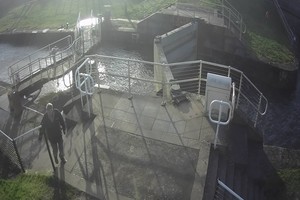
Overhead view of the flood gates at Lydney

The Environment Agency’s flood gate at Lydney

  • Hundreds of Environment Agency officers prepare barriers and pumps ready to protect communities
  • More than 2,000 homes and businesses along Severn Estuary avoid devastation of flooding

Early action by the Environment Agency has protected thousands of homes and businesses along the Severn Estuary from the devastation of flooding as Storm Eunice hit the West.

Environment Agency operatives worked around the clock to make sure flood defences along the estuary were braced for the tidal surge caused by the gale force winds on Friday morning.

Powerful flood defences and gates at Avonmouth, Lydney, Sharpness and Epney worked to deflect the full force of the tidal surge along 80 miles of the estuary and reduced the risk of flooding to nearby communities.

Preparations included:

  • More than 100 Environment Agency staff out on tidal watch at critical points to ensure flood barriers were prepared for the worst of the tidal surge
  • 15 high-volume pumps were ready to be deployed from the Environment Agency’s Gloucester Depot
  • 10 Severe Flood Warnings issued by the Environment Agency urging people to take action

Environment Agency Operations Manager Anthony Perry said:

The predicted tidal surge along the Severn Estuary from Storm Eunice had the potential to have a significant impact on properties along the Severn Estuary and we took every precaution to make sure we were prepared for the worst scenario the storm could bring.

Our flood defences stood up to the challenge and provided valuable protection to more than 2,000 homes and businesses along the estuary.

Without the investment of these defences many communities could have been flooded and faced weeks before being able to return to their homes. Instead, residents faced minimal disruption and businesses are able to carry on their operations.

You can check your flood risk, sign up for free flood warnings and keep up to date with the latest situation at https://www.gov.uk/check-flood-risk, call Floodline on 0345 988 1188 or follow @EnvAgency on Twitter for the latest flood updates.

ENDS

  • The Environment Agency planned for the worst scenario as there was a real risk to life. Fortunately the tidal surge along the Severn Estuary was not as high as predicted although still posed a significant threat of flooding.
  • In the 2020 Budget the Government doubled its investment in flood and coastal erosion risk management in England by committing a record £5.2 billion over the next 6 years. This long-term commitment will better protect hundreds of thousands of properties, including homes, businesses, schools and hospitals.
  • For every £1 spent improving protection from flooding and coastal erosion, we avoid around £5 of property damages. This long-term commitment will make homes, businesses and infrastructure more resilient to the increasing impacts of climate change.
  • This record investment will help the nation ‘build back better’ by making properties more resilient to flooding, and ‘build back greener’ by working with nature to make us more resilient to climate change.
  • The Capital Programme will also prove central to the Environment Agency reaching its target of becoming a net zero organisation by 2030 – by embracing innovative ways of working that minimise the carbon emissions we produce, and the carbon produced through our supply chain, when we build flood defences.
  • The investment across the country will help enable communities adapt to the future risk of climate crisis.
  • Using partnership funding enables us to secure investment beyond levels affordable to central government alone and enables more local choice, while encouraging innovative, cost-effective options where communities may play a greater role.

Published 18 February 2022