PM meeting with US Congresspeople: 21 February 2022

Press release

Prime Minister Boris Johnson met US Speaker of the House Nancy Pelosi and a delegation other Congresspeople in London today.

The Prime Minister met US Speaker of the House Nancy Pelosi and a delegation other Congresspeople in London today.

They discussed the current situation in Ukraine, and their deep concern at the prospect of imminent Russian military action.

The Prime Minister outlined the steps the UK has taken to support Ukraine’s defence, including training 22,000 members of the Ukrainian Armed Forces under Operation Orbital. He also thanked Speaker Pelosi for the US’ cooperation as we build up a comprehensive package of economic measures to ensure Russia pays the price for any further Russian breach of Ukraine’s sovereignty.

The group agreed that it was vital that President Putin fail in his efforts to subjugate Ukraine.

Notes to Editors

Congresspeople in the meeting were: Speaker Pelosi, Chairman Smith, Chairman Schiff, Rep Lee, Rep Maloney, Rep Keating, Rep Swalwell, Rep Khanna and Rep Kim

Published 21 February 2022


Prime Minister sets out plan for living with COVID

  • Prime Minister confirms next steps for living with Covid-19
  • Vaccines will remain first line of defence against the virus with further boosters this spring for the most vulnerable
  • All remaining domestic covid regulations restricting public freedoms to end this week as part of the Living with Covid Plan

Vaccines will remain the first line of defence against Covid-19 as the Prime Minister sets out the Government’s plans to live with and manage the virus.

The UK was the first country in the world to authorise the use of the Pfizer and Oxford-AstraZeneca vaccines, the first European country to vaccinate 50% of its population and has delivered the fastest booster programme in Europe.

Over 31 million boosters have been administered across England and almost 38 million UK wide helping break the link between infections and hospitalisations. In England, the number of cases, hospitalisations and deaths continue to decline and are far below the levels of previous waves, with boosters offering strong protection against severe illness and hospitalisation.

Thanks to our hugely successful vaccination programme, the immunity built up in the population and our new antiviral and therapeutics tools, the UK is in the strongest possible position to learn how to live with Covid and end government regulation.

To save lives and protect the NHS, unprecedented measures were taken on a global scale that interfered with people’s lives and livelihoods. Billions of pounds were spent on supporting a locked down economy as the public stayed at home.

The Prime Minister has been clear that restrictions would not stay in place a day longer than necessary. The British public have made extraordinary sacrifices during the 2020 lockdowns, the Roadmap, and recent Plan B measures in response to the Omicron variant.

The Plan, published today, sets out how vaccines and other pharmaceutical interventions will continue to form our first line of defence. Today the Government has accepted the JCVI recommendation to offer an additional booster to all adults aged over 75, all residents in care homes for older adults, and all over 12s who are immunosuppressed.

An autumn annual booster programme is under consideration, subject to further advice. Further detail on deployment on the spring booster programme will be set out in due course. The Government will continue to be guided by the JCVI on future vaccine programmes.

The plan covers four main pillars:

  • Removing domestic restrictions while encouraging safer behaviours through public health advice, in common with longstanding ways of managing other infectious illnesses
  • Protecting the vulnerable through pharmaceutical interventions and testing, in line with other viruses
  • Maintaining resilience against future variants, including through ongoing surveillance, contingency planning and the ability to reintroduce key capabilities such as mass vaccination and testing in an emergency
  • Securing innovations and opportunities from the COVID-19 response, including investment in life sciences

The public are encouraged to continue to follow public health advice, as with all infectious diseases such as the flu, to minimise the chance of catching Covid and help protect family and friends. This includes by letting fresh air in when meeting indoors, wearing a face covering in crowded and enclosed spaces where you come into contact with people you don’t normally meet, and washing your hands.

The Prime Minister has today confirmed domestic legal restrictions will end on 24 February as we begin to treat Covid as other infectious diseases such as flu. This means:

  • The remaining domestic restrictions in England will be removed. The legal requirement to self-isolate ends. Until 1 April, we still advise people who test positive to stay at home. Adults and children who test positive are advised to stay at home and avoid contact with other people for at least five full days and then continue to follow the guidance until they have received two negative test results on consecutive days.
  • From April, the Government will update guidance setting out the ongoing steps that people with COVID-19 should take to be careful and considerate of others, similar to advice on other infectious diseases. This will align with testing changes.
  • Self-isolation support payments, national funding for practical support and the medicine delivery service will no longer be available.
  • Routine contact tracing ends, including venue check-ins on the NHS COVID-19 app.
  • Fully vaccinated adults and those aged under 18 who are close contacts are no longer advised to test daily for seven days and the legal requirement for close contacts who are not fully vaccinated to self-isolate will be removed.

Our testing programme has been a crucial part of our response to the virus. Over 2 billion lateral flow tests have been provided across the UK since 2020 ensuring people could stay safe and meet family and friends knowing they were free of the virus.

As set out in the Autumn and Winter Plan, universal free provision of tests will end as our response to the virus changes. From the start of April, the government will end free symptomatic and asymptomatic testing for the general public. Limited symptomatic testing will be available for a small number of at-risk groups and we will set out further details on which groups will be eligible shortly. Free symptomatic testing will also remain available to social care staff. We are working with retailers to ensure that everyone who wants to can buy a test.

The Test & Trace programme cost £15.7 billion in 2021/22. With Omicron now the dominant variant and less severe, levels of high immunity across the country and a range of strategies in place including vaccines, treatments, and public health knowledge, the value for taxpayers’ money is now less clear. Free testing should rightly be focused on at-risk groups.

The Government remains ready to respond if a new variant emerges and places unsustainable pressure on the NHS, through surveillance systems and contingency measures such as increased testing capacity or vaccine programmes. Our world-leading ONS survey will allow us to continue to track the virus in granular detail to help us spot any surges in the virus.

Further changes being made include: * Today the guidance has been removed for staff and students in most education and childcare settings to undertake twice weekly asymptomatic testing. * On 24 February, removing additional local authority powers to tackle local COVID-19 outbreaks (No.3 regulations). Local Authorities will manage local outbreaks in high-risk settings as they do with other infectious diseases. * On 24 March, the Government will also remove the COVID-19 provisions within the Statutory Sick Pay and Employment and Support Allowance regulations.

From 1 April, the Government will:

  • Remove the current guidance on voluntary COVID-status certification in domestic settings and no longer recommend that certain venues use the NHS COVID Pass.
  • No longer provide free universal symptomatic and asymptomatic testing for the general public in England.
  • Remove the health and safety requirement for every employer to explicitly consider COVID-19 in their risk assessments.


New UKHSA laboratory will ‘define future pandemic response’ with pioneering COVID-19 vaccines and variants research

News story

The world-class facility at UKHSA’s Porton Down site is dedicated to the development and testing of new coronavirus (COVID-19) vaccines.

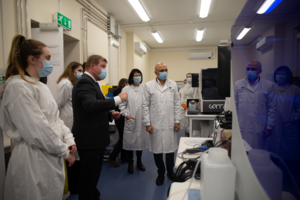
A new world-class UKHSA research facility dedicated to the development and testing of new COVID-19 vaccines has opened at the UK Health Security Agency (UKHSA) Porton Down site, in Salisbury.

The £27 million Robinson Building was officially opened by Health Secretary Sajid Javid and UKHSA CEO, Professor Dame Jenny Harries, on 17 February.

The 2-storey, 22,000sqft building is one of two facilities that make up a new £65 million Vaccine Evaluation Centre, built to help develop and license new vaccines and be a global leader in testing against future variants of the virus.

The project is fully funded by the Vaccine Taskforce, a joint unit between the Department for Business, Energy and Industrial Strategy and the Department of Health and Social Care.

Research undertaken at the facility will include:

  • clinical testing to support regulatory licensing of new COVID-19 vaccines
  • research and data gathering to inform government decisions on future vaccination policies
  • performing risk assessments on variants of concern, including those with potential vaccine escape

Professor Dame Jenny Harries, CEO of UKHSA, said:

These new world-class facilities will help further establish UKHSA and its Porton Down site as a global leader of vaccine testing and variant research in the fight against COVID-19.

The work undertaken at the Vaccine Evaluation Centre will define the UK’s future pandemic response as we help develop the next generation of vaccines to protect against this ever-mutating virus.

Vaccines are one of the most important weapons we have against COVID-19 and they have prevented countless deaths and hospitalisations through this pandemic. Our teams will use these new facilities to ensure we stay on the front foot in protecting against future threats.

Health and Social Care Secretary Sajid Javid said:

Over the course of the pandemic, our country has earned a global reputation as a pioneer in world-class vaccine development and variant research.

This state-of-the-art facility is one of two that together make up a new £65 million Vaccine Evaluation Centre that will be critical in bolstering the UK’s future pandemic response, helping to keep us safe for years to come.

It’s thanks to the research carried out at Porton Down and other vital sites across the UK that tens of millions of British people are protected from the virus as we learn to live with COVID-19.

Published 21 February 2022


PM statement on living with COVID: 21 February 2022

PM statement in the House Of Commons

Mr Speaker, with permission I will make a statement on our strategy for living with Covid.

And before I begin, I know the whole House will join me in sending our best wishes to Her Majesty the Queen for a full and swift recovery.

It is a reminder that this virus has not gone away, but because of the efforts we have made as a country over the past two years we can now deal with it in a very different way, moving from government restrictions to personal responsibility.

So we protect ourselves without losing our liberties – and maintaining our contingency capabilities so we can respond rapidly to any new variant.

Mr Speaker, the UK was the first country in the world to administer an approved vaccine, and the first European nation to protect half our population with at least one dose.

And having made that decision to refocus our NHS this Winter on the campaign to Get Boosted Now, we were the first major European nation to boost half our population too.

And it is because of the extraordinary success of this vaccination programme, that we have been able to lift our restrictions earlier than other comparable countries, opening up last summer, while others remained closed, and keeping things open this winter, when others shut down again, making us one of the most open economies and societies in Europe, with the fastest growth anywhere in the G7 last year.

And while the pandemic is not over, we have now passed the peak of the Omicron wave, with cases falling, hospitalisations in England now fewer than 10,000 and still falling, and the link between infection and severe disease substantially weakened.

Over 71 per cent of all adults are now boosted in England, including 93 per cent of those 70 and over, and together with the treatments and scientific understanding of the virus we have built up, we now have sufficient levels of immunity to complete the transition from protecting people with government interventions to relying on vaccines and treatments as our first line of defence.

As we have throughout the past two years, we will continue to work closely with the Devolved Administrations as they decide how to take forward their own plans, and today’s strategy shows how we will structure our approach in England around four principles.

First, we will remove all remaining domestic restrictions in law.

From this Thursday, 24 February, we will end the legal requirement to self-isolate following a positive test, and so we will also end self-isolation support payments, although Covid provisions for Statutory Sick Pay can still be claimed for a further month.

We will end routine contact tracing, and no longer ask fully vaccinated close contacts and those under 18 to test daily for seven days.

And we will remove the legal requirement for close contacts who are not fully vaccinated to self-isolate.

Until 1 April, we will still advise people who test positive to stay at home. But after that, we will encourage people with Covid-19 symptoms to exercise personal responsibility, just as we encourage people who may have flu to be considerate to others.

Mr Speaker, it is only because levels of immunity are so high and deaths are now, if anything, below where you would normally expect for this time of year, that we can lift these restrictions.

And it is only because we know Omicron is less severe, that testing for Omicron on the colossal scale we have been doing is much less important, and much less valuable in preventing serious illness.

We should be proud that the UK established the biggest testing programme per person of any large country in the world.

But this came at a vast cost.

The Testing, Tracing and Isolation budget in 2020-21 exceeded the entire budget of the Home Office.

It cost a further £15.7 billion in this financial year, and £2 billion in January alone at the height of the Omicron wave.

We must now scale this back.

From today, we are removing the guidance for staff and students in most education and childcare settings to undertake twice weekly asymptomatic testing.

And from 1st April, when Winter is over and the virus will spread less easily, we will end free symptomatic and asymptomatic testing for the general public.

We will continue to provide free symptomatic tests to the oldest age groups and those most vulnerable to Covid.

And in line with the practice in many other countries, we are working with retailers to ensure that everyone who wants to can buy a test.

From April 1st, we will also no longer recommend the use of voluntary Covid-status certification, although the NHS app will continue to allow people to indicate their vaccination status for international travel.

And Mr Speaker, the government will also expire all temporary provisions of the Coronavirus Act.

Of the original 40, 20 have already expired, 16 will expire on 24 March, and the last 4 relating to innovations in public service will expire six months later, after we have made those improvements permanent via other means.

Second, we will continue to protect the most vulnerable with targeted vaccines and treatments.

The UK government has procured enough doses of vaccine to anticipate a wide range of possible JCVI recommendations. And today we are taking further action to guard against a possible resurgence of the virus, accepting JCVI advice for a new Spring booster offered to those aged 75 and over, older care home residents, and those over 12 who are immunosuppressed.

The UK is also leading the way on antivirals and therapeutics, with our AntiVirals Task Force securing a supply of almost 5 million – more per head than any other country in Europe.

Third, SAGE advise there is considerable uncertainty about the future path of the pandemic, and there may of course be significant resurgences.

They are certain there will be new variants and it’s very possible those will be worse than Omicron.

So we will maintain our resilience to manage and respond to these risks, including our world-leading ONS survey, which will allow us to continue tracking the virus in granular detail, with regional and age breakdowns helping us spot surges as and where they happen, and our laboratory networks will help us understand the evolution of the virus and identify any changes in characteristics.

We will prepare and maintain our capabilities to ramp up testing.

We will continue to support other countries in developing their own surveillance capabilities, because a new variant can emerge anywhere.

And we will meet our commitment to donate 100 million vaccine doses by June, as our part of the agreement at the UK’s G7 summit to provide a billion doses to vaccinate the world over the next year.

In all circumstances, our aim will be to manage and respond to future risks through more routine public health interventions, with pharmaceutical interventions as the first line of defence.

Fourth, we will build on the innovation that has defined the best of our response to the pandemic.

The Vaccines Task Force will continue to ensure the UK has access to effective vaccines as they become available, already securing contracts with manufacturers trialling bi-valent vaccines, which would provide protection against Covid variants.

The Therapeutics Task Force will continue to support seven national priority clinical trial platforms focused on prevention, novel treatments and treatment for long-Covid.

We are refreshing our biosecurity strategy to protect the UK against natural zoonosis and accidental laboratory leaks, as well as the potential for biological threats emanating from state and non-state actors.

And building on the Five Point Plan I set out at the United Nations and the agreements reached at the UK’s G7 last year, we are working with our international partners on future pandemic preparedness, including through a new pandemic treaty, an effective early warning system or Global Pandemic Radar, and a mission to make safe and effective diagnostics, therapeutics and vaccines available within the first 100 days of a future pandemic threat being identified.

And we will be hosting a global pandemic preparedness summit next month.

And Mr Speaker, Covid will not suddenly disappear.

So those who would wait for a total end to this war before lifting the remaining regulations, would be restricting the liberties of the British people for a long time to come.

This government does not believe that is right or necessary.

Restrictions pose a heavy toll on our economy, our society, our mental wellbeing, and the life chances of our children.

And we do not need to pay that cost any longer.

We have a population that is protected by the biggest vaccination programme in our history.

We have the antivirals, the treatments, and the scientific understanding of this virus, and we have the capabilities to respond rapidly to any resurgence or new variant.

And Mr Speaker it is time to get our confidence back.

We don’t need laws to compel people to be considerate of others.

We can rely on that sense of responsibility towards one another, providing practical advice in the knowledge that people will follow it to avoid infecting loved ones and others.

So let us learn to live with this virus and continue protecting ourselves without restricting our freedoms.

And in that spirit, I commend this Statement to the House.


Environment Agency issues Severe Flood Warning for Bewdley, Worcestershire

Press release

Residents in flood-risk areas urged to evacuate with support from police and council.

  • Severe Flood Warning issued for Beales Corner as River Severn level expected to rise further
  • High river levels the result of back-to-back storms and continued heavy rain

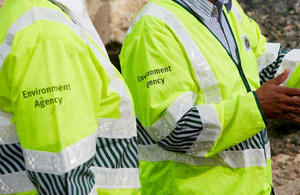
The Environment Agency has issued a Severe Flood Warning for Beales Corner in Bewdley, Worcestershire due to extremely high river levels on the River Severn that are threatening to over-top temporary flood barriers.

Properties in Beales Corner are at a very high risk of flooding as the fast-flowing water from the River Severn is expected to flood the area on Tuesday 22 February with a peak expected on Wednesday 23 February.

Teams from the Environment Agency have been working throughout the weekend to deploy temporary flood barriers at Beales Corner. However, there is still a high risk that water levels will overtop the barrier.

The Environment Agency issues Severe Flood Warnings when there is imminent risk of flooding and threat to life.  Residents are strongly urged to evacuate their homes during the flood and are being supported by the police and councils.

Environment Agency Area Duty Manager for Worcestershire Gary Bywater said:

We are facing a significant flood risk at Beales Corner in Bewdley and urging people to remain vigilant and take extreme care. Heavy rain, affecting already wet areas, is likely to cause significant river flooding along the River Severn for several days.

We have teams out on the ground taking preventative action and we are working with other agencies to support people who need to evacuate their homes.

We advise people to stay away from swollen rivers and not to drive through flood water as just 30 centimetres of flowing water is enough to move your car.

The Environment Agency has been working with local authorities over the past year to ensure that excellent resilient measures are in place should the barrier need to be deployed, including re-surfacing the road and maintaining the drains.

Residents are urged to sign up to Environment Agency Flood Warning messages and to make sure they are prepared for flooding by following the ‘Prepare, Act, Survive’ guidance:

  • Prepare a bag that includes medical and insurance documents
  • Check the latest flood situation online
  • Know how to turn off your gas, electricity and water
  • Check your insurance to make sure you are covered for flood damage. If you rent your home, it is your responsibility to have insurance for your belongings
  • If you are flooded, call 999 if in immediate danger and follow advice from emergency services.
Published 21 February 2022
Last updated 21 February 2022 + show all updates

  1. First published.