How DVLA’s corporate induction process helps new starters

I applied for a job as a software engineer at DVLA because of my passion for coding. I have a degree in Mathematics, but after completing a Professional Graduate Certificate in Education I realised that coding was what I wanted to do. What also attracted me to the role is that it also allows me to study for an MSc in software engineering at the University of Wales Trinity Saint David (UWTSD).

James Harrison Morgan

Starting in September 2018 with 18 other eager students I had no idea what to expect, and I was naturally nervous (as we all are) on my first day. In the following days and weeks I would:

  • be given a guide to my first 6 weeks, outlining all mandatory training
  • be inducted into my new team
  • attend several induction workshops

I fully expected my induction to cover security, data protection, health and safety, and how to conduct yourself at work – which it did. What surprised me was that we would also learn about unconscious bias, counterfraud, social media usage policies and sustainability. It was interesting and educational, and it gave me real insight into how DVLA values high standards of personal conduct which is vital when you work in the Civil Service.

Team induction

Initially I attended UWTSD for 4 days a week with one day with my team in DVLA. This allowed me to develop my skills, for example, problem solving and team working at DVLA and UWTSD.

After a warm welcome and introduction to my new team during the daily standup meeting I was placed into a squad, which is a cloud team using microservices architecture. I observed and learnt the tools, processes and overall structure of DVLA services, gradually increasing the hours to allow me to become more confident in my new role.

A key turning point in my induction was a training course I attended with the other students. Split up into 3 squads we were tasked to build a news, sport and weather application working in an agile way. We were all given a category of the app (mine was the news category) and asked to develop a webpage to display sport information. I needed to use software tools like elastic beanstalk and languages like java to develop the functionality of a webpage. The course taught me how to work as part of a team towards a common goal and we did it with time to spare.

How the training has helped in my role

I’m now working in the emerging technology lab where we develop new ideas for the organisation’s digital services.

Using the skills I built up through the induction process I was able adapt to a role which needed me to communicate with key stakeholders, develop prototypes and demos for products we were working on and make learning fun for children in a school hosting day. I’ve also taken part in a project to investigate robotic process automation and chatbots where I worked with my team to develop a prototype robot.

The induction allowed me to settle in, understand my role, develop new skills, and gain the knowledge to do the job properly. I really enjoy my work. It has also helped me transform from schoolteacher to civil servant. Through this, I now know the difference between working in a class of children to working in a squad of experts.

Next steps

I’m really happy in my role at the moment. In future I’d like a role where I can experience all aspects of the organisation. For example: making business decisions, developing services, provide training or interviewing new candidates. Who knows what the future may hold here at DVLA.

Roles at DVLA

DVLA will support you in reaching your full potential, offering rewarding and challenging jobs, training plans and ongoing development opportunities.

If you fancy a career at DVLA make sure you keep an eye on Civil Service Jobs.

Let’s block ads! (Why?)


DVLA: encouraging the IT experts of tomorrow

The UK needs 100,000 new graduates in Science, Technology, Engineering and Mathematics (STEM) subjects every year. But currently only 6% of the workforce in STEM related subjects are female. Research conducted by the Welsh government has shown that a staggering 93% of parents would not support their daughter to pursue a career in a STEM subject. But, when asked at school, 39% of girls said they enjoy Information Technology, Computing and Design Technology.

Employing around 5,000 people in Swansea, DVLA was one of the first government departments to bring its IT function ‘in house’ and has one of the largest self-sufficient IT departments in government. This puts us in a perfect position to share our knowledge and expertise with the up-and-coming generations, to try and encourage a culture change that will get more women into IT roles.

Bring your daughter to work

We’ve recently introduced a ‘bring your daughter to work’ day. Here we aim to close the gender gap in IT by inviting staff to bring their daughters to work in a bid to spark interest from girls to consider a career in IT.

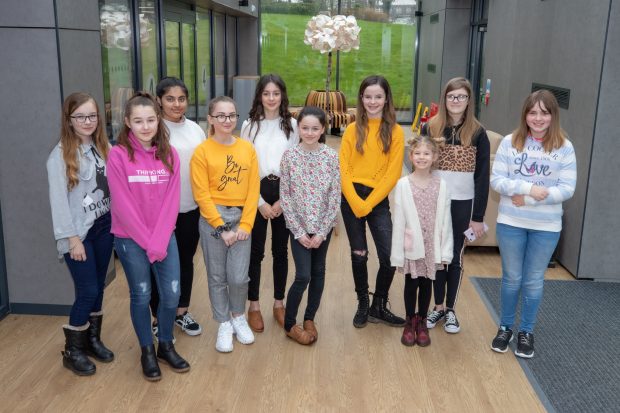
a group of girls standing together

We want to encourage girls, who often give up on IT once they join secondary school, to keep going with STEM subjects (science, technology, engineering and mathematics) and add them to their choices for exams as they go through secondary school.

DVLA’s chief technology officer Brian Sullivan said:

“We’re well aware that there are more men than women working in the IT sector and this is just one of the ways in which we are trying to change that here in Swansea.

“If we can encourage more girls to take an interest from an early age, in 10 years we will have more local women qualified and ready for a career in IT. It would be great to see them working here at DVLA.”

Other initiatives

‘Bring your daughter to work’ is just one of our initiatives in this space. We also run events where all children aged 11 to 13 are invited to spend the day at DVLA and try some fun coding activities, learn about new technologies and pick up some new skills along the way.

All content is age appropriate, light and interactive where possible. At the end of the day there’s a topical, fun quiz based on the learning gained from the day, with prizes too – always a hit with the children.

Some feedback we’ve had from the children, teachers and parents:

“It was really good and a lot more interesting than I thought it would be.”

“I thought we were going to be sat at computers and that it would be a bit boring, but it’s been really fun. The activities were very good.”

“Good presentation. Activities were fun and pitched at the right level. The children were engaged throughout.”

“In the future these skills will be used back at school for coding tasks.”

“I think it was a great experience & should be rolled out for all schools.”

“Must have listened well as she told me about it after the day!”

This feedback is a good indicator that we were able to inspire participants to want to continue their learning journey. It certainly meets with our vision of investing in digital skills.

What’s coming next

Capability and Talent Development Lead, Karen Clark said, “Our aim is to ensure that as an agency, we continue to support and grow the digital skills of young people in the local region and this is a brilliant opportunity to inspire the next generation.

Along with promoting the learning of STEM subjects, this is a great way for us to position DVLA as a leading digital and technology employer and a great place to work for future generations.”

You can read about what it’s like to work at DVLA and take a look at our latest vacancies on Civil Service jobs.

Let’s block ads! (Why?)


Our waste, our responsibility

Reducing our carbon footprint is a great way to save money, boost staff morale and lessen our impact on the environment. But applying this to a business takes a bit more thought than remembering to separate plastic from paper.

The new contract

We recently awarded a new ITS waste contract to a local supplier that offers a complete asset management process. This includes data cleansing, repairing and refurbishing old IT equipment.

The contract includes the option of selling our IT kit back to the private sector and, where possible, clawing revenue back in to the public purse.

Through this new contract we have reduced our destruction costs to zero, making an instant annual saving of £62,000.

Young person holding a small tree

How we do it

Our IT kit is carefully wiped of all data to make sure that everything is removed before it leaves DVLA.

It is then collected by the supplier and placed on a production line, where a physical check is carried out to check for any damage. Each element is given a monetary value, before being cleaned up and sent for resale or donation.

Where it all goes

We have a history of donating IT equipment to local schools, voluntary and charitable organisations through our sustainability team. Laptops, desktops and other redundant IT equipment have also been donated to schools in Zambia as part of the Giakonda project and to the Sponsoring Academic and Medical Access charity.

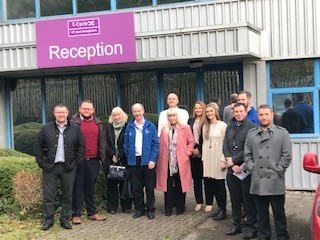
Group of people standing outside Ecycle reception

Laptops have also been reused through our ITS DRIIVE programme. We were able to identify which schools in the local Swansea area would benefit most from our old equipment by working with the Welsh Assembly.

Why it matters

Awarding this contract means we are closer than ever to achieving the goals as set out in our sustainability report.

Follow DVLA on Twitterfollow us on Facebook and connect with us on LinkedIn. You can also subscribe to the DVLA digital services blog.

Let’s block ads! (Why?)


#TaxItOrLoseIt: The story continues

Elaine Rees in front of giant clamp

One of DVLA’s primary functions is to collect vehicle tax on behalf of the Treasury. Most vehicle keepers tax their vehicle when they should – over 98% did the right thing at the last count. We do lots of things to help remind vehicle keepers when their vehicle tax is due, such as millions of postal reminders every year, providing quick and easy to use digital services and targeted communications campaigns.

Despite all this, some motorists still don’t tax their vehicles and continue to drive them on the road. This is where we come in. Our role is to spot untaxed vehicles and take action against them.

How we do it

I work with a fantastic team that makes these enforcement measures happen.

We’ve been really busy since we last blogged about this. We’ve stepped up our enforcement activities with our partners such as local councils and the police in all parts of the country. No matter where you live, we take action against those who don’t tax.

A range of measures, such as fines and penalties, stickers, wheel clamping and communications designed to change behaviour, are having a positive effect in combating tax evasion.

If you’re caught without tax, it’s expensive, inconvenient and just not worth it. When DVLA clamps an untaxed vehicle the motorist is charged a £100 release fee. If they cannot show the vehicle has been taxed when it’s released, the motorist will have to pay a surety fee of £160. This is refunded if the motorist can show the vehicle has been taxed within 15 days.

If the release fee’s not paid within 24 hours, DVLA impounds the vehicle and the fee rises to £200. There’s also a storage charge of £21 per day. Again, a surety fee of £160 must be paid if the motorist cannot show that the vehicle’s been taxed.

Motorists who choose to evade tax take a very real risk of losing their cars, as well as the potential of multiple financial penalties.

Getting the message out there

Giant clamp with 'We're clamping untaxed cars in your area' on it on a car in front of row of terraced houses

As well as the hard graft we put in on the road every day, our communications team ran a locally targeted communications campaign in each of the locations of the UK where vehicle tax evasion is highest. Adverts ran on lots of different channels including radio, print, online and social media. This helped to reach those who have avoided, or might be thinking of avoiding, their vehicle tax.

My teams are always out across the country but we’ll be well supported by the communications once again when the advertising resumes in the areas we’ll be in.

The message is clear to all those who continue not paying their vehicle tax – tax it or lose it.

Let’s block ads! (Why?)


Picking up the baton at DVLA contact centre

I’m delighted to join a vibrant working environment with such great people.

We are a multi-channel customer service provider with around 1,100 staff handling over 24.5 million enquiries a year. The strong leadership and excellent people development that exists is second to none. I think our vision says it all:

To be a centre of excellence in everything we do

Award winning customer service

We recently received Customer Contact Association (CCA) accreditation for the 12th consecutive year, this time successfully obtaining CCA Global Standard Version 7.

To support our accreditation independent external assessors met with staff, senior leaders and key stakeholders to benchmark our operation against the CCA standards.

Continuous focus on customer experience, strong processes, staff development and engagement were key strengths highlighted by the CCA in their assessment.

This achievement follows on from our recent success at the CCA Excellence Awards, where we picked up Team of the Year and Individual of the Year awards.

What I bring to the role

I have over 20 years’ experience in a contact centre environment, covering every role from phone advisor to operations manager and everything in-between! I’m excited to use my expertise to help shape how we take the contact centre to the next level.

Coming from the private sector into the public sector has its advantages. Bringing different perspectives and experiences can be helpful when looking at continuous improvement, pushing digital transformation, and supporting our customers and people.

What the future looks like

We’ll continue supporting customers by offering a choice of channels. I look forward to building on technology we’ve already introduced such as chatbots and webchat.

I’m proud of the awards we’ve achieved, the engagement of our staff and how we always strive for excellence. We’ve got a culture where everyone works towards a common team goal, no matter what individual roles they play.

To find out more

Let’s block ads! (Why?)