Two companies fined after a worker suffers serious injuries in a fall

A construction company and a roofing contractor have been fined after a roofer suffered multiple fractures in a fall from a building roof.

Horizon Roofing Specialist Ltd had been appointed by principal contractor – Bromley-based Property Facilities Group Ltd – to originally undertake the installation of a new roof at Aspire Academy in Welling.

Following this, Horizon Roofing were appointed to replace the roof of an existing modular building that was being refurbished, due to the original contractor becoming unavailable to complete the work.

On 29 September 2020, three roofers began work on the modular building roof, and during the work an unexpected flare from a gas gun caused one of the roofers to stumble backwards and fall from the edge of the unprotected roof to the ground below.

An unexpected flare from a gas gun caused one of the roofers to stumble backwards and fall from the edge of the unprotected roof to the ground below

The roofer who worked for Horizon Roofing Specialist Limited, suffered multiple fractures to both of his legs which required surgery.

HSE has clear and concise guidance on carrying out roof work safely.

An investigation by the Health and Safety Executive (HSE) found that Property Facilities Group and Horizon Roofing had failed to adequately plan, appropriately supervise, and ensure that the work was carried out in a safe manner.

Property Facilities Group Ltd, of Newman Road, Bromley, pleaded guilty to breaching Regulation 4(1) of the Work at Height Regulations 2005. They were fined £14,000 and was ordered to pay £1,619.25 costs at a hearing at Westminster Magistrates Court on 19 January 2024.

Horizon Roofing Specialist Limited, of Langham Road, Robertsbridge, pleaded guilty to breaching Regulation 4(1) of the Work at Height Regulations 2005. They were fined £3,333 and was ordered to pay £1,619 costs at the same hearing.

After the hearing, HSE inspector Gemma Cox said: “Too many workers are injured every year as a result of falling from roofs with unprotected edges. The victim sustained serious injuries which could have been prevented if basic, industry standard control measures had been put in place.

“Companies should be aware that HSE will not hesitate to take appropriate enforcement action against those that fall below the required standards.”

This HSE prosecution was brought by HSE enforcement lawyer Rebecca Schwartz and supported by HSE Paralegal Officer, Rebecca Foreman.


Notes to editors:

  1. The Health and Safety Executive (HSE) is Britain’s national regulator for workplace health and safety. We prevent work-related death, injury and ill health through regulatory actions that range from influencing behaviours across whole industry sectors through to targeted interventions on individual businesses. These activities are supported by globally recognised scientific expertise.
  2. More information about the legislation referred to in this case is available.
  3. Further details on the latest HSE news releases is available.



Company fined after 21-year-old worker dies

A company in Peterborough has been fined £67,000 after a young employee lost his life.

George Setchfield was found unconscious over the side of a large container while working for Electrostatic Magic Limited at the firm’s site in Peterborough.

George’s mum says his passing has affected “every aspect” of her life.

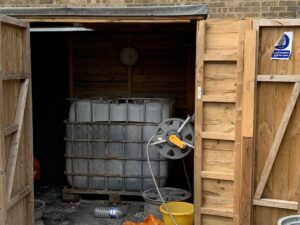
The 21-year-old had entered the company’s stripping shed, which housed an Intermediate Bulk Container (IBC) containing alloy wheel stripper.

He was later found by his manager slumped over the side of the IBC, and could not be revived.

Twenty-one-year-old George Setchfield was found dead in work

George had sustained multiple organ failure and chemical pneumonitis and cutaneous burns from exposure to dichloromethane, hydrofluoric acid and methanol.

Health and Safety Executive (HSE) guidance for those working with dichloromethane is available.

An investigation by HSE found that Electrostatic Magic Limited had failed to control exposure to dichloromethane and hydrofluoric acid. It would have been reasonably practicable for the company to have installed local exhaust ventilation (LEV), used a hoist or long-handled tools to lower and lift parts in and out of the tank, provide pumped chemical systems to prevent the need to lean into the IBC and finally ensure that any Personal Protective Equipment (PPE) or Respiratory Protective Equipment (RPE) provided was suitable for the environment it was being used in.

George had entered the company’s stripping shed, which housed an Intermediate Bulk Container (IBC) containing alloy wheel stripper.

George’s Mum, Amanda Foster, told Peterborough Magistrates’ Court: “Trying to find some level of justice for George has taken over my entire life.  I have spent hours going into detail, reviewing, rereading and making notes about how George died and how it should have been prevented.

“This is something that I struggle to accept, how has this been able to happen to my son? George’s death has affected every aspect of my life. It has left me with a constant feeling of emptiness and devastation. It will shadow my future forever and I know that my life will never be as it once was. It has shattered my family’s lives and changed everyone’s life who knew and loved George.”

Electrostatic Magic Limited, of Ivatt Way, Westwood, Peterborough, pleaded guilty to breaching Regulation 7(1) of the Control of Substances Hazardous to Health Regulations 2002 and Article 67 of the REACH regulation. The company was fined £67,000 and ordered to pay £7,231 in costs at Peterborough Magistrates’ Court on 19 January 2024.

HSE inspector Tom Pouncey said: “Our thoughts today are with the family of Mr Setchfield, a young man, who should have returned home safely to his family at the end of his working day, but because of the failings of Electrostatic Magic Limited, he did not, and his family are understandably heartbroken.”

“Awareness within the alloy wheel stripping industry of the importance of using appropriate control measures and the dangers of this cold stripping process needs to improve.

“Companies need to understand the dangers of working with hazardous chemicals and ensure employees are not unnecessarily exposed. Deaths can result from working with Dichloromethane-based stripping fluids. HSE will be inspecting businesses carrying out similar work to ensure suitable health and safety arrangements are in place. If they are not then HSE will take appropriate action.”

This prosecution was brought by HSE enforcement lawyer Jon Mack and supported by HSE paralegal officer Rebecca Forman.


Notes to editors:

  1. The Health and Safety Executive (HSE) is Britain’s national regulator for workplace health and safety. We prevent work-related death, injury and ill health through regulatory actions that range from influencing behaviours across whole industry sectors through to targeted interventions on individual businesses. These activities are supported by globally recognised scientific expertise.
  2. More information about the legislation referred to in this case is available.
  3. Further details on the latest HSE news releases is available.


Company director fined after falsifying documents

A company director has been fined £5,000 after he falsified asbestos removal documents while his firm worked on a block of flats in Brighton.

Reliable Insulations and Fibre Control Ltd had been hired to remove asbestos at Abbotts Apartments, on King Street, when the company’s director, James Pett, created a fraudulent document claiming a 4-Stage Clearance had been completed on 26 September 2021.

A 4-Stage Clearance is required by law to ensure asbestos removal work has been completed safely.

With the asbestos removal work at the site running behind schedule, Mr Pett decided against using an independent company to check the work had been carried out safely, that the site had been properly cleaned, and it was safe to reoccupy.

Instead, he decided the falsify the 4-Stage Clearance certificate.

An investigation by the Health and Safety Executive (HSE) found that 72-year-old Mr Pett had used a previous authentic test certificate to create a fraudulent document to deceive other parties into believing that the 4-Stage Clearance had been completed, allowing further maintenance work to continue in the basement.

HSE has recently updated its webpages on asbestos safety and in 2023 launched an awareness campaign, Asbestos and You, which provides tradespeople with information about how to deal with asbestos on a job, and the personal risks from asbestos that still exist across the country today. The workplace regulator has also just launched its Asbestos: Your Duty campaign that aims to improve understanding of what the legal duty to manage asbestos involves.

James Pett, of Avenue Road, Erith, Kent, pleaded guilty to breaching Section 33(1)(m) of the Health and Safety at Work etc. Act 1974. He was fined £5,000 at Bromley Magistrates’ Court on 18 January 2024.

HSE inspector Russell Beckett said: “This was a reckless act by the director of a company whose sole job was to safely remove asbestos. Instead, he decided to deceive to try and speed up a job.

“Companies who are licensed to remove asbestos by the HSE are fully aware of risks associated with asbestos and the need to follow all precautions necessary to make sure areas where asbestos has been removed are safe for reoccupation, and this includes a 4-stage clearance test by an independent company.

“Exposure to asbestos is responsible for over 5000 deaths every year in the UK.

“This prosecution shows that HSE will not hesitate to take action against individuals who do not do all that they should to keep people safe.”

This prosecution was brought by HSE enforcement lawyer Rebecca Schwartz and supported by HSE paralegal officer Stephen Parkinson.


Notes to editors:

  1. The Health and Safety Executive (HSE) is Britain’s national regulator for workplace health and safety. We prevent work-related death, injury and ill health through regulatory actions that range from influencing behaviours across whole industry sectors through to targeted interventions on individual businesses. These activities are supported by globally recognised scientific expertise.
  2. More information about the legislation referred to in this case is available.
  3. Further details on the latest HSE news releases is available.


Company director fined after falsifying documents

A company director has been fined £5,000 after he falsified asbestos removal documents while his firm worked on a block of flats in Brighton.

Reliable Insulations and Fibre Control Ltd had been hired to remove asbestos at Abbotts Apartments, on King Street, when the company’s director, James Pett, created a fraudulent document claiming a 4-Stage Clearance had been completed on 26 September 2021.

A 4-Stage Clearance is required by law to ensure asbestos removal work has been completed safely.

With the asbestos removal work at the site running behind schedule, Mr Pett decided against using an independent company to check the work had been carried out safely, that the site had been properly cleaned, and it was safe to reoccupy.

Instead, he decided the falsify the 4-Stage Clearance certificate.

An investigation by the Health and Safety Executive (HSE) found that 72-year-old Mr Pett had used a previous authentic test certificate to create a fraudulent document to deceive other parties into believing that the 4-Stage Clearance had been completed, allowing further maintenance work to continue in the basement.

HSE has recently updated its webpages on asbestos safety and in 2023 launched an awareness campaign, Asbestos and You, which provides tradespeople with information about how to deal with asbestos on a job, and the personal risks from asbestos that still exist across the country today. The workplace regulator has also just launched its Asbestos: Your Duty campaign that aims to improve understanding of what the legal duty to manage asbestos involves.

James Pett, of Avenue Road, Erith, Kent, pleaded guilty to breaching Section 33(1)(m) of the Health and Safety at Work etc. Act 1974. He was fined £5,000 at Bromley Magistrates’ Court on 18 January 2024.

HSE inspector Russell Beckett said: “This was a reckless act by the director of a company whose sole job was to safely remove asbestos. Instead, he decided to deceive to try and speed up a job.

“Companies who are licensed to remove asbestos by the HSE are fully aware of risks associated with asbestos and the need to follow all precautions necessary to make sure areas where asbestos has been removed are safe for reoccupation, and this includes a 4-stage clearance test by an independent company.

“Exposure to asbestos is responsible for over 5000 deaths every year in the UK.

“This prosecution shows that HSE will not hesitate to take action against individuals who do not do all that they should to keep people safe.”

This prosecution was brought by HSE enforcement lawyer Rebecca Schwartz and supported by HSE paralegal officer Stephen Parkinson.


Notes to editors:

  1. The Health and Safety Executive (HSE) is Britain’s national regulator for workplace health and safety. We prevent work-related death, injury and ill health through regulatory actions that range from influencing behaviours across whole industry sectors through to targeted interventions on individual businesses. These activities are supported by globally recognised scientific expertise.
  2. More information about the legislation referred to in this case is available.
  3. Further details on the latest HSE news releases is available.


Manufacturing company fined after worker suffered finger amputation

A West Yorkshire cosmetic manufacturing company has been fined after a worker lost part of a finger while cleaning a machine.

On 8 October 2021, the man was working on a tube filling machine at Orean Personal Care Limited at its base in Cleckheaton, West Yorkshire.

He was supervising five members of staff who were using the machine to fill tubes with a product that needed to stay hot. During the process the machine became contaminated and had to be cleaned. When the employee was cleaning the machine, part of it moved, trapping his finger, and causing the injury. Part of his middle finger was amputated, and he still suffers pain in his finger end and may require additional surgery.

An investigation by the Health and Safety Executive (HSE) found that the interlocked guard had been bypassed to allow the machine to run with the guard door open. The risk was not managed properly and a range of employees from machine operators to cleaning staff were exposed to it.

HSE has detailed guidance on machine safety.

On 16 January at Leeds Magistrates’ Court, Orean Personal Care Limited of Stubbs Beck Lane, Cleckheaton, West Yorkshire pleaded guilty to breaching Section 2 (1) of the Health & Safety at Work etc Act 1974. The company was fined £300,000 and ordered to pay £4,511.70 in costs.

After the hearing, HSE inspector Justine Lee said: “Moving machinery can cause serious injury and it is essential that access to it is prevented at all times, including during maintenance and cleaning work. The use of effective guarding is an absolute duty and, when complied with, will prevent this type of injury.”

This prosecution was brought by HSE enforcement lawyer Gemma Zakrzewski.


Notes to Editors:

  1. The Health and Safety Executive (HSE) is Britain’s national regulator for workplace health and safety. We prevent work-related death, injury and ill health through regulatory actions that range from influencing behaviours across whole industry sectors through to targeted interventions on individual businesses. These activities are supported by globally recognised scientific expertise.
  2. More information about the legislation referred to in this case is available.
  3. Further details on the latest HSE news releases is available.