HSE builds construction support to protect workers’ mental health

The construction industry has stepped-up its efforts to combat work-related stress and promote good mental health by joining Great Britain’s workplace regulator campaign.

The Working Minds campaign, set up by the Health and Safety Executive (HSE), welcomes six new partners in the construction industry to help reach trades and offer free support.

March sees the Contract Flooring Association (CFA) and the Chartered Institute of Plumbing and Heating Engineering (CIPHE), Asbestos Removal Contractors Association (ARCA), the National Federation of Demolition Contractors (NFDC), the Electrical Contractors’ Association (ECA) and the National Federation of Roofing Contractors (NFRC) commit to the campaign.

Working Minds helps employers prevent stress and support good mental health, providing free online learning to show how to make it part of routine working life and culture. The new bitesize tool typically takes no more than an hour to complete and covers what the law requires of employers and what’s needed to do to be compliant.

Users will walk through Working Minds’ five simple steps based on risk assessment. They are to Reach out and have conversations, Recognise the signs and causes of stress, Respond to any risks you’ve identified, Reflect on actions you’ve agreed and taken, and make it Routine. It needs to become the norm to talk about stress and how people are feeling and coping on site.

Liz Goodwill, head of work-related stress and mental health policy at HSE, said: “We know that running a business in construction can be stressful with long hours, juggling intense workloads.

“We are delighted the Working Minds campaign is welcoming even more partners and they will no doubt help us in our efforts to raise awareness of ways employers across Britain’s construction trades can help prevent and reduce work-related stress.

“The law requires all employers – whether you’re a demolition firm or scaffolding business – to carry out a stress risk assessment and act upon the findings. The online learning shares all the tools you need to get started in one place, and you can come back as many times as you like.”

According to Deloitte , the total annual cost of poor mental health has increased by 25% since 2019, costing UK employers up to £56 billion a year.

Help is available

If you or someone you know needs help or support, reach out and ask how they are feeling and coping. The Working Minds campaign sign-posts employers to a wide range of tools and sources of support that can help on its construction sector webpage.

Employers wishing to know more and complete the Working Minds online learning should register and get started today.

Notes to Editors:

  1. The Health and Safety Executive (HSE) is Britain’s national regulator for workplace health and safety. We prevent work-related death, injury and ill health through regulatory actions that range from influencing behaviours across whole industry sectors through to targeted interventions on individual businesses. These activities are supported by globally recognised scientific expertise.
  2. Working Minds campaign partners include; Mates in Mind, Lighthouse Construction charity, Contract Flooring Association (CFA) and the Chartered Institute of Plumbing and Heating Engineering (CIPHE), Asbestos Removal Contractors Association (ARCA), the National Federation of Demolition Contractors (NFDC), the Electrical Contractors’ Association (ECA) and the National Federation of Roofing Contractors (NFRC).
  3. Steve Sadley, chief executive of the Asbestos Removal Contractors Association (ARCA), said: “We are pleased to support the HSE Working Minds campaign to address work-related stress, depression and anxiety. This is an important issue that employers in the asbestos removal industry should prioritise.   There are compelling reasons for asbestos removal companies to prevent work-stress and promote mental health. This includes meeting legal responsibilities, enhancing business operations, and caring for employees.“The nature of asbestos removal work can be demanding, so it’s critical to provide resources that equip teams to handle stress.   The Working Minds campaign offers helpful tools and resources to help asbestos removal companies establish effective wellbeing strategies tailored to industry-specific needs. We encourage companies in this vital field to utilise these materials to foster positive mental health practices. By working together proactively, we can create healthier and more supportive environments for asbestos removal professionals as they safely deliver this essential service.”
  4. Paul Williams, HS&E Services Manager at Electrical Contractors’ Association, said: “ECA is a proud supporter of Working Minds. Our work on mental health incudes providing Mental Health First Aider courses, and awareness courses across our membership family. We strive to make conversations about mental health normal and destigmatise attitudes towards poor mental health.”
  5. Jo Lear, executive assistant to technical and training at the National Federation of Demolition Contractors (NFRC), said: “NFRC is proud to continue to support the HSE Working Mind campaign. It’s an excellent resource that provides practical and useful tools to support our members mental health. NFRC is fully committed to supporting the wellbeing of our members and understand the importance of championing such great initiatives. The HSE Working Minds Campaign is positive step on a long road to improving the wellbeing and mental health of our roofing workforce.”
  6. Richard Catt, CEO at the Contract Flooring Association (CFA), said: “As the CEO of the Contract Flooring Association (CFA), I am proud to support the Health and Safety Executive’s (HSE) Working Minds campaign. Work-related stress, depression, and anxiety account for half of all work-related ill health cases, highlighting the urgent need for action. Employers should recognise three compelling reasons to prioritise mental health in the workplace: it’s a legal requirement, it’s beneficial for business and productivity, and the moral imperative.“By fostering a culture of openness, understanding, and support, we can create healthier, more productive work environments for all. Together, let’s embrace the principles of the Working Minds campaign and champion mental well-being in the workplace. It’s not just about compliance; it’s about creating environments where everyone can thrive.”
  7. Kevin Wellman, CEO of CIPHE, said: “As CEO of CIPHE, I proudly endorse the Working Minds campaign. It’s crucial for employers to prioritise mental health in the workplace, and this initiative provides valuable resources and support to prevent stress and promote well-being. Let’s join forces to create healthier, more supportive work environments for all.”
  8. To read more about HSE’s Working Minds campaign click here
  9. For press and media enquiries please contact media.enquiries@hse.gov.uk


Company fined after delivery driver suffers brain injury

A company has been fined £380,000 after a delivery driver fell and suffered a traumatic brain injury while working at its site in Walsall.

Timothy Bates was delivering fuel for a temporary diesel generator at Haldane Fisher Limited’s timber processing site on Long Street when he fell from a trailer on 28 July 2022.

Mr Bates, who is from Stafford, had been stowing equipment in a trailer attached to his truck when the vehicle was struck by a forklift truck reversing out of a nearby mill. This led to the trailer shunting into Mr Bates, with the 57-year-old then falling over and hitting his head onto the tarmac floor below.

He spent five weeks in hospital after sustaining a traumatic brain injury before spending 13 weeks in a care facility where he undertook CBT. He suffers from memory loss and dizziness as a result of his brain injury.

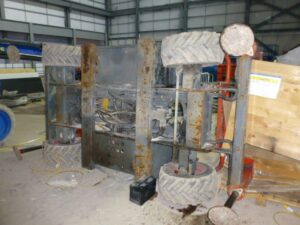
Mr Bates fell off the trailer (pictured) at Haldane Fisher Limited’s site in Walsall

A Health and Safety Executive (HSE) investigation found Haldane Fisher Limited, trading as GE Robinson, failed to identify safe systems of work for the delivery of fuel to the temporary generators at its site. There was inadequate segregation of vehicles and pedestrians in the yard. There were no measures in place to prevent forklift trucks from entering the areas in which delivery drivers were working whilst refuelling generators.

The company understood the risks associated with workplace transport, as control measures had been identified for separating pedestrians and vehicles, but these had not been implemented. Site rules had been identified but were not routinely implemented or monitored by the company.

Every workplace must be safe for the people and vehicles using it and traffic routes must be suitable for the people and vehicles using them. HSE has guidance on workplace transport with advice on keeping traffic routes safe and separating people from vehicles.

Haldane Fisher Limited, of Shepherds Way, Carnbane Industrial Estate, Newry, Northern Ireland, pleaded guilty to breaching Sections 2(1) and 3(1) of the Health and Safety at Work etc. Act 1974. The company was fined £380,000 and ordered to pay £5,934.50 in costs at Birmingham Magistrates’ Court on 1 March 2024.

HSE inspector Heather Campbell said: “This case highlights the dangers arising from inadequate management of workplace transport. It also highlights the requirements to ensure the safety of non-employees including contractors at employer’s sites.”

This prosecution was brought by HSE enforcement lawyer Samantha Wells and supported by HSE paralegal officer Gabrielle O’Sullivan.

Notes to editors:

  1. The Health and Safety Executive (HSE) is Britain’s national regulator for workplace health and safety. We prevent work-related death, injury and ill health through regulatory actions that range from influencing behaviours across whole industry sectors through to targeted interventions on individual businesses. These activities are supported by globally recognised scientific expertise.
  2. More information about the legislation referred to in this case is available.
  3. Further details on the latest HSE news releases is available.


Recycling firm fined after dad killed by shovel loader

A recycling company in Wales has been fined £300,000 after a father-of-two was killed by a shovel loader.

Anthony Bilton, from Barry, Vale of Glamorgan, lost his life on 4 September 2019 when he was run over from behind by a Volvo shovel loader at Atlantic Recycling Limited’s Atlantic Ecopark site in Cardiff.

The 59-year-old had been on his way to undertake routine maintenance tasks when the tragic incident happened, while walking across the wood processing yard.

Health and Safety Executive (HSE) inspector Rhys Hughes said Atlantic Recycling failed to ensure pedestrians and vehicles were separated at its site.

The HSE investigation also found that although a risk assessment had been produced prior to the work commencing, it was not suitable nor sufficient and did not include work taking place in the wood yard. Additionally, the risk assessment should have identified there was a risk to pedestrians where there were moving vehicles.

Every workplace must be safe for the people and vehicles using it and traffic routes must be suitable for the people and vehicles using them. HSE has guidance on workplace transport with advice on keeping traffic routes safe and separating people from vehicles.

Anthony’s son, Jason, says his life was “torn to shreds” following the passing of his dad.

He said: “It took over three hours for me to be notified that my dad had been killed in a work accident. I started to become concerned when he weren’t home from work at his usual time and failed to answer the phone. I remember thinking about popping by his workplace to see him whilst on my journey home from Telford, where I’d been for the past few days, but decided against it as I was exhausted from traveling.

“Had I gone to see him, I would’ve arrived at Atlantic Recycling between 3:30-4pm, he was killed around 4:10pm. Every day I deal with thoughts that: ‘If only I’d stopped to see him, he could still be alive today.’

Jason and Anthony Bilton

“There will never be real closure for my dad’s death as it should never have happened, not the way it did. My life was torn to shreds within a few hours and to this day I’m still dealing with the consequences and emotional impact.”

Atlantic Recycling Limited, of Newton Road, Rumney, Cardiff, pleaded guilty to breaching Section 2(1) of the Health and Safety at Work etc. Act 1974. The company was fined £300,000 and ordered to pay £29,917.47 in costs at Merthyr Tydfil Magistrates’ Court on 28 February 2024.

HSE inspector Rhys Hughes said: “This tragic incident led to the death of a father of two and could have been prevented. Atlantic Recycling Ltd should have identified, and controlled the risks involved with using large plant and vehicles in line with HSE guidance.

“A safe system of work should have been in place, ensuring that pedestrians and vehicles were segregated. This is sadly a common cause of fatal incidents in this sector. The most effective way of protecting pedestrians in any workplace is to make transport routes entirely separate.”

This prosecution was brought by HSE enforcement lawyer Matthew Reynolds and supported by HSE paralegal officer Helen Jacob.

Notes to editors:

  1. The Health and Safety Executive (HSE) is Britain’s national regulator for workplace health and safety. We prevent work-related death, injury and ill health through regulatory actions that range from influencing behaviours across whole industry sectors through to targeted interventions on individual businesses. These activities are supported by globally recognised scientific expertise.
  2. More information about the legislation referred to in this case is available.
  3. Further details on the latest HSE news releases is available.


BSR launches campaign for residents of high-rise buildings

  • High-rise building residents have more rights and protections than ever before.
  • Residents can now check if their high-rise building is registered
  • The Building Safety Regulator is there to drive forward safety standards across the built environment. The Building Safety Act 2022 is at the centre of building safety reforms in England.

The new regulator is asking all those living in tall buildings in England to be aware of how new Building Safety laws affect them. These laws protect and empower people living in high-rise residential buildings (HRBs) to take part in safety decisions that affect them – as well as providing a clear process for reporting safety concerns. This is a major milestone in the journey towards safer high-rise living, placing residents’ rights front and centre.

The Building Safety Act provides a framework for ensuring the safety of residents living in HRBs – these are buildings 18 meters or seven or more floors in height containing at least two residential units. They are defined as ‘higher-risk’ under the Act. Residents of these buildings are urged to find out more about how the new law affects them.

Every high-rise building is now required to have a Principal Accountable Person (PAP), ensuring that those responsible for managing the building’s safety can be held to account for fulfilling their legal obligations.

The enhanced residents’ rights include:

  • Assurance that safety risks in their building are being effectively addressed
  • Access to ongoing information on what is being done to improve safety in their building
  • Empowerment to voice safety concerns, with assurance that their concern will be taken seriously
  • Clear, accessible, and easy to understand information regarding safety matters

The legislation empowers residents to report safety concerns, assured that their grievances will be taken seriously. Clear protocols are in place for expressing concerns or making a complaint. Residents can raise concerns and issues to the PAP for their building.

Operating within the Health and Safety Executive, the BSR is a crucial part of the Government’s response to the Grenfell fire tragedy. An essential element of the new regulator’s role is to ensure the safety of high-rise residential buildings.

Philip White, Director of Building Safety at the Health and Safety Executive, said: “Residents are at the heart of our regulatory efforts. It’s vital for us to amplify their voices and to recognise the role they play in the safety of their buildings. Safety standards in high rise buildings must be assessed and managed by the Principal Accountable Person (PAP). The regulator will review how the building is managed and whether the PAP has complied with their duties.

“Our residents panel members represent the diverse resident community in high-rise buildings. They provide valuable insights based on their real-life experiences of living in a high-rise building. This engagement contributes significantly to our regulatory programme for HRBs.

The residents’ panel welcomes the new measures empowering high-rise residents. They are encouraged by the assurance that residents can speak up with confidence, knowing that their voices will not only be heard but also that their concerns will be considered fully.”

Marlene Price BEM, a member of the BSR Residents Panel, says: “Everyone should feel safe in their home, including the millions of people who live in high-rise buildings. The Building Safety Regulator is working to make this ambition a reality.”

Visit the Building Safety Regulator campaign website to learn more about BSR’s work to make buildings in England safer.

Notes to Editors:

  1. About BSR: The Building Safety Regulator (BSR) is an independent body established by the Building Safety Act, 2022, and is part of the Health and Safety Executive (HSE). BSR will raise building safety and performance standards and oversee a new stringent regime for high-rise residential buildings, as well as overseeing the wider system for regulating safety and performance of all buildings and increasing the competence of relevant regulators and industry professionals.
  2. About HSE: The Health and Safety Executive (HSE) is Britain’s national regulator for workplace health and safety. We prevent work-related death, injury and ill health through regulatory actions that range from influencing behaviours across whole industry sectors through to targeted interventions on individual businesses. These activities are supported by globally recognised scientific expertise.
  3. About the Building Safety Act, 2022: The Building Safety Act gained Royal Assent on the 28 April 2022 and makes ground-breaking reforms to give residents and homeowners more rights, powers, and protections. The Act overhauls existing regulations, creating lasting change and makes clear how residential buildings should be constructed, maintained, and made safe.
  4. For media enquiries, interview requests, or additional information, please email: media.enquiries@hse.gov.uk – interviews will be available on a first come, first served basis.


Company and director fined after worker seriously injured

A company and its director have been fined after an employee was injured from a fall during the construction of eight new houses in Lichfield, Staffordshire.

The man, employed by Alba Construction (Midlands) Limited, had been working in one of the new properties on the former site of The Greyhound Inn on Upper St John Street when he fell through an open stairwell on 27 February 2022.

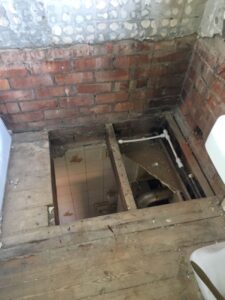
The open stairwell

He fell onto the concrete floor below where he was found unconscious.

A Health and Safety Executive (HSE) investigation found Alba Construction (Midlands) Limited had identified the risk of internal falls in their risk assessment process but failed to provide suitable measures to prevent them in this and other areas of the site. After the incident, three Prohibition Notices were served prohibiting further work at height activities on site until such steps had been taken.

The HSE investigation also found that company director, Bujar Cekrezi, failed to ensure that the necessary health and safety measures were implemented to protect employees and others, despite previous HSE interventions regarding work at height.

Had the company put in place commonplace measures, such as birdcage scaffolding, or fixed edge protection around the stairwell openings, the incident could have been prevented. HSE guidance can be found at: Construction – Working at height industry health & safety (hse.gov.uk)

Alba Construction (Midlands) Limited, of Stoney Lane, Yardley, Birmingham, pleaded guilty to breaching Regulation 6(3) of the Working at Height Regulations 2005. The company was fined £40,000 and ordered to pay £1,857.96 in costs at Kidderminster Magistrates’ Court on 27 February 2024.

Bujar Cekrezi, of Croydon Road, Birmingham, pleaded guilty to breaching Section 37(1) of the Health and Safety at Work etc. Act 1974. He was fined £2,000 and ordered to pay £1,857.96 in costs at Kidderminster Magistrates’ Court on 27 February 2024.

HSE inspector Sinead Martin said: “This incident could have been prevented had the company properly planned the work at height and identified and implemented suitable control measures, such as a birdcage scaffolding or fixed edge protection to prevent falls through the open stairwells.

“Falls from height are the number one cause of serious injury and death in the construction industry and the employee was very lucky to have survived this incident.”

This HSE prosecution was brought by HSE enforcement lawyer Nathan Cook and supported by HSE paralegal officer Sarah Thomas.


Notes to editors:

  1. The Health and Safety Executive (HSE) is Britain’s national regulator for workplace health and safety. We prevent work-related death, injury and ill health through regulatory actions that range from influencing behaviours across whole industry sectors through to targeted interventions on individual businesses. These activities are supported by globally recognised scientific expertise.
  2. More information about the legislation referred to in this case is available.
  3. Further details on the latest HSE news releases is available.