Site manager issued suspended sentence after death of young father

The site manager of a waste and recycling company has been given a suspended prison sentence following the death of a young father at a site in Dewsbury.

Wayne Griffiths, who was also a former director of Arthur Brook Limited, was given a ten-month custodial sentence, which was suspended for 18 months. It followed the death of 26-year-old Sebastian Luke Martin at the firm’s Low Mill Lane facility on 21 September 2018.

Father-of-two Mr Martin, known as Luke, was drawn into a conveyor and suffered multiple injuries that resulted in him being taken to hospital where he died two days later.

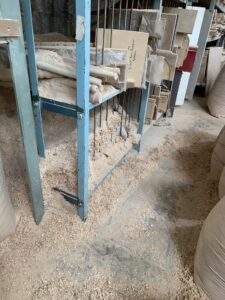
The aftermath of the incident at the company’s Low Mill Lane facility in Dewsbury

An investigation by the Health and Safety Executive (HSE) found that on the day of the incident, a large number of guards including both perimeter and conveyor guards on the machinery known as ‘The Frag’ had been removed to allow metal containing material to be reprocessed with the aid of a mini digger operated by Luke.

Griffiths was responsible for the Frag – from its initial conception and construction, to the development of  systems of work and employee training. He was directly involved in the day to day operation of the machine and this included the maintenance operations.  Guards had been removed and not replaced and yet he allowed Luke to work on the Frag with the machine in a dangerous condition for two days prior to the incident, putting him at risk of serious personal injury.  Luke left the digger cab and approached the unguarded machinery. He was drawn into the conveyor crushing his arm and upper body which ultimately lead to his death.

Arthur Brook Limited of Queens Mill, Low Mill Lane Ravensthorpe, Dewsbury pleaded guilty to breaching Section 2(1) of the Health & Safety at Work etc Act 1974. Wayne Griffiths also pleaded guilty to breaching Section 37(1) of the Act as the breach of Section 2(1) by Arthur Brook Limited occurred with his consent, connivance, or neglect. The company has been fined £200,000 and ordered to pay £43,000 in costs.

Wayne Griffiths was sentenced to 10 months for pleading guilty at the first opportunity, suspended for 18 months during which time he must complete 200 hours of unpaid work and pay costs of £10,000.

After the hearing, HSE inspector Louise Redgrove commented: “

“The incident could easily have been avoided if the company and Wayne Griffiths had taken effective measures to ensure all guards were maintained and in place prior to operating the Frag machine.”


Notes to editors:

  1. The Health and Safety Executive (HSE) is Britain’s national regulator for workplace health and safety. We prevent work-related death, injury and ill health through regulatory actions that range from influencing behaviours across whole industry sectors through to targeted interventions on individual businesses. These activities are supported by globally recognised scientific expertise.
  2. More information about the legislation referred to in this case is available.
  3. Further details on the latest HSE news releases is available.


Recycling company fined after workers exposed to wood dust

The long-term health of workers at a wood waste recycling centre was put in danger due to excessive exposure to the dust their work created, a Health and Safety Executive (HSE) prosecution has found.

Esken Renewables Limited, a waste and recycling company that specialises in generating biofuel from renewable waste, ran a wood waste recycling centre in Middlesborough that processed mixed wood waste, hardwood and softwood into biofuel.

Breathing in wood dust excessively can cause asthma and nasal cancer. In particular, dust from softwood wood dust is a known asthmagen while particles from hardwood are a known carcinogen.

A HSE inspector visited the site in April 2022 to investigate the dust exposures on the site. A few weeks earlier, concerns had been raised about wood dust spreading to the surrounding area. The inspector wrote in detail to Esken Renewables with evidence demonstrating the extent of the wood dust exposure to staff, so that the right action could be taken by the company to control the risks.

The company provided a detailed response, and it was accepted that exposures to the surrounding area was in large part due to four storms in quick succession.

However, the HSE investigation found that the control of wood dust to protect employees working on and around the site was not adequate and fell short of the expected benchmark.

The company failed to design and operate processes and activities to minimise emission, release and spread of wood dust. One solution would be through the use of local exhaust ventilation, the enclosure of machinery or the designing of the processes such as using vacuum systems as opposed to compressed air for cleaning and maintenance.

Guidance on working in the woodworking industry is available and an inspection-led campaign to protect workers continues.

Esken Renewables Limited, who operated the site at Port Clarence Road, Port Clarence, Middlesbrough, pleaded guilty of breaching Regulation 7(1) of the Control of Substances Hazardous to Health (COSHH) Regulations 2002 and were fined £160,000 and ordered to pay £5,310.35 in costs at Teesside Magistrates’ Court on 23 May 2024.

Speaking after the hearing, HSE inspector Matthew Dundas said: “The expected standard is to control exposure to as low a level as is reasonably practicable.

“We hope this serves to raise industry awareness for the expectation of control of hazardous substances, namely wood dust, in the wood waste and recycling industry.”

This prosecution was brought by HSE enforcement lawyer Iain Jordan and supported by HSE paralegal officer Rebecca Forman.

Notes to editors

  1. The Health and Safety Executive (HSE) is Britain’s national regulator for workplace health and safety. It aims to reduce work-related death, injury and ill health. It does so through research, information and advice, promoting training; new or revised regulations and codes of practice, and working with local authority partners by inspection, investigation and enforcement. www.hse.gov.uk
  2. More about the legislation referred to in this case can be found at: https://www.hse.gov.uk/woodworking/recycling.htm
  3. HSE news releases are available at http://press.hse.gov.uk


HSE’s Building Safety conference calls for industry to step up and commit to change

  • The Health and Safety Executive’s second building safety conference saw over 1,300 delegates sharing knowledge and collaborating on solutions to create a safer built environment for everyone
  • Translating the new regulatory framework into actionable steps, ensuring the safety of both existing and future buildings
  • Calls on industry to commit to building a culture of safety and accountability
  • Ensuring residents’ voices are heard in the journey towards safer homes.

The Building Safety Regulator (BSR) held its second industry conference in Birmingham this week.

The conference marked a major milestone for BSR as the new building safety regime was fully established in law last month.

With over 1,300 delegates in attendance, the conference provided a platform for industry leaders, regulators and resident representatives to discuss the ongoing transformation of the building safety landscape.

The conference showcased BSR’s resident-centric approach, with several sessions dedicated to industry accountability and empowering residents to ensure their voices are heard in building safety decisions which affect their homes.

BSR conference opening session

Sarah Newton, Chair of HSE and Philip White, HSE’s Chief Inspector of Buildings and Director of Building Safety Division opened the conference, highlighting BSR’s achievements and outlining its future priorities.

Sarah Newton said: “We are committed to putting residents at the heart of everything we do.

“At HSE, we understand that building safety is not just about regulation and compliance; it is about people – their lives, their homes, and their communities.

“The new building safety regime is designed to give residents a stronger voice and for industry to ensure that their homes are safe.

“Today gave those on the building safety frontlines the chance to share our knowledge and collaborate on solutions to translate the new regulatory framework into actionable steps, ensuring the safety of both existing and future buildings.”

HSE Chair, Sarah Newton addresses the BSR conference

Philip White said: “So much has happened in the last year, and at such pace – showing how much we can achieve together when we have a common goal.

“More than 12,000 buildings have been registered with the regulator and many of our conference delegates, along with others across the UK have already registered as building inspectors and demonstrated their competence.

“Building control professionals play a critical role in ensuring the safety and quality of our built environment – and above all, being regulated will raise industry standards and increase public trust.”

The conference was also addressed by Minister for Housing Lee Rowley who acknowledged the significant progress made during a time of great change for the industry.

Other key topics discussed at the event included:

  • Industry accountability and ownership in delivering safe buildings
  • BSR’s firm but fair approach to enforcement
  • The critical role of building control professionals in raising standards
  • A need for continued collaboration between industry, regulators and residents.

Panel discussions were hosted with the Construction Leadership Council, emphasising the importance of building safety as a strategic priority for the entire industry.

The conference also extended beyond the UK, with Dan O’Brien, CEO of Cladding Safety Victoria in Australian attending as part of an information-gathering visit. His attendance highlighted the vital international collaboration and knowledge-sharing currently taking place in the field of building safety.

The conference sessions and materials will be available online in the coming weeks.

(ends)

Notes to Editors:

  1. About BSR: HSE has established a Building Safety Regulator under the Building Safety Act 2022. We regulate higher risk buildings, ensuring residents feel safe in their homes. We work to improve safety standards for all buildings. And we drive cultural change in the built environment by helping professionals in building control, design, and construction, to improve their competence.
  2. About HSE: The Health and Safety Executive (HSE) is Britain’s national regulator for workplace health and safety. We prevent work-related death, injury and ill health through regulatory actions that range from influencing behaviours across whole industry sectors through to targeted interventions on individual businesses. These activities are supported by globally recognised scientific expertise.
  3. About the Building Safety Act, 2022: The Building Safety Act gained Royal Assent on the 28 April 2022 and makes ground-breaking reforms to give residents and homeowners more rights, powers, and protections. The Act overhauls existing regulations, creating lasting change and makes clear how residential buildings should be constructed, maintained, and made safe.
  4. For media enquiries please email: media.enquiries@hse.gov.uk


Farmer given suspended jail sentence after man killed by cattle

A West Yorkshire farmer has avoided an immediate spell behind bars after his cattle trampled a man to death and left his wife paralysed.

Martin Howard Mitchell was given a six-month custodial sentence, which was suspended for 12 months following the incident on a farm in Netherton, Wakefield.

Michael Holmes, 57, had been walking on a public footpath with his wife Teresa and their dogs on 29 September 2020 when they entered a field containing cows and calves on Hollinghurst farm. The farmer had made no attempts to segregate the cows and calves from the footpath and the couple were attacked and trampled by the cattle.

Mr Holmes suffered fatal injuries and died at the scene while his wife sustained life changing injuries that have left her confined to a wheelchair as well as requiring extensive rehabilitation therapy and major adaptations to her home. Their two dogs, still attached to their leads, had managed to escape and were later found by one of the couple’s neighbours.

Michael Holmes was killed while his wife Teresa was left paralysed

Their story shone a light on the dangers of cattle for dog walkers and farmers alike.

In a victim personal statement, Mrs Holmes said: “Having to cope with two traumas has been very difficult – losing Michael and suffering life changing injuries.

“I sustained a spinal cord injury which left me paralysed from the waist down.

“I now have to use a wheelchair. This has transformed my life beyond anything I could ever imagine.

“The course of my life, and my late husband’s, has been thrown into great turmoil as a result of the farmer’s negligence.”

An investigation by the Health and Safety Executive (HSE) found that Martin Mitchell had failed to ensure that the risks to members of the public were controlled, including that, where possible, cows with calves were suitably segregated from the public footpath.

Cows are known are known to be protective of their calves and unpredictable.

Key considerations for farmers and landowners include:

  • where possible avoid putting cattle, especially cows with calves, in fields with public access.
  • do all that they can to keep animals and people separated, including erecting fencing (permanent or temporary) e.g. electric fencing.
  • Assess the temperament of any cattle before putting them into a field with public access.
  • Any animal that has shown any sign of aggression must not be kept in a field with public access.
  • Clearly sign post all public access routes across the farm. Display signage at all entrances to the field stating what is in the field (cows with calves / bulls).

Martin Howard Mitchell of Netherton, Wakefield pleaded guilty to breaching Section 3(2) of the Health & Safety at Work etc Act 1974. In addition to his suspended sentence he was also ordered to pay a fine and make a contribution towards costs.

After the hearing, HSE inspector Sally Gay commented: “Large animals can be a risk to people. Even a gentle knock from a cow can result in injury.

“Seemingly docile cattle can pose a risk to walkers when they are under stress or feel threatened, and can exhibit instinctive maternal or aggressive behaviour.

“This tragic incident could easily have been avoided if basic precautions had been taken by the farmer.  Readily available HSE guidance states that, where possible, cows with calves should not be grazed in fields where there is a public right of way.

“Where this is not possible they should be segregated from the footpath by appropriate fencing where it is reasonable to do so.”

The prosecution was brought by HSE enforcement lawyer Andy Siddall.


Notes to Editors:

  1. The Health and Safety Executive(HSE) is Britain’s national regulator for workplace health and safety. We prevent work-related death, injury and ill health through regulatory actions that range from influencing behaviours across whole industry sectors through to targeted interventions on individual businesses. These activities are supported by globally recognised scientific expertise.
  2. More information about the legislationreferred to in this case is available.
  3. Further details on the latest HSE news releasesis available.
  4. Advice for farmers, landowners and other livestock keepers on dealing with the risks posed by cows with calves is available.


Waste company director sentenced over failure to comply with HSE notices

A director of a Kent waste company has been disqualified from being a director for five years for his role in its failure to comply with two Improvement Notices served by the Health and Safety Executive (HSE).

David Richard Barker, director of BSP (Knockholt) Limited, was also sentenced to two 12-month community sentences, to run concurrently, to include 12 months of supervision and 80 hours of unpaid work.

An HSE inspection in August 2020 found that employees manually sorting through waste in the company’s yard near Orpington were at risk of being struck by heavy machinery, and that there were inadequate rest facilities for them to use during break times.

Two Improvement Notices were served on the company in September 2020, and a date for compliance in October 2020 was set. Improvement Notices can be served on companies or individuals when HSE inspectors are of the opinion that they are breaching health and safety regulations. They are given a specified amount of time to improve their practices to comply with their legal duties.

However, a further site inspection in February 2021 found that the company had not complied with either notice. The company went into liquidation in 2022 but it was prosecuted and fined £150,000 in March 2023.

Mr Barker, one of the company’s directors and its main controlling party, told HSE during that he had appealed against the Improvement Notices but did not provide any evidence. In an email sent to an inspector, he also suggested that the only way to resolve differences of opinion between HSE and the company about the safety of its working practices would be for HSE to bring a prosecution against it.

Although Mr Barker was not present at the site during either inspection, HSE inspectors were told to direct all enquiries regarding health and safety to him.

At Croydon Crown Court, David Richard Barker, of Crockham Hill, Edenbridge, Kent, was previously found guilty after trial of breaching Sections 37(1) and 33(1)(g) of the Health and Safety at Work etc Act 1974, in that the offences of contravening the requirements imposed by the Improvement Notices were committed with his “consent, connivance or were attributable to his neglect”, such that he, in addition to BSP (Knockholt) Limited, was guilty of the offences.

On 20 May 2024, he was sentenced to two 12-month community sentences to run concurrently, disqualified from being a director for five years, and ordered to pay £10,000 towards prosecution costs.


Notes to editors:

  1. The Health and Safety Executive (HSE) is Britain’s national regulator for workplace health and safety. We prevent work-related death, injury and ill health through regulatory actions that range from influencing behaviours across whole industry sectors through to targeted interventions on individual businesses. These activities are supported by globally recognised scientific expertise.
  2. More information about the legislation referred to in this case is available.
  3. Further details on the latest HSE news releases is available.