Property developer fined after man crushed by faulty lift
A London property developer has been fined £40,000 after a member of the public was crushed by a faulty falling lift at a block of flats.
The 23-year-old had returned to the flats on Cambridge Heath Road in East London, with a group of friends on 9 September 2019. When he and seven others entered the lift on the ground floor, it began to shudder and descend with the doors still open. As it began to fall, the young man attempted to exit the lift but he was crushed between the ground floor and the top of the lift. The crush injuries he sustained were so serious he eventually required a liver transplant.
Nofax Enterprises Limited had been acting as the property manager for the five-storey block flats. The investigation by the Health and Safety Executive (HSE) found that it failed to act when defects with the lift were identified by a third party, resulting in a member of the public being harmed.
Health and safety law places specific obligations on those providing, controlling and using lifting equipment. HSE has detailed guidance for how to properly manage these risks. Thorough examinations should be carried out by a competent person at six month intervals for lifts designed to lift people. When a defect is identified that poses a danger to people the lifting equipment should not be used until the defect is remedied. Further guidance can be found here: Thorough examination and testing of lifts: Simple guidance for lift owners INDG339.
Nofax Enterprises Limited of Swiss House, Beckingham Street, Tolleshunt Major, Essex, pleaded guilty to breaching Section 3(1) of the Health and Safety at Work etc. Act 1974. The company was fined £40,000 and ordered to pay £8,540 in costs at Southwark Crown Court on 22 July 2025.
HSE inspector Pippa Knott said: “As a result of this company’s failures, a young man who was simply returning from a night out with friends has suffered life-changing injuries.
“The fine imposed on Nofax Enterprises Limited should underline to everyone in property management that the courts, and HSE, take these failures extremely seriously.
“We will not hesitate to take action against companies which do not do all that they should to keep people safe.”
This HSE prosecution was brought by HSE enforcement lawyer Nathan Cook and paralegal officer David Shore.
Further information:
The Health and Safety Executive (HSE) is Britain’s national regulator for workplace health and safety. We are dedicated to protecting people and places, and helping everyone lead safer and healthier lives.
More information about the legislation referred to in this case is available.
HSE does not pass sentences, set guidelines or collect any fines imposed. Relevant sentencing guidelines must be followed unless the court is satisfied that it would be contrary to the interests of justice to do so. The sentencing guidelines for health and safety offences can be found here.
HSE inspectors act for “public safety” on nine theme park rides
Nine rides at a Devon theme park were stopped after a routine inspection by the Health and Safety Executive (HSE).
Woodlands Family Theme Park was unable to provide sufficient assurance that the rides had undergone valid safety checks, but was able to rectify the issues quickly to minimise disruption.
On Thursday 26 June 2025, HSE inspected the venue as part of its ongoing programme of inspections to fixed and mobile fairgrounds across the country.
After David Geary of DMG Technical Limited was suspended from the Amusement Device Inspection Procedures Scheme (ADIPS), Declarations of Compliance for the nine rides were missing. HSE took proactive action to stop them being used until the issue was resolved.
The following rides were affected:
Rocking Tug
Sea Dragon
Vertigo
Trauma Tower
Tractor Ride
Submarine Ride
Dragon Ferris Wheel
Polar Pilots
Dizzy Dune Buggies
Woodlands Family Theme Park urgently commissioned an inspection body, who produced the Declarations of Compliance required, meaning the rides could reopen with minimal delay.
HSE inspector Melissa Lai-Hung said: “This action was taken in the interests of public safety. At this time of year, any enforcement action will cause inconvenience, but it is vital that those who enjoy amusement parks are kept safe and feel reassured. We thank Woodlands for their co-operation to resolve this matter.”
Woodlands Family Theme Park said: “We take HSE-related compliance legislation very seriously. As soon as this was brought to our attention, all the rides were reinspected by another registered inspector. We would like to add that at no time would Woodlands ever be involved in anything related to non-compliance of safety. We have and will remain totally committed to raising and maintaining standards in our industry.”
Notes to Editors
The Health and Safety Executive (HSE) is Britain’s national regulator for workplace health and safety. We are dedicated to protecting people and places, and helping everyone lead safer and healthier lives.
HSE has no evidence that any work undertaken by DMG Technical Limited prior to the suspension of David Geary was deficient. The overarching legal duty is on the ride controller to ensure that the amusement device remains safe for use, and is being maintained and operated in line with the manufacturer’s instructions.
Joinery firm fined for failing to protect its workers
Unannounced visit by Health and Safety Executive (HSE) found failures.
The company had failed to protect workers from exposure to wood dust.
They also failed to maintain electrical installations.
A joinery firm in Middlesbrough has been fined £10,000 after an unannounced visit by Britain’s workplace regulator found multiple health and safety breaches.
Inspectors from the Health and Safety Executive (HSE) visited Abbey Joinery and Manufacture Limited at its Worlton Road site on 25 May 2023. During their inspection they identified multiple failings relating to the company’s control of wood dust as well as its maintenance of electrical systems. These failings meant that employees were being unnecessarily exposed to unnecessary risks.
Inspectors found wood dust across the site
Breathing in wood dust excessively can cause asthma and nasal cancer. HSE provides a range of guidance on working in the woodworking industry, covering the Control of Substances Hazardous to Health (COSHH) Regulations 2002; exposure limits; extraction; and health surveillance.
HSE inspector Darian Dundas said: “Wood dust can cause serious health problems.
“It can cause asthma, which carpenters and joiners are four times more likely to get compared with other UK workers.
“There is clear health and safety guidance available to assist businesses in adequately controlling exposure to wood dust.
“Adequate control of wood dust is achieved when the eight principles of good control practice are applied.”
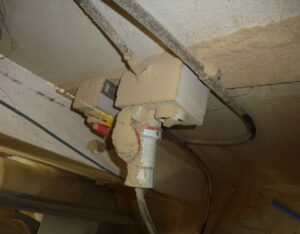
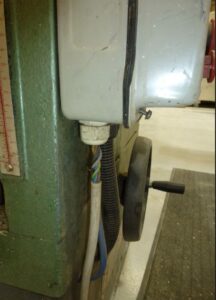
The HSE inspection also found failures in the company’s electrical installations, including both fixed and portable appliances and machinery. Exposed wiring carried the potential to put workers at risk of serious injury, or worse, from electric shock.
Electrical failings were also identified
HSE guidance about electrical safety is also available. Darian Dundas continued: “It is vital that maintenance is carried out done to ensure the safety of electrical systems.
“The inspection and testing of equipment is also an essential part of any preventive maintenance programme.
“This investigation was supported by specialist inspectors with a deep knowledge in electrical safety.
Abbey Joinery and Manufacture Limited, of Whorlton Road in Middlesbrough, pleaded guilty to breaching Sections 2(1) of the Health and Safety at Work etc. Act 1974 and was fined £10,000 with £4,428 costs by Teesside Magistrates’ Court.
This HSE prosecution was brought by enforcement lawyer Chloe Ward and paralegal officer Jason Dix.
Further information:
The Health and Safety Executive (HSE) is Britain’s national regulator for workplace health and safety. We are dedicated to protecting people and places, and helping everyone lead safer and healthier lives.
More information about the legislation referred to in this case is available.
HSE does not pass sentences, set guidelines or collect any fines imposed. Relevant sentencing guidelines must be followed unless the court is satisfied that it would be contrary to the interests of justice to do so. The sentencing guidelines for health and safety offences in England and Wales can be found here and for those in Scotland here.
A rogue gas fitter from Norfolk has been jailed after carrying out unsafe gas work at a residential property while suspended from the Gas Safe Register.
Antony Clifton, from Wymondham, has been sentenced to 46 weeks in custody after he carried out unsafe gas work while falsely claiming to be a member of the Gas Safe Register. He worked at a home in Drayon, Norwich in January 2022, but there was a gas escape on the inlet to a cooker that had been fitted the day before by the 52-year-old.
An investigation by the Health and Safety Executive (HSE) found that Clifton had left the appliance in a condition where gas was leaking, and emergency repair work was required. Clifton had previously been served with a prohibition notice by HSE following unsafe gas work.
Antony Clifton, a director of CS Appliance Repairs Limited, of Exige Way, Wymondham pleaded guilty to breaching Regulations 3(7) and 5(3) of the Gas Safety (Installation and Use) 1998 Regulations. He was sentenced to a total of 46 weeks in custody and was ordered to pay £1,000 costs at a hearing at Great Yarmouth Magistrates’ Court on 14 July 2025.
After the hearing, HSE inspector Martyn Webb said: “Antony Clifton knew that he was not registered and should not carry out any gas work.
“However, he showed a blatant disregard to this fact and his illegal actions meant the people living in that house could have been killed.
“Homeowners and tenants should check for Gas Safe registration before allowing work to commence on their appliances and refuse entry to individuals who cannot prove they are registered.
“All gas work must be done by a registered Gas Safe engineer to ensure the highest standards are met to prevent injury and loss of life.”
Gas engineers and consumers can contact the Gas Safe Register in any of these ways:
This HSE prosecution was brought by enforcement lawyer Iain Jordan and paralegal officer Helen Hugo.
Further information:
The Health and Safety Executive (HSE) is Britain’s national regulator for workplace health and safety. We are dedicated to protecting people and places, and helping everyone lead safer and healthier lives.
More information about the legislation referred to in this case is available.
HSE does not pass sentences, set guidelines or collect any fines imposed. Relevant sentencing guidelines must be followed unless the court is satisfied that it would be contrary to the interests of justice to do so. The sentencing guidelines for health and safety offences in England and Wales can be found here and for those in Scotland here.