Call for Evidence to Review Lifting and Pressure Systems Regulations

  • Review aims to simplify regulatory processes whilst maintaining workplace safety standards

The Health and Safety Executive (HSE) today (1/10/25) announced the launch of a Call for Evidence (CfE) to review the Lifting Operations and Lifting Equipment Regulations (LOLER) and the Pressure Systems Safety Regulations (PSSR).

HSE is inviting input from industry stakeholders, professional bodies, and organisations with relevant experience and expertise, with the CfE running from 1 October 2025 until 11 November 2025.

The main objective of the CfE is to establish a comprehensive evidence base to inform viable opportunities for simplifying and streamlining regulatory processes. The review will reflect the current industry landscape, anticipate future innovation, and maintain workplace health and safety standards.

Kate Haire, Deputy Director of Direction and Policy at HSE said: “This review represents a targeted approach to regulatory reform rather than an overhaul of the frameworks. We want a regulatory system that not only protects those at work, but also encourages new investment, innovation, and growth.

“We are focused on targeting amendments that will enhance clarity, simplify requirements, and modernise processes. Our aim is to ensure that we deliver proportionate regulatory requirements, maintaining safety standards, but minimising the unnecessary costs and compliance barriers faced by businesses.

“Our initial assessment indicates that LOLER and PSSR are generally founded on sound engineering principles, reflect well-established practices, and are deeply embedded across a wide range of sectors. However, we recognise that the emergence of new technologies, particularly those underpinning net zero transitions such as hydrogen, introduce new risk profiles, which is why we are looking to update our evidence base.”

HSE’s review is part of the organisation’s wider response to the government’s plans to support growth through the Regulation action Plan. The CfE will serve as a preliminary validation of the practical implications of existing regulations, drawing on stakeholder insights to ensure no critical considerations are overlooked. It aims to identify any unnecessary administrative or financial burdens that do not meaningfully contribute to risk reduction, assess whether regulations have become outdated in practice, and explore opportunities for reform that could enhance regulatory clarity, foster innovation, and support economic growth.

Industry stakeholders, professional bodies, and relevant organisations looking to participate  can view the Call for Evidence webpages at

Pressure Safety Systems Regulations (PSSR) Call for Evidence (CfE) – Health and Safety Executive – Citizen Space

Lifting Operations and Lifting Equipment Regulation (LOLER) Call for Evidence (CfE) – Health and Safety Executive – Citizen Space


Notes to editors:

  1. The Health and Safety Executive (HSE) is Britain’s national regulator for workplace health and safety. We are dedicated to protecting people and places, and helping everyone lead safer and healthier lives.
  2. The Lifting Operations and Lifting Equipment Regulations (LOLER) and Pressure Systems Safety Regulations (PSSR) govern the safe use of lifting equipment and pressure systems in workplaces
  3. The review will focus on targeted amendments rather than comprehensive regulatory reform


Global glass bottle maker fined £600k after worker injured

  • Man suffered burns after molten glass was spilled.
  • Protective door missing from shovel loader for two years.
  • HSE guidance is available:

A global glass bottle manufacturer has been fined £600,000 after a worker was burnt by molten glass and hot water spilling into his cab.

O-I Glass Limited pleaded guilty to one charge following the incident at its Glasshouse Loan site in Alloa on 3 February 2024.

A 32-year-old man suffered scald burns to 8 percent of his body but has since been able to make a full recovery.

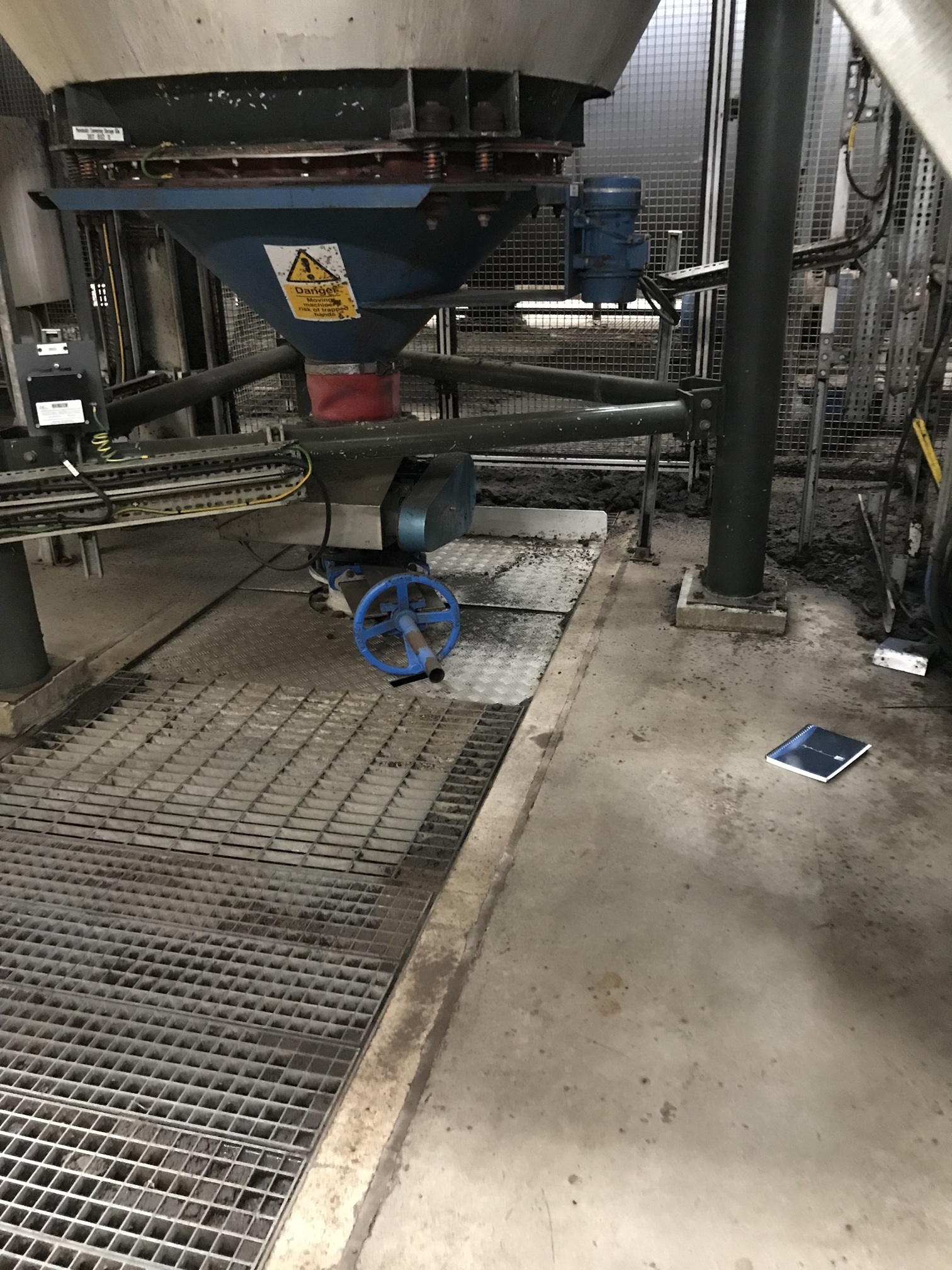
The basement of the site and the skips being used to collect waste product

The company, which employs around 500 people at the site, continually operates furnaces that are used to smelt raw materials, from which glass bottles are manufactured. The furnaces and production lines are located on the floor above two glass reject basements, which house a number of large, moveable skips. It is into these skips that molten or formed glass is rejected, via chutes, during the production process. Coolant water runs down each chute with the rejected molten or formed glass, which in turn generates very hot water and large amounts of steam.

Due to the continuous nature of the operation, the skips would quickly fill and sometimes reject material and water would spill from the skips onto the basement floors. Employees working in these basements used shovel loaders to clear this spilled material from the floors, which was then emptied into other skips.

On the day in question, the worker had been operating a shovel loader, clearing the waste molten glass and hot water from the basement floor. However, there was no protective door on the cab of the vehicle, so some of that material spilled from the bucket onto him.

The shovel loader with missing protective door

When it was first provided for use, the loader was fitted with a protective door incorporating a glass window, in front of the cab. However, an investigation by the Health and Safety Executive (HSE) established that the protective door had been missing since March 2022. It had been removed from the vehicle after being damaged, and although this was reported to the site engineer at the time, no action was taken to replace it. In the almost two years that went by, other operatives had reported being struck or having footwear burnt by molten glass falling into the cab.

HSE guidance, specifically the publication “A guide to workplace transport safety – HSE (HSG136) paragraph 219 & 220: states that ‘vehicles should be fitted with additional protection for those working ….in an inhospitable working environment…. where there is a risk of being struck by falling objects, the vehicle should be fitted with a falling-object protective structure (FOPS)’ and Safe use of work equipment – HSE (Approved Code of Practice to the Provision and Use of Work Equipment Regulations 1998 (PUWER))

Following the incident, the company removed the vehicle from service, and it didn’t return until June 2024, after being fitted with a steel front door, incorporating a glass window with protective wire mesh.

O-I Glass Limited, of Edinburgh Way, Harlow, Essex, pleaded guilty to Regulation 5 (1) of The Provision and Use of Work Equipment Regulations 1998 and section 33(1) of Health and Safety at Work etc Act 1974 for failing to maintain the vehicle in an efficient state, in efficient working order and in good repair. The company was fined £600,000 at Stirling Sheriff Court on 23 September 2025.

HSE inspector Kathy Gostick said: “This was an avoidable ordeal for a young worker. It is sheer luck he has been able to recover from his serious injuries.

“This company’s employees worked in this environment with a safety critical part of the loader missing for a period of almost two years.

“Although the protective front door had been removed and reported to the on-site engineer, drivers had continued to work and operate the loader with it missing.

“Some operatives even described being struck or having footwear burnt by molten glass falling into the cab as a result.

“When work equipment is being selected, its suitability for the environment it is going to be used in must be risk assessed. In this case the protective door was not suitable to protect against impacts from hot and molten glass and therefore was often broken and in the end never replaced. Had an appropriate door been selected and maintained in place this accident would not have occurred.”


Notes to Editors

  1. The Health and Safety Executive (HSE) is Britain’s national regulator for workplace health and safety. We are dedicated to protecting people and places, and helping everyone lead safer and healthier lives.
  2. More information about the legislation referred to in this case is available.
  3. Further details on the latest HSE news releases is available.
  4. HSE does not pass sentences, set guidelines or collect any fines imposed. Relevant sentencing guidelines must be followed unless the court is satisfied that it would be contrary to the interests of justice to do so.  The sentencing guidelines for health and safety offences in Scotland can be found here.


Builder sentenced after house collapse injures three workers

  • Three workers injured due to failures.
  • Homeowner left with £200k bill to rebuild home.
  • HSE guidance on structural works available.

A builder has been given a suspended prison sentence after a roof collapse destroyed a home and injured three workers in Windsor.

Jack Savva, 70, was given a 13-month custodial sentence, suspended for two years, following the incident on 6 August 2020. Savva, of Wraysbury in Surrey, was carrying out a loft conversion on the property in Springfield Road, when the gable wall fell into the building after the roof was removed.

The devastation following the collapse

Two days before the incident, Savva had informed the home owner about work that was required on the chimney breast. He had told them it was incomplete as it had previously been removed from the first floor bathroom and would need to be propped. However, on the day itself, he instructed his workers to remove key supporting timbers and steels, resulting in the collapse of the brick gable wall which struck the workers and destroyed the first floor of the home, which was occupied at the time.

An investigation by the Health and Safety Executive (HSE)  found Savva had failed to ensure the structure did not collapse while it was in a state of temporary weakness. He had not taken steps to address the unsupported chimney breast before dismantling the roof, which caused the brick gable to collapse into the work area. He also failed to take all practicable steps to prevent danger to any person while the building was in a temporary state of weakness.

The homeowner was left with a £200k bill to rebuild their home

One of the injured workers said: “I still suffer from nightmares of the day of the accident.

“I haven’t slept more than two hours a night over the last four years.”

HSE guidance about managing structural stability during alteration or dismantling advises about temporary bracing and propping being required – particularly if it is known or suspected of being weak. You can read more here: Structural stability during alteration, demolition and dismantling – HSE.

Jack Savva, of Friary Road, Wraysbury, Surrey, pleaded guilty to breaching Regulation 19(1) of the Construction (Design and Management) Regulations 2015. He was given a 13-month custodial sentence, suspended for two years and was ordered to pay £2,000 compensation to the home owner, at a hearing before Reading Crown Court on 17 September 2025.

Three workers were injured in the collapse

HSE inspector Dominic Goacher said: “Although three men were seriously injured, it was lucky nobody was killed. In addition, the householder faced a bill of £200k to rebuild their house due to Jack Savva’s public liability insurance being invalid.

“This was a completely avoidable incident had he acted on his findings regarding the unsupported chimney breast and taken steps to support the gable wall before removing the roof components.

“Jack Savva should have taken precautions to protect people from the risk of collapse.”

This prosecution was brought by HSE enforcement lawyer Alan Hughes and supported by HSE Paralegal Officer Melissa Wardle.


Further information:

  1. The Health and Safety Executive (HSE) is Britain’s national regulator for workplace health and safety. We are dedicated to protecting people and places, and helping everyone lead safer and healthier lives.
  2. More information about the legislation referred to in this case is available.
  3. Further details on the latest HSE news releases is available.
  4. Relevant guidance can be found here – Structural stability during alteration, demolition and dismantling – HSE.
  5. HSE does not pass sentences, set guidelines or collect any fines imposed. Relevant sentencing guidelines must be followed unless the court is satisfied that it would be contrary to the interests of justice to do so.  The sentencing guidelines for health and safety offences can be found here.


Sign fitting company and director fined after fatal fall from scaffolding

  • Mr Iftikhar Ahmed Mughal, 64, died four days after falling from unguarded platform.
  • Fall of just six feet proved fatal due to serious head injuries.
  • Inspector highlights work at height as leading cause of workplace deaths.
  • HSE guidance on tower scaffold protection readily available.

A shop sign making and fitting company and its director have been fined after an employee fell from an unguarded scaffolding tower and later died from his injuries.

Mr Mughal, 64, was working for WH Metals Limited installing a metal sign to the front of the shop in Darwen, Lancashire. He was standing on the platform of a scaffolding tower without any edge protection in place, when he fell to the pavement below.

Although the height he fell from was only six feet, it was enough for him to suffer serious head injuries which resulted in him being taken to hospital by ambulance. Sadly, he died from his injuries four days later.

The scaffolding tower without edge protection

An investigation by the Health and Safety Executive (HSE) found that WH Metals Limited and its director, who was on site at the time of the incident, failed to prevent the risk of a fall from a distance liable to cause personal injury.

HSE guidance on working at height is available on the HSE website: Work at height – HSE. The preferred method of fall prevention on tower scaffolds is the fitting of suitable guardrails around the platform. This is a well-known and long-established control measure. If this had been in place at the time of the incident, it is highly unlikely that the worker in this case would have died.

Mr Asad Iftikar, Mr Mughal’s son, said: “My father was like a roof to the family, and since his death, I and my siblings have felt alone. He always supported us in everything we did; he would help us make all the important decisions in our lives.”

WH Metals Limited of Navigation Way, Preston, pleaded guilty to breaching Section 2(1) of the Health and Safety at Work etc Act 1974 and was fined £45,000. The company was also ordered to pay costs of £4,826.21 and a victim surcharge of £2,000.

Mr Waqas Hanif, the company’s director, pleaded guilty to breaching Section 37 of the Health and Safety at Work etc Act 1974 and was given a 26-week custodial sentence, suspended for 12 months. He was also ordered to pay costs of £4,846.21 and a victim surcharge of £154.

HSE inspector David Hobbs said: “Work at height remains one of the leading causes of workplace injury and death. In this case, a fall of six feet was enough to cause a death, highlighting the dangers.

“This incident highlights the importance of suitable control measures, such as edge protection, to minimise the risk of serious personal injury.”


Further information

  1. The Health and Safety Executive (HSE) is Britain’s national regulator for workplace health and safety. We are dedicated to protecting people and places, and helping everyone lead safer and healthier lives.
  2. More information about the legislation referred to in this case is available.
  3. Further details on the latest HSE news releases is available.
  4. Relevant guidance can be found here: Work at height – HSE.
  5. HSE does not pass sentences, set guidelines or collect any fines imposed. Relevant sentencing guidelines must be followed unless the court is satisfied that it would be contrary to the interests of justice to do so. The sentencing guidelines for health and safety offences can be found here.


HSE launches workplace safety inspections for motor vehicle repair

The Health and Safety Executive (HSE) has launched 1,000 targeted inspections of motor vehicle repair businesses across Great Britain to tackle occupational asthma. Many skilled vehicle paint sprayers develop this life-changing and debilitating disease each year, forcing them to leave their profession permanently.

This inspection campaign will focus on workplaces that use isocyanate-containing paints and coatings – the leading cause of occupational asthma in the UK. Once asthma develops, even small amounts of isocyanate exposure can trigger severe attacks, making continued work in the industry impossible for affected workers.


Legal requirements under COSHH

The inspections will assess compliance with the Control of Substances Hazardous to Health (COSHH) Regulations. Under COSHH, employers must prevent or control worker exposure to isocyanates using effective control measures and safe working procedures. They must also verify these measures are working by arranging regular health surveillance and biological monitoring. Both are legally required for workers exposed to isocyanates.

Health surveillance is required when there is risk of inhalation exposure and skin contact during paint spraying activities. COSHH also requires that exposure is monitored using a suitable procedure. Biological monitoring (urine testing) is the most practicable and cost-effective method to assess exposure levels and ensure control measures are effective.


Protecting workers through health checks and testing

Health surveillance involves regular medical screening by competent occupational health professionals to detect early signs of health conditions like occupational asthma or dermatitis.

Biological monitoring involves laboratory analysis of samples taken from workers to detect chemical isocyanate exposure before health problems develop. This provides an early warning for employers to investigate and correct control failures. HSE recommends urine testing as the most practical and cost-effective method for measuring isocyanate exposure.

Kate Jones, HSE’s biological monitoring team lead, said: “Biological monitoring, a simple urine test, is a quick and cost-effective way to check that control measures are working and being used properly, giving sprayers, dutyholders and HSE confidence that spraying is being done safely.”

Isocyanate-containing materials, commonly known as two-pack (2k) paints, coatings and lacquers, are widely used for their durability and finish quality. However, when sprayed, these paints release invisible mist that spreads rapidly and can reach dangerous levels within minutes.


Three essential protection measures

Businesses must implement three critical safety measures during spray painting operations:

  1. Proper spray booth ventilation – Maintain spray booths or rooms with adequate extraction systems that create negative pressure. This prevents paint vapours escaping into workshop areas and contaminating the wider workplace.
  2. Correct respiratory protection equipment – Workers must use air-fed breathing apparatus certified to the appropriate standard. Filtering respirators do not provide enough protection against paint mist and vapours during spray operations. Breathing apparatus should ideally be full-visor type, but half-mask type with appropriate eye protection is acceptable with more frequent biological monitoring.
  3. Safe clearance procedures – Display measurable clearance times clearly for all workers to see. Workers must not remove respiratory protection until they are safely outside the spray area, or the required clearance time has fully elapsed.


Consequences of non-compliance

Businesses found to be breaching the COSHH Regulations may face improvement notices, prohibition notices, or prosecution leading to unlimited fines.

Motor vehicle repair businesses can access comprehensive information and materials through HSE’s campaign pages to ensure compliance and protect their skilled workforce from preventable occupational disease.