Property owner sentenced after builder suffered life changing injuries

A Derbyshire property owner has been given a community order after a father-of-two sustained life changing injuries when a wall collapsed on top of him during a barn conversion.

Nigel Edwards failed to have a structural assessment of the outbuildings carried out as part of his planning for the project at his home in Woodhouses. The outbuildings were being converted into holiday let accommodation when a stone wall collapsed on 40-year-old Steven Tyson on 8 October 2021.

The married father of two daughters from Melbourne, suffered a catalogue of serious injuries, including a fractured skull, a bleed on the brain and multiple broken bones, including 11 of his ribs. He was rushed to hospital, where he spent the next 18 days in “immense pain”.

Steven Tyson suffered multiple broken bones, including a fractured skull when the wall collapsed

He said: “The pain was made worse by the fact I was unable to see my daughters in hospital due to the Covid-19 restrictions on visitors.

“I am still in pain today and struggle to put weight on my right ankle.

“Due to the traumatic head injury, I was unable to drive for six months.”

Derby Magistrates Court heard how the building had undergone significant structural alterations. It was while Mr Tyson was clearing up outside, that the external face of the stone gable wall collapsed on top of him causing life threatening injuries.

The site where the wall collapsed in Woodhouses, Derbyshire

An investigation by the Health and Safety Executive (HSE) found that Nigel Edwards had failed to have a structural assessment of the outbuildings undertaken prior to starting the work. As a result, no measures had been identified or implemented to stabilise the building while underwent the alteration. Similarly, there was no plan in place for dismantling parts of the building safely, exposing workers and members of the public to the risk of injury or death from the full or partial collapse of the structures.

Mr Tyson, who has been left blind in one eye as well as losing hearing in his right ear, went on to say how the incident had left him unable to work in the construction industry.

“I might never be able to,” he added.

“The injuries have also impacted on my hobbies, which included karate, dog walking and metal detecting.

“I have also had therapy sessions to try and come to terms with the physical and psychological impacts of what happened.

“This is something I thought I would never have to do.”

Steven Tyson suffered multiple broken bones, including a fractured skull when the wall collapsed

Nigel Edwards of Tutholme, Woodhouses, Melbourne, Derbyshire, pleaded guilty to breaching Regulations 19(1) and 20(1) of the Construction (Design and Management) Regulations 2015. He was made the subject of a 12-month community order and told to complete 80 hours of unpaid work. He must also pay costs of £4,097.94.

Speaking after the hearing, HSE inspector Robert Gidman said: “It is vital that all demolition and dismantling is adequately planned and that a competent structural engineer is engaged by those in control of work where there is the risk of collapse of any structure.

“If this project had been planned effectively, engaging the right people at the right time to ensure a suitable safe system of work was implemented, the life changing injuries sustained by the injured person could have been prevented.”

Notes to Editors:

  1. The Health and Safety Executive (HSE) is Britain’s national regulator for workplace health and safety. We prevent work-related death, injury and ill health through regulatory actions that range from influencing behaviours across whole industry sectors through to targeted interventions on individual businesses. These activities are supported by globally recognised scientific expertise.
  2. More information about the legislation referred to in this case is available.
  3. Further details on the latest HSE news releases is available.
  4. Further information about structural safety is also available.


HSE hosts its first building safety conference

The first Building Safety Conference, hosted by HSE’s Building Safety Regulator (BSR) is taking place today, Wednesday 22 March 2023, at Central Hall, Westminster


BSR was created following Dame Judith Hackett’s review and part of the building safety reforms since the Grenfell tragedy.


The event will see nearly 1,000 practitioners gather together to hear directly from the new regulator about the important changes that will come into effect from April 23, under the new Building Safety Act 2022.  Throughout the day, delegates will develop their knowledge and understanding of how the reforms will impact on them and their organisation.


As high-rise residential building registration for all Accountable and Principle Accountable Persons opens in April, the conference will provide insight and develop the knowledge of these individuals and organisations in relation to their responsibilities. 


There will also be an opportunity to hear more about the changes that will come into effect later in the year, with sessions from industry experts and keynotes speakers including our Chief Inspector of Buildings, Peter Baker.  The day is aimed at helping Accountable Persons, Building Control professionals and Construction and Design professionals, who will take on various new roles and responsibilities needed to comply with building safety law. 


Sign up to get further updates on BSR.


Company fined £175,000 after worker suffers brain trauma

A London company has been fined £175,000 after a worker suffered serious head injuries that saw him hospitalised for seven months.

The man, who was 35 at the time, was working at a domestic property on Elmfield Avenue, Crouch End, London, on 3 March 2019 when he sustained head injuries during concrete pumping operations carried out by sub-contractor Singh Will Mix It Ltd.

The concrete pump operator was cleaning the pump’s hose after it had been used to pump concrete for a ground floor extension. As he was doing this, the pump became blocked, leading to a sudden release of pressure and causing the hose to whip and strike him in the head. The man was not qualified to operate the machine.

The man spent seven months in hospital following the incident, suffered brain trauma, and continues to have difficulties with his speech, memory and movement.

The property on Elmfield Avenue, Crouch End, London

An investigation by the Health and Safety Executive (HSE) found Singh Will Mix It Ltd failed to ensure workers had the necessary skills, knowledge, experience and training to carry out the work and they failed to have appropriate health and safety systems in place to carry out the work safely.

Singh Will Mix It Ltd, of Larkshall Road, Walthamstow, London, was found guilty of breaching Sections 2(1) and 3(1) of the Health & Safety at Work etc. Act 1974 following a trial at Southwark Crown Court. The company was fined £175,000 and ordered to pay £75,722 in costs at Southwark Crown Court on 15 March 2023.

HSE inspector Gordon Nixon said: “HSE will not hesitate in prosecuting where contractors and operatives do not have the appropriate skills, knowledge, experience and training when carrying out dangerous tasks and putting people at risk.”

Notes to editors

  1. The Health and Safety Executive (HSE) is Britain’s national regulator for workplace health and safety. We prevent work-related death, injury and ill health through regulatory actions that range from influencing behaviours across whole industry sectors through to targeted interventions on individual businesses. These activities are supported by globally recognised scientific expertise.
  2. More information about the legislation referred to in this case is available.
  3. Further details on the latest HSE news releases is available.


Firm receives £190k fine after worker seriously injured

A Hereford company has been fined £190k after an employee was seriously injured after falling into a pit.

The man was working for Wyman-Gordon Limited, a company that produces forgings for the aerospace industry, when he fell into the bottom of a pit on 25 November 2018. He sustained deep cuts to his head that required eight stitches. He had been working at the company’s premises on Spa Road, Lincoln.

While changing an oil seal on a counterblow hammer, a lifting sling containing a 169kg load broke. The load fell and broke the board the worker was standing on, causing him to fall into the bottom of the pit.

The man has revealed how the incident left him feeling anxious after returning to work.

The worker said in his victim impact statement: “I was on sick leave for three weeks.

“After the accident I became more anxious while doing high risk work. I continue to have a problem with my back. I go to physiotherapy via the NHS when necessary. Currently, it has become difficult for me to get up in the morning because of my back.

“I also have frequent headaches. I have been to different hospitals in connection with that, but no cause has been determined.

“Also the accident had a partial impact on looking after my wife as I could not lean forward and bend down for about two weeks. My daughter had to assist both me and my wife during all that time.”

An investigation by the Health and Safety Executive (HSE) found Wyman-Gordon Limited failed to ensure so far as is reasonably practicable, the health, safety and welfare at work of its employees during the ram seal replacement. There was no safe system of work that properly addressed work at height and lifting operations. The company should not have lifted loads over employees and either prevented the need to work at height, or used alternative methods for doing so. HSE guidance on equipment and machinery can be found at: Equipment and machinery – HSE

Wyman-Gordon Limited, of Holmer Road, Hereford, Herefordshire, pleaded guilty to breaching Section 2(1) of the Health and Safety at Work etc Act 1974. The company was fined £190,000 and ordered to pay £35,000 in costs at Lincoln Magistrates’ Court on 16 March 2023.

HSE inspector Stacey Gamwell said: “Employers have a responsibility to devise safe methods of working that properly address the risks, had one been in place prior to the incident, the injuries sustained by the employee could have been prevented. There is guidance freely available on the HSE Website regarding the safe planning, organisation and undertaking of lifting operations. Guidance is also freely available in relation to working at height safely.”


Notes to Editors:

  1. The Health and Safety Executive (HSE) is Britain’s national regulator for workplace health and safety. We prevent work-related death, injury and ill health through regulatory actions that range from influencing behaviours across whole industry sectors through to targeted interventions on individual businesses. These activities are supported by globally recognised scientific expertise.
  2. More information about the legislation referred to in this case is available.
  3. Further details on the latest HSE news releases is available.


Farmer fined after dog walker thrown 8ft into the air and trampled by cow

A DOG walker was thrown 8ft into the air by a cow which then repeatedly trampled on him as he tried to crawl away, breaking six ribs of his ribs and leaving him with damage to his lungs and spleen.

Steve Adams, from Coleshill, Warwickshire, was on holiday with his wife Jane near Sidbury, East Devon when they went for a walk with their Springer Spaniel, named Lisa.

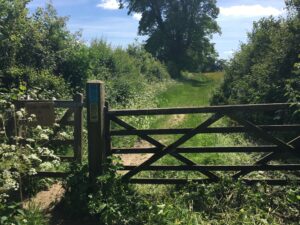
They were walking along a public footpath through a field containing cows with calves when one of the cows attacked, leaving Steve badly injured. He spent seven days in intensive care.

The farmer responsible for the cattle has been ordered to pay a fine and costs totalling more than £3,500.

Farmers should not put cattle with young calves in fields with a public right of way. The Health and Safety Executive (HSE) has advice for farmers, landowners and other livestock keepers on dealing with the risks posed by cows with calves.

Steve, who is now 63, and is a dad of three with two grandchildren, is retired from the transport industry. He said: “My own grandfather was a farmer, so I’d been around cattle as a child, and I wasn’t scared of them. Now, I wouldn’t go into a field with cows, you don’t know what’s going to happen. People should be very wary of cows.”

Steve and Jane were on holiday at the East Devon caravan and motorhome campsite in July 2021 when they decided to go for a walk with their dog, which was on a lead.

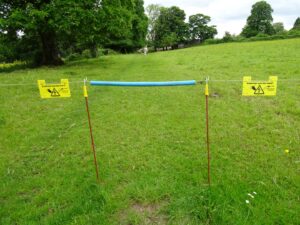
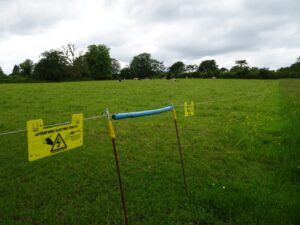
Their route took them from a pub through fields. As they headed towards a pedestrian gate at the edge of one of the fields, they came to an electric fence surrounding the fields edge.

They were then surrounded by more than 20 cattle, some with calves. A cow approached, lowered its head and tossed Mr Adams into the air. It then trampled him on the ground until he managed to crawl away.

A HSE investigation established that cattle with young calves were being kept in a field with a public right of way across it. Cattle with young calves are known to be protective and unpredictable, and can pose a risk to walkers, especially to those with dogs. Farmers should not put cattle with young calves in fields with a public right of way.

Steve Adams said: “It was just the one cow, the biggest one. It came up and threw me into the air with its head and then it trod all over me. I was trying to crawl out of the way, but it just kept landing its hooves on me.

“The dog was on its lead and I’d managed to let it go and it made it away. My wife had one of those plastic ball throwers for the dog and she was hitting the cow with it but it made no difference at all. I managed to roll away from under it.

“I wasn’t feeling too good at all, I couldn’t breathe. It had taken us about 15 minutes to walk to where it happened, but it took us about two and half hours to make it back to the van. An ambulance was called to the site and they said straight away that I’d broken my ribs. It was a pretty scary day.

“I don’t walk too much now. I’m not as healthy as I was, and I can still feel my injuries now.”

Barry Fowler, of Sidbury, Sidmouth, pleaded guilty to breaching Section 3(2) of the Health & Safety at Work etc Act 1974 and was fined £555 and ordered to pay costs of £3,000 at Exeter Magistrates’ Court on 8 March 2023.

HSE inspector Simon Jones said: “The serious injuries to Mr Adam sustained when he has attacked and trampled by cattle with their calves was totally preventable.

“Cattle are extremely protective of their calves and even calm cattle can become aggressive if they think the calves may, in any way, be threatened, even by members of the public walking past.

“Farmers should not place cattle with calves in fields where members of the public have a legal right to walk unless appropriate measures are in place such as robust fencing separating cattle from people. Had Barry Fowler done this then the incident could not have happened.”

Notes to Editors:

  1. The Health and Safety Executive (HSE) is Britain’s national regulator for workplace health and safety. It aims to reduce work-related death, injury and ill health. It does so through research, information and advice, promoting training; new or revised regulations and codes of practice, and working with local authority partners by inspection, investigation and enforcement. www.hse.gov.uk[1]
  2. More about the legislation referred to in this case can be found at: www.legislation.gov.uk/ [2]
  3. HSE news releases are available at http://press.hse.gov.uk[3]