Press release: Queen approves Knighthood for Antony James Zacaroli QC
The Queen has approved a Knighthood for Antony James Zacaroli QC.
The Queen has approved a Knighthood for Antony James Zacaroli QC.
Ofqual has today (27 November 2017) launched a consultation that proposes changes to non-exam assessment in GCSE computer science given evidence of widespread rule breaches.
Non-exam assessment in computer science is intended to test students’ programming skills and is worth 20% of the overall 9 to 1 grade. However, there is evidence that some of this year’s tasks have been posted to online forums and collaborative programming sites, contrary to exam board rules. Detailed solutions have been provided in many cases, and some of these posts have been viewed thousands of times.
The apparent extent of malpractice in this qualification leads us to believe that it is no longer possible for exam boards to ensure that grades awarded next summer will fairly reflect the ability of all students unless changes are made to the assessment arrangements.
We are asking for views on alternative assessment arrangements that would apply to students sitting exams in 2018 and 2019. Our preferred option is to retain the need for the non-exam assessment task to be completed by students, but for it not to contribute to their overall 9 to 1 grade. We continue to believe that there is significant value in students completing programming tasks and they will be required to do so. It is our expectation that teachers will want to provide feedback to students on their completed task as preparation for their exams, which include the assessment of computational thinking and programming, though they will not be required to formally provide marks for each student to their exam board.
Julie Swan, Executive Director for General Qualifications, said:
It is with great reluctance that we are proposing to change a qualification for which students are already studying. However, we must take immediate action to address these issues and the potential impact on public confidence in relation to this qualification. Subject to the consultation responses, we believe our preferred solution will deliver fairer and more reliable results than would otherwise be the case. It will also allow us to be confident, that standards will be set appropriately.
The consultation will run until 22 December 2017. It includes a discussion of the need to consult in due course on a longer-term solution for non-exam assessment as part of this qualification. Responses will be reviewed over Christmas and a decision announced in the week beginning 8 January 2018.
Over the last 12 months the Environment Agency has seen an increase in illegal waste activity across Bristol, Dorset, Somerset and Wiltshire.
The first of these events took place on Tuesday 21 November 2017. Environment Officers visited 15 locations in the Bristol, Dorset, Somerset and Wiltshire area. They confirmed 6 illegal waste sites and found a number of unauthorised waste disposal activities, including waste being burnt.
Tackling waste crime is a top priority for the Environment Agency. Waste stored or disposed of without the proper environmental controls can have a huge impact on the environment, polluting watercourses, land and underground aquifers, and in some cases contributing to flooding. It is often an eyesore that attracts further dumping, while creating issues for neighbours such as smells and pests. The Environment Agency is determined to make life hard for criminals and to support legitimate businesses by disrupting the criminal element and taking tough enforcement action.
Andy Hicklin, Environment Agency Area Environment Manager for Wessex area, said:
Waste crime is a blight on communities and the environment and undermines legitimate business. Acting on reports from members of the public, days of action are just the first step in tackling waste crime. We will work with our partners in local authorities and use all of the tools at our disposal to disrupt, prevent and stop illegal waste activity.
The Environment Agency is asking members of the public to be vigilant; to contact them with information on anything suspicious. Illegal treatment and disposal of waste is a crime that blights lives and communities and damages the environment. Individuals involved in this type of illegal activity can be hostile and we would urge members of the public to avoid any direct contact with the culprits.
If you see or suspect illegal waste activities, report it anonymously to Crimestoppers or call 0800 555 111 or via the Environment Agency incident hotline on 0800 80 70 60.
Four sirens, located approximately 250 metres apart in Chiswell, will be activated on Thursday (30 November 2017) at 11am, 2pm and 5pm, weather permitting. Local residents are being informed in advance via a leaflet drop and door-knocking exercise.
Rachel Burden, Wessex Flood and Coast Risk Manager at the Environment Agency, said:
Regular siren testing is an essential part of our forward planning, not only to ensure we are incident ready, but also to make sure our community flood warning and informing measures are effective.
If severe storms hit Portland, the sirens will play a crucial part in alerting local residents to imminent danger and potential evacuation. Ultimately, these sirens could help save lives.
The Chiswell area of Portland is classed as a high risk flood area because of the potential for strong south westerly winds, high tides in Lyme Bay and the close proximity of properties to the sea.
Rachel added:
Chiswell was badly affected by the floods in 2013/2014. It is a vulnerable area and can take a heavy pounding from the tides when the south westerly wind picks up. Although good flood protection measures are in place, we can never fully defend against the worst that Mother Nature can throw at us.
The sirens, which are tested twice a year, are extremely loud so that they can be heard above the noise of crashing waves during a storm. These modern sirens were installed in 2010 and replaced older Second World War equipment. An additional siren was put in during 2015 in order to fill a ‘quiet spot’ which was identified during the storms of the previous winter.
The testing will involve remote activation from our Blandford incident room, from the coastguard’s hut and from the individual sirens. Representatives from the Environment Agency will be on hand to assist.
The day supports the annual Environment Agency Flood Action Campaign.
If you drive, it goes without saying that you know you need your eyes on the road at all times. What you might not know is that DVLA has minimum eyesight standards that all drivers need to demonstrate so they can be allowed to drive.
So how do we decide on the vision standards for driving? DVLA’s Vision Panel Secretary Dr Gareth Rees tells us more about his role and these standards.
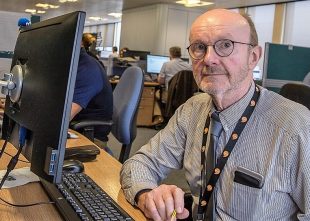
I’ve been a doctor for 41 years and have been DVLA’s Vision Panel Secretary for 10 years. My main role is to liaise between DVLA and the Honorary Medical Advisory Panel on Visual Disorders. The panel meets every 6 months and is made up of eyesight specialists, who provide DVLA with expert advice on how to apply and interpret the law when assessing fitness to drive.
We all have busy lives, and sometimes we might overlook the signs that our eyes are not as good as they were. You might be finding it harder to judge distances, you might be struggling to read the newspapers, or it’s getting more difficult for you to drive at night. These are just a few signs that your eyesight may be deteriorating.
In line with advice from optometrists, our advice is that you should get your eyes tested at least every 2 years. But if you recognise any of the signs above, don’t wait – go and get checked out straight away with your optician or doctor. If they advise you to tell DVLA about your eyesight, you can do this online or by writing to us.
If you don’t meet the eyesight standards, stop driving immediately and tell DVLA.
Don’t worry – usually, most people who tell us they’ve got a medical condition are still allowed to drive.
If you have a ‘progressive’ (worsening) condition but can still meet the eyesight standards for driving, you may get a short-term licence rather than a full-term one. This type of licence lasts for 1, 2, 3 or 5 years and when it’s due for renewal, we let you know.
It’s better to be safe than sorry. So if you’re in doubt, get it checked out.
Follow DVLA on Twitter, Facebook and LinkedIn and subscribe to our Inside DVLA blog.