News story: Boston Barrier tidal flood defence construction begins

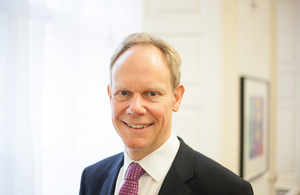
The EA’s Toby Willison and MP Matt Warman joined Floods Minister Therese Coffey to mark the start of works on the Boston Barrier.

Floods Minister Thérèse Coffey has marked the start of works on the £100 million Boston Barrier flood defence, breaking ground on an Environment Agency scheme that will protect 14,000 homes and businesses from tidal flooding.

Work is already underway to dredge more than 5,000 cubic metres of silt from the Boston Haven to make way for construction. Over the coming months, 2,000 tonnes of steel sheeting – weighing as much as 280 elephants – will be put in place to strengthen the riverbanks in preparation for the barrier.

Floods Minister Thérèse Coffey said:

This Government investment will make sure Boston is one of the best protected towns on the east coast and I am proud to be putting the first spade in the ground on this project.

The Boston Barrier is part of our plan to invest £229 million over the next four years to make sure the risk of flooding to 49,000 homes and businesses in Lincolnshire is significantly reduced.

It is expected that works will be complete by the end of 2020, and will make Boston one of the best-protected areas from tidal flooding outside of London.

The scheme will feature a moveable gate across the River Witham together with a new control building to operate the barrier, new flood defence walls on both banks and a replacement gate across the entrance to the existing Port of Boston wet dock.

Toby Willison, Executive Director of Operations at the Environment Agency, said:

This state-of-the-art defence will help protect Boston’s communities and businesses from the kind of flooding the town experienced in December 2013.

It’s yet another example of the brilliant work our teams are doing up and down the country to better protect people from flooding, and recently we’ve reached a milestone of an extra 100,000 homes protected.

The barrier’s 25-metre wide hydraulic-powered gate, when not in use, will lay flat on the riverbed out of sight, but will be raised to close off the River Witham when flooding is expected, preventing high tides on the North Sea from raising river levels in the town.

Boston has a long history of tidal flooding, most recently in December 2013 when more than 800 properties flooded across 55 streets. Flooding also occurred in 1953 and 1978.

The Environment Agency is investing £2.6 billion of government funding in more than 1,500 flood defences to protect homes and businesses across the country by 2021.

Everyone has a responsibility to take steps to protect themselves from flooding, such as knowing your risk, signing up for free flood warnings and making a floodplan in advance. Call Floodline on 0345 988 1188 or visit www.gov.uk/flood for more information.


News story: Collaborating to support marine licence applications from the subsea cable sector

The Marine Management Organisation’s (MMO) Marine Licensing Team have worked with the European Subsea Cables Association (ESCA) to develop a desk note to assist with marine licence applications.

Trudi Wakelin MMO Director of Marine Licensing said:

We worked closely with ESCA in developing this desk note to make sure that the content is of value to the cable industry and that the information contained in it gives a clear understanding of what applicants need to do to achieve licences.

This demonstrates the benefits of working together to achieve the common goals of economic growth and environmental protection.

Peter Jamieson, Chair of ESCA said:

ESCA welcomes this publicly available desk note, which will ensure consistency for both applicant and regulator.

This desk note provides an overview of the subsea cable sector, the relevant legislation, a description of the different types of cable, the main methods of cable installation, as well as the key impacts to be considered in a subsea cable application.

The full desk note is available on the ESCA website.


News story: UKHO features on BBC One’s ‘Antiques Road Trip’

A recent episode of BBC One’s Antiques Road Trip paid a visit to the United Kingdom Hydrographic Office (UKHO) in Taunton, Somerset, to find out about their history spanning over 200 years and how they use marine geospatial data today.

Airing weekdays on BBC One and BBC Two, the show sees two antiques experts buying and selling antiques across the UK in order to make a profit at auction for charity. During an episode aired on 5 January, James Braxton met with National Hydrographer RAdm Tim Lowe and Dr Adrian Webb to learn more about the organisation.

The UKHO’s archive contains thousands of historical items, including nautical charts, Royal Navy surveys, books, letters and more. During the clip, James viewed the oldest chart in the archives (thought to date back to the early 1600s) as well as the work of Captain Greenvile Collins, who conducted Britain’s first official hydrographic survey in 1681.

The clip also showcases some of the UKHO’s work from the present day, including high-resolution bathymetric data captured to support HMS Queen Elizabeth’s transit from the Rosyth and entry into Portsmouth Harbour last year, as RAdm Tim Lowe explains:

HMS Queen Elizabeth had to come down from Rosyth and those waters were not surveyed to modern standards. So, a combination of the Royal Navy survey teams and their cartographers and geodesists here [at the UKHO] helped develop the new charts and products to help her get out of Rosyth, and more importantly, into her new home in Portsmouth Harbour.

They had to do a massive amount of infrastructure change to actually allow HMS Queen Elizabeth to get into the harbour. They had to dredge quite a lot of the water approach channel to allow her room to manoeuvre. Portsmouth Harbour is a large area and the seabed can change, so we’ll have to keep going back and we’ll have to keep checking.

You can view the full clip below:

Antiques Road Trip – United Kingdom Hydrographic Office


News story: Pushchair trapped in tram doors and dragged, Nottingham

At about 13:34 hrs on Friday 15 December 2017, an empty pushchair became trapped in the doors of a tram at Radford Road tram stop and was then dragged on the outside of the tram until the next tram stop. Nobody was injured during the incident.

The tram was operated by Nottingham Express Transit and was travelling from Hucknall to Toton Lane. After it arrived at Radford Road tram stop, several people, including a ticket inspector escorting a passenger, got off the tram. Shortly afterwards, another passenger, travelling with the escorted passenger and carrying a child, moved a pushchair out of the tram. As she was doing this, the tram doors began to close. When the doors reached the fully closed position, the pushchair was outside with its plastic weather guard trapped in the doors, and the passenger and child were still inside the tram. The tram then moved off. The pushchair remained attached to the tram until the next stop, Hyson Green Market, where the tram driver first became aware of it. The passenger operated a passenger-to-driver communication device while the tram was travelling between the two stops but no conversation with the driver took place.

Our investigation into the accident will determine the sequence of events. It will also include consideration of:

  • the actions of the staff involved
  • the process for checking whether it is safe for a tram to depart from Radford Road tram stop, including the equipment provided to assist the driver in this task
  • the door control and obstacle detection system
  • the passenger-to-driver communication system and associated procedures
  • any underlying management factors

Our investigation is independent of any investigation by the railway industry, or by the industry’s regulator, the Office of Rail and Road.

We will publish our findings, including any recommendations to improve safety, at the conclusion of our investigation. This report will be available on our website.

You can subscribe to automated emails notifying you when we publish our reports.


Speech: The opportunities of cross border growth

Introduction

Good morning I’m delighted to welcome you here to Newport and this superb venue today for the first ever UK Government Cross-border Growth Summit.

It’s wonderful to see such a packed audience – I have been truly overwhelmed with the response to this Summit and the fact that this event is sold out shows the appetite for a new way working between the great cities of Newport Cardiff and Bristol.

I’d like to start by thanking all those that helped make this event happen, particularly Business West and the South Wales Chambers of Commerce.

This Summit was born out of an appreciation for what this great region has to offer.

The Welsh economy is going from strength to strength – last year, Wales was the fastest growing country in the UK and Cardiff was the fastest growing capital city.

And Bristol is the only city in England outside of London with productivity above the UK average.

Together, it’s clear this region is a true powerhouse of the UK economy.

But the real driver behind this event today has been our commitment to abolish the tolls on the Severn Crossings.

This was my first objective when I became Secretary of State for Wales because I recognise the symbolic and economic barrier the tolls represent to the prosperity of Wales and the South West.

As many of you in this room will know these iconic landmarks have served commuters, businesses and local communities in Wales and England for over 50 years.

60,000 journeys are made between England and Wales on the M4 each day – that’s almost a fifth of all road journeys between England and Wales.

By ending the tolls for the 25 million annual journeys across the Severn, we will create a natural economic growth corridor spanning Cardiff through Newport to Bristol.

This commitment will save commuters £1,440 a year, equivalent to £115 per month.

And hauliers will no longer pay £20 for every truck transporting goods – this will be profound change to the economic landscape.

This sends a direct message to businesses, commuters and tourists alike that we are committed to strengthening the links between England and Wales.

And we must ensure we capitalise on this opportunity – that’s why I wanted to bring you all together today.

And to emphasise how important this is, can you imagine if there was a £6.70 charge between Cardiff and Newport and the impact this would have on the local economy? Or if there was a £6.70 charge between Bristol and Bath?

The barriers this would create to business and communities would be devastating. And so we must not forget that this barrier has been in place for 50 years between Wales and the South West, and this is now our opportunity to transform this great region.

It’s clear that underpinning everything we do should be an understanding that economic opportunities do not stop at political or administrative boundaries.

So my ambition for today is simple, I want us to seize the new opportunities abolishing the tolls creates and work together to grasp the potential of this great region.

Synergies

So, what are our strengths?

We know there is already some excellent cross-border work despite the tolls – from businesses and universities who collaborate across the Severn, to the work Cardiff, Newport and Bristol Councils have begun through the Great Western Cities initiative.

I look forward to building on this work and develop the synergies that exist between the economies in Bristol, Newport and Cardiff.

There are many strengths in this great economic region and part of the work my department is doing is to establish what sectors have the greatest growth potential.

From the world famous Aardman animations in Bristol, to Cloth Cat in Cardiff, the creative industries sector is thriving and represents one of the largest sectors in the region outside London – we must take advantage of this talent.

There are over 4,000 creative businesses in Bristol, with a further 1,700 creative businesses in Cardiff.

Together, there are almost 50,000 creative jobs in Cardiff and Bristol, and with employment in the sector growing at four times the rate of the UK workforce as whole, this region is set to prosper.

And I’m pleased that there are already companies in the creative industries sector who operate in both Cardiff and Bristol.

Plimsol Productions is one such company and will be discussing their experiences of cross border working later this morning.

Between Bristol, Newport and Cardiff we also have one of the strongest digital corridors in the UK.

And it’s great to see Doopoll, one of Wales’ leading digital companies, here today supporting this event.

High tech industries and advanced manufacturing are central to this digital growth and companies like Airbus are already leading the way in Aerospace and Defence with operations in Filton and Newport.

There are also 450 law firms registered in Wales, including top international law firm Eversheds Sutherland, operating around the world from its Cardiff office.

And we shouldn’t forget the importance of the financial and professional business services sectors to Cardiff, Newport and Bristol.

Companies such as PricewaterhouseCoopers have a presence in Cardiff and Bristol, and both cities have been identified as Financial Centres of Excellence by UK Government.

Financial services in Cardiff contribute almost £1.2billion to the UKs economy and in Bristol contribute over £1.3billion, higher than the contribution made by the sector in cities such as Sheffield, Liverpool, and Aberdeen.

This reinforces the status of Cardiff and Bristol as an emerging powerhouse in the financial and professional services industry.

Universities

But is it not just about business.

Our universities and higher education institutions also have extensive research links on either side of the Severn.

With specialisms in areas including life sciences, digital, engineering and energy, Welsh and South West universities are contributing to the innovation potential of this growth corridor.

And there is further opportunity for collaboration here too. Take for example the world leading work that is happening on Compound Semi-Conductors at Cardiff University and the potential for joint working with the Quantum Technology Innovation Centre.

Colin Riordan from Cardiff University will talk more about this collaboration potential in our panel session later this morning.

Industrial Strategy

The tolls were clearly a priority but they are one part of a broader approach to driving economic growth throughout the whole of the UK.

Underpinning policies like the tolls is our UK-wide Industrial Strategy which focuses on developing the natural growth corridors to spread prosperity and enable us to compete on a global stage.

City and Growth Deals are the building blocks of the Industrial Strategy and I want us to capitalise on the success of the Cardiff Capital Region City Deal and the West of England devolution deal – both of which have huge potential.

I look forward to hearing more about both regions during the course of the morning.

Cross border regions

And we must learn from others.

The Mersey-Dee alliance in North Wales shows what can be achieved when MPs from both sides of the political spectrum, as well as organisations from both sides of the border collaborate for the benefit of the region.

And on the international stage the parallels to the Oresund region in Scandinavia are clear.

This region, which spans parts of Denmark and Sweden, is linked by a bridge between Copehagen and Malmo, not dissimilar to our own Severn Crossings.

Whilst differences to our own cross-border region exist, it is clear that we can learn lessons and benefit from others’ experience.

Connectivity

I wanted to highlight one area of particular interest which is clearly central to increasing cross-border collaboration – connectivity.

One of the key drivers behind the Northern Powerhouse initiative was the significant number of people commuting between Liverpool and Manchester, however there are actually more people commuting between Bristol and either Cardiff or Newport.

This shows that this region has huge potential, potential that rivals that of the Northern Powerhouse or Midlands Engine.

And where there are challenges there will also be opportunities, so for example, removing the tolls from the Severn Crossings has already raised concerns about congestion on the M4, whilst I understand these concerns I also believe we have an opportunity to look how we improve our rail offer between Cardiff, Newport and Bristol.

And to support this ambition I want to highlight one particular issue: last Month, the Transport Secretary launched a consultation into the future of the Great Western franchise.

This franchise delivers services which are invaluable to Wales’ economy, its passengers and commuters, and plays a crucial role in connecting communities in the Severn Growth corridor.

The consultation offers the ideal opportunity to have your say on how we can maximise the potential of the franchise to benefit passengers in Wales – I encourage everyone here to contribute and if you look inside your brochure, you will find details on how to respond.

Conclusion

I am sure that everyone here today will agree that the value of connectivity between Cardiff, Newport and Bristol is clear beyond doubt.

I want this event to be the catalyst to the forging and strengthening of partnerships with innovators, inventors, job creators, local leaders, the devolved administrations, workers and consumers as we work together to make our country fit for the future.

As we move closer to our departure from the EU, more decisions about our economic future will be in our own hands – and it’s vital that we take them.

Our individual strengths are many.

But by pooling our resources, expertise and experiences, we can deliver ideas and projects that will not only benefit the cities of Bristol, Cardiff and Newport but the wider South Wales and South West England regions as well.

I started by talking about the Severn Crossings, and so it seems fit to end my speech with reference to a Welsh proverb which I hope our English colleagues in the audience will appreciate:

A fo ben, bid bont, which translates to ‘if you want to be a leader, be a bridge’ – so let’s use our bridge, our new-found connectivity to lead together and champion this great region.

I hope this event will give us all a stronger voice to promote our joint ambitions, and allow us all to take forward future economic and cultural opportunities that will deliver prosperity for the whole of the UK.

Thank you.