News story: Emerging and enabling & health and life sciences: apply for funds

Robopod’s configureable robotics, on display at Innovate 2017. By Adam Gasson.

Innovate UK has up to £19 million to invest in innovative ideas for new products, processes and services in the fields of emerging and enabling technologies and health and life sciences.

You can apply to either industry sector, so long as your project meets the specific competition scope.

A further £12 million is available in Knowledge Transfer Partnerships (KTP), which allows businesses to recruit graduates that can help them on an innovation project.

New and novel, emerging and enabling technologies

Emerging and enabling technologies have the potential to transform a wide range of markets and generate significant economic growth.

Projects should be in one of 4 priority areas:

  • emerging technologies, which have either recently developed or are starting to come out of the research base. It includes biofilms, energy harvesting, graphene and cutting-edge imaging technologies
  • digital technology, specifically in the areas of machine learning and artificial intelligence, cybersecurity, big data, distributed ledger, Internet of Things, 5G and virtual and augmented reality
  • enabling capabilities, such as electronics, sensors and photonics, robotics and autonomous systems, as well as opportunities in the creative industries
  • space applications including satellite communications, positioning, navigation and timing and Earth observation

All projects should provide business growth, productivity or an export opportunity for at least one SME and be applied in more than one industry, sector or market.

Competition information

  • the competition is open, and the deadline is at midday on 28 March 2018
  • projects must be led by a business or a research and technology organisation and must include an SME
  • we expect projects to range in size from £35,000 to £2 million and to last from 3 months to 3 years
  • businesses could attract up to 70% of their project costs
  • briefing events will be held in Edinburgh, Cardiff and Leeds in January and February

Addressing health and life sciences challenges

We are seeking projects that lead to increased agricultural productivity, better food quality and sustainability or improved health.

These could be in:

  • agricultural productivity, such as advanced and precision engineering, novel genetics and breeding, or fighting agro-chemical and antimicrobial resistance
  • enhancing food quality, for example, through better authenticity and traceability, modern manufacturing, new ingredients and smarter packaging
  • precision medicine, including accurate decision-making for patient management and choice of therapy
  • advanced therapies, including development of innovative cell and gene therapies
  • medicines discovery, including development and validation of technologies, models and test systems
  • advanced biosciences, such as the development of tools, platforms and techniques

Competition information

  • the competition is open, and the deadline for applications is at midday on 28 March 2018
  • projects must be led by a business or a research and technology organisation and must include an SME
  • we expect projects to range in size from £50,000 to £2 million and to last between 6 months and 24 months
  • businesses could attract up to 70% of their project costs
  • briefing events will be held in Edinburgh, Cardiff and Leeds in January and February

Applying for KTPs

Up to £12 million is available to fund KTPs across emerging and enabling technologies and health and life sciences.

The scheme can help businesses to grow by linking them with an academic or research organisation and a graduate with relevant skills.

We particularly welcome KTPs that meet the competition scope, however, we will consider disciplines and applications that span across the sectors.

Projects can last between 12 and 36 months. Businesses should speak to a knowledge transfer adviser before starting an application.


News story: Funding available for student placements

Credit: Stefan Stefancik.

The funding from the Agency’s Space Placement in INdustry (SPIN) scheme, is for Earth Observation projects at small and medium size businesses, universities, charities, not-for-profit or government agencies within the space sector.

There is a total of £30,000 funding available, with a maximum of £3,000 for each award.

The aim of the scheme is to fulfill the skills and careers objectives of the UK Space Agency education programme, as set out in its Education, Skills and Outreach Strategy. This in turn supports the aims of the UK Space Agency by providing a context for students to experience the breadth of opportunities that the sector can offer, developing skills crucial to the success of the sector, supporting the growth of businesses within the sector and raising awareness of the UK’s space programme and STEM subjects in general.

What projects are suitable?

Your project may be targeted at a student or graduate of a specific discipline, or simply describe the skills you are looking for. It should outline a piece of work or role which will take a minimum of 8 weeks and be designed to enhance the skillset of the successful applicant whilst providing them with a business context in which to apply their skills. Projects submitted for this round of SPIN funding should have an Earth Observation focus.

The placement will vary from organisation to organisation and may involve:

  • a piece of research or a small project that would otherwise not be done
  • working as part of a team on a product or client-focused project, or something more independent

Placements may be extended beyond 8 weeks, by mutual agreement between the host organisation and the successful applicant.

We anticipate the following schedule:

  • opening of award scheme – 22 January 2018
  • deadline for placement proposals to be received – 5pm on 30 January 2018
  • panel meeting 31 January 2018
  • projects to be advertised to students on the SPIN website for no more than 2 weeks
  • successful applicants to be notified no later than 21 February 2018
  • placements to be started no later than 7 March 2018
  • invoice to be submitted no later than 12 March 2018

This file may not be suitable for users of assistive technology. Request an accessible format.

If you use assistive technology (such as a screen reader) and need a version of this document in a more accessible format, please email info@ukspaceagency.bis.gsi.gov.uk. Please tell us what format you need. It will help us if you say what assistive technology you use.

This file may not be suitable for users of assistive technology. Request an accessible format. If you use assistive technology (such as a screen reader) and need a version of this document in a more accessible format, please email enquiries@bis.gsi.gov.uk. Please tell us what format you need. It will help us if you say what assistive technology you use.

You will receive a notification of your application being accepted within 48 hours of sending. If you do not receive this, we have probably not received your application.

Email: Katharine.Bowden@ukspaceagency.bis.gsi.gov.uk

This file may not be suitable for users of assistive technology. Request an accessible format.

If you use assistive technology (such as a screen reader) and need a version of this document in a more accessible format, please email info@ukspaceagency.bis.gsi.gov.uk. Please tell us what format you need. It will help us if you say what assistive technology you use.

This file may not be suitable for users of assistive technology. Request an accessible format.

If you use assistive technology (such as a screen reader) and need a version of this document in a more accessible format, please email info@ukspaceagency.bis.gsi.gov.uk. Please tell us what format you need. It will help us if you say what assistive technology you use.


News story: Improved healthcare for all: pioneering projects get funding

MeiraGTx colleague in the company’s facilities.

New initiatives to accelerate the development and manufacture of new medicines that could have real benefits to patients will share almost £50 million. The funding is from Innovate UK under the Industrial Strategy Challenge Fund.

This is the leading edge healthcare challenge, which supports UK businesses and researchers to develop and manufacture new medicines and vaccines, as well as digital health products and medical technologies. A total of £181 million will be invested over 4 years.

The challenge of manufacturing medicines

To stimulate the development and manufacture of novel medicines for patients, 22 projects involving 58 organisations will get £15 million.

One of those to receive funding is MeiraGTx, which develops novel gene therapies for patients with acquired and inherited disorders, such as Alzheimer’s and Parkinson’s disease.

MeiraGTx’s Jon Telfer.

MeiraGTx will work with Touchlight Genetics and Symbiosis Pharmaceutical Services to develop a next-generation gene-therapy manufacturing platform.

The project will look at the manufacturing process for the adeno-associated virus. This virus infects humans but is not known to cause disease, making it a good candidate for gene therapies. It should help to deliver new treatments more quickly and efficiently.

New digital healthcare solutions

Innovate UK will also invest £8 million in 52 projects through the digital health technology catalyst, which aims to improve patient outcomes, access to healthcare and service delivery and treatments.

Digital therapeutics start-up Neurofenix will partner with Brunel University London to develop Gameball, an affordable and enjoyable rehabilitation programme for patients with neurological impairment, which includes people that have suffered strokes.

Patients will use a hand-controller and connected software to take part in digital games. It will provide upper-limb training to help patients regain mobility, an online community of support, as well as analytics on performance.

Neurofenix’s Guillem Singla Buxarrais and Dimitris Athanasiou.

Centres for advanced therapies

£21 million will go towards setting up a network of 3 advanced therapies treatment centres that span the UK.

The centres will be alliances between the north of England and Scotland, and the Midlands and Wales, with the final site being based in Manchester.

This is a joint collaboration between hospitals, therapeutics development businesses and the supply chain. It should advance the use of pioneering cell and gene therapies with a large number of patients.

Building the UK’s capacity

Finally, a further £5.6 million will go to the manufacture and production of viral vectors.

Viral vectors are important to advanced therapies as the carrier of gene therapy treatments. However, there is a shortage of capacity for making viral vectors in the UK.

The projects funded under this competition will expand commercial capacity in the UK and increase the ability to produce viral vectors to be used in advanced therapy medicinal products.

Work will be conducted at 2 locations at Oxford and Keele, Staffordshire.

One of Neurofenix’s 3D printers.

New opportunities

In addition to the almost £50 million already pledged under this challenge, a further £18 million will be made available to UK businesses and researchers in 2 new competitions.

There will be up to £8 million in the next round of the digital health technology catalyst. Up to £10 million will support collaborative research and development in medicines manufacturing.

These will open for applications in February and March 2018.

Developing research and innovation

Sam Gyimah, Minister for the Department for Business, Energy and Industrial Strategy, announced the funding today (22 January 2018) in a visit to Imperial College London.

The Minister also outlined plans to map UK’s research infrastructure to show strengths and identify any gaps. This will be the first major piece of work by UK Research and Innovation.


Press release: Licence Conditions and how the Parole Board use them

What are licence conditions?

Licence conditions are the set of rules prisoners must follow if they are released with still a part of their sentence to serve in the community.

The aim of a period on licence is to protect the public, to prevent re-offending, and to secure the successful reintegration of the individual into the community. They are not a form of punishment and must be proportionate, reasonable and necessary.

If a prisoner is released by the Parole Board, the licence conditions will be suggested by the Offender Manager but will be agreed by the board.

Victims and Licence Conditions

In cases where the victim does not qualify for statutory contact, but where the National Probation Service has used discretion to provide them with the Scheme, the victim receives the same level of service as those with a statutory entitlement, and will be able to make representations about licence conditions.

Where a Parole Board panel has not made the licence conditions requested by a victim, or issued an adapted version of the request, the Panel will explain why it has not done so in its decision. This should include reference to the principles of the request being necessary and proportionate.

This information will be passed on to the victim by their VLO. This is a requirement as set out in the Code of Practice.

Application to vary a licence condition

Offender managers (National Probation Service) can apply to vary or add conditions to the licence of a prisoner once a release decision has been made.

Victims can request to vary/add licence conditions and this will be through the Victim Contact Service who will then pass it on to the Offender Manager to make the request.

These variation requests are sent to the Public Protection Casework Section to submit to the Parole Board on behalf of the secretary of state.

Prisoners are also allowed to request for their licence to be varied or for conditions to be removed.

What will be considered in a licence variation request:

The Parole Board member who chaired the Oral Hearing, or a Parole Board duty member, will make the decision on a licence variation request .

To make this decision they will look at:

  • The full dossier for the offender;
  • the Parole Board’s decision to release;
  • a report from the Offender Manager setting out in detail why the request to vary or revoke conditions has been submitted.

The basic rule is to ensure that the requested changes are necessary and proportionate. They should also be realistic.

There will need to be sufficient evidence that risk can be effectively managed if the licence condition is varied or removed and the Parole Board member can ask for more information if necessary.

A decision on the licence variation request will then be sent to all parties.

Where a licence conditions have not been added that were requested by a victim, the Parole Board member will explain why it has not done so in its decision. This should include reference to the principles of the request being necessary and proportionate.

This information will be passed on to the victim by their VLO. This is a requirement as set out in the Code of Practice.

Standard Licence Conditions

Every release decision will contain a standard set of licence conditions, which are as follows:

A prisoner must:

(a) be of good behaviour and not behave in a way which undermines the purpose of the licence period;
(b) not commit any offence;
(c) keep in touch with the supervising officer in accordance with instructions given by the supervising officer;
(d) receive visits from the supervising officer in accordance with instructions given by the supervising officer;
(e) reside permanently at an address approved by the supervising officer and obtain the prior permission of the supervising officer for any stay of one or more nights at a different address;
(f) not undertake work, or a particular type of work, unless it is approved by the supervising officer and notify the supervising officer in advance of any proposal to undertake work or a particular type of work;
(g) not travel outside the United Kingdom, the Channel Islands or the Isle of Man except with the prior permission of your supervising officer or for the purposes of immigration deportation or removal.

Additional Licence Conditions

Licences may also include additional conditions, for example, exclusion zones or non-contact restrictions.

These categories are:

  1. residence at a specified place;
  2. restriction of residency;
  3. making or maintaining contact with a person;
  4. participation in, or co-operation with, a programme or set of activities;
  5. possession, ownership, control or inspection of specified items or documents;
  6. disclosure of information;
  7. curfew arrangement;
  8. freedom of movement;
  9. supervision in the community by the supervising officer, or other responsible officer, or organisation.

These additional licence conditions need to be specifically asked for by the supervising officer and the Parole Board will judge whether they are necessary and proportionate.

Recall of Prisoners on Licence

Offenders can have their licence revoked and be recalled to custody at any time during their licence period. Where the National Probation Service considers that an offender on licence presents a danger to the public it should request that the offender be recalled.

More detailed information

For more detailed information on licence conditions and licences, here are some useful links:

Prisoner service Instructions 22/2016: Generic Parole Process for Indeterminate and Determinate sentenced prisoners

Prison Service Instructions 12/2015: LICENCE CONDITIONS, LICENCES AND LICENCE AND SUPERVISION NOTICES


News story: Damian Hinds Launches Global Celebration of Education

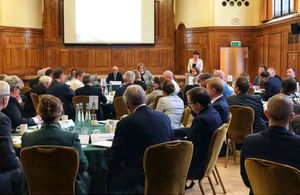
New Education Secretary Damian Hinds welcomed counterparts from across the world to the Education World Forum to share ideas and expertise, as he gave his first speech as Education Secretary today.

Speaking at the Education World Forum, he highlighted the importance of international cooperation and openness to more than 80 Education Ministers from around the world. He focused on what they can learn from each other when tackling common issues and challenges, as well the knowledge they can gain from each other’s successes, to help ensure every young person can access a world-class education.

Education Secretary Education Damian Hinds said:

Standards are rising in our schools thanks to our reforms and the hard work of teachers. There are 1.9 million more children in good or outstanding schools than in 2010, nine out of ten schools were given this rating at their last inspection and our recent rise up the international rankings for reading and literacy puts England’s achievements on a global scale.

We are already learning from international best practice, with programmes like the Teaching for Mastery and the Mandarin Excellence Programme. Now we want to go even further and ensure all our young people are able to excel in the new global economy.

As well as learning from other countries, education is also one of our country’s biggest export earners. By continuing to forge strong relationships globally we can create even more opportunities for the next generation and help build a Britain that is fit for the future.

The Education Secretary’s speech comes days after he confirmed further plans to drive up education standards across England and increase opportunity in the areas that need it most. The announcement last week included support for underperforming schools alongside a package of measures to offer young people more opportunities to make the best of their lives in social mobility ‘cold spots’.

Minister for School Standards Nick Gibb and Minister for Apprenticeships and Skills Anne Milton will also speak at the Education World Forum later this week, focusing on government reforms and an increased emphasis on training and vocational skills.

Attended by more than 500 people, the Education World Forum will run until Wednesday 24 January. It is supported by the Foreign and Commonwealth Office, the Department for Education, the Department for International Trade, the Department for International Development, the British Council and the EWF industry partners.

The event comes ahead of the Commonwealth Heads of Government Meeting which will be hosted by the UK in April and will bring experts from around the world together again.