Press release: Aquilon Medical Nebulisers: people urged to stop use immediately

Following withdrawal of CE certification for the Aquilon series of nebulisers, the manufacturer has continued to place the nebulisers on the market. We have issued a Medical Device Alert today to all relevant healthcare professionals.

The affected nebulisers and packaging do have a CE mark placed on them, however this has not been obtained through appropriate regulatory oversight and therefore, their safety cannot be assured.

A medical device cannot be marketed in Europe without carrying a CE mark. It is applied by the manufacturer and means that the device meets the relevant regulatory requirements and, when used as intended, works properly and is acceptably safe.

This issue affects Aquilon2, Aquilon, Aquilon+ and Aquilon Pro series medical nebulisers manufactured since 01 April 2015. MHRA believes that more than 8,000 Aquilon nebulisers, which have been on the market since 2015 are affected in the UK.

If there is suspicion that a nebuliser is affected, people are advised to stop using immediately, dispose of the device and to use an alternative nebuliser where available. It is advisable that you speak to your healthcare professional or GP who can help you find out if your device is affected, give you advice on how to dispose of it and provide a replacement.

John Wilkinson, MHRA’s Director of Medical Devices said:

We have been made aware that the manufacturer has continued to sell nebulisers even after their CE certification was withdrawn. We cannot guarantee they have been manufactured to an appropriate standard.

These devices deliver potential life-saving treatment and it is vital they operate correctly when needed.

We are taking action, as a matter of priority, to make sure people are aware the CE mark has been withdrawn and that these devices should not be used and should be disposed of.

Patient safety is our highest priority and we urge anyone with questions to speak to a healthcare professional as soon as possible.


Press release: Child sex offenders sent to prison after Solicitor General’s action

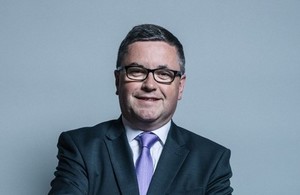
Solicitor General Robert Buckland QC MP Solicitor General Robert Buckland QC MP

Two men who sexually abused two 14 year old girls have been sent to prison after the Solicitor General, Robert Buckland QC MP, appealed their sentences.

Lee Pollard and Marc Allen were each originally sentenced to 15 months’ imprisonment suspended for 24 months at Exeter Crown Court for the offence of sexual activity with a child.

Pollard and Allen who were both 24 at the time knew their victims were under-age when they had sex with them but they later denied this. The offences took place while the young girls were under the influence of alcohol and drugs at a party in Dawlish.

Today, after the action of the Solicitor General, the Court of Appeal quashed the original sentences and replaced them with immediate prison terms. Pollard has been sentenced to 2 years 9 months imprisonment and Allen 3 years 6 months imprisonment.

Commenting after the hearing today, the Solicitor General said:

Despite knowing that the girls were only 14 years old Pollard and Allen engaged them in sexual activity and provided them both with alcohol and drugs. They have no excuse for their behaviour. I hope that the increased sentences will bring some comfort to the girls’ families.

Published 22 February 2018


Press release: Exeter flood defence scheme

The construction of the Exeter flood defence scheme is now well advanced with completion of the whole scheme expected at the end of 2018. The scheme is a partnership between the Environment Agency, Devon County Council and Exeter City Council. The flood defences will reduce the risk of flooding to more than 3,200 homes and businesses in Exeter.

As part of the new defences being built in the north of the city it will be necessary to close Station Road from 9 April 2018 for 9 weeks. Station Road is located near St David’s Station and links Exwick Road to Cowley Bridge Road across the River Exe.

Two flood gates will be built across Station Road on either side of the river and the flood relief channel. When not in use the gates will sit behind the footpaths; when a flood is expected the gates will be closed thereby completing the flood defences and protecting the properties on each side of the river.

It is necessary to close Station Road to vehicles during the construction work due to the size of the foundations required to support the gates. Pedestrians and cyclists will be able use the footpaths across the bridges except for the 4 weekends in May when complete closures will be in place.

Cllr Roger Croad, Devon County Council’s Cabinet Member with responsibility for Environmental Services said:

This is an essential element of the flood defence scheme and these flood gates will reduce flood risk to hundreds of homes and businesses in the city. Every effort will be made to minimise disruption during the closure of Station Road, but the long term benefits will outweigh the short term inconvenience.

The Environment Agency and Network Rail have co-ordinated their work such that Network Rail will carry out essential maintenance work on their level crossing during this time to avoid the need for a separate closure at a future date.

The Environment Agency will be holding a drop-by briefing on Station Road on 12 March 2018 from 4pm to 7pm to explain the works and diversion routes. The briefing is in the public car park on the Exwick side of the bridge. You can also see the latest information on GOV.UK.

Throughout the works detailed traffic and pedestrian diversion signage will be erected to direct people around the closures.

Richard Cox, the scheme’s project manager said:

We’d like to thank commuters and others for their patience while we carry out these essential works. We regret that there will be inconvenience and we urge motorists to plan ahead and allow extra journey time. If people have questions regarding the diversion routes or works they can call the Exeter scheme information line on 07769 162338.


Press release: UK Government hosts first International Public Sector Fraud Symposium

Minister for the Constitution, Chloe Smith, today met with senior counter-fraud experts from Australia, Canada, New Zealand and the United States as they attend the first ever International Public Sector Fraud Symposium in London to share experience and expertise in tackling fraud in the public sector.

According to the latest Crime Survey of England and Wales fraud is now the most prevalent crime in the UK, and within the public sector the loss from fraud is estimated to cost the UK taxpayer between £31 billion and £49 billion a year.

The UK is leading efforts to identify and stamp out fraud, and building on the strength of our strategic Five-Eye partners Minister Smith hosted a roundtable to share best practice and explore the mutual challenges this kind of fraud presents to developed democracies.

Minister for the Constitution, Chloe Smith MP, said:

The UK Government is already taking proactive and rigorous steps to tackling public sector fraud.

This is demonstrated by the National Fraud Initiative which has helped detect and prevent the most public sector fraud in its history in the last two years – over £275 million.

Today, I hosted the first International Fraud Symposium to build on the progress we are making in this area, and to develop our work with global partners.

Let me be clear: anyone committing fraud is stealing directly from the UK taxpayer and is diverting vital resources from much needed public services. This government will do everything it can to root out fraudsters and put a stop to their activities.


News story: Brain cancer research to receive £45 million funding

Health and Social Care Secretary Jeremy Hunt has announced that an estimated £20 million in funding will be invested through the National Institute for Health Research (NIHR) over the next 5 years.

The funding will start with a formal call to research teams to put forward new proposals, to access NIHR funding in April.

In addition, Cancer Research UK will invest £25 million in research into brain tumours over the next 5 years. This is on top of £13 million each year on the research and development of cancer treatments.

Cancer Research UK’s funding will support 2 new specialised centres:

  • The Children’s Brain Tumour Centre of Excellence, based at the University of Cambridge
  • The Institute of Cancer Research, London

These centres bring together world-leading experts to discover and develop new treatments to tackle brain tumours in children. A centre focusing on adult brain tumours will open later this year.

The funding announcement follows the publication of the report of the task and finish working group on brain tumour research, led by the government Chief Scientific Adviser Professor Chris Whitty.

Health and Social Care Secretary Jeremy Hunt said:

While survival rates for most cancers are at record levels, the prognosis for people with brain tumours has scarcely improved in over a generation. I am grateful to Baroness Jowell and other MPs who have campaigned with great dignity and courage to raise awareness of this issue.

Our ambition is to deliver a big uplift in the funding of brain cancer research, while galvanising the clinical and scientific communities to explore new avenues for diagnosis and treatment in the future. It is a chance to create a genuine step change in survival rates for one of the deadliest forms of cancer.

Sir Harpal Kumar, Cancer Research UK Chief Executive, said:

Brain tumours remain a huge challenge, with survival barely improving over the last 30 years. Since we laid out our plans to tackle this challenge in 2014, Cancer Research UK has already substantially increased its funding into brain tumours and attracted some of the world’s leading experts to the UK.

This new funding will mean that we can accelerate these efforts further, by developing a critical mass of expertise in key areas and supporting work along the entire research pipeline to improve survival for children and adults with brain tumours.

Each year around 11,400 people in the UK are diagnosed with a brain tumour and just 14% of people survive their disease for 10 or more years.