News story: Wales’ reputation as FinTech hub of excellence showcased at showpiece tech event

Welsh businesses blazing a trail in the financial technology sector will seek to take their company aspirations to the next level today when they join a global audience at a showcase of their innovations and global investment plans at the International FinTech Conference (22 March).

The 2nd UK Government International FinTech Conference will bring together international investors and UK Fintech firms alongside leading industry figures, regulators and policymakers for a day-long programme of talks and pitches promoting the opportunities for global investment in the UK Fintech sector.

In Wales the digital economy is worth an estimated £8.2bn and employs over 44,000 people.

Cardiff’s burgeoning reputation as an incubator for some of the UK’s leading FinTech companies will be highlighted at the conference by start-ups Wealthify, MYPINPAD and Delio.

Secretary of State for Wales Alun Cairns is currently exploring the growing potential for Wales-Asia trade links at the Great Festival of Innovation in Hong Kong.

Speaking of Wales’ growing stature in the FinTech sector, he said:

Whether you’re tapping your bank card to pay for your morning coffee, or using your smartphone to check your bank account in the evening, chances are you’re a regular consumer of Britain’s ambitious and exciting FinTech industries.

This conference will be a showcase and a celebration of an industry that has done so much to contribute to this country’s knowledge, skills and expertise, enhancing the UK’s status as a global financial centre.

And I’m delighted to see Welsh FinTech companies taking part today – each eager to showcase this impressive wave of innovation that Wales is producing, and each benefiting from a blueprint for the best FinTech ecosystem in the world, cultivated right here in the UK.

One of the Welsh companies invited to exhibit their technology at the conference is Wealthify. Launched in Cardiff in 2016, it is a low cost ‘robo’ investment service that makes the process of becoming an investor easier, quicker and more affordable.

Richard Theo, Chief Exective Officer of Wealthify said:

The International Fintech Conference is an exciting opportunity for some of the UK’s best and brightest fintech companies to come together through quality and relevant discussion, leading to meaningful collaboration with other businesses, policy makers and potential investors from around the globe. We are particularly impressed with the calibre of the other organisations on the attendee list of IFC2018, which reads like a ‘who’s who’ of the UK fintech sector.

We launched Wealthify in 2016 with a mission to use technology to revolutionise and democratise investing by making it simple, affordable and accessible to everyone. Events such as IFC act as an important forum for like-minded Fintech businesses to meet, exchange experiences and ideas and take part in organic debate that helps drive progress in our emerging sectors. What really sets IFC aside from other events we’ve attended is the unique and invaluable opportunity to hold these vital discussions in the presence of Westminster policy and decision makers with whose support we can drive real and positive change for the UK sector and beyond.

Wealthify will be joined at the conference by MYPINPAD – a Cardiff based payment authentication software company established in 2012 which now has offices in London, Hong Kong and Jakarta.

Allan Syms, Chief Operating Officer at MyPinPad said:

We are delighted to have been hand selected to exhibit at this years’ International FinTech Conference as ‘one of the UK’s most exciting FinTech’s. MYPINPAD is a global leader in payments software authentication solutions.

Our patented technologies make it easier and more secure than ever before for merchants and PSP’s to accept card payments both online and in-store to meet the ever-growing demand for innovative mobile payment solutions.

Our aspiration of growing the number of global card acceptance points from 46m to 460m in the next 5 years drives us towards our goal of turning every ubiquitous smart device into a payment acceptance terminal. We are looking forward to showcasing our revolutionary software-based payments authentication technologies to international investors, industry experts and domestic policymakers at this year’s event.

The conference coincides with the launch of the UK Government’s FinTech Sector Strategy – a plan developed to underline the Government’s ongoing support for the industry, responding directly to one of the key aims of the Industrial Strategy of making the UK one of the best places to start and grow a business.

The Fintech Sector Strategy will include:

  • a Cryptoassets Task Force consisting of HM Treasury, the Bank of England, and the Financial Conduct Authority. This will help the UK to be at the forefront of harnessing the potential benefits of the underlying technology, while guarding against potential risks
  • ‘Robo-regulation’ pilot schemes to help new fintech firms, and the financial services industry more widely, comply with regulations by building software which would automatically ensure they follow the rules, saving them time and money
  • appointing three new Fintech Regional Envoys to ensure the benefits of fintech are felt across the UK
  • creating a set of industry standards which will enable fintech firms to more easily partner with existing banks
  • helping new, small fintech firms to provide complex financial services and thereby grow their businesses and reach new customers. Industry and government will work together to create ‘shared platforms’ which will help remove the barriers that these firms face in setting up new systems
  • a Connect with Work programme developed by the government’s Fintech Delivery Panel to help fintech firms to take advantage of the UK’s diverse workforce

At the conference the Secretary of State for Digital, Culture, Media and Sport, Matt Hancock, will also announce that Tech City UK is building a world-leading Fintech Programme across the country. This will support new companies in the sector across the UK to become tomorrow’s global fintech firms.

Digital and Culture Secretary Matt Hancock said:

We are determined to make Britain the best place to start and grow a digital business while giving consumers more choice when it comes to managing their money. This new nationwide fintech programme will help startups right across the country flourish in the future and spread the benefits of this pioneering technology.

The Conference is a highlight event as part of UK Fintech Week 2018, which takes place from 19-23 March. ENDS


News story: Fintech Sector Strategy launched at International Fintech Conference

A new cryptoassets task force, the next steps in ‘robo-regulation’ to make it faster and easier for fintech firms to follow complex regulations, and a new UK-Australia ‘fintech bridge’ to help UK firms expand internationally, are some of the innovations expected to be announced by the Chancellor, Philip Hammond, at the government’s second International Fintech Conference, held today (22nd March).

They are set to form part of the government’s first Fintech Sector Strategy, which will be launched at the conference.

Chancellor of the Exchequer, Philip Hammond said:

From the square mile in London to Scotland’s Silicon Glen, the UK leads the world in harnessing the power of fintech as we create an economy fit for the future.

I am committed to helping the sector grow and flourish, and our ambitious Sector Strategy sets out how we will ensure the UK remains at the cutting edge of the digital revolution. As part of that, a new task force will help the UK to manage the risks around Cryptoassets, as well as harnessing the potential benefits of the underlying technology.

The Fintech Sector Strategy will include:

  • a Cryptoassets Task Force consisting of HM Treasury, the Bank of England, and the Financial Conduct Authority. This will help the UK to be at the forefront of harnessing the potential benefits of the underlying technology, while guarding against potential risks

  • ‘Robo-regulation’ pilot schemes to help new fintech firms, and the financial services industry more widely, comply with regulations by building software which would automatically ensure they follow the rules, saving them time and money

  • appointing three new Fintech Regional Envoys to ensure the benefits of fintech are felt across the UK

  • creating a set of industry standards which will enable fintech firms to more easily partner with existing banks

  • helping new, small fintech firms to provide complex financial services and thereby grow their businesses and reach new customers. Industry and government will work together to create ‘shared platforms’ which will help remove the barriers that these firms face in setting up new systems

  • a Connect with Work programme developed by the government’s Fintech Delivery Panel to help fintech firms to take advantage of the UK’s diverse workforce

At the conference the Secretary of State for Digital, Culture, Media and Sport, Matt Hancock, will also announce that Tech City UK is building a world-leading Fintech Programme across the country. This will support new companies in the sector across the UK to become tomorrow’s global fintech firms.

Digital and Culture Secretary Matt Hancock said:

We are determined to make Britain the best place to start and grow a digital business while giving consumers more choice when it comes to managing their money. This new nationwide fintech programme will help startups right across the country flourish in the future and spread the benefits of this pioneering technology.

At the conference, the Chancellor and Scott Morrison, Treasurer of the Commonwealth of Australia, will sign a new Fintech Bridge agreement. This will help to open up a new important market for UK fintech firms wanting to expand internationally by selling their products and services in Australia. It will also help the two countries to harmonise policies across a range of issues relevant to fintech, and increase regulatory cooperation.

Commenting on the UK-Australia Fintech Bridge, Philip Hammond said:

Today’s UK-Australia Fintech Bridge agreement is our most ambitious to date. It will bring together our regulators, policy makers, and private sectors to build an improved fintech ecosystem to support the growth of our fintech markets.

This is underpinned by the most advanced regulatory partnership that the FCA has signed, connecting the UK to a market of 24 million people and ensuring stronger commercial ties with Australia’s rapidly growing fintech sector.

As part of the Fintech Bridge, Innovate Finance and FinTech Australia will introduce a regular business to business summit, advising the UK and Australian governments on how best to support the sector.

Charlotte Crosswell, CEO, Innovate Finance said:

This exciting partnership between Innovate Finance and FinTech Australia will foster even stronger ties between the fintech communities of our two countries and is an important step in supporting innovation in financial services on an international scale. It offers an excellent opportunity to work together to share industry best practices, strengthen understanding and knowledge of each other’s fintech markets, and drive progressive regulatory approaches to help our fintech sector grow.

The UK fintech sector contributes £6.6 billion annually to the UK economy, and employs over 60,000 people across 1,600 companies. In the first three quarters of this year the sector received a record £2.1 billion investment.

The conference will bring together international investors and UK fintech firms alongside leading industry figures, regulators and policymakers for a day-long programme of talks and pitches promoting the opportunities for global investment in the UK fintech sector. Keynote speakers include:

  • Philip Hammond, Chancellor of the Exchequer
  • Scott Morrison, Treasurer of the Commonwealth of Australia
  • Eileen Burbidge, HM Treasury’s Special Envoy for FinTech
  • Matt Hancock, Secretary of State for Digital, Culture, Media and Sport
  • Jayne-Anne Gadhia, CEO of Virgin Money and Government’s Women in Finance Champion
  • Dame Helena Morrissey DBE, Head of Personal Investing, Legal and General Investment Management
  • Dave Ramsden, Deputy Governor for Markets and Banking at the Bank of England
  • Mark Tucker, Chairman, HSBC
  • Sir George Iacobescu, Chair and CEO, Canary Wharf Group
  • Imran Gulamhuseinwala, Global Head of FinTech at EY
  • Samir Desai, CEO of Funding Circle
  • Steve Hatch, Vice President Europe at Facebook

Watch the Chancellor, Philip Hammond, talking about the conference.


News story: Constant Friend report and flyer published

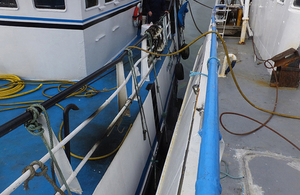
Access to Constant Friend via another fishing vessel Access to Constant Friend via another fishing vessel

MAIB’s report on the fatal man overboard from the stern trawler Constant Friend is now published. A crewman fell into the water at Kilkeel Harbour while attempting to board via another vessel on 23 September 2017.

The report contains details of what happened, subsequent actions taken and recommendations: read more.

A safety flyer to the fishing vessel industry summarising the accident and detailing the safety lessons learned, has also been produced.

Published 22 March 2018


Press release: Statement from Sir Mark Sedwill on the Salisbury attack

On Monday EU foreign ministers expressed “unqualified solidarity” with the UK after the terrible attack in Salisbury and gave their support for our efforts to bring those responsible for justice, demanding urgent and full answers from the Russian government. EU ministers agreed the need to focus on the implications of this shocking incident.

Tomorrow the Prime Minister and other EU leaders will discuss this at the European Council. I came to Brussels today as part of the preparations for those discussions.

I had the opportunity to meet the High Representative and other senior EU officials and to brief representatives of all the Member States.

I set out the reasons for our clear assessment of Russian responsibility, the measured but clear response we were taking, the wider pattern of malign behaviour into which Salisbury fits, and the importance of a renewed and wider international focus, including from the EU, on the challenge Russia represents to our shared interests and values.

It was clear from my discussions not only the strong solidarity with my country but also the shared sense of gravity and determination to look carefully, calmly but purposefully at the implications, given the high stakes involved for our shared European security and the rules based international order.


Speech: What we talk about when we talk about green cities

‘What we talk about when we talk about green cities’

Emma Howard Boyd, Chair of the Environment Agency

Manchester Green Summit, 21 March 2018

In an article for the New Statesman in January, the editor of the Today Programme, Sarah Sands, wrote about the type of language that works in newspapers and words that work on the radio.

She shared an anecdote about working with Prince Harry, who guest edited the show over Christmas.

During an on air discussion about supermarkets and plastic, the Prince wanted the presenter to ask:

“Do we need to create a circular rather than a linear economy?”

An important question that I’m sure many people will want to discuss today.

But instead of asking that, the editor pressed the button and said to the presenter:

“Say, should there be more pressure from the government?”

This is an important lesson for those of us who care about green issues.

If we are to persuade people of our cause we should note that even Prince Harry can’t get the “circular economy” on the radio.

Of course – there are good reasons for using nerdy terms like “the circular economy”, “natural capital” and “climate resilience”.

But, the seemingly impossible scale of these issues is bigger than our day to day activities. So, the words we use as shorthand, aren’t part of everyday language.

I want to thank the Mayor for inviting me to join you today.

Manchester is the perfect place to talk about these things.

As the cradle of the industrial revolution – and a place that has reinvented itself more than once – these huge global challenges are alive in your city.

In Manchester:

  • the circular economy is emptying your recycling bin;
  • natural capital is flowing into the Manchester Ship Canal;
  • And, climate resilience is walking through your sewers.

(I know this because I have walked in your sewers with the Environment Agency’s confined spaces team – who work to reduce flood risk from the rivers beneath Manchester’s streets.)

The challenges facing the world in the next century will be felt most by people living in cities.

The Committee on Climate Change has identified increased flooding as the biggest climate risk facing the UK.

And, in November 2017, Moody’s rating agency warned cities to address climate risk or face credit downgrades. Climate change will bring heavier storms than the one you saw here on Boxing Day 2015.

We must ensure Manchester’s investments and ambitions are not undermined by the weather.

We need to stop force majeure from becoming run-of-the-mill.

So, what to do?

Well, the short answer is you need to attract enough industry and development to invest in resilient infrastructure, so that you can keep your power, water, communications and transport running smoothly in all conditions – while ensuring that you don’t lose the natural environment and culture that made people want to live in Manchester in the first place.

I said it was the short answer, not that it was an easy answer.

But, Manchester has faithfully reinvented itself before, so let’s roll our sleeves up and do it again.

There are many people who are here today to help – and as Chair of the Environment Agency, I want us to be your partner of choice in your ambition to become one of Europe’s leading green cities.

As an emergency responder, our first priority is your safety in severe weather.

Our broader role is to protect and enhance the environment while ensuring sustainable growth and development.

We’re working with Business in the Community to bring companies in Manchester together with local communities and the Greater Manchester Combined Authority to deliver sustainable drainage in schools and for the NHS.

For four years, we’ve been working in the GMCA – and its predecessors – allowing us to enhance the contribution of natural assets like clean air, water and green space while protecting major investments.

For instance, the £1 billion redevelopment of the old Royal Mail Depot near Piccadilly.

We are supporting GMCA’s involvement with the Rockefeller Foundation’s 100 Resilient Cities programme, helping Manchester prepare to meet the challenges of 21st century life.

Through your selection as the Government’s Urban Pioneer, we are exploring the potential for taking a natural capital approach to development decisions.

We are working to improve water quality in the city’s rivers and we have restocked the River Irwell with 10,000 course fish for local anglers.

Most of all, we are part of Manchester.

Our work, ably led by area director Lee Rawlinson, creates new jobs and local skills among colleagues and partners who are proud to call Manchester home.

The Government’s 25 Year Environment Plan puts natural capital at the heart of the industrial strategy.

It also says we will make sure “that all policies, programmes and investment decisions take into account the possible extent of climate change this century.”

We currently have 1659 kilometres of flood assets in Greater Manchester, including the recent £10 million Salford Flood Improvements Scheme, delivered with Salford City Council, which protects nearly 2,000 properties.

As well as protecting existing development, it enables over 90 hectares of regeneration in Lower Broughton and delivered 5.5 hectares of new wetland habitat, 10 hectares of wildflower meadow and 2.5 kilometres of new footpath and cycleway.

By giving people safe lanes to cycle on, we can also reduce emissions from the roads – helping everyone breathe cleaner air.

While looking at the potential for that scheme, we discovered 344 kilometres of Greater Manchester’s flood assets are within 10 metres of a cycle path.

So, I am announcing today that we will work with Chris Boardman, the walking and cycling commissioner, to make our flood assets part of the city’s cycle lanes.

This is a fantastic example of how to combine natural capital, with climate resilience, wildlife protection and the creation of green spaces.

But I realise that such projects usually require a lot of private sector investment to get off the ground.

We’re working on it.

I’ve got 25 years’ experience in the financial services industry and I’m a member of the government’s Green Finance Taskforce, which reports in to Claire Perry, who we just heard from, and the Treasury.

We’re pushing for the development of natural capital thinking in the UK to create more opportunities to generate revenue from projects that improve the natural environment.

Measuring the benefits of these will sharpen the business case for investment and help to unlock private finance for environmental projects, thereby supporting the resilience of UK infrastructure.

An understanding of natural capital will certainly help climate resilience, but how does the circular economy fit in?

At the end of 2017, Blue Planet 2 focussed minds on the impacts of plastic pollution.

That television programme – called “public service broadcasting at its finest” by the Prime Minister, has already made a difference to our lives, with the extension of the plastic bag charge.

But it seems tackling plastic pollution is a bit like spring cleaning: as soon as you start, you find more dirt. Just last week, researchers from The University of Manchester told us they had found the highest levels of microplastics anywhere in the world in the River Tame, in Denton.

We’re working with the water industry and leading academics to investigate microplastics entering the environment.

This work will inform plans to tackle the pollution at the source, before it reaches local rivers.

In January, I was in Cornwall announcing £750,000 for a scheme to fight plastic washing up on beaches – a pilot scheme that we hope will inform further action around the country.

I am hopeful, but I don’t underestimate the challenge.

Councils are already feeling the Chinese government’s decision to ban imports of plastic waste, as this adds millions of tonnes of waste to our current systems.

Waste management businesses are the unsung heroes of the environmental movement.

Their work to ensure that the Right Waste goes to the Right Place, is an essential service.

Unfortunately, good waste businesses are too often undermined.

The economic impact of waste crime in England in 2015 was estimated to be at least £604 million – not to mention the incalculable misery and ill health it brings to people all over the country.

The Environment Agency stands with Greater Manchester police and authorities all over the country in our commitment to stamp out environmental crime.

In January, new powers were introduced for my colleagues to lock gates and block access to problem waste sites. Last year, we were closing over 2 illegal waste sites every day and we will always push for prosecution.

For example, last year:

  • Barry Kilroe was sentenced in Manchester Crown Court to 15 months after breaching permit conditions at two waste sites that caught fire – closing the M60 motorway and the Manchester to Liverpool railway line.

  • David Shrigley (not the artist) was sentenced to 40 days for refusing to remove waste from a site in Cornwall that posed a serious fire risk and environmental harm.

  • Martin McDonagh ran away to Ireland to avoid 20 months for removing household waste in Plymouth and dumping it randomly out the back of a blue transit van. We’re pursuing him with a European arrest warrant.

  • Lee Hazel in Wiltshire was given a confiscation order of £1.97million, with an 8 year custodial sentence should he fail to pay, following the disposal of waste on a farm and the illegal importation and treatment of unpermitted waste.

  • And, on October 30, 6 former corporate officers of waste companies in Nottinghamshire got a mixture of immediate prison sentences, suspended prison sentences and community orders following illegal waste operations in the Midlands.

These are just a few examples of our action.

I am proud of my colleagues in the Environment Agency for their bravery in bringing these criminals to justice and I am pleased that following sentencing guidelines in 2014, courts began imposing higher fines for environmental offences.

However, for the damage these crimes do to the environment and to communities’ health and wellbeing; for their flagrant disregard for public safety; for the money taken out of pockets of responsible local businesses, and – in some cases – into the pockets of organised crime: I still don’t think the deterrent is strong enough.

Today, I am calling for higher fines and custodial sentences for waste criminals.

How we deal with the rising tide of waste is a global challenge, but no one should have to live next door to this disgusting criminality:

Not by the sea; not in the countryside; and not in Manchester.

Of course, I realise we won’t solve all of our waste problems with jail time.

Waste criminals are exploiting the weaknesses of a linear economy.

In this role, I’ve visited illegal waste sites, and I can tell you that packaging from even the most responsible businesses ends up there.

All companies need to consider their duty of care in fully understanding where their waste products go. I look forward to hearing from Marks & Spencer’s Mike Barry – speaking next – about this area of their business.

Everyone should be challenging themselves to do more.

A circular economy is a useful target to aim for.

Ultimately, the circular economy, natural capital and climate resilience are simply useful pointers to a better way of organising ourselves.

And they apply in Manchester as much as anywhere else in the world.

If they sound complicated – that’s because life is pretty complicated.

Maybe we should take the advice of the American writer Nora Ephron who said:

“It will be a little messy, but embrace the mess. It will be complicated, but rejoice in the complications.”

As we try to understand these vast, complicated challenges today at the Green Summit, I want to leave you with one very simple thought:

The Environment Agency is here to help.

Thank you.