Speech: Our action will degrade the Syrian regime’s chemical weapons use

Thank you Mr President.

Mr President, these are uncertain times and today we deal with exceptional circumstance. Acting with our American and French allies in the early hours of this morning, the United Kingdom conducted coordinated, targeted and precise strikes to degrade Assad’s chemical weapons capability and deter their future use.

The British Royal Air Force launched Storm Shadow missiles at a military facility some 15 miles west of Homs where the regime is assessed to keep chemical weapons in breach of Syria’s obligations under the Chemical Weapons Convention. Full assessment has not yet been completed but we believe the strikes to be successful.

Furthermore, none of the British, US or French aircraft or missiles involved in this operation were successfully engaged by Syrian air defences and there is also no indication that Russian air defence systems were employed.

Our action was a limited, targeted and effective strike. There were clear boundaries that expressly sought to avoid escalation and we did everything possible, including rigorous planning, before any action was undertaken to ensure that we mitigated and minimised the impact on civilians. Together our action will significantly degrade the Syrian regime’s ability to research, develop and deploy chemical weapons and deter their future use.

The UK Prime Minister has said we are clear about who is responsible for the atrocity of the use of chemical weapons. A significant body of information including intelligence indicates the Syrian regime is responsible for the attack we saw last Saturday. Some of the evidence that leads us to this conclusion is as follows:

There are open source accounts alleging that a barrel bomb was used to deliver the chemicals;

Multiple open source reports claim a regime helicopter was observed above the city of Douma on the evening of 7th April. The opposition does not operate helicopters nor does it use barrel bombs;

And reliable intelligence indicates that Syrian military officials coordinated what appears to be the use of chlorine in Douma on 7th April. Mr President, no other group could have carried out this attack. Indeed Da’esh, for example, does not even have a presence in Douma.

The Syrian regime has been killing its own people for seven years. Its use of chemical weapons, which has exacerbated the human suffering, is a serious crime of international concern as a breach of the customary international law prohibition on the use of chemical weapons and this amounts to a war crime and a crime against humanity. Any state is permitted under international law, on an exceptional basis, to take measures in order to alleviate overwhelming humanitarian suffering. The legal basis for the use of force for the United Kingdom is humanitarian intervention which requires three conditions to be met.

Number one, that there is convincing evidence, generally accepted by the international community as a whole, of extreme humanitarian distress on a large scale requiring immediate and urgent relief. I think the debates in this Council and the briefings we have had from OCHA and others have proved that.

Secondly, it must be objectively clear that there is no practicable alternative to the use of force if lives are to be saved. I think the vetoes have shown us that.

And thirdly, the proposed use of force must be necessary and proportionate to the aim of relief of humanitarian suffering. It must be strictly limited in time and in scope to this aim. And I think we have heard both in my intervention in Ambassador Haley’s how that has also been met.

The history of the Syrian conflict is a litany of threats to peace and violations of international law. The Security Council has met 113 times since the Syrian war started. It was therefore not for want of international diplomatic effort that we find ourselves in this position today.

After pattern of chemical weapons use since the outbreak of the conflict, Assad defied the international community in 2013 by launching a sarin gas attack on Eastern Ghouta which left more than 800 people dead. Despite the adoption of Resolution 2118, despite four years of patient engagement, Syria continues to use chemical weapons against its people and has failed to answer a long list of serious questions. The only conclusion we can reach is that Syria had not declared or destroyed all of its chemical weapons despite its obligations under the Chemical Weapons Convention.

This is not assertion on our part but a matter of record and I draw the Russian Ambassador’s attention to his points about Barazan and Jimrya. The OPCW still has unanswered questions and discrepancies. He knows this. We all know this. The Council was briefed by the OPCW Director General.

Resolution 2118 decides in the event of non-compliance to impose measures under Chapter 7 of the Charter. Yet on 28th February last year when the UK, together with France, proposed a Resolution taking measures under Chapter 7, short of the use of force, Russia vetoed. The very least this Council should have been able to do Mr President, was to follow up on the findings of the JIM report by extending its mandate. Yet four times Russia has vetoed different proposals from different Council Members to do just that.

The Syrian regime and it supporters are responsible for the gravest violations of international humanitarian law in modern history. They have used indiscriminate weapons, notably barrel bombs and cluster munitions, against civilians and they have deliberately targeted medical facilities and schools as well as humanitarian personnel and civilian objects. They have used sieges and starvation as methods of warfare accompanied by attacks on opposition-held civilian areas.

The regime has persistently obstructed humanitarian aid and medical evacuations. Tens of thousands of people have been illegally detained, tortured and executed by the regime. This is one of the most serious challenges to the international non-proliferation regime we have ever faced. A State party has violated the Chemical Weapons Convention. It has defied the Security Council and it has broken international law.

Repeated attempts over several years to hold them to account have been met with Russian obstruction and resistance. We have repeatedly, in this Council, attempted to overcome this obstruction without success. Mr President, we are faced with the litany of violations, no sense of guilt, no sense of regret, no sense of responsibility, a shameful record, wrapped in a mix of denial, deceit and disinformation.

Mr President, I would invite those like the Russian Ambassador who speak about the Charter to consider the following: It is hard to believe that it is in line with the principles and purposes of the Charter to use or condone the use of chemical weapons and in the United Kingdom’s view, it cannot be illegal to use force to prevent the killing of such numbers of innocent people. I will take no lessons, Mr. President, in international law from Russia.

Despite all this Mr. President we would like to look forward. The United Kingdom, together with France and the US, will continue to pursue a diplomatic resolution to the Syrian crisis. My French colleague will say more about our work in a few moments. We believe it must comprise four elements.

One, Syria’s chemical weapons program must be ended and the chemical weapons stockpiles destroyed once and for all.

Two, there must be an immediate cessation of hostilities and compliance with all Security Council Resolutions and these include those which mandate humanitarian access.

Three, the regime must return to the Geneva talks and agree to engage on the substantial agenda put forward by the UN Special Envoy Stefan de Mistura,

Four, finally, there must be accountability for the use of chemical weapons and other war crimes in Syria.

Mr. President, the Secretary-General rightly highlighted the political process. We propose that as the Security Council will all be together next weekend in the retreat with the Secretary-General, very kindly hosted by Sweden, that we should use that opportunity to reflect on next steps and the way back to the political process.

And with our allies, we stand ready to work with all members on the Security Council towards this end.

Thank you.
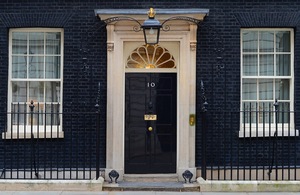


Press release: PM calls with world leaders: 14 April 2018

PM calls with world leaders: 14 April 2018 – GOV.UK

Prime Minister Theresa May spoke with a number of world leaders about the strikes made by the UK, France and the United States in Syria.

placeholder

A Downing Street spokesperson said:

Following the successful strikes made against the Syrian Regime’s chemical weapons sites earlier today by the UK, France and United States, Prime Minister Theresa May is speaking to a number of her fellow world leaders.

Those who she has spoken to so far are Mohammad Bin Salman Al Saud; King Abdullah of Jordan; Crown Prince of Saudi Arabia; President Erdogan of Turkey; President Anastasiades of Cyprus; Prime Minister Gentiloni of Italy; Chancellor Merkel of Germany; EU President Donald Tusk; Prime Minister Turnbull of Australia and Prime Minister Trudeau of Canada.

The PM explained that the action the UK has taken with our American and French allies was limited, carefully targeted and designed to alleviate humanitarian suffering, degrade the Syrian Regime’s chemical weapons capability and deter their use in the future. The response was not just to the Douma attack but to a series of devastating assaults on the Syrian people by their government.

All of the leaders agreed with the Prime Minister on the importance of restoring the international norm that the use of chemical weapons is never acceptable.

Published 14 April 2018


Press release: PM calls with President Macron and President Trump: 14 April 2018

In separate calls, the Prime Minister this afternoon spoke with President Macron and President Trump.

The three leaders agreed that the military strikes taken against the Syrian Regime’s chemical weapons sites had been a success.

The Prime Minister welcomed the public support which had been given by fellow world leaders for the strong stand the UK, France and the United States had taken in degrading Syria’s chemical weapons capability and deterring their use; defending global rules; and sending a clear message that the use of chemical weapons can never become normalised.


Speech: PM’s press conference statement on Syria: 14 April 2013

Prime Minister Theresa May:

Last night British, French and American armed forces conducted co-ordinated and targeted strikes to degrade the Syrian Regime’s chemical weapons capability and deter their use.

For the UK’s part four RAF Tornado GR 4’s launched storm shadow missiles at a military facility some 15 miles west of Homs, where the regime is assessed to keep chemical weapons in breach of Syria’s obligations under the Chemical Weapons Convention.

While the full assessment of the strike is ongoing, we are confident of its success.

Let me set out why we have taken this action.

Last Saturday up to 75 people, including young children, were killed in a despicable and barbaric attack in Douma, with as many as 500 further casualties.

We have worked with our allies to establish what happened. And all the indications are that this was a chemical weapons attack.

We have seen the harrowing images of men, women and children lying dead with foam in their mouths.

These were innocent families who, at the time this chemical weapon was unleashed, were seeking shelter underground, in basements.

First-hand accounts from NGOs and aid workers have detailed the most horrific suffering, including burns to the eyes, suffocation and skin discolouration, with a chlorine-like odour surrounding the victims.

And the World Health Organisation has received reports that hundreds of patients arrived at Syrian heath facilities on Saturday night with “signs and symptoms consistent with exposure to toxic chemicals.”

We are also clear about who was responsible for this atrocity.

A significant body of information including intelligence indicates the Syrian Regime is responsible for this latest attack.

I cannot tell you everything. But let me give an example of some of the evidence that leads us to this conclusion.

Open source accounts allege that a barrel bomb was used to deliver the chemicals.

Multiple open source reports claim that a Regime helicopter was observed above the city of Douma on the evening of 7th April.

The Opposition does not operate helicopters or use barrel bombs.

And reliable intelligence indicates that Syrian military officials co-ordinated what appears to be the use of chlorine in Douma on 7th April.

No other group could have carried out this attack. Indeed, Daesh for example does not even have a presence in Douma.

And the fact of this attack should surprise no-one.

We know that the Syrian regime has an utterly abhorrent record of using chemical weapons against its own people.

On 21st August 2013 over 800 people were killed and thousands more injured in a chemical attack also in Ghouta.

There were 14 further smaller scale chemical attacks prior to that summer.

At Khan Shaykhun on 4th April last year, the Syrian Regime used sarin against its people killing around 100 with a further 500 casualties.

And based on the Regime’s persistent pattern of behaviour and the cumulative analysis of specific incidents we judge it highly likely both that the Syrian regime has continued to use chemical weapons since then, and will continue to do so.

This must be stopped.

We have sought to do so using every possible diplomatic channel.

But our efforts have been repeatedly thwarted both on the ground and in the United Nations.

Following the sarin attack in Eastern Damascus back in August 2013, the Syrian Regime committed to dismantle its chemical weapon programme – and Russia promised to ensure that Syria did this, overseen by the Organisation for the Prohibition of Chemical Weapons.

But these commitments have not been met.

A recent report from the Organisation for the Prohibition of Chemical Weapons has said that Syria’s declaration of its former Chemical Weapons programme is incomplete.

This indicates that it continues to retain undeclared stocks of nerve agent or precursor chemicals – and is likely to be continuing with some chemical weapons production.

The OPCW inspectors have investigated previous attacks and on four occasions decided that the Regime was indeed responsible.

And on each occasion when we have seen every sign of chemical weapons being used, any attempt to hold the perpetrators to account has been blocked by Russia at the UN Security Council, with six such vetoes since the start of 2017.

Just this week, the Russians vetoed a draft Resolution that would have established an independent investigation into this latest attack – even making the grotesque and absurd claim that it was “staged” by Britain.

So we have no choice but to conclude that diplomatic action on its own will not be any more effective in the future than it has been in the past.

Over the last week the UK government has been working intensively with our international partners to build the evidence picture, and to consider what action we need to take to prevent and deter future humanitarian catastrophes caused by chemical weapons attacks.

When the Cabinet met on Thursday we considered the advice of the Attorney General, the National Security Adviser and the Chief of the Defence Staff – and we were updated on the latest assessment and intelligence picture.

And based on this advice we agreed that it was both right and legal to take military action, together with our closest allies, to alleviate further humanitarian suffering by degrading the Syrian Regime’s Chemical Weapons capability and deterring their use.

This was not about interfering in a civil war.

And it was not about regime change.

As I discussed with President Trump and President Macron, it was a limited, targeted and effective strike with clear boundaries that expressly sought to avoid escalation and did everything possible to prevent civilian casualties.

Together we have hit a specific and limited set of targets. They were a chemical weapons storage and production facility, a key chemical weapons research centre and a military bunker involved in chemical weapons attacks.

Hitting these targets with the force that we have deployed will significantly degrade the Syrian Regime’s ability to research, develop and deploy chemical weapons.

A year ago, after the atrocity at Khan Shaykhun, the US conducted a strike on the airfield from which the attack took place. But Assad and his regime hasn’t stopped their use of chemical weapons.

So last night’s strikes by the US, UK and France were significantly larger than the US action a year ago and specifically designed to have a greater impact on the regime’s capability and willingness to use chemical weapons.

And this collective action sends a clear message that the international community will not stand by and tolerate the use of chemical weapons.

I also want to be clear that this military action to deter the use of chemical weapons does not stand alone.

We must remain committed to resolving the conflict at large.

The best hope for the Syrian people remains a political solution.

We need all partners – especially the Regime and its backers – to enable humanitarian access to those in desperate need.

And the UK will continue to strive for both.

But these strikes are about deterring the barbaric use of chemical weapons in Syria and beyond.

And so to achieve this there must also be a wider diplomatic effort – including the full range of political and economic levers – to strengthen the global norms prohibiting the use of chemical weapons which have stood for nearly a century.

Although of a much lower order of magnitude, the use of a nerve agent on the streets of the UK in recent weeks is part of a pattern of disregard for these norms.

So while this action is specifically about deterring the Syrian regime, it will also send a clear signal to anyone else who believes they can use chemical weapons with impunity.

There is no graver decision for a Prime Minister than to commit our forces to combat – and this is the first time that I have had to do so.

As always, they have served our country with the greatest professionalism and bravery – and we owe them a huge debt of gratitude.

We would have preferred an alternative path.

But on this occasion there is none.

We cannot allow the use of chemical weapons to become normalised – either within Syria, on the streets of the UK or elsewhere.

We must reinstate the global consensus that chemical weapons cannot be used.

This action is absolutely in Britain’s national interest.

The lesson of history is that when the global rules and standards that keep us safe come under threat – we must take a stand and defend them.

That is what our country has always done.

And that is what we will continue to do.


News story: RAF JETS STRIKE CHEMICAL WEAPON FACILITY IN SYRIA

A Tornado GR4 from 903 Expeditionary Air Wing (EAW), based out of Royal Air Force Akrotiri, Cyprus. Crown copyright.

At 0200 UK time on 14 April, British forces joined close Allies in a precision strike on Syrian installations involved in the regime’s use of chemical weapons against its own people. The strike was launched as a response to the chemical weapon attack on 7 April in Douma which killed up to 75 people, including young children; a significant body of information, including intelligence, indicates that the Syrian regime was responsible for this latest attack.

As the Prime Minister has made clear, this pattern of behaviour must be stopped, not just to protect innocent people in Syria from these horrific weapons, but also because the erosion cannot be allowed of the international norms that prevent the use of chemical weapons.

Our action is proportionate, specifically aimed at degrading the regime’s ability to use chemical weapons and deterring further such appalling acts; it is therefore focused on regime facilities linked to the production and use of chemical weapons.

The UK element of the carefully coordinated joint action was contributed by four Royal Air Force Tornado GR4s. They launched Storm Shadow missiles at a military facility – a former missile base – some fifteen miles west of Homs, where the regime is assessed to keep chemical weapon precursors stockpiled in breach of Syria’s obligations under the Chemical Weapons Convention. Very careful scientific analysis was applied to determine where best to target the Storm Shadows to maximise the destruction of the stockpiled chemicals and to minimise any risks of contamination to the surrounding area. The facility which was struck is located some distance from any known concentrations of civilian habitation, reducing yet further any such risk.

Detailed analysis of the effectiveness of the strike is currently underway, but initial indications are that the precision of the Storm Shadow weapons and meticulous target planning have resulted in a successful attack.

Defence Secretary Gavin Williamson said:

The reprehensible use of chemical weapons in Douma is further evidence of the Syrian regime’s appalling cruelty against its own people. We will not stand by whilst innocent civilians, including women and children, are killed and made to suffer.

The international community has responded decisively with legal and proportionate military force. Let these united actions send a clear message to the regime – the use of chemical weapons is categorically unacceptable and you will be held to account.