My five-point economic action plan for the G20

Leaders take responsibility. They show up. Yet, at the G20 summit in Indonesia this week, one seat will remain vacant.

The man who is responsible for so much bloodshed in Ukraine and economic strife around the world will not be there to face his peers. He won’t even attempt to explain his actions. Instead, he will stay at home and the rest of us will get on with the task at hand.

Last week, we saw the Ukrainian flag raised once again over Kherson only weeks after Putin declared that the city would be part of Russia forever. It is an historic milestone in Ukraine’s fight to take back what’s theirs. They are standing up for fundamental principles that matter to us all – the principles of sovereignty and self-determination, which are the very foundations of a stable international order.

But we know the Ukrainian people are still suffering terribly under the continued Russian bombardment and prolonged power blackouts in near-freezing temperatures.

That’s why when I spoke to Volodymyr Zelensky, the Ukrainian president, last Thursday, I made clear that Britain will never back down when it comes to supporting the Ukrainian people in the face of this brutality.

We will continue training Ukrainian troops and providing vital defensive military equipment, like the additional 1,000 air defence missiles and more than 25,000 extreme cold winter kits that I pledged last week. We remain the largest European military donor to Ukraine, delivering £2.3 billion of support this year.

There is no doubt that the war in Ukraine is fuelling the challenges facing countries across the world. That’s why as I hold my first meetings with Joe Biden, the US president, and other leaders during the summit, we will be clear that discussions about how we can continue to back Ukraine are inseparable from those on how we can strengthen our collective economic security.

As we recover from a pandemic that almost broke the world economy, every household on the planet is feeling the fallout from the war in Ukraine. Global food prices have been hit by Vladimir Putin’s attempts to choke off Ukrainian grain exports – two-thirds of which go to developing countries. Energy bills have skyrocketed thanks to Russia turning off the gas taps.

The result is that two-thirds of G20 members are now experiencing inflation rates above seven per cent and the IMF predicts that a third of the world’s economy will be in recession next year.

I know that people are struggling. Across the UK, families are feeling the squeeze. The weekly shop costs more than ever, and people are anxious about the next bill to land on their doormat.

So we will continue to deliver help at home, but we also need to see coordinated global action like we saw in response to the financial crisis in 2008.

Russia is trying to asphyxiate the global economy. We must join together to stop them in their tracks and restore economic stability. There are five points where we need to see action.

First and foremost, we must keep delivering urgent support where it’s needed most in the winter ahead. We are helping the people of Ukraine as their national infrastructure is attacked by drones and missiles – just as we are supporting people with their rising energy bills back in Britain and taking action to prevent famine in the most vulnerable parts of the world.

Second, we must put an end to Russia’s appalling weaponisation of food. I am supporting the UN secretary-general to keep grain shipments moving in the Black Sea and urging all those countries who can produce more food or release stockpiles to do so, in order to help increase supply.

Third, we must take urgent action to protect our economic security and bolster our resilience against malign actors. This means securing our supply chains and rapidly transitioning from dependence on energy from countries like Russia, who seek to use it against us. We must show authoritarian aggressors that we are in it for the long haul.

Fourth, we must remain utterly committed to the promotion of free markets and an open global economy in which enterprise drives growth – and the UK will continue leading the way, utilising our Brexit freedoms to pursue free trade agreements around the world. Our prosperity and our security go hand in hand.

Finally, we must work together with our partners – governments, the private sector and intentional financial institutions – to provide the financial stability and probity that the international economic situation demands. That means calling out those who exploit their lending power to create debt traps in emerging economies and also tackling the causes of rising inflation head on.

We will not let our economic future be held hostage by the actions of a rogue state – and nor will our allies. Instead, we will stand with Ukraine and we will work to deliver on each element of this five-point plan, promoting free markets and a global economy that is stronger, more stable and more resilient, and that delivers a faster return to growth.

This is what the world expects from the responsible members of the G20 – and I know that the UK will emerge the other side of this crisis stronger than before.

Previously published in The Daily Telegraph


UK funding to help repair Ukraine’s damaged energy systems and get power back to Ukrainian people

  • The support will help with essential repairs to critical energy infrastructure following ongoing Russian attacks,and will reconnect households and key facilities to power supply.
  • The UK is the largest donor to the Fund so far, along with sending hospital generators and a financial guarantee for Ukraine’s state-owned energy provider.

Ukraine will have further UK support to keep the lights on across the country and repair energy infrastructure damaged by Russian attacks, Foreign Secretary James Cleverly announced today.

The UK is so far the biggest donor to the Ukraine Energy Support Fund. This latest funding will provide specialised energy equipment to keep critical national infrastructure up and running – a priority request from the Government of Ukraine.

Since October 2022, Russia has carried out widespread missile and drone strikes, particularly targeting Ukraine’s power supplies. More than 40% of Ukraine’s energy infrastructure, including transmission lines, power stations and pipelines, has been damaged or destroyed by Russian attacks. This has left millions of Ukrainians across the country living without electricity or experiencing rolling blackouts.

Recently the UK has also provided £7 million for over 850 generators so that vital facilities, such as hospitals, have power and a further £5 million for safety and security equipment for the civil nuclear sector. In addition, the UK has put up a $50 million guarantee for financing for Ukraine’s state-owned energy provider, Ukrenergo, through the European Bank for Reconstruction and Development which will help Ukraine continue to supply electricity to its citizens.

The Foreign Secretary is due to sign the agreement today with Ukrainian Energy Minister Herman Halushchenko, alongside Energy Community Secretariat Deputy Director Dirk Buschle, to transfer the first £5 million of the UK’s £10 million commitment to the Energy Community’s Ukraine Energy Support Fund.

Foreign Secretary James Cleverly said:

Russia’s attacks on vital infrastructure show that Putin is resorting to desperate measures. But even in the face of missile attacks and blackouts, the resolve of the Ukrainian people remains unbroken.

The Government of Ukraine said it needed specialised energy equipment to repair critical national infrastructure, and the UK is delivering on their request.

The UK has made the largest donation to date to this Fund. We need all partners to step up their support and show Putin that his attempts to destroy Ukraine will be met with fierce resistance.

Ukrainian Minister of Energy Herman Halushchenko said:

Russia is trying to break us by shelling the energy infrastructure to leave Ukrainians on the eve of winter without heat and light. These days the support of international partners is more important than ever.

UK has been helping Ukraine’s energy sector since the beginning of the Russian invasion. Today it is making a significant contribution to the Energy Support Fund.

This will make it possible to purchase the necessary equipment for our energy companies, which is difficult to do as a part of humanitarian aid.

Many thanks to our British partners and the Energy Community Secretariat for the help in the fight against Russia on the energy front.

The private sector also has an important role in supporting Ukraine’s reconstruction. That’s why the Business and Energy Secretary Grant Shapps is issuing a call to action to UK industry today to consider supplying emergency energy equipment, such as power generators, transformers, and cables-wires and connectors.

Business and Energy Secretary Grant Shapps said:

We cannot stand by and watch millions of innocent Ukrainian citizens continue to suffer due to barbaric Russian air strikes. Today’s intervention from the UK Government will be critical in helping to get Ukraine’s power back up and running.

But this alone simply won’t suffice. In Ukraine’s hour of need, I call on the generosity of the UK industry to join the Government in donating emergency energy equipment and resources through the Energy Support Fund. This will help rebuild what has been damaged by Putin’s illegal invasion as we continue to stand with the people of Ukraine.

The Department for International Trade is also working with relevant UK trade associations and Ukrainian energy companies to identify areas where UK expertise and equipment can be provided to help with vital maintenance of Ukraine’s energy supply infrastructure.

With hundreds of thousands of Ukrainian families without electricity, heating and hot water as winter sets in, support to Ukraine is needed more than ever. The Ukraine Energy Support Fund is a transparent and efficient vehicle for international donors seeking to help Ukraine repair and rebuild its energy infrastructure which has been brutally damaged by Russia.

The donation of the United Kingdom is a great show of solidarity and will bring essential aid to Ukraine by allowing the purchase of much needed tools and critical equipment needed to restore essential electricity and gas services to Ukrainian citizens.

ENDS

Notes to Editors

  1. The Energy Community is an international organisation consisting of the European Union and a number of non-EU countries. Since March 2022, it has been coordinating donations of specialised energy equipment to repair Ukraine’s energy infrastructure at the Government of Ukraine’s request.
  2. Ukraine was exporting electricity to the rest of Europe until exports were suspended on October 12th this year due to the damage to critical infrastructure. This funding will support the Ukrainian government to rebuild the electricity sector and provide much-needed supply to the international market over the longer term.
  3. The UK’s offer of £10 million to the Energy Support Fund was announced at the Ukraine Recovery Conference in July 2022.


Hardy Sikh prayer book revived after 100 years to help personnel practice faith in the field

News story

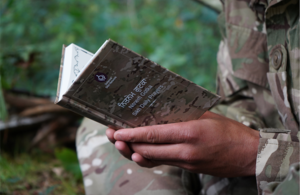
An operations-ready prayer book has been reintroduced for Sikh service personnel, reviving a tradition last seen in the British Indian Army during WW1.

In close-up, the book is being read outside.

The new prayerbook is waterproof and tearproof

Waterproof and tearproof, the Nitnem Gutka (Sikh Daily Prayers) is designed to be used in modern tactical environments. Nitnem translates to Daily Routine, and the collection of Sikh meditations will allow Sikh personnel to practice their faith at 3 different times of the day, wherever they are and in any conditions.

There is a long tradition of Sikhs carrying their religious text with them into conflict. In World Wars 1 and 2, Sikhs made up 20% of the British Indian Army. Over 120,000 Sikhs died and many more were injured from the trenches in France to the Jungles of Burma, and records from the time show Sikh troops with their prayer books in the deserts of Egypt and Mesopotamia.

The National Army Museum holds a copy of the original prayer book, pictured here with the new versions.

Provided by the Defence Sikh Network, the modernised Nitnem Gutka is designed to be hardy so it can cope with use on operations.

  • Made from a tactical nylon paper, called Polyart paper, it is water and tearproof, and is thread bound for ultimate strength.
  • It comes in two versions –camouflage for Army personnel and blue for the Navy and Air Force.
  • The Nitnem Gutka has been written in 3 languages; Gurmukhi the original form of Sikh text, Romanised English, and English translation to make the Nitnem Gutka as accessible as possible.
  • It also includes instruction and guidance on how to keep the Sikh scriptures in accordance with Sikh scripture code of conduct.

Watch the making of the new Nitnem Gutka

Maj Daljinder Singh Virdee, who led the project, said:

I was inspired to undertake this initiative when I saw old images of Sikh soldiers conducting their prayers in uniform. It has been a two-year journey to get to this point but makes all the efforts worthwhile knowing that Sikhs in UK Defence no matter where they serve across the world in whatever conditions can connect to their faith and find spiritual support through this Nitnem Gutka, for generations to come”.

The project has opened the door for other faith communities in Defence to create a similar product, such as the Hindu Gita.

Further information

  • Permission for conducting the project was sought from the highest seat of Sikh authority Jathedar Akaal Takht Bhai Harpreet Singh.
  • Printing was conducted in the UK and was supervised throughout by the DSN and a UK Sikh Organisation called Respect Your Guru.
  • This tradition was last seen during World War 1, where thousands of Sikhs fought and died fighting for the allies. Supported by the Ministry of Defence Diversity Inclusion team and community stakeholders, the Defence Sikh Network have produced a modern tactical version.

Published 14 November 2022


UK aid will save over one million lives from killer diseases

  • The UK is again contributing to the Global Fund to help fight three of the deadliest diseases around the world
  • The UK’s funding will save lives through prevention of and treatment for HIV, tuberculosis and malaria and strengthening health systems
  • The UK remains the third largest ever donor to the Global Fund

New UK aid support to the Global Fund will help fight AIDS, tuberculosis, and malaria around the world, Minister for Development Andrew Mitchell announced today (Monday 14 November).

As a founding supporter of the Global Fund, the UK is its third largest ever donor, having contributed £4.4 billion since its inception. The Global Fund has saved 50 million lives since it was set up by the G7 in 2002.

In 2021 alone, the Global Fund provided 23 million people with lifesaving antiretroviral therapy for HIV and 5.3 million with TB treatment and care. It also treated 148 million cases of malaria and helped distribute 133 million mosquito nets to protect families from malaria.

The UK is providing £1 billion over 3 years to the Global Fund, which will help save more than one million lives around the world and pay for interventions to help a much larger number of people stay safe.

From this new commitment:

  • 2 million people with HIV will receive antiretroviral therapy
  • More than 1 million people will receive TB treatment and care
  • 86 million mosquito nets will be distributed to protect children and families from malaria
  • Over 28 million new infections or cases across the three diseases will be avoided by diagnosing and treating those already infected to prevent further spread and supporting prevention services such as mosquito nets
  • Health systems will be strengthened which will help with pandemic preparedness

Minister for Development Andrew Mitchell said:

The UK and others founded the Global Fund because we refused to accept the loss of millions of lives every year to preventable and treatable diseases.

Countries with better health systems and healthier people are more likely to be stable and prosperous and this fund gives hope and opportunity to millions who would otherwise suffer. Malaria kills a child nearly every minute of every day. These are wholly preventable deaths, and the UK is dedicated to preventing them.

Executive Director of the Global Fund Peter Sands said:

We are incredibly grateful to the United Kingdom for this renewed commitment to accelerate progress toward ending HIV, tuberculosis and malaria, and strengthening health and community systems everywhere.

Over the past 20 years, British taxpayer support has helped save 50 million lives. The UK’s new £1 billion pledge is instrumental to helping us save millions more lives, get back on track following the reversals from COVID-19, and strengthen global health security.

Pledges for the Global Fund are just one element of the UK’s efforts to strengthen global health. We are the largest donor to Gavi’s core mission to save lives and protect people by increasing access to vaccines and we hosted the CEPI replenishment this year which raised $1.5 billion to reduce vaccine development time.

Through innovative technology, the UK is harnessing new developments to boost global health in the long term. For example, the Foreign, Commonwealth and Development Office has funded Liverpool-based Innovative Vector Control Consortium (IVCC) to create a new generation of bed nets, which kill mosquitoes resistant to traditional insecticides. To date, their innovations have averted an estimated 27 million malaria cases, especially in children.

Notes to editors:

  • This pledge is drawn from the current Official Development Assistance (ODA) allocation.
  • More information about the Global Fund’s work can be found here.
  • The funding is in response to the Global Fund’s seventh replenishment for 2023-2025.


More French officers to patrol beaches to tackle small boat crossings

Numbers of officers in northern France will increase by 40% over the coming months as a result of UK funding to step up action to reduce illegal small boat crossings, following a new UK and France agreement signed today.

The Home Secretary, Suella Braverman, is in France today (Monday 14 November) to finalise the arrangement with the French Interior Minister Gérald Darmanin. The new agreement lays the foundations for deeper UK-French co-operation to tackle illegal migration and marks the next step for the close operational partnership between the 2 countries which has prevented over 30,000 crossings this year.

The arrangement means, for the first time, specialist UK officers will also be embedded with their French counterparts, which will increase information sharing, improve understanding of the threat, and ensure UK expertise is at the heart of efforts to disrupt crossings and clamp down on people smugglers. This more integrated approach will also include strengthened operational co-operation, including joint UK-France analysis teams supporting the co-ordination and exchange of information by French-command HQ.

Home Secretary Suella Braverman said:

We must do everything we can to stop people making these dangerous journeys and crack down on the criminal gangs. This is a global challenge requiring global solutions, and it is in the interests of both the UK and French governments to work together to solve this complex problem.

There are no quick fixes, but this new arrangement will mean we can significantly increase the number of French gendarmes patrolling the beaches in northern France and ensure UK and French officers are working hand in hand to stop the people smugglers.

Joint working between UK and French officers so far has secured more than 140 convictions connected to people smuggling since the start of 2020 – and these criminals now face a combined 400 years behind bars.

The UK-France Joint Intelligence Cell, which has so far dismantled 55 organised crime groups and secured over 500 arrests since its inception in 2020, will also be expanded.

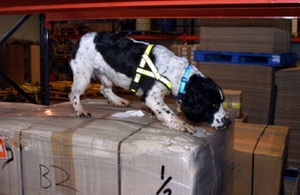
This latest multi-year arrangement between France and the UK is worth up to 72.2 million euros in 2022 to 2023. It will strengthen security at ports to help clamp down on illegal entry by funding investment in cutting edge surveillance technology, drones, detection dog teams, CCTV and helicopters to help detect and prevent crossings.

It will also go towards supporting reception and removal centres in France for migrants whose journeys to the UK are prevented, to further deter crossing attempts.

A new taskforce will also be set up, focused on reversing the recent rise in Albanian nationals and organised crime groups exploiting illegal migration routes into Western Europe and the UK.

This enhanced approach will boost joint British and French collaboration, which has already prevented over 30,000 illegal crossing attempts since the start of the year – more than 50% more than at the same stage last year.

The renewed partnership marks the next step in joint efforts to reduce these dangerous crossings and paves the way for deeper co-operation between the 2 countries in future, looking ahead to next year’s UK-France leaders’ summit.

The Home Secretary will travel to Frankfurt later this week, where she will meet her international counterparts from the G7 to discuss a range of priority issues including tackling serious organised crime. She will also meet with neighbouring countries as soon as possible as part of the UK’s ongoing co-operation with European partners to drive progress on the issue of illegal migration.

The UK’s work with international partners is a key part of the government’s wide-ranging approach to fix the broken asylum system, break the business model of people smugglers facilitating these journeys and clamp down on illegal migration.

This includes the measures introduced through the Nationality and Borders Act to prevent abuse of the system, such as introducing life sentences for people smugglers and increasing the maximum penalty for entering the UK illegally, as well as our world leading partnership with Rwanda which will see migrants who make these unnecessary journeys relocated there to have their claims considered and rebuild their lives.