News story: Animal medicines improvement notice: Aurivo (NI) Ltd , Omagh, County Tyrone

Lecturn

This notice was issued to Aurivo (NI) Ltd

The following contravened the Veterinary Medicines Regulation (VMR) 2013:

  • Failure to keep proper records for the supply of veterinary medicinal products classified as POM-VPS, contrary to Regulation 23 of the Veterinary Medicines Regulations 2013.

The improvements required:

  • All POM-VPS supplies must be prescribed by a SQP and full records kept of purchaser, product, date of supply, quantity and batch number. Records must be maintained for at least 5 years.

Published 12 February 2019


Press release: Change of British High Commissioner to Australia: March 2019

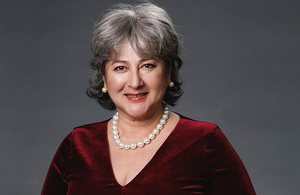
Mrs Vicki Treadell CMG MVO has been appointed British High Commissioner to Australia

Mrs Vicki Treadell CMG MVO has been appointed British High Commissioner to Australia

Mrs Vicki Treadell CMG MVO has been appointed British High Commissioner to Australia in succession to Mrs Menna Rawlings CMG who will be transferring to another Diplomatic Service appointment. Mrs Treadell will take up her appointment in March 2019.

CURRICULUM VITAE

Full name: Victoria Marguerite Treadell

Married to: Alan Treadell

2014 to Present Kuala Lumpur, British High Commissioner
2010 to 2014 Wellington, British High Commissioner
2006 to 2010 Mumbai, Deputy High Commissioner
2002 to 2005 UKTI, Director, North West of England
1999 to 2002 BTI, Deputy Director, Corporate Resources Group
1998 to 1999 FCO/DTI, Head of Professionalism in Trade Unit
1996 to 1998 FCO, Desk Officer, Latin America Department
1993 to 1996 FCO/DTI, Deputy Head of Export Services Section
1992 to 1993 FCO, British Council Quinquennial Review Team
1990 to 1992 FCO, Assistant Desk Officer, Resource Policy Department
1989 to 1990 Kuala Lumpur, CHOGM and State Visits Officer
1986 to 1989 Kuala Lumpur, Assistant Management Officer
1985 FCO, Desk Officer, Western Europe Department
1983 to 1985 FCO, Diary Secretary, Permanent Under Secretary’s Office
1981 to 1983 Islamabad, Visa Support Officer
1979 to 1981 FCO, Economic Relations Department

Further information

Published 12 February 2019


Statement to parliament: Government response and consultation on taxi and private hire vehicle licensing

I am today announcing to the House the launching of a consultation on statutory guidance to be issued to taxi and private hire vehicle (PHV) licensing authorities and that the government has issued its response to the report of the Task and Finish Group on taxi and private hire vehicle licensing.

The draft statutory guidance proposes a range of robust measures to protect taxi and PHV passengers, particularly those most vulnerable. Government and licensing authorities must work together to ensure that, above all else, the taxi and PHV services the public use are safe. The consultation on this guidance will run until 22 April 2019.

The taxi and PHV trade has experienced significant and rapid changes in recent years which have brought with them benefits but have exacerbated concerns over the existing structure of the industry and the environment in which it operates. In particular, many of these changes have highlighted inconsistencies in the licencing standards, and in the rigour with which these standards are applied by some licencing authorities.

The recommendations proposed in the draft statutory guidance are a result of extensive consultation, and in particular learning from the best practice of exemplary licensing authorities.

Consulting on statutory guidance is an important first step to reforming the way the taxi and PHV sector is regulated.

In addition to the statutory guidance consultation, the government is today publishing its response to the report of the Chair of the Task and Finish Group. The government has set out its plans to introduce legislation and bring forward the urgent reforms necessary. I would like to take this opportunity to thank the Chair, Professor Mohammed Abdel-Haq, for his report, and the members of the group for their dedication in considering the issues facing the trade and their potential remedies.

Government will when time allows bring forward legislation to introduce national minimum standards for taxi and PHV licensing, reinforcing the consistently high standards that the statutory guidance will bring to the sector. To ensure that drivers are under the same level of scrutiny when operating away from their licensing area we will legislate to enable enforcement and compliance checks to be conducted by any licensing officer against any vehicle regardless of where they have been licensed. Where drivers or vehicles fail to meet the national minimum standards, they will be able to take appropriate action to protect the public. Underpinning these measures will be the introduction of a national licensing database to assist the sharing of relevant information between licensing authorities and other bodies necessary to ensure that all those in the trade are ‘fit and proper’ and warrant the trust that is placed in them by the public. This database will build on the work of the Local Government Association and the National Anti-Fraud Network in establishing the National Register of Revocation and Refusals.

Taxis and PHVs provide a vital community service which is used by many people; helping them get to the shops, see their friends, or go to work or school. We will work with the trade, drivers and regulators as well as passenger groups to meet the challenges the sector is expected to face in the future and ensure that change is not at the expense of a safe and well-functioning market.

This work is already underway thorough the Future of Mobility Grand Challenge and the Law Commission’s consideration on enabling autonomous vehicles. I would encourage all to engage on these issues and help shape a successful sector that all can be proud of.


News story: New guidance on taxi licensing to protect passengers

Passengers in taxis and minicabs could be kept safer under strict new licensing guidelines planned by the Department for Transport.

The government has today (12 February 2019) launched a consultation on robust new rules for licensing authorities outlining how they should use their powers to protect vulnerable passengers from harm.

These guidelines would improve safety with enhanced safety standards for taxi and private hire vehicles, which will be consistent across the country. New safety measures proposed include recommending councils ensure every driver undergoes enhanced criminal record and background checks.

New guidance on taxi licensing to protect passengers video

Taxis Minister Nusrat Ghani said:

While the vast majority of drivers are safe and act responsibly, we have seen too many cases where taxi and minicab drivers have used their job to prey on vulnerable people, women and children.

These rules would make sure that drivers are fit to carry passengers, keeping people safe while stopping those with bad intentions from getting behind the wheel of a taxi or minicab.

The consultation will run up until 22 April and comes as part of the government’s response to the Task and Finish Group’s report on taxi and private hire vehicle licensing, which made a series of recommendations to reform the sector in September.

The government has also pledged to legislate on national minimum standards for drivers, establish a national licensing database and look at restricting drivers operating hundreds of miles away from where they are licensed.

As part of these minimum standards, the department will consider whether vehicles should be fitted with CCTV. These encrypted systems mean footage can only be accessed if there is a crime reported.


Press release: Cairncross report recommends levelling of the playing field for UK journalism

  • Online platforms should have a ‘news quality obligation’ to improve trust in news they host, overseen by a regulator

  • Government should explore direct funding for local news and new tax reliefs to support public interest journalism

  • A new Institute for Public Interest News should focus on the future of local and regional press and oversee a new innovation fund

Read the the final report.

The independent review, undertaken by Dame Frances Cairncross, was tasked by the Prime Minister in 2018 with investigating the sustainability of the production and distribution of high-quality journalism.

It comes as significant changes to technology and consumer behaviour are posing problems for high-quality journalism, both in the UK and globally.

Dame Frances Cairncross said:

The proposals I have put forward have the potential to improve the outlook for high quality journalism. They are designed to encourage new models to emerge, with the help of innovation not just in technology but in business systems and journalistic techniques.

DCMS Secretary of State Jeremy Wright said:

A healthy democracy needs high quality journalism to thrive and this report sets out the challenges to putting our news media on a stronger and more sustainable footing, in the face of changing technology and rising disinformation. There are some things we can take action on immediately while others will need further careful consideration with stakeholders on the best way forward.

Dame Frances was advised by a panel of experts from the local and national press, digital and physical publishers and advertising. Her recommendations include measures to tackle the uneven balance of power between news publishers and the online platforms that distribute their content, and to address the growing risks to the future provision of public-interest news.

It also concludes that intervention may be needed to improve people’s ability to assess the quality of online news, and to measure their engagement with public interest news. The key recommendations are:

  • New codes of conduct to rebalance the relationship between publishers and online platforms;
  • The CMA to investigate the online advertising market to ensure fair competition;
  • Online platforms’ efforts to improve their users’ news experience should be placed under regulatory supervision;
  • Ofcom should explore the market impact of BBC News, and whether its inappropriately steps into areas better served by commercial news providers;
  • The BBC should do more to help local publishers and think further about how its news provision can act as a complement to commercial news;
  • A new independent Institute should be created to ensure the future provision of public interest news;
  • A new Innovation Fund should be launched, aiming to improve the supply of public interest news;
  • New forms of tax reliefs to encourage payments for online news content and support local and investigative journalism;
  • Expanding financial support for local news by extending the BBC’s Local Democracy Reporting Service;
  • Developing a media literacy strategy alongside Ofcom, industry and stakeholders.

The Government will now consider all of the recommendations in more detail. To inform this, the Culture Secretary will write immediately to the Competition and Markets Authority, Ofcom and the Chair of the Charity Commission to open discussions about how best to take forward the recommendations which fall within their remits. The Government will respond fully to the report later this year.

ENDS

The review has looked at the overall state of the news media market, the threats to the financial sustainability of publishers, the impact of search engines and social media platforms, and the role of digital advertising. Some of the report’s key findings include:

  • Half of UK adults worry about “fake news” or disinformation. A quarter do not know how to verify sources of information they find online. So users need to get the right skills to spot fake news, and platforms must identify and quickly remove the deliberate spread of misinformation on their services.

  • Although news can be found on television and radio, written journalism (whether in print or online) originates the largest quantity of original journalism and is most at risk – particularly investigative journalism and democracy reporting.

A Mediatique report Overview of recent market dynamics in the UK press, April 2018 commissioned by DCMS as the part of the Cairncross Review found:

  • Print advertising revenues have dropped by more than two-thirds in the ten years to 2017;
  • Print circulation of national papers fell from 11.5 million daily copies in 2008 to 5.8 million in 2018 and for local papers from 63.4 million weekly in 2007 to 31.4 million weekly in 2017;
  • Sales of both national and local printed papers fell by roughly half between 2007 and 2017, and are still declining;
  • The number of full-time frontline journalists in the UK has dropped from an estimated 23,000 in 2007, to just 17,000 today, and the numbers are still declining.

A report Online Advertising in the UK by Plum Consulting, commissioned by DCMS as the part of the Cairncross Review (and available as an annex to the Review) found:

  • UK internet advertising expenditure increased from £3.5 billion in 2008 to £11.5 billion in 2017, a compound annual growth rate of 14%.
  • Publishers rely on display advertising for their revenue online – which in the last decade has transformed into a complex, automated system known as programmatic advertising.
  • An estimated average of £0.62 of every £1 spent on programmatic advertising goes to the publisher – though this can range from £0.43 to £0.72. *Collectively, Facebook and Google were estimated to have accounted for over half (54%) of all UK online advertising revenues in 2017.
  • The major online platforms collect multiple first-party datasets from large numbers of logged-in users. They generally, they do not share data with third-parties, including publishers.

Dame Frances Cairncross is a former economic journalist, author and academic administrator. She is currently Chair of the Court of Heriot-Watt University and a Trustee at the Natural History Museum. Dame Frances was Rector of Exeter College, Oxford University; a senior editor on The Economist; and principal economic columnist for the Guardian. In 2014 she was made a Dame of the British Empire for services to education. She is the author of a number of books, including “The Death of Distance: How the Communications Revolution is Changing our Lives” and “Costing the Earth: The Challenge for Governments, the Opportunities for Business”. Dame Frances is married to financial journalist Hamish McRae.