Inspection Report Published: An inspection of the immigration system as it relates to the Higher Education sector

News story

This inspection examined how the immigration system serves the needs of the higher education sector, rather than focusing narrowly on the operational functions within the Home Office.

Graduation cap

Publishing the report, David Neal said:

I welcome the publication of this report, which looks at how the immigration system relates to the Higher Education sector. To facilitate the movement of international students and staff, the higher education sector is reliant on the Home Office for an efficient and effective immigration system.

The inspection found that the Home Office was performing well overall and has developed good levels of engagement with representative bodies and higher education institutions. Collaborative working and consultation with external stakeholders has fed into the development of new routes, Simplification of the Immigration Rules and changes to associated guidance.

However, the Home Office should look to review the services provided by the Premium Customer Service Teams. Currently there is a disconnect between what the Home Office envisaged the service offer to be and what the higher education sector expected from that offer. This could be resolved through engagement between both parties to draw up a collaborative and agreed set of service expectations.

Also, compliance requirements were considered by stakeholders to be overly burdensome. The Home Office should reassess whether their current expectations are proportionate with the risks posed by international students.

I made three recommendations in this report. I am pleased that the Home Office accepted all of these recommendations in full and that work is already underway to tackle the issues raised.

Published 30 June 2022


Inspection Report Published: A re-inspection of Napier Barracks March 2022

News story

This re-inspection reviewed the improvements the Home Office had made to the management and operation of Napier Barracks following the ICIBI/HMIP inspection of February 2021.

Accommodation icon

Publishing the report, David Neal said:

I welcome the publication of this report on the ICIBI’s second inspection of Napier Barracks. This re-inspection examined the improvements to which the Home Office committed in its response to the report on the first inspection (with Her Majesty’s Inspectorate of Prisons) of Napier Barracks and Penally Camp in February 2021.

The re-inspection found that the management and oversight of Napier have improved, with strong working relationships in place between the Home Office, the provider, and its subcontractors. The more positive atmosphere at the site reflects the work undertaken to improve the facilities and activities, and the introduction of a 90-day maximum duration of stay which gives residents more certainty over the time they will spend at Napier. There was also evidence of increased engagement with non-governmental organisations and community groups, all of which contribute to the positive mental and physical wellbeing of residents. This engagement is not expensive – it is largely a matter of coordination which harnesses the goodwill of the local community. The effect undoubtedly contributes to a better atmosphere in the camp and introduces humanity and kindness into what can otherwise be a dispiriting waiting game.

I was disappointed that work had not been undertaken to improve the poor condition of the shared dormitories, with those accommodated there reporting a lack of privacy, unacceptable noise levels, and disruption to sleep. I am concerned that a timescale has not been set for the completion of any improvements despite Home Office plans to increase the number of residents accommodated on the site.

This inspection observed conditions at Napier Barracks that should have been in place over a year ago. The agility of the Home Office to respond to a dynamic situation, with staff with the appropriate level of skills and experience to ensure that contractors are delivering what they are paid to deliver, is key to the welfare of residents.

I am still looking for evidence that the Home Office has introduced a template for the standing up of future sites that incorporates the lessons learned from Napier. Considering the numbers of people involved and the amount of money being spent, there should be a ‘playbook’ that captures lessons learned and best practice from tactical experience on the ground and recommendations made to improve the service. The lack of Home Office engagement with the local community prior to the establishment of an accommodation centre at Linton-on-Ouse suggests that it still has some way to go.

I made 4 recommendations in this report. The Home Office has accepted 3 of them and partially accepted 1. I am pleased that work is already under way to implement them.

Published 30 June 2022


Environment Agency calls on sports industry to support Plastic Free July

Campaign toolkits have been sent to over 100 organisations inviting them to raise awareness of environmentally-friendly alternatives to single-use plastic items.

The toolkit has been created by the Environment Agency’s plastics and sustainability team as part of the Interreg Preventing Plastic Pollution project.  The aim is to embed positive behaviour change. Experts say that 50% of all plastic produced is for single-use items – items that are often only used a few times and then discarded, which may pollute rivers and oceans, causing harm to wildlife.

Environment Agency project lead Hannah Amor said:

Everyone has a part to play in minimising their avoidable plastic consumption and carbon footprint to help conserve the natural world.

Sport can influence thousands of people that may otherwise not engage with environmental issues. Three billion people watched the Tokyo Olympics. That is a huge platform to showcase sustainability and make it the new norm for people taking part in and watching sport.

We hope this campaign will encourage people from all walks of life involved in sport to take even the smallest step, like wearing a hydration belt or carrying a resuable cup. Collectively, changing our daily habits can make a huge difference.

The toolkit includes twice-weekly posts encouraging deposit return schemes, re-wearing old kit and avoiding single-use plastic waste at celebrations. The posts also signpost to new sustainability guidance for sports events, stadiums and community clubs, and encourage people to sign up to the Big Plastic Pledge – a global movement founded by Olympic gold medallist Hannah Mills.

The campaign will also run on the Interreg Preventing Plastic Pollution Twitter feed at @Plastic_EU, with the first post going live on Friday 1 July (tomorrow).

Plastic Free July is a global movement that helps millions of people be part of the solution to plastic pollution. It was launched by the Plastic Free Foundation which aims to see a world free of plastic waste.

Environment Agency role

As a regulator, preventing waste plastic entering the environment by cracking down on waste crime and poor waste management is a key activity for the Environment Agency. As an influencer, it also has an ambition to promote better environmental practices that result in a reduction of plastic waste, helping to achieve the goals and commitments outlined in its five year plan to create better places for people and wildlife, and the government’s 25 Year Environment Plan.

Preventing Plastic Pollution (PPP)

PPP is a €14million funded EU INTERREG VA France (Channel) England Programme project co-financed by the European Regional Development Fund which works mainly across  pilot catchments: Brest Harbour, Bay of Douarnenez, Bay of Veys, Test and Itchen, East Hampshire, Poole Harbour,  Medway, Tamar, and the Great Ouse catchments.

Working in partnership with 18 organisations from across France and England, PPP seeks to understand and reduce the impacts of plastic pollution in the river and marine environments. By looking at the catchment from source to sea, the project identifies and targets hotspots for plastic, embeds behaviour change in local communities and businesses, and implement effective solutions and alternatives.

Partners are the Environment Agency, Department for Environment, Food and Rural Affairs, Queen Mary University of London, LABOCEA Conseil, Expertise et Analyses, Syndicat mixte établissement public de gestion et d’aménagement de la baie de Douarnenez, Office Français De La Biodiversité, Parc naturel marin d’Iroise, Brest Métropole, Centre national de la recherche scientifique, Counseil départemental de la Manche, Institut français de recherche pour l’exploitation de la mer, The Rivers Trust, Syndicat de bassin de l’Elorn, ACTIMAR, Brest’aim, Westcountry Rivers Trust, South East Rivers Trust, and Plymouth City Council.


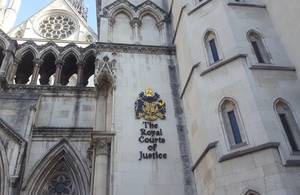

Increased sentence for man convicted of rape and child sex offences

News story

A Cambridgeshire man will spend longer in prison for rape and child sex offences

A Cambridgeshire man found guilty of rape and sexual offences against a child will spend longer in prison after the Solicitor General, Alex Chalk QC MP referred his original sentence to the Court of Appeal as unduly lenient.

Elton Townend-Jones, 52, engaged in a course of sexual abuse against the victim when she was between the ages of 10 and 14, which included raping her. There were at least 25 occasions where the offender assaulted the victim by penetration whilst she was under the age of 13.

On 23 March 2022, Townend-Jones was sentenced to a Special Custodial Sentence of 14 years’ imprisonment with a 1-year extended licence at Cambridge Crown Court.  This was later increased on 6 May 2022 by Cambridge Crown Court to 17 years’ imprisonment with a 1-year extended licence.

Following the sentencing the Solicitor General, Alex Chalk QC MP, referred Townend-Jones’ sentence to the Court of Appeal under the Unduly Lenient Sentence scheme.

On 30 June the Court of Appeal found his original sentence to be unduly lenient and increased it 20 years’ imprisonment with a 1-year extended licence.

Speaking after the hearing, the Solicitor General, Alex Chalk QC MP said:

Elton Townend-Jones engaged in a sustained and depraved course of sexual abuse against a child. I believed that his crimes warranted a stronger punishment, so I welcome the decision of the Court of Appeal to increase his sentence today.

Published 30 June 2022


Somerset farmer fined second time for polluting Frome watercourse

The case was heard at North Somerset Magistrates Court on 28 June 2022.

Cross Keys Farms Ltd pleaded guilty to causing an unpermitted discharge of slurry.  This polluted the Somerset Frome river in Frome, turning it brown and smelly in August 2020.  The slurry pollution killed more than 120 adult fish, including many large pike, roach and chub.

He was fined £12,000 and ordered to pay costs of £13,631.08.

In 2017 Aylesbury was found guilty of polluting this same stretch of the River Frome in 2016, killing more than 1,700 fish.

Members of the public alerted the Environment Agency to the pollution on 20 August 2020.  Local residents carrying out ‘citizen science’ river monitoring provided helpful evidence for our investigation.

Reminded of the 2016 pollution incident, the sight of dead and dying fish distressed many people.  One local fisherman described feeling ‘physically sick’ from the strong putrid smell of dead fish and said the sight of the dead fish was ‘heart breaking’.

The pollution came from slurry that had been washed out of a soiled cattle trailer and rinsed out on to a concrete yard at Bollow Farm, Silver Lane, East Woodlands.

Also, a pile of slurry left open to the elements was washed into the surface water drain, ending up in the river.

Environment Officers found the ditch and river smelt strongly of slurry and low in dissolved oxygen. Investigations also showed that the slurry pollution resulted in the death of most invertebrates over more than 2.6 kilometres downstream.

Andy Grant, Environment Officer, said:

It was very disappointing to find another pollution from Bellow Farm following a previous prosecution for a major incident. The river was just beginning to recover and the fish population was showing signs of improving.

Informing us of the slurry spillage and keeping an eye on nearby watercourses are two simple actions the farmer should have taken to protect the local environment.

We restocked the river following the 2016 incident and it is so disappointing to see that work undone.

Luke Kozak , a Project Manager from the Environment Agency’s Environment Programme Team said:

We are actively working with our partners in the Somerset Frome catchment to improve the water quality and habitat for people and for wildlife. Farming Wildlife advisory Group SW are leading an EA funded project focussed on working with farmers to improve their land management practices in order to reduce sediment reaching the river.

The Wild Trout Trust are leading a project in Frome Town Centre to enhance river habitat, which will also investigate the possibility of removing impoundments, increasing habitat connectivity and improving fish passage.

If anyone is concerned about pollution or an environmental incident they should call the Environment Agency’s 24-hour incident hotline on 0800 80 70 60.

Charges

  • Between 18 August 2020 and 27 August 2020 Michael Aylesbury did cause an unpermitted water discharge activity, namely the discharge of poisonous, noxious or polluting matter from Bollow Farm, Silver Lane, East Woodlands, Frome, Somerset into inland fresh waters

Contrary to Regulations 12(1)(b) and Regulation 38(1)(a) of the Environmental Permitting (England and Wales) Regulations 2016.

  • On or before the 20 August 2020 at Bollow Farm, Silver Lane, East Woodlands, Somerset Michael Aylesbury  failed to ensure that slurry was stored in accordance with Regulation 4(1) of the Water Resources (Control of Pollution) (Silage, Slurry and agricultural Fuel Oil) (England) Regulations 2010

Contrary to Regulation 10(1) of the Water Resources (Control of Pollution) (Silage, Slurry and agricultural Fuel Oil) (England) Regulations 2010.

Citizen science

The Bristol Avon Rivers Trust (BART) offer opportunities to carry out citizen science monitoring through their ‘RiverBlitz’ project and ‘River Fly Monitoring’ – further information can be found by visiting the BART website https://bristolavonriverstrust.org/.