Most significant change to taxi and private hire vehicle accessibility legislation in 12 years

  • new laws will ensure disabled people receive help and can travel with dignity and confidence
  • disabled people protected against extra charges and rip-off fares
  • changes will benefit 13.7 million people

New laws will ensure the 13.7 million disabled people in England, Scotland and Wales receive the assistance they need and will not be charged over the odds when using taxis and private hire vehicles (PHVs).

The new Taxis and Private Hire Vehicles (Disabled Persons) Act 2022, which came into force on 28 June, is the most significant change to taxi accessibility legislation since the Equality Act was introduced 12 years ago.

The 2022 Act amends the Equality Act 2010 to place duties on taxi drivers and PHV drivers and operators, so any disabled person has specific rights and protections to be transported and receive assistance when using a taxi or PHV without being charged extra.

As part of the amendments, taxi and PHV drivers could face fines of up to £1,000 if they fail to provide reasonable mobility assistance to disabled passengers taking a pre-booked vehicle.

This will also ensure that visually impaired passengers will be assisted by drivers to help them identify or find the vehicle. There will also be a duty for local authorities to publicly identify wheelchair-accessible vehicles in their fleets.

The measures will apply to drivers in England, Scotland and Wales and will help to provide consistency of experience for affected passengers.

Wendy Morton, Accessibility Minister, said:

It is fantastic that the updated legislation and guidance will help ensure that all disabled people receive assistance when using taxis and PHVs.

Disabled people account for around a fifth of the population and our Inclusive Transport Strategy is making travel more accessible for all.

The Act was a Private Members’ Bill introduced by Jeremy Wright QC MP. Another change will mean that even drivers granted exemption from assistance duties on account of medical needs must still accept the carriage of disabled passengers and will not be able to charge them more than others.

Disability affects 13.7 million people in Great Britain. It includes physical and sensory conditions, as well as impairments that are ‘non-visible’.

The amendments to the Equality Act 2010 have been developed by the Department for Transport (DfT) as part of work in support of its 2018 Inclusive Transport Strategy and cross-government commitments on improving access to taxi and PHV services and will benefit a wide range of disabled passengers, as well as their friends and family.

In March 2022, DfT announced a £2.5 million package to help disabled people travel more confidently. This included funding towards mobility centres across England and to enhance access to lifeline ferry services.

The updated legislation will build on the commitment we made and will make travel more accessible for all.


National recognition for Sellafield Ltd apprenticeship programme

News story

Sellafield Ltd has been listed in the top 100 apprenticeship employers in England for 2022.

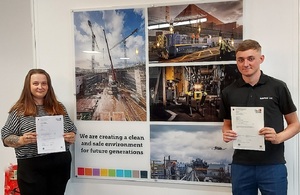
All twelve Level 3 Business Administration standard and City & Guilds Level 3 Diplomas passed their end point assessments gaining distinctions.

All 12 Level 3 Business Administration standard and City & Guilds Level 3 Diplomas passed their end point assessments gaining distinctions.

The annual rankings, produced by the Department for Education, highlight some of the country’s most successful programmes that help future apprentices identify opportunities with leading employers.

Sellafield Ltd recruits up to 200 apprentices each year across 18 schemes, and currently has 600 in training.

This year, circa 200 will complete their apprenticeships across multiple disciplines, from Level 2 (GCSE equivalent) to Level 6 (degree level) schemes.

Donna Connor, Sellafield Ltd’s head of education and skills said:

Being listed in the top 100 is endorsement of our excellent training programme, working in partnership with our training providers across a wide range of disciplines.

There is a really exciting career ahead for our young people, who have the opportunity to carry out the nationally important work of cleaning up the country’s highest hazards and creating a clean and safe environment for future generations.

Over 33% of our current apprentice cohort are female and we retain 95% of our apprentices when they complete their training. I’m delighted that our schemes have received this recognition.

Amongst our many successes this year includes 12 Business Administration students. Business Administration apprentice scheme lead Louise McKain said:

Sellafield Ltd has offered a successful Business Administration apprentice scheme for a number of years which has proven popular with people from different backgrounds and levels of experience.

During the 2 year scheme, our apprentices are provided with 3 placements where they acquire skills to provide quality business administration support to the management teams across a variety of departments.

This year, the 2020 intake of students have obtained Level 3 Business Administration standard and City & Guilds Level 3 Diplomas, and I’m proud to say that for the first time we have seen all 12 pass their end point assessments gaining distinctions.

Published 1 July 2022


TRA helps preserve critical steel supplies to the UK

News story

The Trade Remedies Authority (TRA) has recommended changes to the tariff rate quotas (TRQs) on imports of certain steel products from Russia and Belarus.

In light of current UK sanctions on imports from Russia and Belarus, the TRA initiated a Tariff Rate Quota (TRQ) review of steel imports covered by the UK’s safeguard trade remedy measure. The TRA assessed whether the quotas for these countries should be re-allocated to avoid a potential shortage of steel in the UK. The Secretary of State for International Trade has accepted the TRA recommendation and the HMRC notice detailing the changes was published on Thursday 30 June. The tariff rate quotas (TRQs) will change from 1 July 2022.

Avoiding a shortfall in critical steel supplies to the UK

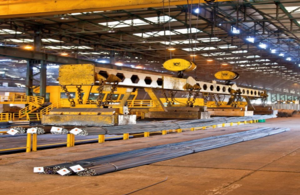
As with any safeguard measure, the UK has set quotas for different countries or regions to import a certain amount of steel tariff-free into the UK. Once their quota is exhausted, they have to pay a higher tariff rate. Russia and Belarus between them accounted for around 22% of the UK’s supply of rebar. The TRA has recommended reallocating the Russia and Belarus quota to other countries and regions including Ukraine, the EU, Turkey and Taiwan.

TRA Chief Executive Oliver Griffiths said: “We have responded to changes in the international steel market following the Russian invasion of Ukraine. Reallocating quotas currently held by Russia and Belarus will provide UK firms in the construction, engineering and automotive sectors with access to higher volumes of duty-free steel.”

What this means for importers and users of steel in the UK

There are two product categories affected by the re-allocation. Category 1 (non-alloy and other alloy hot rolled sheets and strips) are used in yellow goods, construction, tube-making and the production of downstream steel products. Category 13 (rebars) are used in construction, the automotive industry, engineering and white goods manufacture. New tariff rates may apply to imports of steel in these categories, depending on which country they come from.

Wider changes to the steel safeguards measure

The Government confirmed this week in a statement that it plans to maintain steel safeguard tariffs on 15 categories of steel imports for two further years, to 2024. The Trade Remedies Authority completed its analysis of the measure under Government direction after the work was called in by the Secretary of State for International Trade. The TRA’s final Report of Findings is available on its public file.

The TRA has also completed two further TRQ reviews related to the steel safeguard measure. These assess:

  • whether imports from developing countries exceed 3% of total UK imports, which is the threshold for developing countries to be subject to the safeguard measure

  • updates to HMRC data in relation to a small subset of steel product categories.

The TRA’s Recommendations on all three TRQ reviews are incorporated in the final TRQ allocations for the safeguard measure and are confirmed in the taxation notice which takes effect from 1 July.

Background information

  • The Trade Remedies Authority is the UK body that investigates whether trade remedies measures are needed on imports. Trade remedy investigations were carried out by the EU Commission on the UK’s behalf until the UK left the EU.

  • Safeguard measures are one of the three types of trade remedies – along with anti-dumping measures which counter goods being ‘dumped’ into countries at prices below their normal price in their country of origin and countervailing measures against countervailable subsidies – that are allowed under World Trade Organization (WTO) rules.

  • Forty-four EU trade remedies measures that were of interest to UK producers were carried across into UK law when the UK left the EU and the TRA needs to review each one to check if it is suitable for UK needs.

  • As part of this process, the TRA reviewed a safeguard measure on certain steel products, reporting its recommendation in June 2021. The TRA recommended that measures should be extended on some steel products but removed on others, where they were not needed. The TRA was subsequently asked to reconsider this decision. The reconsideration was ‘called in’ by the Secretary of State for International Trade. The TRA completed the reconsideration under her direction.

  • Tariff Rate Quotas (TRQs) are part of the World Trade Organization (WTO) framework. They specify how much of a product can be imported from a country before its imports are subject to higher tariffs. The UK’s trade remedies system follows WTO rules and is designed to make sure UK industries are not damaged by unfair trade practices or unexpected surges in imports.

  • The UK has the power to review its Tariff Rate Quotas on imports covered by safeguard measures to make sure its safeguard measures remain up to date and useful. This is not part of the reconsideration process.

Published 1 July 2022


9-year bankruptcy restrictions for Indian restaurant owner

Rathudi Mahesh Manglanand, 47, from Pontypridd, was a sole trader who ran the Chutney Roti Indian Restaurant in Cardiff.

The restaurant had already ceased trading prior to the beginning of the pandemic and was therefore not eligible for Covid-19 financial assistance schemes.

However, in April 2020 Manglanand applied for a £25,000 grant from his local council and the following month he applied for a £18,000 Bounce Back Loan.

Manglanand subsequently applied for his own bankruptcy in July 2021 at which point the Insolvency Service began investigating and uncovered his misuse of the Covid-19 financial support schemes.

Manglanand accepted that his business had already ceased trading and told investigators that he had been drinking heavily and “was not thinking straight”. He estimated he had lost around £30,000 though gambling in the space of a year.

The Secretary of State for Business, Energy and Industrial Strategy accepted a nine-year bankruptcy restrictions undertaking from Rathudi Manglanand, which commences on 20 June 2022.

In their capacity as Rathudi Manglanand’s trustee in bankruptcy, the Official Receiver is assessing assets available in order recover the Covid-19 support funding.

Gavin Seymour, Deputy Official Receiver at the Insolvency Service, said:

The Covid-19 support schemes generously provided taxpayer money to support genuine businesses and anyone who abused those schemes should expect to be caught and punished.

Notes to editors

Rathudi Manglanand is of Pontypridd and his date of birth is September 1975.

Details of Rathudi Manglanand’s undertaking is available on the Individual Insolvency Register

Bankruptcy restrictions are wide ranging. The effects are the same whether you are subject to a bankruptcy restrictions order or to an undertaking. Guidance on the main statutory consequences flowing from a bankruptcy restrictions order or undertaking.

Information about the work of the Insolvency Service, and how to complain about financial misconduct.

Contact Press Office

You can also follow the Insolvency Service on:


Government launches consultation on reforms to the funding arrangements for the Homelessness Prevention Grant for 2023/24 onwards

News story

Government to consult local authorities on reforms that will ensure funding covering 2023/24 onwards is allocated fairly and based on current need.

The government has today (1 July 2022) launched a consultation seeking views from local authorities and other interested stakeholders on a review of funding arrangements and conditions for the Homelessness Prevention Grant for 2023/24 onwards.

The Homelessness Prevention Grant is funding allocated to all local housing authorities in England.

They can use the funding flexibly to support their homelessness and rough sleeping strategies, such as:

  • offering financial support for people to find a new home

  • working with landlords to prevent evictions

  • providing temporary accommodation

The consultation will review a new funding formula based on current homelessness pressures to make sure that funding is distributed fairly to local authorities and is driven by a current picture of need.

The government is also consulting on changing the grant conditions to improve its understanding of how the grant is spent and making the payments in two phases, with the second payment released when accurate data has been returned.

The consultation will run for 8 weeks. Funding allocations will be finalised and announced later this year.

Published 1 July 2022