Lord Ahmad: Our support for Ukraine must not waver

Madam President, Secretary General, Your Excellencies, Lords, Ladies & Gentlemen, welcome to the United Kingdom and welcome to Birmingham.

It is a great honour to be here together with Mr Speaker, Sir Lindsay Hoyle, in welcoming you to both our country and our second city.

In my introduction it was said that I am, amongst other things, Minister of State for the Commonwealth and we’re looking forward to welcoming 56 countries of the Commonwealth to our sporting event a few weeks from now.

It is also a real honour to welcome all of you. John Whittingdale and I have known each other many years and it was interesting for him to raise the British weather. Part of my title includes ‘Wimbledon’ where some of you will notice that there’s a small tournament is going on. I notice the Ambassador from Kazakhstan is here and is a great tennis player. Wimbledon without rain is a non event so it was no surprise to see the weather here.

As the UK Minister with a wide range of responsibilities it’s a huge honour to be the Minister responsible for the OSCE. And to John and the whole of the UK Delegation, I pay tribute to them for their absolute devotion and dedication to the OSCE. I thank them also for their valuable insights they provide to me.

I’ve seen myself through working with the OSCE, its incredible work, from military transparency, to human rights, to democracy and the environment. The list goes on. But as all of us realise – indeed His Royal Highness, the Prince of Wales in his letter to the OSCE reflects on this very issue – today the work and objectives of the OSCE are under greater threat than at any time in its history. And it is for all of us, irrespective of the role we play, to stand up and defend them.

This is why I am delighted to have this opportunity, not only to welcome you to the UK, but to address you, colleagues from across parliament, as to your role which for all of us is extremely vital.

Together, all countries – the UK, our allies across the world – have demonstrated strength and unity in our response to Mr Putin’s barbaric, premeditated invasion of the sovereign nation of Ukraine.

For our part in the UK, whether it’s diplomacy, humanitarian support, economic reconstruction – indeed the Foreign Secretary, Liz Truss will be attending the Lugano conference next week on this very objective – or indeed standing with Ukraine through support of its military, we stand with Ukraine.

We also continue to support Ukraine. We have colleagues from across different parties, different perspectives here in the UK and across other countries. But one thing I can say with absolute confidence – and I am grateful to colleagues and Shadow Ministers from Her Majesty’s opposition – that when it comes to the issue of Ukraine we are absolutely at one. There is no difference and nor should there be.

The UK stands firm in our support to Ukraine in its fight, and have committed £1.3 billion in military aid and operational support, including support for weapons.

Our economic and humanitarian support totals nearly £400 million. It includes food, medical supplies and shelter kits.

And as the UK Minister for sanctions, we are also ensuring that Mr Putin’s regime pays an economic price for its actions, and we have now sanctioned more than 1,000 individuals and 100 entities.

But it is important when we look to act in this particular way – particularly when it comes to the issue of sanctions – that we stand together with our allies and friends from across the world. For sanctions really hit hard when we work together as one.

This unprovoked, illegal war is, of course, far more than an attack on Ukraine. It is also an attack on the very founding principles of the OSCE. The pillars on which European security has been built.

Russia appears to believe that these principles designed to keep us all safe – principles that all sides agreed to, even during the Cold War, and yes, by Russia itself – are no longer in its interest.

Simply put, this is a tragedy.

Yet, even as Russia flagrantly disregards commitments itself signed up to – including the Minsk agreement – the OSCE is still proving its value.

Prior to the invasion, we drew heavily on its confidence-building measures in an effort together to avert this crisis.

The UK strongly supported Ukraine in its use of the Vienna Document, giving Russia the opportunity to explain its build-up of troops.

Yet tragically, every week since the invasion – notwithstanding the fact that we have gathered around the table in Vienna to hold Russia to account – Russia is still continuing its assault on Ukraine.

The UK has twice joined the majority of OSCE states in triggering the Moscow Mechanism, launching missions to document the impacts of the invasion.

As you know, the first report from April exposed the true face of Mr Putin’s war, revealing widespread human rights and humanitarian law violations by Russian troops.

The credible evidence the independent experts found of war crimes, from torture and killing of innocent civilians. And as we meet today Madam President, yet again in the last week we have seen a shopping centre with innocent civilians attacked. And this morning, again we heard further assaults and heard news of credible attacks yet again on the port city of Odesa and its surrounding areas. Russia is attacking and seeking to instil further fear in the innocent civilians of Ukraine, trying to disable its lifelines.

The report that the OSCE has conducted, and those of other independent authorities including the UN, have also captured accounts of devastating sexual violence. This is an issue close to my heart as the Prime Minister’s Special Representative on Preventing Sexual Violence in Conflict.

We must work together to ensure that there is no impunity for those perpetrators who commit these crimes and they will be held to account.

I had the opportunity to visit Poland in recent months where I paid tribute to the Polish Government and other Governments around Ukraine who are providing vital support. I met directly with those fleeing – young women especially, who were the majority of cases, the elderly, young children fleeing the war – and sitting down with them. There were many poignant moments but there was one particular incident which stays with me – that of a young boy who followed me around one of the centres where Ukrainians were being housed and supported. He was the age of one of my own children, only 10 years old. He kept with us and I liked his resilience. We didn’t speak the same language but I knew he was taken by the fact that someone was visiting. Equally reflecting all the countries represented here and beyond was the important issue which he said to me, that you being here meant you care.

I didn’t have anything to give him but a smile, then I remembered my lapel badge of a Union Jack, which I knelt down and gave to him. This young child who had lost everything didn’t know what to do. He smiled, took it gratefully and then disappeared. Five minutes later he returned with a key ring with a Georgian flag on it – the George’s cross. Through a translator he explained that in Ukrainian tradition and hospitality, when you are presented with a gift, you give a gift. And that, your excellencies captures the spirit of Ukraine, and of its children. The reason we are standing up for Ukraine today. We must never lose sight of that vital effort.

In March, the UK led efforts to ensue those perpetrators are held to account, and together we other countries we referred the situation in Ukraine to the International Criminal Court, which has now secured the support of 42 other countries.

I am glad that the ICC investigation is now underway, under the ICC Prosecutor, Karim Khan. And again the UK is playing its part to assist and work with all other internal and international investigations to ensure we can provide justice.

We will also support efforts by the Ukrainian authorities to investigate war crimes, in particular conflict-related sexual violence.

At tomorrow’s session you will hear how the UK is working with partners to ensure evidence of Russia’s crimes is documented in a way that ensures prosecution. This includes providing funding and law enforcement support to reinforce the ICC’s investigation, and the UK has appointed an experienced and renowned ICC judge Sir Howard Morrison as an independent adviser to Ukrainian Prosecutor General.

When she visited in London, we were pleased to not only offer her technical support, and support for experts, but also financial commitments to ensure that the prosecutions start taking place.

What’s most crucial to that is evidence and it is crucial that we put the survivors’ rights at the heart of our evidence gathering.

Ensuring that survivors have their experiences recorded safely, in a way that strengthens the pursuit of justice, is an important step towards accountability. It is an important step towards healing.

Our collective approach should be guided by the principles laid out in the Murad Code, the global code of conduct for collection of information from survivors of systematic and conflict-related sexual violence.

I was proud and honoured to accompany the brave Nadia Murad, herself a survivor of sexual violence from the despicable organisation that is Daesh in Iraq. Who is now amongst the most powerful advocates of this particular issue, and indeed recognised through a Nobel prize.

And together with her, in April we launched the Murad Code at the UN Security Council. And we are deploying it. And we immediately ensured it was translated into Ukrainian to help those incredible, courageous survivors who are fleeing Russian onslaught, to ensure they are informed of their rights, and that we can secure their testimonies in a way that allows for successful prosecutions.

Let me also add that the UK will be hosting an international conference in November on this very issue. We must rally international support behind further action to tackle these heinous crimes.

Ukraine will, of course, be integral to our thinking and planning.

To conclude, Madam President, Mr Speaker, Your Excellencies, Ladies and Gentlemen, I share your revulsion at the unrelenting horror Russia is inflicting upon the Ukrainian people. Russia itself is rich in history and tradition, and we must ensure also that the people of Russia – many brave Russian souls who have taken to the streets – also know that the fight is not with them but with the Government – Mr Putin’s Government – who have inflicted this war, whose impacts are being felt across the world.

I also share the fact that through attacking ports such as Odesa, we are seeing Russia’s attempt to weaponise global hunger.

And I’m sure I speak with everyone in this hall, in our support for Ukraine we will not waver. We will not yield to those who complain of war fatigue, who agitate for an unfair and unsustainable negotiated settlement.

We will continue to stand in solidarity with Ukraine and we will work with you in your efforts to push back Russia, to push back Mr Putin’s intent, through military support, through diplomatic isolation, sanctions and indeed acting at the heart of Russia’s economy through its energy imports.

Ukraine’s victory – god willing – will be not just a victory for Ukraine, it will be a victory for democracy. It will be a victory for the integrity and sovereignty of every nation. It is a victory in all our interests, and we will be with you, however long it takes.

There is much work ahead. Over the next four days you will be debating and reaching important decisions on how this institution – set up to look at issues of conflict and averting conflict, to look at issues of security across Europe, but ultimately to see how we can strengthen cooperation across Europe – will have deliberations on the important and challenging path it currently confronts

On this I can assure you that the UK has been, and will remain a steadfast partner in these efforts.

I wish you well in this vital task, and look forward to the outcome. Thank you.

ENDS
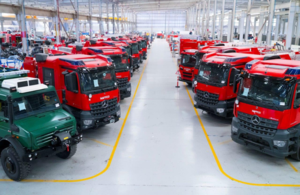


UK Government provides vital finance for emergency services overhaul in Senegal

Press release

£116.5 million loan backed by UK Export Finance will help UK businesses prevent avoidable disasters in the country.

  • UK Export Finance (UKEF) and Standard Chartered Bank support will allow the Senegalese government to strengthen its fire response services and medical equipment
  • Support unlocks over £35 million worth of exports for UK companies who will supply equipment
  • Deal announced during UKEF CEO Louis Taylor’s visit to Senegal to boost trade and economic cooperation between the two countries

A historic agreement has been agreed between UKEF and the Senegalese government to strengthen the nation’s fire response services, in a deal that will bolster UK exports to the region.

UKEF has supported a £116.5 million loan from Standard Chartered using a mix of Buyer Credit and Direct Lending which will be used to purchase fire-fighting and other life-saving emergency equipment in Senegal.

This is the first deal that UKEF has supported in Senegal and follows UKEF’s largest-ever deal in West Africa last year, worth over £200 million to support the construction of six hospitals in the Côte d’Ivoire.

Mike Freer, UK Minister for Exports, said:

The UK can provide a leading role when it comes to exporting fire safety equipment. This deal demonstrates how British ingenuity can better protect communities abroad and shows how the government can help UK businesses export their best-in-class equipment and services.

UKEF can help overseas buyers access financial support to make their projects happen, provided they commit to sourcing goods and services from the UK. This helps open new doors for world-class British suppliers to trade overseas.

The lifesaving equipment will make Senegal’s fire and medical services better armed to respond to emergencies. As a result of the UKEF backing, over £34 million pounds worth of goods and materials for the project will come from UK suppliers. UK-made ambulances, fire trucks, footwear for first responders and medical equipment will be exported throughout Senegal.

Louis Taylor, CEO of UK Export Finance, said:

Senegal is a unique market for UK exporters to tap into. I’ve seen for myself this week how the UK and Senegal can work together to unlock projects in the country with our financing and open new trade routes for UK companies.

Published 2 July 2022


Virgin Orbit mission success brings UK launch another step closer

Virgin Orbit’s next satellite launch will take place from the UK, following the success of the “Straight Up” mission, which lifted off from Mojave in California earlier today (2 July 2022).

Science Minister George Freeman and the UK Space Agency welcomed the news that Virgin Orbit has successfully completed its fourth mission from California, and its first night launch.

With this mission complete, Virgin Orbit is on track for launch from Spaceport Cornwall later this year. The UK Space Agency and Cornwall Council are supporting the launch, with Spaceport Cornwall set to create 150 jobs in the local area.

Science Minister George Freeman said:

Congratulations to Virgin Orbit on another successful US mission, which demonstrates the ability of its innovative launch platform to put satellites into orbit day or night. With the countdown on to the first satellite launch from UK soil, it’s incredible to see Cosmic Girl and LauncherOne in action before they head to Spaceport Cornwall.

We are in a strong position to capitalise on the growing global demand for small satellite launch and to do so in a way that will keep space and our planet sustainable for future generations.

Matthew Archer, Director of Commercial Spaceflight at the UK Space Agency, who joined the Virgin Orbit team for the launch from the Mojave Air and Space Port, said:

The success of the Straight Up mission is another exciting milestone on our way to seeing the first satellite launch from UK soil. We are working closely with Virgin Orbit and it was a privilege to be alongside our partners to witness another successful launch for the team.

The UK is home to some of the world’s leading satellite manufacturers, which currently ship their products overseas for launch. We are supporting them by fostering a new domestic launch market, with spaceports and launch operators providing services across the UK and catalysing investment from all over the world.

Today’s Virgin Orbit mission launched seven satellites on behalf of the U.S. Space Force that will experiment in space-based communications, in-space navigation and climate change.

A number of national and international satellites have also been confirmed for the first UK launch later this year, with customers including Space Forge, Satellite Applications Catapult and Horizon Technologies, the MOD, DSTL and US National Reconnaissance Office, and the Sultanate of Oman.

Unlike many rockets, Virgin Orbit’s Launcher One takes off horizontally, carried aloft by a modified Boeing 747 aircraft, named Cosmic Girl.

This was Virgin Orbit’s fourth commercial flight. In January 2021 the company put its first satellites into space, after launching from California’s Mojave Air and Space Port.

Melissa Thorpe, Head of Spaceport Cornwall, said:

The success of this last launch in California is extremely rewarding for Spaceport Cornwall and the UK space sector. It was amazing to see both the team from Virgin Orbit and our team working together to mirror the US operations in real-time – ensuring we’re mission-ready for the summer. This gave us a taste of what is to come and our team could not be more excited.

The UK Government’s National Space Strategy sets out how the UK will become the first country in Europe to launch satellites into orbit in 2022. Spaceport Cornwall is one of seven potential spaceport sites across the UK which will help to cement the UK’s role as a science superpower and help unleash a wave of innovation across the country.

The launch name, “Straight Up,” is inspired by American singer Paula Abdul’s song of that title, from her album Forever Your Girl.


More disadvantaged students than ever will work or study around the globe through the government’s Turing scheme

Around 20,000 disadvantaged students from schools, colleges and universities are set to travel all over the world for work and study as the Turing Scheme continues to deliver on the government’s commitment to levelling-up opportunity across the UK.

Now entering its second year, 38,000 students, learners and pupils will have the lifechanging opportunity to study and work abroad – 52% of which will be those from disadvantaged backgrounds, up from 48% last year.

Students taking part in the scheme, which replaced the UK’s participation in the Erasmus+ scheme, will be given the chance to undertake study, school exchanges, and industry work placements in over 150 international destinations, including the USA, Japan, Canada, Thailand and South Africa.

More than 130 universities, 116 further education providers and 70 schools will be receiving a share of £105m worth of grants following a highly competitive application process across the sector.

Disadvantaged students will see more opportunities, helping to drive up social mobility for regional areas, which previously benefitted less under the Erasmus+ scheme. This includes the North-East of England, with 22 providers including universities, schools and colleges in this region set to receive a share of the funding.

This announcement builds on the success of the first year of the programme which has seen UK students embark on journeys to every corner of the globe – from Iceland to Indonesia.

Projects this year have included digital technology students from New Bridge College, Oldham – which specialises in supporting students with special educational needs – travelling to Chicago, USA to visit the Apple Headquarters office to inspire and support their career aspirations.

This week, Skills Minister Alex Burghart visited Newcastle College in Newcastle to hear from students who this year travelled to Malta and Northern Italy through the Turing scheme to support their studies in sport, uniformed public services, travel and tourism, and health.

Minister for Skills Alex Burghart said:

I am delighted that following a successful launch year, the Turing Scheme will now be giving more disadvantaged students than ever before the opportunity to embark on their own journeys across the world.

It was fantastic to hear directly from students at Newcastle College about how their placements in Malta and Italy not only helped them with their studies but also allowed them to travel outside the UK and gain a taste of independence.

This government wants to open these opportunities up to so many more students in regions that lost out under Erasmus+ so that students of all ages can embrace different cultures, make new friends and acquire new knowledge. I hope that next year’s placements will be just as inspiring.

The funding is not capped per nation and will therefore benefit students in every level of the education system all across the UK, including thousands of students from Scotland, Wales and Northern Ireland.

Other successful projects for next year include cultural exchanges being offered in Japan, Mauritius, South Korea and Nepal for a university with 83% of disadvantaged students within its population.

Jamie Arrowsmith, Assistant Director for Policy and Global Engagement and incoming Acting Director, Universities UK International said:

International experience has the power to change lives. The Turing scheme provides opportunities to students in all corners of the UK education sector to study, train, and volunteer abroad for short or long periods that can fit around existing commitments and programme requirements.

The key focus on widening access for students from non-traditional backgrounds is a real strength of the UK scheme and we are pleased to see the increase this year, in the grant funding allocation to support students from less advantaged backgrounds, which demonstrates the strong commitment from UK government and UK higher education providers to widening access.

Turing scheme funding allows universities to develop new and innovative partnerships with organisations all across the globe, as well as sustaining strategically important relationships internationally. It is important that future funding for the scheme supports the scale of UK students’ appetite for international experiences, to maximise the transformative potential of the scheme.

Emma Meredith, Association of Colleges International Director, said:

In its first year alone, the Turing Scheme has delivered truly worldwide, once-in-a-lifetime opportunities for further education students across the UK.

Students’ testimonials speak to the tremendous power of international mobility as an enabler of personal and technical skill development.

I am so pleased that even more students will benefit in year 2, particularly those for whom work and study abroad would simply not be accessible without the Turing Scheme and the support of their college. Congratulations to all the successful projects.


Unscrupulous landlords who exploit vulnerable residents to be driven out of supported housing sector

  • £20 million Supported Housing Improvement Programme will drive up quality in some of the most affected areas 

  • Programme builds on successful pilots in Birmingham, Blackburn with Darwen, Blackpool, Bristol and Hull

  • Measures include minimum standards for support provided to residents to help their progress towards living independently

Unscrupulous landlords who exploit vulnerable residents by charging high rents for poor-quality accommodation and offering almost no help will be driven out of the supported housing market by a new £20 million government improvement programme launched today (2 July 2022).

Supported housing provides accommodation alongside care, support, or supervision, helping vulnerable people across the country. In short term supported housing, residents may have experience of homelessness, mental health issues or domestic abuse, and schemes should provide them with the skills and confidence to enter longer-term independent accommodation. 

Many people in supported housing receive good quality, tailored support to help them get their lives back on track by assisting them to access health services or mental health support, manage their finances, find employment and/or sustain a tenancy.

But there are instances of supported housing landlords providing unacceptable levels of support while charging extortionate rents. For example, there have been reports of landlords providing as little support as dropping off a box of cereal while claiming £250 per week in an area where the average rent is £80.

This will be stamped out with a package of government measures that include:

  • minimum standards for support provided to residents in order to help their progress towards living independently

  • new powers for local authorities to better manage their local supported housing market and ensure no individual falls through the cracks 

  • changes to Housing Benefit regulations to seek to define care, support, and supervision to improve quality across all specified supported housing provision 

Alongside this, the Department for Levelling Up, Housing and Communities (DLUHC) are today opening the bidding round for local councils to apply for funding from a £20 million Supported Housing Improvement Programme to drive up accommodation quality in some of the most affected areas. 

This follows successful pilots which saw DLUHC work with 5 local authorities around England to improve supported housing in these areas.

Minister for Rough Sleeping and Housing Eddie Hughes MP said: 

“We want vulnerable residents living in supported housing to have safe, appropriate accommodation, which meets their needs and can help them move onto more independent living.

“I’m pleased to open our Supported Housing Improvement Programme for bids today. This will build on the momentum from our successful pilots, helping councils in the worst-affected areas to tackle bad quality and poor value for money in supported housing, while preserving good provision by responsible providers.”

Minister for Welfare Delivery, David Rutley MP said:

“The welfare system acts as a safety net to help people, including those living in supported housing and the Improvement Programme further strengthens that.

“Having a settled home gives people the security to improve their lives by getting on the employment ladder or taking other steps towards financial independence.

“This, supported by changes we recently announced which will give people on benefits the choice of putting money towards a deposit, provides the chance to make progress on the pathway to home ownership.”

From October 2020 to September 2021, DLUHC funded 5 local authorities (Birmingham, Blackburn with Darwen, Blackpool, Hull and Bristol) to test interventions to raise standards of accommodation and support and improve local authority oversight of the local supported housing market. 

The pilot authorities were able to drive up the quality of accommodation and support to residents. They also improved value for money through enhanced scrutiny of Housing Benefit claims to verify that costs were legitimate and reasonable. 

The independent evaluation of the pilots was published in April 2022. It found that increasing local authority capacity and capability had a positive impact on their ability to improve quality and value for money in supported housing at a local level.  

This prospectus published today provides detailed guidance that will assist local councils in considering whether and how to bid, and for those selected to go on to participate in the programme.