Catherine Large at the End Point Assessment 2022 conference

Hello everyone, thank you for inviting me to speak to you today. I’m here as the qualifications regulator, as it is our job to make sure that the Apprenticeship End Point Assessments that are in our purview are awarded consistently and fairly and with the apprentice’s interests protected as a priority. So I’d like to focus on three key things this morning from my perspective and then over to you for questions.

Firstly, you will be aware that End Point Assessment Organisations were asked in 2020 to apply to be regulated by Ofqual, as part of the Institute for Apprenticeships and Technical Education’s programme to simplify the quality assurance process – and that ticks off one of the challenges of 2018, Charlotte [Bosworth, who chaired the event]. Many of you here today will have recently been through our recognition process or are perhaps going through it now. I know you are keen to understand how the market will change and develop as a consequence, so I will give you an update and overview today.

Then, following on from that, I want to talk about our approach to regulating End Point Assessments in delivery, and what you can expect from us as the regulator. This will be something that those of you in the room who have been recognised by Ofqual for a while will be very familiar with I’m sure, but I’m conscious as I said, that there are organisations here that are brand new to Ofqual regulation too.

And finally, I just want to talk to you about the importance of data and research and how this informs how we regulate, and how, in turn, I hope it will help drive up quality in the apprenticeship system overall in the future.

EQA transition update

So, to start with, Ofqual recognition. What’s going on? The Institute’s decision two years ago that all apprenticeship assessments should be awarded by organisations that are subject to statutory regulation was, I think, a really important sector development. We are delighted that so many End Point Assessment Organisations, of all shapes and sizes, have come forward to meet the necessarily high bar we set for entering the regulated community.

Out of the approximately 100 organisations that applied to us in the initial phase, we have now recognised 51 to deliver end point assessments, with more applications under review, including 9 EPAOs recently invited to panel meetings. These new organisations, together with the existing operators in the regulated market, means that there are now 110 organisations in total offering regulated end-point assessments, and we are making more decisions each day. We have never received and approved so many applications for recognition in Ofqual’s 12-year history. And this has been done without lowering the bar on quality.

This growth includes organisations who may be here today that are specialists in their respective fields, that have demonstrated they can meet our requirements. They range from niche organisations like the Institute of Cast Metal Engineers, recognised for a single apprenticeship standard – the Metal Casting, Foundry and Patternmaking Technician (I like that example), to those that are broader in scope offering popular standards such as Business Administrator and Associate Project Manager.

The Department for Education (previously, the Education and Skills Funding Agency) is now taking steps to remove End Point Assessment Organisations from their Register if they have not been recognised by Ofqual after two applications. These organisations have not yet demonstrated that they meet our requirements by providing sufficient evidence to us, two years after the announcement was first made. If that sounds a bit tough then it all comes back, for me, to the goal of protecting the quality of assessments for apprentices and their current and potential employers. There is absolutely nothing stopping organisations applying to us at any point in the future, as many times as they like.

I am alive to the risks in the market as it changes, and we remain in close dialogue with the Department and the Institute as they manage these developments. Our work so far has brought more than 95% of apprentices in our first phase into the protection of regulation. We are united as partners in our aims for quality and will continue to prioritise the apprentices themselves as we progress through the programme. We expect apprentices who have started their end point assessment with an EPAO to complete their end point assessment with the same EPAO – the transition process is being very carefully managed, so no apprentice is disadvantaged.

We are now starting to look at applications from organisations that have applied to us as part of the last phase of the programme, the deadline of which was 16 May. We have received applications from all 30 organisations we were expecting to receive, which is great news. Thank you for coming in on time. These applications will now be reviewed, and the outcomes shared with individual organisations and we will continue to provide updates like this on our progress.

I’m confident therefore that there will continue to be a thriving market of End Point Assessment Organisations supporting apprentices in the future. And, of course, I am highly recommending that everyone makes an Ofqual-recognised Awarding Organisation their EPA provider of choice from this point on.

Regulatory approach

The second point I wanted to talk to you about today is what you can expect from us as the regulator.

Many elements of our regulatory approach to End Point Assessment are similar to those used in our regulation of other qualifications. This includes setting the rules and requirements that you must meet as awarding organisations and then monitoring and enforcing those rules. These are elements of our approach across all regulated qualifications and you would expect us to be consistent and coherent across all qualifications.

But apprenticeship assessment is a particular form of assessment. The assessment must meet the requirements set out by employers as articulated in the Apprenticeship Standard and Assessment Plan held by the Institute. Like many vocational qualifications, it is not done en masse in an exam hall but in the field, in workplaces, on site, and at multiple different points in the year. Our regulatory approach is therefore tailored to this unique set of circumstances.

Over the past year we have established our new field team, whose job it is to engage End Point Assessment Organisations directly and take time to understand your approaches to assessment. An important and growing part of this team’s role is to travel to those places where assessment is being carried out and observe apprentices being assessed. From manufacturing environments to hair salons, the team have been welcomed by you and – most crucially – employers, who understand how important it is for Ofqual to see assessments first hand, so we can properly appreciate the hard work that both they and the apprentice put into a meaningful apprenticeship programme. Through this work our aim is to better understand the quality of assessments being offered to apprentices and their experience of them.

We are also establishing sector fora for awarding organisations to collectively share and address issues which some of you have participated in already. We have seen a real willingness to engage, and to work together to resolve problems, for example those offering assessments in financial services, who recently agreed to work jointly on common grade descriptors. We have seen a welcome readiness to adjust approaches to accommodate common practice and this is critical to establishing consistency across awarding organisations and strengthening comparability for apprentices and employers. We also have got a really close feedback loop with the Institute, to make sure that any adjustments needed to Assessment Plans are fed back and acted on.

We call this collaborative working with Awarding Organisations co-regulation and you will hear us talk of this more and more. Yes, we are the regulator, and yes, we have rules that you, they, have to comply with. But there is no reason not to work cooperatively, if you have quality as your shared goal, and the interests of the apprentices themselves as your priority.

Research and data

The last point that I want to mention briefly is the increasing use of research and data in our work in this area. It is so important to us to ensure that vocational and technical qualifications and assessments are properly theorised, researched and documented, so there is a strong evidence base from which they can be understood.

Some of you will be aware of our CASLO research, led by Paul Newton, for example, which looks to thoroughly understand qualifications that confirm the acquisition of specified learning outcomes. We are also looking in to how best to assess ‘soft skills’, behaviours – the ‘highly valued competencies’ that employers demand. These are inherently difficult to assess but incredibly important to get right for employers.

Those of you who have been regulated by Ofqual for some time will know we are now collecting EPA outcome data on an annual basis, which we will publish in due course in line with other qualifications we regulate, once it becomes a significant data set. This will allow us to compare outcomes between EPAOs on the same standard and over time. We hope it will in turn contribute to the national picture we have about apprentices as a cohort of learners and support the system as a whole to develop further.

Conclusion

To conclude then, as I said, I believe that working together cooperatively we can get the best outcomes for apprentices and employers.

We need input and feedback from you, through participation in sector fora and other forums we host, as I said, as well as other direct contact on risks and issues. We will shortly be publishing some new guidance for awarding organisations to support interpretation and understanding of our EPA regulations and clarify some points which have proven unclear since we launched them in 2018. This will be formally open for consultation shortly and we would welcome your views.

And I know that you are all here today because you are interested in cooperating with each other to drive quality. I welcome discussions today about industry best practice, and the work you might do to collectively drive up quality in the system. As the regulator we can play our part in setting a quality baseline, but to really reach the gold standard – that is up to you.

I hope that’s helpful. I’m around all morning to answer your questions.


Dangerous driver who killed a baby receives increased sentence after referral by the Attorney General

News story

James Davis will spend longer in prison for causing the death of a baby by dangerous driving.

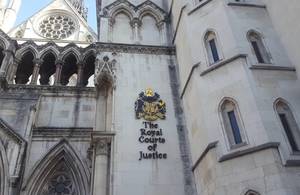
A Walsall man has received an increased prison sentence for causing death by dangerous driving after his case was referred to the Court of Appeal by the Attorney General Rt Hon Suella Braverman QC MP.

On 4 April 2021, James Davis, 35, was driving at grossly excessive speed along a shopping high street in Brownhills, Walsall, when he lost control of his vehicle and collided with a pram carrying Ciaran Morris, an 18-day old baby, who was killed.

Davis had been travelling at speeds of up to 67 miles per hour – over twice the speed limit – and was driving uninsured whilst under the influence of cannabis. The collision occurred when he became distracted by his mobile phone. He then fled the scene before handing himself in to the police.

On 8 April 2022, Davis was sentenced to 6 years and 6 months’ imprisonment at Wolverhampton Crown Court for causing death by dangerous driving.

The Attorney General referred his sentence to the Court of Appeal under the Unduly Lenient Sentence scheme because she did not believe it reflected the severity of the offences that had taken place.

On 6 July the Court of Appeal found Davis’ original sentence to be unduly lenient and imposed a new sentence of 10 years’ imprisonment.

Speaking after the hearing, the Attorney General Rt Hon Suella Braverman QC MP said:

Today my thoughts are with the family of Ciaran Morris, who was tragically killed by the criminally dangerous driving of James Davis. While no sentence can repair the damage caused by Davis’ actions, I welcome the decision of the Court to impose a sentence that better reflects the dreadful offending that has taken place.

Published 6 July 2022


Online Safety Bill: Home Secretary’s op-ed for The Telegraph

Nothing is more important than the safety of our children and we need to do everything we can to keep them safe online, just as we do in our communities and on our streets.

Child sexual abuse is an unimaginably wicked crime. Tackling this online is a global problem, requiring global solutions. We all need to play our part.

That is why we are joining with countries across the globe to demand tech companies do more. Together with international partners, child safety organisations, and survivors of child sexual abuse, the government is making sure the industry shoulders its responsibility for keeping children safe online.

In 2021, global technology companies reported more than 29 million suspected instances of child sexual abuse material on their platforms, amounting to 85 million images and videos of child sexual abuse.

As a result of these reports, UK law enforcement arrest or interview on average around 800 suspects each month, safeguarding around 1,000 children.

Some of these children are as young as six months old. I have heard in bone-chilling detail the lifelong impact such abuse has on them. It is vital that we do everything we can to stop it.

The Online Safety Bill, new legislation intended to make the UK the safest place to be online, is currently before Parliament. The bill has been designed to protect both the safety of users as well as their right to privacy and freedom of expression. We do not want to censor anyone or restrict free speech, but we must do more to combat these foul, hugely destructive crimes.

Things like end-to-end encryption significantly reduce the ability for platforms to detect child sexual abuse. The Online Safety Bill sets a clear legal duty to prevent, identify, and remove child sexual abuse content, irrespective of the technologies they use. Nobody can sensibly deny that this is a moral imperative.

We intend to amend and strengthen the bill to ensure that the onus is on tech companies to develop or source technology to mitigate the risks, regardless of their design choices. If they fail to do so, Ofcom will be able to impose fines of up to £18 million or 10% of the company’s global annual turnover – depending on which is higher. This will therefore support innovation and drive the development of effective safety technologies across the industry, so that offenders have nowhere to hide online.

The UK government wholeheartedly supports the responsible use of encryption technologies. They are widely used by banks to protect financial information and to stop it being accessed or misused when UK citizens bank or make purchases online. However, the implementation of end-to-end encryption or other technologies in a way that intentionally blinds companies to abhorrent child sex abuse happening on their platforms will have a disastrous impact on child safety.

The National Crime Agency leads the UK law enforcement response to child sexual abuse. By working collaboratively with regional and local police forces, and with technology companies that currently detect and report instances of suspected child sexual abuse on their platforms, the agency relentlessly pursues those who groom and abuse our children.

If end-to-end encryption is implemented without the relevant safety mitigations in place, this will become much harder. It will significantly reduce tech companies’ and law enforcement’s ability to detect child sexual abuse happening online. This is obviously unacceptable.

We, and other child safety and tech experts, believe that it is possible to implement end-to-end encryption in a way that preserves users’ right to privacy, while ensuring children remain safe online.

We have already worked with child protection organisations and technology companies to shape the bill. And we will continue to listen and to engage. But the safety of our children is of paramount importance, and I make no apology for doing whatever it takes.

Our changes to the Online Safety Bill will help to ensure that tech companies, working in partnership with governments, child protection organisations and law enforcement, provide the best possible protections to children from those who prey on them, while maintaining our privacy.

Tech companies now need to stand up and use their resources and engineering expertise to build on the innovation from that fund. The safety of our children from the most evil predators demands it.


New measures will go further in tackling child sexual abuse online than ever before

Greater powers to tackle child sexual abuse online will be introduced through an amendment to the Online Safety Bill, the Home Secretary announced today (Wednesday 6 July 2022).

The amendment will give Ofcom extra tools to ensure technology companies take action to prevent, identify and remove harmful child sexual abuse and exploitation (CSAE) content.

Ofcom, the UK’s regulatory authority for telecommunications, will be able to demand that technology companies such as social media platforms roll out or develop new technologies to better detect and tackle harmful content on their platforms. If they fail to do so, Ofcom will be able to impose fines of up to £18 million or 10% of the company’s global annual turnover, depending on which is higher.

Home Secretary, Priti Patel said:

Child sexual abuse is a sickening crime. We must all work to ensure criminals are not allowed to run rampant online and technology companies must play their part and take responsibility for keeping our children safe.

Privacy and security are not mutually exclusive – we need both, and we can have both and that is what this amendment delivers.

The National Crime Agency estimate there are between 550,000 to 850,000 people in the UK who pose a sexual risk to children. In the year to 2021, there were 33,974 obscene publications offences recorded by the police, and although some improvements have been made, it is still too easy for offenders to access harmful content online.

Access to such content online can lead to offenders normalising their own consumption of this content, sharing methods with each other on how to evade detection, and escalation to committing contact child sexual abuse offences.

Digital Minister, Nadine Dorries said:

Tech firms have a responsibility not to provide safe spaces for horrendous images of child abuse to be shared online. Nor should they blind themselves to these awful crimes happening on their sites.

Rob Jones, NCA Director General for child sexual abuse, said:

Technology plays an extremely important part in our daily lives and its benefits are undeniable.

But it is also a fact that online platforms can be a key tool in a child abuser’s arsenal. They use them to view and share abuse material, seek out and groom potential victims, and to discuss their offending with each other.

Identifying these individuals online is crucial to us uncovering the real-world abuse of children.

We are taking significant action in this space and, alongside UK policing, we are making record numbers of arrests and safeguards every month.

While this will always be a priority, we need tech companies to be there on the front line with us and these new measures will ensure that.

Sir Peter Wanless, NSPCC Chief Executive, said:

We need urgent action to protect children from preventable online abuse. Our latest analysis shows online grooming crimes have jumped by more than 80% in four years.

The Online Safety Bill is a once-in-a-generation opportunity to ensure children can explore the online world safely.

This amendment will strengthen protections around private messaging and ensure companies have a responsibility to build products with child safety in mind. This positive step shows there doesn’t have to be a trade-off between privacy and detecting and disrupting child abuse material and grooming.

The amendment will support innovation and the development of safety technologies across the technology industry and will incentivise companies in building solutions to tackle CSEA which are effective and proportionate.

The government-funded Safety Tech Challenge Fund is demonstrating that is it is possible to detect child sexual abuse material in end-to-end encrypted environments, while respecting user privacy.

You can also read the Home Secretary’s op-ed for the The Telegraph.


Tax cut worth up to £330 comes in for 30 million workers

  • 30 million people across the UK will benefit from the biggest personal tax in a decade from today
  • Hard working Brits will save up to £330 per year – 2.2 million lifted out of personal tax altogether
  • 70% of UK workers now paying less National Insurance, even after accounting for the Health and Social Care Levy

The £6 billion tax cut will see the level at which people start paying National Insurance rise to £12,570 – lifting 2.2 million people out of paying any personal tax and ensuring people get to keep more of the money they earn.

The threshold change means that 70% of UK workers will pay less National Insurance, even after accounting for the Health and Social Care Levy that is funding the biggest catch up programme in NHS history and putting an end to spiralling social care costs.

From today the level at which people start paying National Insurance has risen from £9,880 to £12,570.

This change means that millions of people working across hundreds of different industries across the UK will now be better off.

This includes bricklayers who’ll save £218, care workers who’ll save £324, hairdressers who will get a £118 benefit and nursery assistants who’ll get a £343 yearly boost.

Workers can check their salary in the government’s online tool to estimate the amount they could save between July 2022 to July 2023.

The last major personal tax cut of today’s magnitude was nearly ten years ago, when the income tax personal allowance increased by £1,100 in 2013. Today’s threshold change is more than double that, as working people are now able to hold on to an extra £2,690 free from tax.

Today’s change to National Insurance thresholds comes as part of the Chancellor’s wider vision for a lower tax economy. At the Spring Statement Mr Sunak announced a 1p income tax cut in 2024 – which will be the first cut to the basic rate in 16 years and will save the average taxpayer a further £175 a year. The Chancellor also committed to cutting and reforming business taxes later this year in the autumn, to help spur business growth and productivity. The government is currently working with industry on how best to do that.

The increase to the National Insurance thresholds will leave around 76% of National Insurance payers in the North East better, 75% in the North West and Merseyside, and 62% in London.

Today’s landmark personal tax cut also comes as the government launched new Help for Households campaign designed to raise awareness and signpost people to the £37 billion in support on offer and targeted at those most in need. The support provides millions of the most vulnerable households at least £1,200 of support in total this year to help with the cost of living, with all domestic electricity customers receiving at least £400 to help with their bills.

It also includes a 5p fuel duty cut – the biggest cut ever to fuel duty rates, a rise in the national living wage to give full time workers an extra £1,000 and a cut to the Universal Credit taper rate to provide over 1 million families an extra £1,000.

The NICs threshold change takes effect following the government making tough but responsible decisions to manage the public finances responsibly and choosing not to saddle future generations with almost £400 billion of debt used to protect jobs and the economy during the pandemic – worth around £5,500 for every person in the UK.

Further information

  • Visit the government’s cost of living support website
  • Personal Tax factsheet
  • Spring Statement Tax Plan
  • With those with the broadest shoulders bearing the biggest burden, the government is taking decisive action through the Health and Social Care Levy to tackle the NHS backlog and fix the social care crisis – something governments have ducked for decades.
  • Over the last decade the government increased the personal allowance people have before they pay any income tax from £6,475 in 2010 to £12,570 today. This has lifted millions of the poorest out of paying any income tax at all, and meant a real terms tax cut of £750 for 27 million people.

Example occupations paying less National Insurance, even after accounting for the Health and Social Care Levy, below (list from ONS and checked through the government’s online tool

Occupation Median salary (£) Calculator result
Hospital porter 19860 £292 less
Shelf stacker 12351 £333 less
Security guard 24814 £246 less
Fork-life truck drivers 25072 £243 less
Van drivers 20250 £289 less
Lorry drivers 30620 £191 less
Construction workers 26619 £229 less
Sewing machinists 16651 £322 less
Tyre fitters 22513 £267 less
Metal workers 22842 £264 less
Retail cashiers and sales assistants 10555 / 12071 £112 less / £298 less
Hairdressers, beauticians and barbers 10608 £118 less
Care workers 16502 £324 less
Nursery assistants 14462 £343 less
Chefs 17906 £311 less
Butchers 22561 £267 less
Fishmongers 18987 £300 less
Bakers 19933 £292 less
Painters and decorators 23224 £261 less
Builders, floorers, wall tilers and plasterers 25030 £244 less
Bricklayers 27756 £218 less
Plumbers 31602 £182 less
Carpenters and joiners 27520 £220 less
Receptionists 14317 £344 less
Youth workers 23136 £262 less

When looking at the combined impact of the Levy and the Health and Social Care Levy, from July, a breakdown is below showing the percentage of National Insurance better off in regions across the UK.

Percentage of NICs payers Region
76% North East
75% North West and Merseyside
76% Yorkshire and the Humber
74% East Midlands
74% West Midlands
67% East of England
62% London
65% South East
73% South West
77% Northern Ireland
70% Scotland
75% Wales