SLC launches recruitment campaign to recruit more than 100 employees

The Student Loans Company (SLC) has launched a campaign to recruit more than 100 permanent employees at its office in Darlington.

Based at Lingfield Point, the Student Finance Officer (SFO) roles are vital to the smooth running of the organisation. SLC processes up to two million student finance applications each year and in the last academic year (21/22) paid £9.2 billion in loans and grants to new and existing students, as well as £12.6 billion in tuition fees to higher and further education providers.

SLC’s mission is to enable people to invest in their futures through access to further and higher education. The SFO role is vital as it includes supporting customers at the various stages of their student finance journeys, including processing applications, case managing applications and answering questions from across a number of channels including inbound and outbound calls, email, webchat and by post.

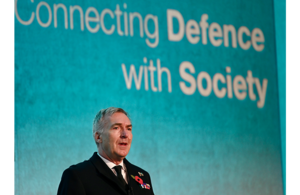
Chris Larmer, Executive Director of Operations at SLC, hosted a launch event in Darlington on Friday (18 November), welcoming local stakeholders into the office to learn more about what the organisation has to offer and to speak to staff about their roles.

Rianna Craggs, SFO, joined SLC at the start of 2022. She said: “Working at SLC has been really rewarding. I’m learning and gaining confidence every day. I love being part of an inclusive organisation as there are people from all walks of life and age groups working together, striving for the same aim – providing excellent service for our customers.”

Chris said: “As a big employer, we take our responsibility to the local area seriously. We know how much talent there is in Darlington and the North East, and we want people to consider a career with us.

“We have been speaking to a range of stakeholders from across the region to promote our recruitment campaign and I’m looking forward to welcoming our new recruits in the new year. The importance of our SFO roles cannot be understated – we simply couldn’t do our job without them.”

Peter Gibson, MP for Darlington, also attended the event. He said: “I warmly welcome the Student Loans Company’s announcement that they are now recruiting for over 100 new permanent Student Finance Officer roles based in Darlington. These new roles offer a fantastic new opportunity for local people and offer a fantastic rewards and benefits package.

“These are exciting times to live and work in Darlington, with huge Government investments and the Darlington Economic Campus bringing more jobs and opportunities to the town. I know that these new roles with the Student Loans Company will offer more local people the chance to stay local but go far.”

Successful candidates will receive a reward and benefits package, which includes access to the civil service pension scheme, generous holiday entitlement, options to buy and sell holidays and access to a range of lifestyle benefits. They will also benefit from SLC’s routes for progression, with opportunities to learn, develop and upskill. SLC has a blended approach to work, with colleagues spending time in the office and at home, so applications are being encouraged from across the North East.

Find out more about the new roles and how to apply at https://careers.slc.co.uk/apply/.


Fight against international wildlife crime stepped up

  • UK Government pushing for further protections for endangered species including pangolin and sharks on the global stage
  • Move comes just weeks ahead of crucial UN Convention on Biological Diversity

The fight against international wildlife crime received a boost today with the announcement of new funding for the International Consortium’s Vision 2030, a long-term vision of working towards a world free of wildlife crime.

The government is pledging £4m of new funding for the International Consortium on Combatting Wildlife Crime (ICCWC). The announcement has been made at the Convention on International Trade in Endangered Species of Wild Fauna and Flora (CITES) in Panama, where the UK government is pushing to secure stronger protections for some of the world’s most threatened species such as pangolins and requiem sharks. Ongoing pressures, including legal and illegal international trade, continue to threaten their survival.

CITES is an international agreement between governments that protects over 38,000 wild plant and animal species from the impacts of international trade. Wildlife crime undermines efforts to ensure that international trade is legal and sustainable. Since 2010, the ICCWC, with their collective expertise and extensive experience, has been delivering essential work to eradicate this vile trade.

The new funding will go towards the next phase of ICCWC programming and will help fight wildlife crime by increasing the detection, disruption and detention of criminals. Transnational criminal networks profit from illegal trade, causing serious security implications for many countries and regions.

Environment Secretary Thérèse Coffey said:

We want to keep protecting our most endangered plants and animals. This £4 million of funding going to the ICCWC will help tackle criminals and stop this vile trade.

The UK is showing global leadership on conservation and proposing stronger protections for a range of rare species at this summit such as pangolins and sharks. We will also be driving global efforts to secure a post-2020 global biodiversity framework at the UN Convention on Biological Diversity in Montreal next month.

The UK is demonstrating global leadership on conservation and sustainable use at CITES CoP 19, advocating for:

  • Better protection of 54 species of shark to help shield them from overexploitation in the fin trade.
  • Strengthening commitments to protect pangolins, the most trafficked mammal in the world, through cooperation and demand reduction measures.
  • Improving CITES implementation for agarwood to assist in conservation efforts.
  • Upholding the ban on international commercial trade in ivory and rhino horn, managing ivory stockpiles, and ending trade in live African elephants to non-range states.
  • Enhancing CITES’ role in relation to reducing the risk of zoonotic disease emergence, tackling the illegal trade in CITES species, better engagement of indigenous people and local communities.

Welcoming the additional funding as an endorsement of ICCWC’s work, CITES Secretary-General, Ivonne Higuero, said:

We’re grateful to the United Kingdom of Great Britain and Northern Ireland for this important contribution to support the efforts of CITES Parties to combat wildlife crime. It is a vote of confidence in the coordinated work being done by ICCWC partners to put an end to this scourge affecting our planet and its people.

The 19th meeting of the Conference of the Parties has acknowledged and welcomed the excellent work with Parties conducted under the Consortium and the development of the ICCWC Vision 2030. This funding means more Parties will be assisted by the Consortium to further strengthen their capabilities in the decade to come.

Poaching and the illegal wildlife trade (IWT) has been estimated to be worth up to £17 billion a year. It fuels corruption, creates instability, impacts economic development and deprives some of the world’s poorest communities of sustainable livelihoods. For some of the most endangered species – like pangolins, succulents and turtles – the illegal wildlife trade is the gravest threat to their future.

This funding will provide for a range of training courses, tools, services and capacity building activities, designed to strengthen criminal justice systems and support co-operation among countries exposed to the threats of wildlife trafficking.


Sellafield big winners at global awards

The company has won 4 awards at the prestigious Institute of Chemical Engineers (IChemE) event and a highly commended in the ‘Research Project’ category.

The annual event celebrates the achievements of chemical engineers around the world.

The ‘Process Safety Award’ went to Sellafield Ltd employee, Joe Hayward, a process responsible engineer in retrievals, for his MSSS entry – helping to solve the site’s decommissioning challenges.

The ‘Team Award’ went to Sellafield Ltd for ‘Collaborating to Develop Nuclear Chemical Engineering Skills’ entry, which was collected by process engineer Kathleen Feller. This entry celebrated the collaboration between Sellafield Ltd and Loughborough University in developing our engineering skills and capability.

Simon Malone, a technical assurance manager at Sellafield Ltd, came away with a highly commended for his research project ‘SMART Sensors in Can Monitoring’.

And the night was topped off with Sellafield Ltd and the National Nuclear laboratories, in a joint entry, picking up the ‘Overall Achievement Award’ for its winning entry ‘Process Flow Smoothing Optimisation of Nationally Critical Nuclear Infrastructure’, which was submitted by process engineer, Jack Newton.

The ‘Overall Achievement Award’.

Martin Chown, chief executive officer, Sellafield Ltd said:

These awards are a clear demonstration of the contribution our chemical engineers are making to our purpose and is a testament to our long-standing collaboration with our partners.

I’m so proud to see that our professional chemical engineering community are doing great things. Congratulations to all our deserving winners.

Chief process engineer, Sellafield Ltd, Elisabeth Cooke said:

Congratulations to all finalists and our own winners. This is great achievement for all the authors and winning teams who contributed to representing us at these global awards.

To be recognised on this scale is tremendous and for all their contributions to make Sellafield a clean and safe environment for future generations.


Graves of two soldiers killed in northern France rededicated

The services, which were organised by the MOD’s Joint Casualty and Compassionate Centre (JCCC), also known as the ‘MOD War Detectives’, were held at the Commonwealth War Graves Commission’s (CWGC) Fosse 7 Military Cemetery (Quality Street) and Bancourt British Cemetery on 17 November.

The graves of both men were identified after two members of the public, Alan Gregson (for Pte McLean) and Andrew Pugh (for LCpl Smith) contacted the CWGC presenting evidence suggesting they had been found. Further research conducted by the National Army Museum and JCCC confirmed their findings.

Nicola Nash, JCCC case lead said:

Today we stood in two beautiful cemeteries and heard nothing but birds and the distant rumbling of everyday life. A very different scene would have faced our two soldiers over a hundred years ago, when these two men made the ultimate sacrifice for their country. Having their families attend today just shows that their sacrifices will never be forgotten and they will always be remembered with grateful thanks by us all”.

The rededication services for both men were attended by members of their families.

Philip Maclean, great nephew of Pte McLean said:

The re dedication service for our Gt Uncle James was a moving and emotional experience. We are so pleased as a family he is no longer a missing soldier. We would like to thank the MOD, CWGC and the Army for their considerable efforts”.

Malcolm Clague, grandson of LCpl Smith said:

The families of Brunton Hunter and Malcolm Clague wish to thank everyone for the very poignant and fitting service for our grandfather who gave the ultimate sacrifice.

We thank the Commemorations team for your hard work and for bringing together representatives of the Regiment, the Padre and the CWGC. We were especially touched by the presentation of the flag by the Military Attaché from the British Embassy Paris as a tribute to the life given by L/Cpl Brunton Smith. A moving act of remembrance for which we offer our grateful thanks to all and will recall with gratitude in the years to come”.

The services were conducted by the Reverend Timothy Clarke-Wood CF, Chaplain to 4th Battalion The Royal Regiment of Scotland and were attended by serving soldiers of the same regiment.

The Reverend Clarke-Wood said:

There are key moments in our shared history that stand as vital. When within the tragedy of such epic loss as WW1, we can in our present take time to honour and consider the individual who has died – we are on the right track. The celebration of inherent human dignity is found in such moment as the rededication of our fallen heroes”.

The headstones over their graves have been replaced by the CWGC. Liz Woodfield, Director of External Relations at CWGC, said:

We thank Mr Gregson, Mr Pugh and the National Army Museum for their research and dedication in helping to identify the graves of Pte McLean and LCpl Smith. We are privileged to honour these two brave men who made the ultimate sacrifice fighting for their country. We will care for their graves in perpetuity.

How they died

LCpl Smith joined the 8th Battalion, Royal Scots in 1915. He spent almost all of the war along the Western Front, in France and Belgium. On 21 March 1918, some 6,500 German guns and 3,500 heavy mortars opened up a huge 5-hour barrage against the British 3rd and 5th Armies on the Western Front. Although the Allies knew an attack was imminent, they did not know where and how the main attack would occur. The German tactics succeeded and on the first day, British casualties amounted to 38,500 men. The Germans pushed the British back several miles, with heavy casualties inflicted during their fighting retreat. During 23-26 March, German successes continued with the capture of Peronne, Bapaume and Albert. On 24 March, as LCpl Smith’s battalion were withdrawing through Bapaume, he was one of the casualties lost during the continual artillery bombardment and fighting.

Pte McLean was living in Invergordon when he joined the 10th Battalion, Gordon Highlanders. Referred to at the time as ‘the big push’, the Battle of Loos was the biggest British attack of 1915 and saw the first engagement of New Army units. Five battalions of the Gordon Highlanders saw action in this battle, with a further two involved in a subsidiary attack in Hooge, north of the Loos battlefield. Just two days before this battle began, on 23 September 1915, the 10th Battalion, Gordon Highlanders were in the front lines facing Loos-en-Gohelle. The day was spent listening to the near constant, heavy artillery bombardment of the enemy trenches. During the afternoon, the battalion ‘shewed their bayonets and cheered’ to trick the enemy into thinking an attack was imminent. It was during this day that Pte McLean tragically lost his life.


Protecting the marine environment is vital say public

Whether its rambling along coastal paths, walking the dog or visiting coastal heritage sites, a new survey has revealed the overwhelming value the public feel the marine environment offers to their mental and physical health. However, around half of the 12,000 people surveyed also expressed concern about our seas, with over 80% of those taking part saying how crucial it is to protect our ocean.

Almost 70% of people see marine litter and plastic pollution as the greatest threats to our marine environment, with over half saying they believe regulating the use of single use plastics is one of the main ways we can address these issues. The public continue to take action at home, with roughly 4 out of 5 recycling more over the last 12 months, and 70% reducing their use of single use plastics.

The survey, published by Defra in collaboration with the Ocean Conservation Trust, the Scottish Government and Natural Resources Wales, sheds light on public awareness, knowledge and attitudes surrounding the marine environment.

Minister for Marine, Lord Benyon said:

“This survey highlights the immense value that the general public place on our ocean and marine environment as well as their willingness to take action to help to preserve it.

“As a government we are determined to continue to build on the protective measures we already have in place in our Marine Protected Areas alongside introducing further restrictions on single use plastic.

“We are also championing the goal of protecting 30 per cent of the global ocean by 2030 to help conserve our marine environment that is evidently precious to many.”

Roughly 4 in 5 people believe spending time in the marine environment results in good mental health; and over half found it to be a good source of social connection and a way to spend time with family and friends. Around 70% believe visits to the coast are also good for their physical health. England’s coastal path, being established by Natural England, will be the longest continuous coastal walking route in the world once complete, and a previous report from Natural England found that 97% of people felt refreshed and revitalised as a result of their visit.

The survey also shows that the public consider the ocean and marine environment as fragile resources that are highly valuable when it comes to education, general life enjoyment and overall wellbeing. Many of the respondents have carried out activities to protect the environment, including changes to lifestyle choices and signing petitions, and over 80% said they support the creation of Marine Protected Areas.

Nicola Bridge, Head of Advocacy and Engagement from the Ocean Conservation Trust said:

“As an Ocean conservation charity, understanding Ocean Literacy levels in the UK is vital to help us to protect the future of our Ocean. Someone who is Ocean literate is more likely to act in ways that support the health of our Ocean. At the OCT, our goal is to support as many people as possible to connect to the Ocean, becoming ‘Ocean literate’ and thinking about their impact on the Ocean in their daily choices.

“The results from this survey will be an important tool to help us shape our public engagement and education programmes. It is uplifting to see more and more people taking action to increase their positive impact on the Ocean, which is a great baseline for us to work from.”

In June this year, the UK Government joined other world leaders at the UN Ocean Conference to announce new initiatives to protect the global marine environment, marking a significant step forward in our mission to protect at least 30% of the global ocean by 2030. At home, the UK has a strong track record in marine conservation, with 374 Marine Protected Areas (MPAs) already in place. The comprehensive network of MPAs provides protection for just over 38% of UK waters, and in England, nearly 60% of the 178 English MPAs are already protected from damaging fishing gear, with the aim to have all 40 offshore sites protected from damaging fishing activity by 2024.

The UK has also been a leading voice in attempts to tackle marine plastic pollution, co-sponsoring a proposal to prepare a new treaty and being a founding member of the High Ambition Coalition to End Plastic Pollution, a group of more than 30 countries calling for a target under the treaty to stop plastic from flowing into our lands and ocean by 2040. This builds on the UK’s world-leading efforts to tackle plastic pollution at home. We have so far introduced a plastic packaging tax on packaging that contains less than 30% recycled plastic, a ban on microbeads in rinse-off personal care products, and measures to restrict the supply of plastic straws, plastic drink stirrers and plastic-stemmed cotton buds.

This report follows the first meeting of the UK Dialogues on Ocean Plastics this month which marked a major step in developing a legally-binding global treaty that aims to end plastic pollution by 2040.

It also comes shortly after COP27 where the UK Government has continued to push for progress on ocean commitments, including announcing an additional £12 million to the Ocean Risk and Resilience Action Alliance (ORRAA) to help protect our ocean and vulnerable coastal communities.

Notes to editors:

  • The Defra Ocean Literacy headline findings report will be available online shortly. For a copy of the report, please email Defra press office.
  • The Scottish Government Ocean Literacy headline findings report can be found here.
  • The Natural Resources Wales Ocean Literacy headline findings report can be found here.
  • The term ‘Ocean Literacy’ means an understanding of the ocean’s influence on a person and their influence on the ocean. Across England, over 7000 people over the age of 16 participated in the online survey; over 3,000 people responded to the Scotland survey; and over 2,000 people responded to the Wales survey.
  • Following a pilot survey in 2021, this is the first year that Scottish Government have taken part in the survey, and Northern Ireland also plan to develop their own, making this a nationwide endeavour to tackle issues related to the marine environment. The survey will be conducted every two years, allowing the government to track behaviours and attitudes over time.