Sir Patrick Vallance pays tribute to Robert May

News story

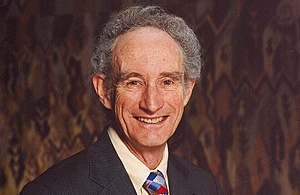
Government Chief Scientific Adviser (GCSA) Sir Patrick Vallance comments on the sad news that Robert May has passed away.

Robert May

Sir Patrick Vallance said:

Robert May was Government Chief Scientific Adviser from 1995 to 2000 and was influential in developing the role in government through both his powerful intellect and the force of his personality. He held the role at a time when science underpinning government policy was in the spotlight, from BSE to GM crops. He helped make the case in government that public funding for science is an investment that delivers value for the nation. Subsequent GCSAs have built on and benefitted from his influence.

Throughout his career, he was an exemplar of the fact that being a scientist is not just about knowledge or discovery, but also speaking up about science and discussing its implications.

He will be sadly missed.

Published 29 April 2020


Daily death reporting now includes all positive COVID-19 deaths

  • new data on COVID-19 deaths to take effect from today
  • the new daily count includes deaths in all settings with COVID-19 for the first time
  • data will complement the new Care Quality Commission (CQC) and Office for National Statistics (ONS) figures on care homes

Public Health England (PHE) has developed a new method of reporting daily COVID-19 deaths, to give a more complete number of those who have died from the virus.

For the first time from today, Wednesday 29 April 2020, the government’s daily figure will include deaths that have occurred in all settings where there has been a positive COVID-19 test, including hospitals, care homes and the wider community. Scotland, Northern Ireland and Wales already report out-of-hospital deaths.

Today’s figures have been revised retrospectively by PHE since the first death on 2 March 2020 to include additional data sources. This will bring the total number of deaths in the UK to 26,097 from 2 March until 28 April, including 765 deaths reported in the 24 hours to 5pm on 28 April.  

PHE has now reported an additional 3,811 deaths since the start of the outbreak. Of these, around 70% were outside hospital settings and around 30% were in hospital. The additional hospital deaths have been identified through PHE’s laboratory system and were not reported to NHSE.

The total number of deaths reported by PHE is approximately 17% higher than previous data showed.

It is important to note that this does not indicate a sudden one day increase and is broadly in line with trends seen by the ONS in their data, which already reports out of hospital deaths.

Dr Yvonne Doyle, Medical Director at PHE, said:

Every death from COVID-19 is a tragedy. Tracking the daily death count is vital to help us understand the impact of the disease.

These more complete data will give us a fuller and more up-to-date picture of deaths in England and will inform the government’s approach as we continue to protect the public.

It will remain the case that ONS data, which publishes every week with data from 11 days ago, includes suspected cases where a test has not taken place. ONS figures will therefore continue to include more deaths than our daily series.

From the start of the pandemic, the Department of Health and Social Care (DHSC) has reported a daily count of COVID-19 deaths in hospitals in England, with deaths in other settings included from Scotland, Wales and Northern Ireland.

Each day, PHE will link data from 3 different sources: the NHSE dataset collected manually from trusts; deaths collected electronically from NHS information systems; and reports from PHE Health Protection Teams as part of their local outbreak management.

Helen Whately, Minister for Care, said:

I am determined that people living in care homes continue to receive the best care possible during these challenging times.  

Sadly, this pandemic has already taken many lives, and my heart goes out to all those who have lost loved ones before their time.

Today’s data cannot bring them back but it can help us to better understand the impact this outbreak is having on those living in care homes so that we can continue to do everything in our power to protect them.

PHE’s data complements the weekly death statistics published by the ONS. This has an 11 day delay due to the time taken for deaths to be certified, registered and processed, and includes suspected as well as confirmed cases in all settings. The ONS data is supplemented by CQC’s data, which comes from death notifications submitted by adult social care providers and also includes confirmed and suspected cases.

  1. The daily dashboard with UK lab-confirmed cases and UK lab-confirmed deaths.
  2. PHE’s technical summary of the deaths data reporting.
  3. There is more detail about the current reporting process and the data sources for Wales, Scotland and Northern Ireland (which remain unchanged).


The process of seeking a political solution in Syria must not cease

Thank you very much, Mr President, and thank you for your characteristically clear briefing.

Mr President, as we said last time we met, we remain deeply concerned about the devastating potential impact that COVID-19 could have in Syria, a country already devastated by this nearly decade-long conflict. It’s clear that that’s a sentiment also shared across this Council in many of the statements today. And as my Chinese colleague has just said, we will discuss the humanitarian challenge this afternoon. But with 43 confirmed cases and undoubtedly many more, it is vital that all parties heed the Special Envoy’s call for a nationwide ceasefire.

The Secretary-General’s call for a global ceasefire is not just about rightly helping those in conflict zones, but also to allow for our full attention to be devoted to the fight against COVID-19. We can only defeat it if we defeat it everywhere.

We are also appalled to receive news of yesterday’s bomb attack in Afrin that killed at least 40 civilians, many of them children. More families mourning, and our thoughts and prayers go out to those families today. It’s such a senseless act should take place during the holy month of Ramadan; in particular, it is all the more egregious. Preventing a major outbreak of COVID-19 in any part of Syria must be a common task for us all. This virus knows no lines of control or geographical, political or cultural boundaries.

It is therefore vital that all parties adhere to existing ceasefires in Northwest and Northeast Syria and abide by their responsibilities to facilitate humanitarian aid. The current crisis reinforces the need to work together to reach across the divide and to resolve this conflict. The process of seeking a political solution in Syria must not cease. And in this context, it was encouraging to hear at the last session that an agenda for the next round of Constitutional Committee talks had been agreed. It is important that this opportunity is seized before momentum is lost again. And we encourage the Special Envoy to look at ways for talks to go ahead and the meetings to continue.

As we and other Council members have made clear before, the political process under Resolution 2254 extends beyond the Constitutional Committee. In addition, to a nationwide ceasefire, the Syrian regime should also take other important confidence-building measures. These include the wholesale release of arbitrarily detained prisoners and ensuring humanitarian access to all parts of the country. Given the risk of COVID-19 taking hold in prisons, we would also strongly urge the Syrian regime to make widespread release of political prisoners and vulnerable people and to ensure medical care is available for those still in detention. The reported release of 40 detainees in Deir ez-Zour Province is a small step in the right direction.

We also noted that the issue of sanctions was raised by a number of members of the Council in relation to COVID-19. We want to confirm, as I think was well explained by our Estonian colleague, that goods and medical supplies used for humanitarian purposes are not subject to EU sanctions, which the UK continues to apply, and additional exemptions from sanctions are available for humanitarian activity in Syria.

I would also note that the UK and our European partners are among the leading donors to humanitarian aid in Syria, including in regime held areas. In reality, the problems facing the Syrian health sector and economy are a result not of sanctions, but of the Syrian regime, through its cronyism and corruption and through its brutal conduct of the war. If the Syrian regime and its allies wish to see the removal of sanctions, then they know what they have to do: engage seriously with Special Envoy Pedersen and the UN-led political process to achieve a peaceful end to the Syrian conflict.

Finally, we also wanted to say that despite the looming prospect of a virus that could heap further suffering on the Syrian people, we cannot ignore the findings in the recent reports that the Commission of Inquiry, the Secretary-General’s Board of Inquiry and the OPCW and the Investigation and Identification Team.

We welcome the release of the Secretary-General’s summary report from the Board of Inquiry on the 6th of April. Even though the report does not explicitly identify Russia as the regime’s “ally” responsible for some of the attacks on civilian infrastructure, it is clear who they must mean when there is only one country flying military aircraft over Idlib alongside the regime.This conclusion is supported by the findings of the Commission of Inquiry, which identified Russia as responsible for attacks on civilian infrastructure.

These are flagrant breaches of the international rules, which we all agreed cannot be tolerated, and those who have committed crimes must be held to account. That is our responsibility.

We note with deep regret that the very hospitals that were bombed by the regime and by Russia are the same hospitals that could have been used now to fight against COVID-19.

Mr President, the time for action is now. We must ask ourselves how we can now come together to alleviate the suffering of the Syrian people.

Thank you, Mr President.


Repatriation during the coronavirus (COVID-19) pandemic: Minister Adams’ statement, 29 April 2020

Thank you very much, Mr Speaker.

With your permission, I would like to make a statement on the Foreign and Commonwealth Office’s response to the COVID-19 pandemic.

Our team of experienced diplomats here at home, and in our Embassies and Consulates around the world, continue to work around the clock, using our unparalleled international connections to help overcome this unprecedented challenge.

Now, since the outbreak in Wuhan, our over-riding priority has been to help British travellers get home safely to their loved ones.

And we estimate that over 1.3 million people have returned to the UK since the outbreak via commercial routes.

This has been from countries across the globe. We’ve seen 200,000 British nationals return from Spain. And 50,000 have returned from Australia in the past month alone.

Keeping commercial options running has required enormous international effort.

We have worked alongside airlines and foreign governments to keep vital routes open and ensure that domestic restrictions don’t create a barrier to getting people home.

But as you’ll appreciate, Mr Speaker, as countries have increased travel restrictions, often without notice, commercial routes have ceased to be an option for some travellers.

So thanks to a £75 million partnership between this government and airlines, we have now brought back more than 19,000 people on 93 charter flights organised by the Foreign Office from 20 different countries and territories.

And in some instances, this will mean bringing home a few hundred passengers from small countries, like the Gambia, or remote locations, like the outer islands of the Philippines.

In other cases, this has meant returning thousands of British travellers, such as the 10,000 people returned home from India, and 2,000 thus far from Pakistan.

In the next week alone, we will bring back thousands more travellers on further charter flights including from Bangladesh, Nigeria and New Zealand.

Mr Speaker, I’d also like to touch on cruise ship travel. More than 19,000 British passengers were aboard 60 cruise ships when the FCO changed their travel advice on 17 March.

And working with local authorities and cruise operators, the FCO has helped ensure these passengers were able to return home.

We have provided consular assistance to many of them, and in some cases, we have organised direct or supported charters for over 1,500 people.

But for those British people who have chosen to remain in place or are still trying to get home, our consular teams are providing support 24 hours a day.

To ensure timely responses, we have tripled the capacity in our consular contact centres.

Our broader consular effort has been centred around supporting British travellers right across the piece.

We have worked with foreign governments to ensure that British travellers can continue to meet visa, immigration or documentation requirements while they’re abroad.

And we are offering financial protection as well, including through the same measures available to British workers and residents here at home, such as the Coronavirus Job Retention Scheme and access to mortgage holidays.

We are making sure British travellers have access to essential care, including food and accommodation, as well as medical care, this also includes psychosocial support, and we have been working with third sector and external partners to deliver this.

And now, most UK insurers will extend their travel insurance cover, so British travellers actively trying to get home will be covered for emergency medical treatment if they’re still stuck abroad at least for 60 days.

Our efforts and our aims show that we are committed to helping every British traveller, no matter where they are in the world.

Mr Speaker, I’d now like to turn to the FCO’s role in procurement, particularly and specifically PPE equipment.

With so many other countries in similar circumstances, we are grappling with a global shortage in Personal Protective Equipment.

Yet, thanks to the efforts of our domestic manufacturers, and our work with international partners around the world, we’ve procured and distributed over a billion items to those on the front line.

Lord Deighton who helped organise the London Olympics, has been brought in to oversee efforts to boost our domestic supply even further.

And in the Foreign Office, we are working tirelessly through our overseas posts to get medical supplies into the UK.

Mr Speaker, over 350 million items of PPE equipment have been procured through our China network alone and we are working flat out to get orders delivered from, for example, Turkey and Egypt.

We have also distributed over 1500 ventilators, with thousands more ordered and on the way.

In the last week, we have received shipments of more than 4 million IIR masks; and 1 million other masks.

And by the end of today, flights will have touched down with more than half a million masks, more than 350,000 gowns, and more than three quarters of a million face shields.

Meanwhile, the Foreign Secretary and my fellow ministers at the FCO are on calls with counterparts around the world every day, working to secure new deliveries from abroad with the support of our excellent and tireless diplomatic service.

From the start of the crisis, the UK has played a leading role in tackling the spread of the disease and the world’s response to it.

We are uniquely placed to do so as a member of the G7, G20, NATO, the Commonwealth; UN; and as a major donor to the global health system.

And as the Foreign Secretary laid out in his previous statement, our international strategy is focused in four key areas:

Securing a strong and co-ordinated global health response, particularly for the most vulnerable countries.

Accelerating the search for a vaccine, more effective treatments and testing.

Supporting the global economy, keeping trade open and securing critical supply chains.

Keeping transport routes and transit hubs open, to support the flow of freight, aid, medical supplies, and crucially to bring our people home.

I’ve outlined our support for bringing British nationals home, but would like to touch on our good progress in the other areas.

We are helping vulnerable countries with their response to coronavirus by announcing up to £744m in aid, including for R&D and support to the World Health Organisation, UN agencies, NGOs and the Red Cross.

And today, my right honourable friend, the International Development Secretary also announced a funding pledge equivalent of £330 million a year over the next five years to Gavi, the Vaccine Alliance.

This will fund the immunisation of 75 million children against other deadly diseases, supporting the world’s poorest countries so they can cope with rising coronavirus cases.

On the COVID-19 vaccine, this Government has already committed £360m as part of our domestic and international effort.

This investment includes a quarter of a billion pounds to the Coalition for Epidemic Preparedness (CEPI) to support coordinated global research – this is the single largest single contribution by any country.

And we are helping to keep vital trade routes and supply chains open by coordinating closely with allies and partners in the commercial sector.

Finally, the UK has a responsibility to protect the safety and the security of the people of the Overseas Territories, most of whom are British nationals.

So we have been providing tailored support to our Overseas Territories, ensuring that the appropriate resources are provided to them during the coronavirus response. 

Mr Speaker, the scale and impact of this pandemic has been unimaginable.

But working alongside our international partners, the UK has been able to demonstrate the kind of leadership, cooperation and collaboration that will get us through this crisis.
Further information


Grassroots radio boosted through community fund

Community radio is an increasingly important part of the UK radio landscape. Around 300 not-for-profit stations, staffed largely by volunteers, broadcast to around a million listeners per week.

But advertising revenues, which make up around 25 to 30 percent of a community station’s income, have dropped significantly as a result of the pandemic.

The government has today announced that the £400,000 Community Radio Fund administered by Ofcom will be used to provide a lifeline for radio stations hit hardest by the coronavirus. Relevant stations will be invited to bid for emergency grants through Ofcom to help meet their core costs.

John Whittingdale, Minister for Media and Data, said:

Community stations across the country are helping people through the pandemic with up-to-date news and entertainment and through their role coordinating volunteer networks.

We recognise the difficulties they face and are releasing emergency funding to help them continue providing programming and services for the communities they serve.

Awards will be determined by the independent Community Radio Fund Panel. Guidance will be provided from Ofcom on how radio stations can bid for funding.

The Community Radio Fund is a grant scheme set up in 2005 to support the community radio sector. Funding has to date been awarded to projects and posts promoting business development and self-sustainability. It has been particularly successful in funding distinctive content tailored to the needs and interests of local audiences offering opportunities for local engagement and fostering community cohesion.

Danny Lawrence, Chair of the Community Media Association, said

We are encouraged that DCMS has listened to our presentation of how the coronavirus is affecting our members and the wider community radio sector. The quick and early release of funds from the Community Radio Fund, administered by Ofcom, will provide immediate short-term relief for those community radio stations facing immediate hardship.

We look forward to working with DCMS to continue to explore options to fund community radio in the long term to support stations keeping their communities connected and informed during the crisis. We profoundly thank DCMS and Ofcom for acting so quickly at this difficult time.

Kevin Bakhurst, Group Director of Content and Media Policy at Ofcom, said:

During this challenging period, community radio can provide a reassuring local voice to millions of people.

We know many community stations are facing significant challenges as a result of coronavirus, and we will be working as quickly as possible to administer this fund so they can continue to reach local listeners.

Notes to editors:
  • Community radio stations can receive further guidance and information from Ofcom.