Millions more items of PPE for frontline staff from new business partnerships

  • Companies including Amazon, the Royal Mint and Jaguar Land Rover have stepped up to get more PPE to healthcare workers
  • Support follows the government’s call-to-arms for businesses to use their manufacturing or procurement power to aid the coronavirus response
  • More than a billion items of PPE already delivered to frontline, with millions more expected over coming months thanks to businesses ramping up production

NHS and social care staff in the UK are set to receive millions of items of personal protective equipment (PPE) over the coming months thanks to new, innovative collaborations with a number of organisations, the government has announced.

Companies including Amazon, the Royal Mint, Jaguar Land Rover and eBay are supporting the government’s ongoing efforts to get PPE to the hardworking frontline staff, at no additional cost to the taxpayer.

This follows a call-to-action from the government for UK businesses to use their existing manufacturing power and expertise to meet the growing demand for protective equipment. 

More than 200 potential manufacturers have been identified and many have been contracted to make over 25 million items of PPE and deliver 12 million square metres of PPE fabric to produce items like gowns, gloves and aprons.

Deliveries have already started, including contracts for 2.5 million aprons and 50,000 bottles of hand sanitiser a week. Firms will be supported through the regulatory, testing and procurement process in less than a month to get PPE to the frontline as quickly as possible.

Health and Social Care Secretary Matt Hancock said:

“In continuing to tackle this global pandemic we outlined the need for a great national effort to ensure our frontline NHS and social care continue to have all the equipment they need.

“The support from businesses who accepted this challenge has been phenomenal.

“International demand for PPE has never been so high, and we are now working with over 1,000 businesses and establishing a British manufacturing base, which will see tens of millions of extra items of PPE delivered to the frontline in the coming weeks alone.

“I want to thank Lord Deighton for his work leading this national effort, and everyone who has stepped up to the plate.”

Lord Paul Deighton, adviser to the Secretary of State on PPE, said:

“It’s been fantastic to see so many companies come forward and offer their support for this vital undertaking. We are working tirelessly to look at all offers and are currently engaging with over a thousand different companies.

“However, there’s still more that can be done and I encourage any company with the capacity to step up and join the response. I look forward to seeing what future partnerships we can produce and what they can bring to the table to get healthcare workers the PPE they need.”

Examples of some of the support that has been accepted includes:

  • the Royal Mint will be providing over 1.9 million face visors over the next 6 months, with 54,000 being delivered a week
  • a partnership with Amazon allows us to harness their global sourcing expertise
  • eBay has provided a new platform, jointly developed with Clipper Logistics, that will allow primary, social and community care providers to order from a range of PPE directly – the orders are then fulfilled by Clipper and shipped directly via Royal Mail
  • Survitec, a life-saving product technology company, will begin producing gowns as soon as the beginning of June
  • DTR Medical will be providing 1.3 million visors, with the first delivery expected next week
  • Bollé Safety, who manufacture protective eyewear, will make 6.5 million visors over the course of the pandemic
  • Jaguar Land Rover is now manufacturing 14,000 visors a week for healthcare staff
  • Don & Low will be manufacturing 12 million metres squared of fabric for gowns over the next 6 months, with the first delivery expected later this month
  • Burberry is manufacturing non-surgical gowns at its factory in Castleford and sourcing masks through its supply chain. To date, the company has donated over 100,000 pieces of PPE to the NHS and healthcare charities
  • Ineos is delivering around 174,000 bottles of hand sanitiser a week to NHS hospitals

The partnerships will help to bolster existing measures the government has implemented to increase the supply of PPE to the NHS and social care sector, as set out in the government’s national PPE plan published in April. This includes the creation of a PPE distribution network with the NHS, industry and armed forces, and a 24-hour NHS-run helpline to report any shortage of supplies.

These collaborations are only the latest in a growing list of successful partnerships with companies across the UK and the world since the beginning of this crisis. 
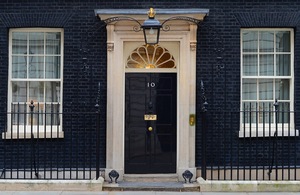


PM call with Prime Minister of Poland

Press release

Prime Minister Boris Johnson spoke with Polish Prime Minister Morawiecki to mark the 75th anniversary of VE Day.

placeholder

A Downing Street spokesperson said:

Prime Minister Boris Johnson today spoke with Prime Minister Morawiecki of Poland to mark the 75th anniversary of VE Day.

The PM said Poland was a key ally in the Second World War, and our forces fought shoulder to shoulder on land, sea and air against the Nazis.

The PM expressed regret that Prime Minister Morawiecki and Polish Citizens had been unable to attend commemorations which had been planned prior to the coronavirus pandemic, and stressed the huge appreciation which the UK has for the sacrifices which Poland had made.

The PM and the Prime Minster Morawiecki agreed on the huge importance of the UK/Poland relationship, and said there is much for our two countries to work on together, from security to trade issues.

On the response to coronavirus, the PM said there are many Polish frontline workers serving in the UK, and thanked them for all of their incredible hard work. The PM urged a global fight against the pandemic and said he hoped that Poland can join the virtual Global Vaccine Summit which the UK is hosting on 4 June.

Published 8 May 2020


New Ventilator Challenge devices arrive in UK

A batch of new ventilators from the Government’s Ventilator Challenge has arrived in the UK this week to continue supporting NHS patients with coronavirus.

150 devices, made up of the Vivo65 and the Nippy4+ ventilators from Breas Medical, arrived this week from Sweden.

The new ventilators are existing designs, already approved by regulators, and the Cabinet Office has assisted the Swedish company Breas Medical, who also operate in Stratford-Upon-Avon, to ramp up the production of their ventilators, by supporting new production lines, negotiating with suppliers to source critical components and expediting shipments of key parts from around the world.

The existing products have proven to be clinically excellent in a number of different settings. The Government has ordered 2000 of the devices, with hundreds expected to arrive over the coming weeks.

The Vivo65 and the Nippy4+ ventilators join the Penlon Prima ESO2 and the Smiths paraPAC models as Ventilator Challenge devices which are available to the NHS.

Chancellor of the Duchy of Lancaster Michael Gove said:

The arrival of the Breas Medical devices further underlines the Ventilator Challenge’s success in stepping up the number of ventilators in the UK.

These devices are well suited to helping patients in intensive care and will complement the two other Ventilator Challenge devices currently on the NHS frontline.

We are also hugely grateful to those companies that will not be progressing further in the Ventilator Challenge. They can be proud of the part they played in the national effort to protect the NHS and save lives.

A further 449 Ventilator Challenge devices are now available to the NHS frontline, with hundreds more arriving over the coming weeks. Government efforts to increase ventilator capacity have already seen an additional 2,600 mechanical ventilators made available to the NHS since the start of the pandemic. The UK now has over 11,000 mechanical invasive ventilators available in total.

During the coronavirus pandemic, everyone who has required a ventilator has had access to one, but the Government will continue to increase capacity through its three pillar strategy: procuring more ventilators from overseas, scaling up the production of existing or modified designs and working to design and manufacture new devices.

Today the Cabinet Office has also confirmed that, following re-assessment from a panel of expert clinicians, the department is ending support for the following devices:

  • Piran Vent, made by Swagelok
  • Veloci-Vent, made by Cambridge Consultants Ltd and MetLase
  • CoVent, made by TTP and Dyson
  • Sagentia Ventilator, made by Sagentia
  • AirCare, made by BAE Systems

All five designs have made exceptional progress since the start of the Ventilator Challenge, with a number of devices having been assessed as having viable designs by expert clinicians. However they would require further development before they would be ready for clinical testing, and they are not currently required to meet immediate demand. Companies may continue to develop their designs, including for CE-marking.

Director, Medical Devices Testing and Evaluation Centre, Dr Tom Clutton-Brock said:

Having tested all of the new devices in the Ventilator Challenge, it’s fantastic to see that so many designs have come a long way in such a short period of time. Designing and testing ventilators usually takes years and it’s a testament to the perseverance and ingenuity of the companies involved that so much has been accomplished. While some of the new designs are no longer being supported, several designs are very close to being clinically viable pandemic ventilators.

As set out last week, the Government will continue to provide support to the following devices:

  • Penlon Prima ESO2
  • Smiths paraPAC
  • Breas Medical Nippy 4+ & Vivo65

In addition, two devices are subject to ongoing review to ensure that they continue to meet the needs of the NHS:

  • Zephyr Plus, made by Babcock
  • Gemini, made by OES Medical

The Government recently announced that 15,000 Penlon Prima ESO2 ventilators have been ordered, the first newly-adapted device to receive regulatory approval in the Ventilator Challenge, with production set to ramp up in the coming weeks. Smiths paraPAC ventilators, an existing device, are also being manufactured at speed and at scale as part of the Ventilator Challenge.

Devices that have been selected to continue as part of the Ventilator Challenge have been selected based upon expert clinical and technical advice. This includes feedback from rigorous testing of the ventilators by clinical experts to ensure that they meet the necessary standards for patient safety and effectiveness of treatment, which is of vital importance for any new ventilator design. This selection criteria also takes into account projections for ventilator demand, the availability of other devices which already have regulatory approval, the performance and clinical usefulness of each device and the progress to date on each device’s overall development.


PM call with President of the European Commission: 8 May 2020

Press release

Prime Minister Boris Johnson spoke to the President of the European Commission Ursula von der Leyen.

placeholder

A Downing Street spokesperson said:

The Prime Minister spoke to the President of the European Commission Ursula von der Leyen today about the response to the coronavirus pandemic.

Both leaders welcomed the good cooperation between the UK and the EU on coronavirus, including on the global effort to repatriate citizens.

The PM also congratulated the European Commission on the 7.4billion euros raised at Monday’s pledging conference, and President von der Leyen thanked the UK for our £388 million pledge for vaccines, treatments and diagnostics.

The PM gave an update on the UK’s domestic response. They agreed on the need for ongoing cooperation in the fight against coronavirus.

Published 8 May 2020


Environment Secretary’s statement on coronavirus (COVID-19): 8 May 2020

This transcript is for the coronavirus statement delivered on 8 May 2020:

Good afternoon, and welcome to today’s Downing Street Press Conference. I’m pleased to be joined today by Steve Powis the medical director of NHS England.

Before we give an update on the latest figures on the Coronavirus and also our work to help support the vulnerable get access to food.

Today is of course the 75th anniversary of VE day and although many of the lockdown measures and the social distancing measures that are in place mean that many of the planned events have been unable to take place as originally envisaged, today is an important day to pause and remember and 75 years ago people poured into the streets of our scarred cities to celebrate the end of that most difficult conflict.

Our soldiers fought around the world, there were countless acts of bravery, 450,000 British people sadly lost their lives and it was a moment when our whole country pulled together.

As Defra secretary I would like to take this opportunity to record the efforts of those who also contributed in a non-military way, in particular our farmers who stepped up to ensure the nation was fed and the many women who responded to the call to join the Women’s Land Army.

In a moment I am going to give an update on our work to support the vulnerable get access to food, but firstly let me give you an update on the latest data from the COBR coronavirus data file. I can report through the governments ongoing monitoring and testing programme as of today:

  • 1,631,561 tests for coronavirus have now been carried out in the UK, including 97,029 tests carried out yesterday;

  • 211,364 people have tested positive, that’s an increase of 4,649 cases since yesterday;

  • 11,788 people are currently in hospital with coronavirus, down from 12,688 the previous day.

And sadly, of those tested positive for coronavirus, across all settings, 31,241 have now died. That’s an increase of 626 fatalities since yesterday. This new figure includes deaths in all settings not just in hospitals.

We express our deepest condolences to the families and friends of these victims.


Turning now to our work to help the vulnerable get access to food, firstly for the so called shielded cohort. That’s those who are clinically vulnerable.

Over a million food parcels have now been delivered to these households and in addition, all those in the shielded cohort have been added to a list giving them priority access to supermarket delivery slots. So far around 400,000 people have been offered priority delivery slots by supermarkets and around 1 million orders have been placed ensuring that people can shop normally and purchase the goods that they want to buy.

There is of course a wider vulnerable group, those who perhaps have disabilities or who are elderly and perhaps don’t have neighbours or relatives close by to help them. Or indeed those with other conditions that don’t put them in the clinically shielded group but nevertheless make them vulnerable and we have been working with local authorities, and some of the leading charities such as Age UK to put together a package of support to help these people get access to food.

And many local authorities and charities have also been accessing the Good Samaritan app as part of the NHS responder volunteer programme and so far 79,000 shopping runs have been carried out by volunteers engaged in that programme.

In addition we are continuing to work with supermarkets to make available additional priority slots for those in this group. But we also recognise that the economic impacts of coronavirus means that vulnerability is not about physical access to food, for some there is also financial vulnerability, so today we are announcing a new £16 million fund to support frontline food charities. The fund will be used by Fareshare and WRAP to continue and support and increase the food redistribution work that they already do and will significantly expand their sourcing capacity. They will be delivering food to around 5,000 frontline charities and these include refuges, homeless shelters and rehabilitation centres.

Finally I am conscious that there is a great deal of speculation about what the Prime Minster might say on Sunday when he outlines the roadmap for the future and how we will evolve the current restrictions. The Prime Minister will outline any changes to the guidance on Sunday but in the meantime in spite of the sunny bank holiday it is vitally important that we continue to abide by the current restrictions, stay at home to protect the NHS and save lives.

Concluding the press conference the Environment Secretary said:

I would also as I have done before like to conclude by recording my thanks to all those working in the food industry; from supermarkets and food manufacturers right through to farmers, there has really been quite an extraordinary effort over the last couple of months to ensure that we keep food on our supermarket shelves.

Thank you all very much.